
Executive Overview
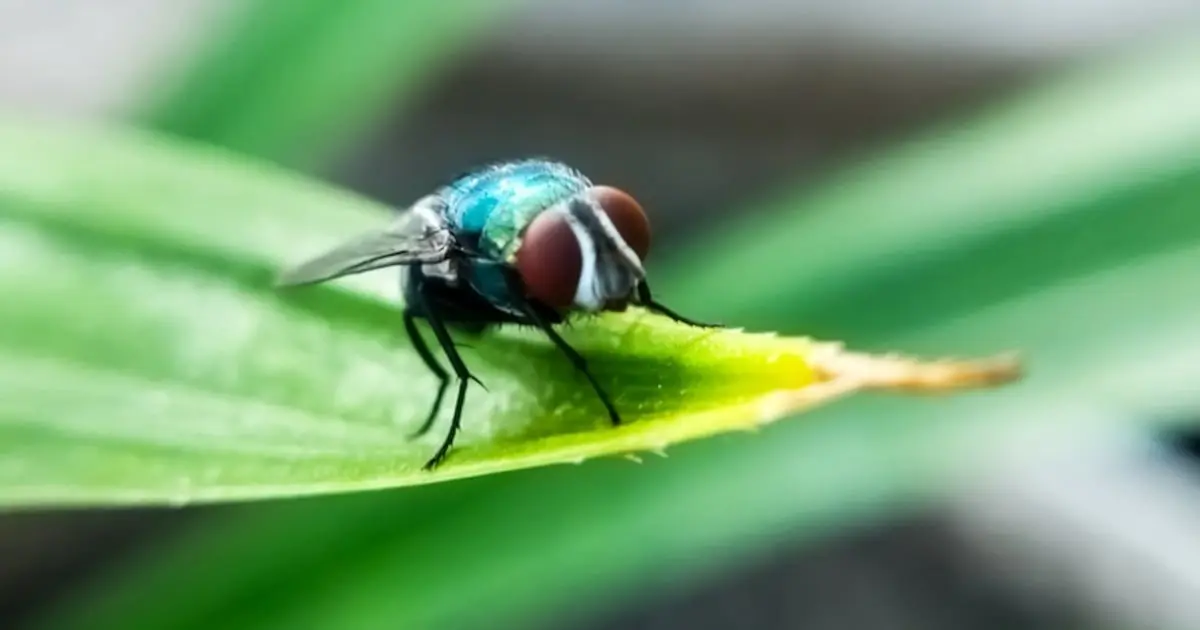
The return of the New World screwworm (Cochliomyia hominivorax) to the United States marks a critical turning point in modern agricultural security. Far more than a localized nuisance for livestock producers, the resurgence of this parasitic fly underscores a rapidly shifting pest threat landscape. As traditional chemical interventions falter, resistant strains emerge, and global climate patterns alter natural boundaries, the intersection of agriculture, national security, and technology has never been more precarious.
At the vanguard of this new paradigm is Flyttr, a Virginia-based biosecurity innovator formerly known as Oxitec. Operating at the critical nexus of automated surveillance, artificial intelligence, and biological crop protection, Flyttr is pioneering an integrated, end-to-end defense blueprint. Through strategic public-private partnerships, advanced sensing networks, and cutting-edge sterile insect technique (SIT) manufacturing, the company is positioning itself as the "Palantir of the pest management space"—shifting the industry from reactive chemical dependence to predictive, data-driven biosecurity.
This in-depth investigative report examines Flyttr’s vital role in combating the current U.S. New World screwworm outbreak, details the architecture of the federally backed FastFly initiative, and explores the broader economic and systemic vulnerabilities threatening the global food supply chain.
Detailed Chronology
Understanding the current biosecurity crisis requires mapping the timeline of regulatory preparation, federal infrastructure investment, and private-sector mobilization that culminated in Flyttr’s recent operational deployments.
- March 2026 (The USDA Foundation): Recognizing the rising vulnerability of American livestock to vector-borne parasitic threats, the United States Department of Agriculture (USDA) initiates targeted capital investments into domestic sterile fly production. This lays the groundwork for rebuilding a modernized infrastructure capable of mass-rearing and distributing sterile insects—a cornerstone of historical eradication campaigns.
- Summer 2026 (The Escalation of Cases): USDA Animal and Plant Health Inspection Service (APHIS) surveillance teams detect active New World screwworm cases, centering primarily in Texas. As case numbers tick upward through the summer months, agricultural economists and supply chain analysts sound the alarm, though federal assurances maintain that the integrity of the domestic food supply remains secure under current containment protocols.
- September 2026 (Official USDA Reporting): Updated confirmed status reports released by APHIS on September 9 confirm ongoing active cases in the Lone Star State. While seasonal models indicate that New World screwworm activity naturally slows during winter months, entomologists warn that dormant populations will re-emerge with heightened vigor in the spring unless aggressive preventative measures are institutionalized.
- Late 2026 and Beyond (The FastFly Mobilization): To counter the immediate crisis and establish a permanent national defense against biological incursions, Flyttr secures a high-stakes government contract to design and construct a state-of-the-art innovation hub in San Antonio, Texas. Operating under the umbrella of the FastFly initiative, this facility serves as the operational testbed for next-generation bio-surveillance, AI-driven monitoring software, and scaled sterile insect production.
Supporting Context & Metrics: The Scale of the Agricultural Threat
To appreciate the gravity of Flyttr’s mission, one must examine the staggering statistics governing modern agricultural biosecurity. Pests and vector-borne pathogens are no longer isolated regional problems; they are systemic risks to global economic stability.
The Global Toll of Agricultural Pests
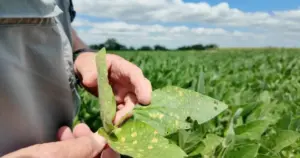
- 20% Crop Destruction: According to global agricultural impact assessments cited by industry leaders, pests destroy upwards of 20% of all food produced globally each year, representing hundreds of billions of dollars in lost nutritional and economic value.
- Failing Chemical Regimes: Decades of intensive agriculture and monoculture have placed unprecedented evolutionary pressure on target insect populations. Traditional synthetic chemical pesticides are losing their efficacy at an alarming rate, driven by rapid biological resistance.
- The Multi-Trillion-Dollar Supply Chain Risk: A single unchecked outbreak in primary livestock or staple crops can cascade through international trade networks, triggering import bans, skyrocketing consumer prices, and severe food insecurity.
Beyond the Screwworm: The Next Wave of Vulnerabilities
While the New World screwworm commands immediate media attention due to its visceral nature—its larvae feed exclusively on the living tissue of warm-blooded animals—industry experts emphasize that it is merely the tip of the iceberg.
- The Boll Weevil Resurgence: In the agricultural sector, traditional control measures are failing to suppress historic pests like the boll weevil in cotton production, threatening regional economies that depend on predictable yields.
- Expanding Geographic Ranges: Changing global temperatures and shifting weather patterns are allowing tropical and subtropical pests to expand their ranges northward into vital North American breadbaskets and livestock corridors.
- Economic Disproportion: As Grey Franson, CEO of Flyttr, notes, while the screwworm is devastating, there are at least five additional major pest threats currently established or actively encroaching upon U.S. borders that pose an even greater cumulative economic burden.
Official Statements and Industry Insights
The transition from conventional pest control to comprehensive bio-surveillance represents a philosophical shift within agricultural governance. Leadership at Flyttr and federal agencies have articulated a clear vision for this new era.
Grey Franson, Chief Executive Officer of Flyttr, crystallized the company’s strategic ambition during recent industry evaluations:
"We will be the Palantir of the pest management space. If we are sensing and detecting, we now need to help customers make decisions. It’s one thing to know where the [pest] is. It’s another thing to actually have tools that say, ‘Okay, let’s bring in X, Y, and Z capabilities.’"
Franson emphasized that Flyttr’s involvement in the current screwworm crisis extends far beyond a localized remediation effort. The ultimate objective is to establish a repeatable blueprint for federal crisis response:
"The punchline here is: We’re here to help [with] screwworm, but actually, how we do this thing—how we rapidly build out this facility, rapidly build out screwworm production—ideally sets a template for how the U.S. government sees a problem and how quickly it can respond to that problem."
Highlighting the fragility of current agricultural defenses, Franson added a stark warning regarding systemic vulnerability:
"We have a changing pest landscape. Pests pose arguably the largest threat to agricultural security globally. Pests destroy potentially more than 20% of all food produced around the planet, and their patterns are changing. Intensive agriculture is putting pressure on existing or traditional tools. So, chemical pesticides, for example, are losing effectiveness at a very rapid rate."
Federal officials, balancing public reassurance with operational urgency, have stressed the importance of proactive infrastructure investments. The USDA’s proactive funding of sterile fly production facilities reflects a growing realization that biosecurity must be treated with the same strategic gravity as physical and cyber defense.
Future Outlook: The Blueprint for Modern Biosecurity
As agricultural stakeholders look toward the horizon, the path forward requires a fundamental reimagining of how society detects, evaluates, and neutralizes biological threats. Flyttr’s multi-layered business model—comprising hardware sensors, autonomous sentry systems, AI-powered monitoring software, and bio-based crop protection—offers a compelling glimpse into the future of food security.
1. Shifting from Detection to Decision Support
Historically, pest management has been reactive: farmers observe damage, identify the pest, and apply broad-spectrum chemical treatments. Flyttr’s architecture flips this script. By deploying continuous autonomous sensors and AI analytics, the platform maps pest migration in real-time. Crucially, the software bridges the gap between awareness and action, instantly recommending targeted biological interventions—such as the release of sterile insects or specific bio-pesticides—before populations reach economic damage thresholds.
2. Scaling Public-Private Collaboration
The FastFly initiative and the San Antonio innovation hub serve as a vital proof-of-concept for public-private synergy. Government agencies possess the regulatory authority, emergency funding mechanisms, and jurisdictional reach required to manage national biosecurity crises. Private technology firms, conversely, offer agile engineering, rapid software deployment, and cutting-edge bio-manufacturing capabilities. Replicating this collaborative speed will be essential for countering future biological incursions.
3. Re-Engineering Biological Defenses
As chemical pesticides face diminishing returns due to biological resistance, the future of crop and livestock protection lies in nature-based solutions. The sterile insect technique, championed decades ago and now modernized through genetic engineering and automated mass-rearing, represents a sustainable, species-specific method of population suppression. By scaling these biological tools, the agricultural sector can protect yields without compounding environmental degradation or chemical runoff.
Conclusion
The return of the New World screwworm is a sobering reminder that humanity’s dominion over nature is constantly challenged by adaptive biological forces. Yet, it also serves as a catalyst for long-overdue modernization.
Through the pioneering work of companies like Flyttr, backed by strategic federal investments and data-driven biosecurity frameworks, the United States is building a resilient defense mechanism for the 21st century. By uniting autonomous surveillance, artificial intelligence, and scalable biological interventions, the agricultural sector is moving away from the precarious reliance on failing chemicals and stepping toward a secure, predictable, and technologically empowered future.