
Executive Overview
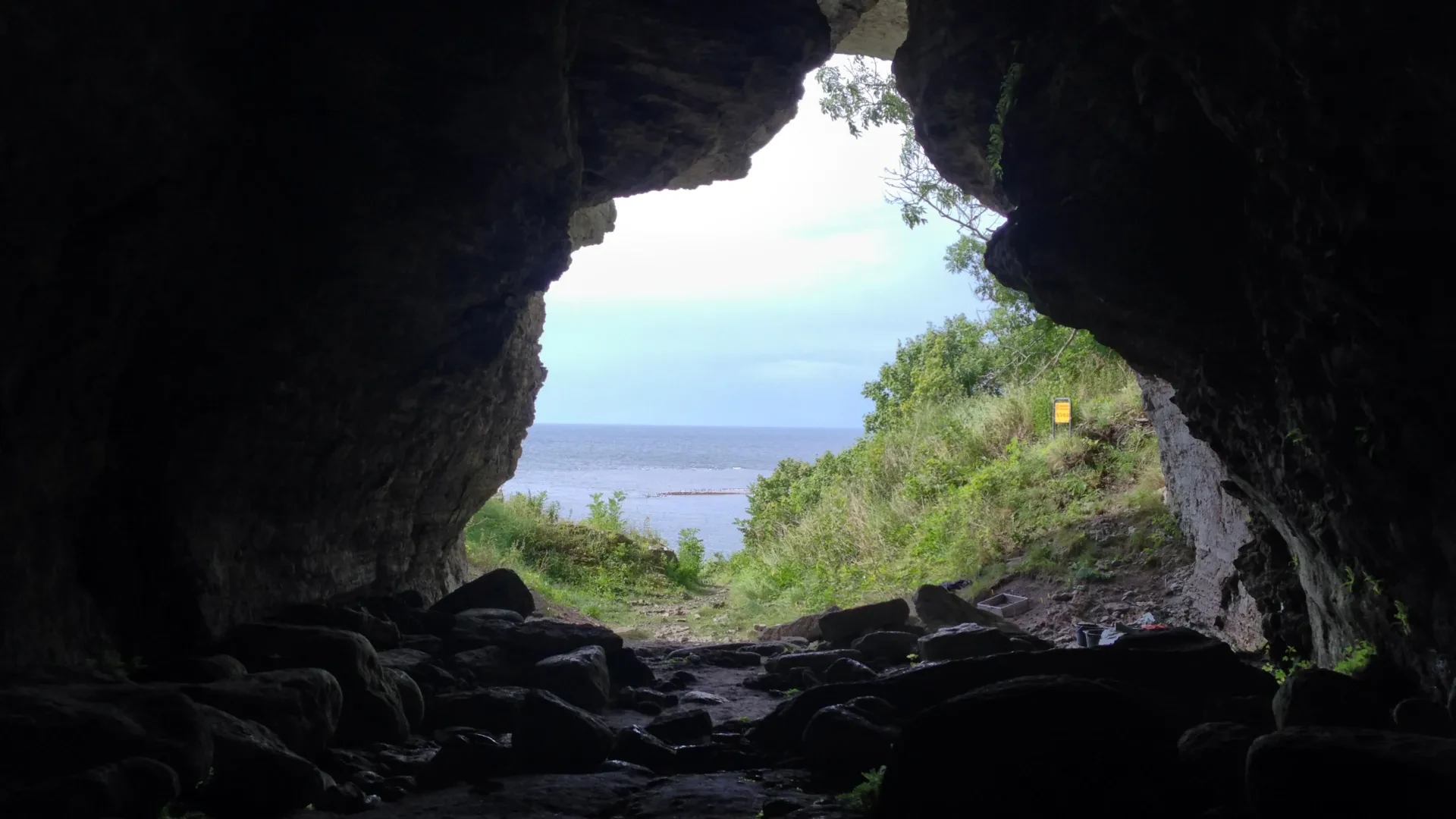
In a discovery that upends traditional models of ancient animal husbandry and the timeline of canid domestication, an international team of researchers has unearthed ancient grey wolf remains in a location where the species could not possibly have existed on its own: a tiny, isolated island in the Baltic Sea. Spanning the Neolithic and Bronze Ages, these remains—dated to between 3,000 and 5,000 years ago—were recovered from a limestone cave on Stora Karlsö, a Swedish island measuring a mere 2.5 square kilometres.
Because the island is entirely devoid of native land mammals, any apex predator found within its prehistoric strata represents an unmistakable anomaly: a creature that arrived solely through maritime transport by human hands.
Published in the Proceedings of the National Academy of Sciences (PNAS), the study was spearheaded by a multidisciplinary collective of scientists from the Francis Crick Institute, Stockholm University, the University of Aberdeen, and the University of East Anglia. Through a rigorous combination of ancient genomic sequencing, stable isotope dietary analysis, and osteoarchaeological examination, the researchers have revealed a relationship between prehistoric humans and wild grey wolves that defies simple categorization.
Far from viewing wolves merely as competitors for territory or threats to livestock, Stone Age and Bronze Age seal hunters and fishers appear to have intentionally captured, transported, and maintained grey wolves within their island settlements. Chemical signatures in the bones indicate that these captive or managed carnivores subsisted on a marine diet identical to that of their human hosts—principally seals and fish. Furthermore, genetic sequencing of the canid remains confirmed they were pure grey wolves rather than early domestic dogs, yet physical and genomic markers suggest they lived under conditions of human control, isolation, and, in one poignant instance, medical care.
This startling archaeological revelation forces a radical reassessment of human-animal dynamics in prehistory. It demonstrates that our ancestors’ interactions with the progenitors of modern dogs were far more nuanced, experimental, and diverse than previously imagined, pointing toward short-lived or alternative pathways of wolf management that predated, or existed parallel to, the conventional domestication trajectory.
Detailed Chronology
To understand the magnitude of the Stora Karlsö discovery, researchers had to reconstruct a multi-millennial timeline of human activity, environmental isolation, and biological change on the island. The investigation centers on the Stora Förvar cave, an archaeological site that has long fascinated Nordic scholars due to its rich deposits from prehistoric maritime cultures.
The Neolithic Context (circa 3000–5000 BCE)
During the Neolithic period, the Baltic region was undergoing profound cultural and ecological transformations as hunter-gatherer-fisher communities adapted to changing coastlines following the retreat of the Fennoscandian ice sheet. Stora Karlsö, positioned off the western coast of Gotland, emerged as a vital seasonal outpost. Archaeological layers within the Stora Förvar cave show that the island was heavily utilized by specialized maritime populations who exploited the rich seal breeding colonies and fish populations in the surrounding waters.
Because sea levels and post-glacial rebound left Stora Karlsö isolated from both Gotland and the European mainland, it possessed no terrestrial bridge across which large mammals could wander. Any large animal present during the Neolithic occupation had to cross several kilometers of open, unpredictable Baltic waters. The presence of wolf bones dating to this early phase indicates that prehistoric mariners possessed the watercraft capability and the inclination to capture live, formidable apex predators on the mainland and ferry them across the sea to their island camps.
The Bronze Age Continuance
The association between humans and wolves on Stora Karlsö did not represent a fleeting event; rather, it persisted across generations, bridging the late Stone Age and the early Bronze Age. Bones recovered from subsequent strata confirm that wolves continued to inhabit the island centuries after the initial introductions.
It was during this later Bronze Age phase that researchers identified the most striking piece of direct evidence for human care: the skeletal remains of a wolf bearing a severe, healed limb fracture. In a natural environment, a major leg injury would spell a swift and certain death sentence for an apex predator, preventing it from running down prey and leaving it vulnerable to starvation or pack rejection. The fact that this particular wolf survived long enough for its bone to mend suggests a profound level of human intervention—provisioning the injured animal with food and shelter in a controlled setting where physical prowess was no longer a prerequisite for survival.
The Genetic Bottleneck
As the centuries progressed, the isolated island population experienced profound biological shifts. Genomic analysis of the wolf specimens revealed an extreme reduction in genetic diversity—lower than that observed in any other ancient wolf population studied to date. This genetic signature, known as a population bottleneck, is characteristic of small, isolated groups cut off from mainland gene flow, as well as populations actively shaped by human breeding management. Whether this isolation was maintained deliberately through captive breeding or simply as a consequence of keeping wild-caught wolves confined to a 2.5-square-kilometer island, the genetic data confirms a long-term, enclosed presence that lasted far beyond a simple transient visit by a stray animal.
Supporting Context & Metrics
The multi-pronged scientific methodology deployed in the study allowed researchers to extract deep biological and ecological data from fragmented sub-fossil bones. The investigation relied on three primary pillars: ancient DNA (aDNA) extraction, stable isotope dietary reconstruction, and osteomorphological analysis.
| Analytical Method | Primary Target | Key Finding | Significance |
|---|---|---|---|
| Ancient DNA Sequencing | Nuclear and mitochondrial genomes of canid bones | Confirmed pure wolf ancestry (Canis lupus); zero genetic introgression from early domestic dogs. | Rules out the possibility that the animals were feral dogs or early morphologic hybrids. |
| Stable Isotope Analysis | Carbon and nitrogen ratios in bone collagen | Revealed a heavy marine diet (seals and fish) matching human consumption patterns. | Proves the wolves were sustained directly by human provisioning rather than terrestrial hunting. |
| Osteomorphological Study | Skeletal dimensions and bone pathology | Noted reduced body size compared to mainland counterparts and severe, healed limb trauma. | Indicates morphological shifts due to isolation/captivity and direct evidence of post-injury care. |
Genomic Insights: Wolves, Not Dogs
One of the most intense debates surrounding prehistoric canids centers on distinguishing between wild wolves and early domestic dogs. At archaeological sites dating to the Neolithic and Bronze Ages, morphological identification can be notoriously difficult due to the overlapping size ranges of small wolves and large primitive dogs.
To resolve this, the research team extracted ancient DNA from two distinct canid bones recovered from Stora Förvar. Sequencing results were definitive: both animals possessed complete mitochondrial and nuclear genomes that placed them firmly within the Eurasian grey wolf clade. They showed no genetic affinity with early domestic dog lineages known from contemporary European sites. They were, unmistakably, wild wolves.
Dietary Reconstruction Through Chemistry
To determine how these wolves sustained themselves on an island devoid of terrestrial ungulates (such as deer or wild boar), the scientists turned to stable isotope analysis. By measuring the ratios of carbon and nitrogen isotopes preserved in the bone collagen, researchers can reconstruct an animal’s long-term diet.
The isotopic signatures of the Stora Karlsö wolves yielded a stunning revelation: their diets were heavily marine-based, dominated by the consumption of seals and fish. Crucially, these isotopic values mirrored those of the human inhabitants residing in the Stora Förvar cave. In a natural setting, wolves rarely consume marine mammals in large quantities, as hunting seals on ice floes or rocky shores requires specialized tactics that terrestrial predators lack. The isotopic match between humans and wolves on the island strongly indicates that the carnivores were eating scraps, carcasses, or deliberate portions provided by the human seal hunters.
Official Statements
The profound implications of the Stora Karlsö findings have prompted reflections from the leading researchers involved in the international collaboration, highlighting how this discovery forces a re-evaluation of human-canid history.
Dr. Linus Girdland-Flink of the University of Aberdeen, a lead author of the study, emphasized the sheer unexpectedness of the ecological scenario:
"The discovery of these wolves on a remote island is completely unexpected. Not only did they have ancestry indistinguishable from other Eurasian wolves, but they seemed to be living alongside humans, eating their food, and in a place they could have only have reached by boat. This paints a complex picture of the relationship between humans and wolves in the past."
Pontus Skoglund, senior author of the study and head of the Ancient Genomics Laboratory at the Francis Crick Institute, highlighted the behavioral and cultural implications for prehistoric societies:
"It was a complete surprise to see that it was a wolf and not a dog. This is a provocative case that raises the possibility that in certain environments, humans were able to keep wolves in their settlements, and found value in doing so."
Dr. Anders Bergström of the University of East Anglia, co-lead author, elaborated on the genetic anomalies uncovered in the study:
"The genetic data is fascinating. We found that the wolf with the most complete genome had low genetic diversity, lower than any other ancient wolf we’ve seen. This is similar to what you see in isolated or bottlenecked populations, or in domesticated organisms. While we can’t rule out that these wolves had low genetic diversity for natural reasons, it suggests that humans were interacting with and managing wolves in ways we hadn’t previously considered."
Professor Jan Storå of the Department of Osteoarchaeology at Stockholm University reflected on the power of combining traditional osteology with cutting-edge genomics:
"The combination of data has revealed new and very unexpected perspectives on Stone Age and Bronze Age human-animal interactions in general and specifically concerning wolves and also dogs."
Future Outlook
The revelation that prehistoric mariners captured, transported, and maintained wild grey wolves on an isolated Baltic island opens up expansive new avenues of archaeological inquiry. As genetic and isotopic techniques continue to advance, researchers are shifting their focus toward several critical questions that remain unanswered.
Re-Evaluating Global Archaeological Sites
In light of the Stora Karlsö discovery, archaeologists are now taking a second look at unusual canid remains found at other remote or island sites across Eurasia and the Americas. For decades, atypical canid bones discovered in contexts lacking natural land bridges were often automatically cataloged as feral dogs or discarded as local anomalies. The Baltic study proves that ancient humans deliberately moved apex predators across marine barriers, prompting a systematic re-examination of museum collections worldwide for similar signatures of prehistoric animal transport and management.
Unlocking the "Dead-End" Experiments of Domestication
The traditional narrative of dog domestication portrays a linear, gradual process wherein wolves that scavenged near human camps slowly evolved into domestic dogs through self-domestication and human selection. The Stora Karlsö wolves complicate this narrative by demonstrating that prehistoric humans occasionally captured and managed true wolves—keeping them alive, feeding them marine proteins, and even nursing injured adults—without those populations evolving into modern dogs or contributing to the domestic dog gene pool.
This suggests that human-wolf interactions in prehistory involved multiple, localized experiments in captivity and management. Some of these experiments likely succeeded in producing domestic dogs, while others—such as the captive wolf populations of the Baltic—ultimately proved to be evolutionary dead ends when human settlement patterns shifted or islands were abandoned.
Next-Generation Proteomics and Environmental DNA
Moving forward, the research team aims to apply emerging techniques such as paleoproteomics and micro-stratigraphic environmental DNA (eDNA) analysis to the sediment layers of the Stora Förvar cave and other Baltic sites. By examining proteins preserved in tooth enamel and analyzing microscopic traces of hair, feces, and plant matter embedded in the cave floors, scientists hope to reconstruct the exact spatial dynamics between humans and wolves within the settlement. Did the wolves roam freely through the camp? Were they tethered or penned? Did they serve as guard animals, ritual symbols, or sources of fur?
Ultimately, the ancient wolves of Stora Karlsö stand as ambassadors from a complex prehistoric past. They remind us that the boundary between wild and domestic, between fear and cooperation, was porous and frequently negotiated by ancient humans who viewed the apex predators of their world not merely as adversaries, but as creatures worthy of transport across the sea, integration into their daily lives, and care in their hours of vulnerability.