
Executive Overview
Long before a puppy ever learns to sit on command, heel alongside a handler, or navigate a bustling metropolitan crosswalk, a complex and profound process is already underway behind the scenes. At organizations dedicated to breeding and training elite working animals, such as Dogs Inc, the journey of a future guide or service dog begins the moment life starts. While newborn puppies may appear entirely helpless—blind, deaf, and entirely dependent on their mother and littermates—their central nervous systems are experiencing a period of explosive, critical development.
To capitalize on this foundational window, organizations implement specialized, science-based protocols designed to optimize neurological pathways from birth. Among these, Early Neurological Stimulation (ENS) stands out as a pioneering, highly structured practice. Administered during the delicate neonatal stage, ENS uses brief, gentle tactile challenges to stimulate the neurological system safely.
However, ENS is merely the opening chapter in a multi-stage developmental continuum. From neonatal stimulation to the transitional phase, the crucial socialization window, and the adolescent boundaries of later puppyhood, every single phase requires deliberate strategy, environmental enrichment, and positive reinforcement. This article examines the science, methodology, and organizational dedication required to transform a vulnerable newborn puppy into a calm, confident, life-changing service partner.
Detailed Chronology: From Neonatal Beginnings to Adolescent Milestones
Understanding how service dogs achieve their trademark stability and composure requires looking closely at the chronological stages of early canine development. Each phase presents unique neurological developments, behavioral benchmarks, and care requirements.

1. The Neonatal Stage (Birth to 2 Weeks)
During the neonatal period, a puppy’s world is defined by warmth, nursing, and sleep. Puppies at this age cannot see or hear, and they lack the physical capability to regulate their own body temperature, meaning they rely entirely on their mother and littermates for survival. Despite their apparent vulnerability, rapid internal developments are taking place.
It is precisely during this window—typically starting around day three and concluding at day sixteen—that Early Neurological Stimulation (ENS) is introduced. Because the neurological system is undergoing such rapid growth, introducing controlled, mild tactile stressors helps build resilience and neurological capacity. These exercises are brief, highly regulated, and performed strictly by trained professionals who understand the fragility of newborn pups.
2. The Transitional Stage (2 to 4 Weeks)
As puppies cross the two-week threshold, a dramatic transformation occurs. Their eyes and ears begin to open, allowing them to perceive light, shadow, and sound for the very first time. By approximately four weeks of age, puppies are taking their first wobbly steps, beginning to bark, and experiencing the arrival of their first milk teeth.
This stage marks a shift from total dependence toward basic exploration. Puppies begin interacting more directly with their littermates, learning foundational social behaviors and early bite inhibition through play. Nutritional needs also evolve during this period, as puppies transition gradually from nursing to soft gruel and eventually solid food.

3. The Socialization Window (3 to 12 Weeks)
Widely recognized by animal behaviorists as one of the most critical periods in a dog’s life, the socialization window requires careful, intentional exposure to the world. Starting around three weeks and peaking through the twelfth week, a puppy’s brain is primed to learn that novel things are safe rather than frightening.
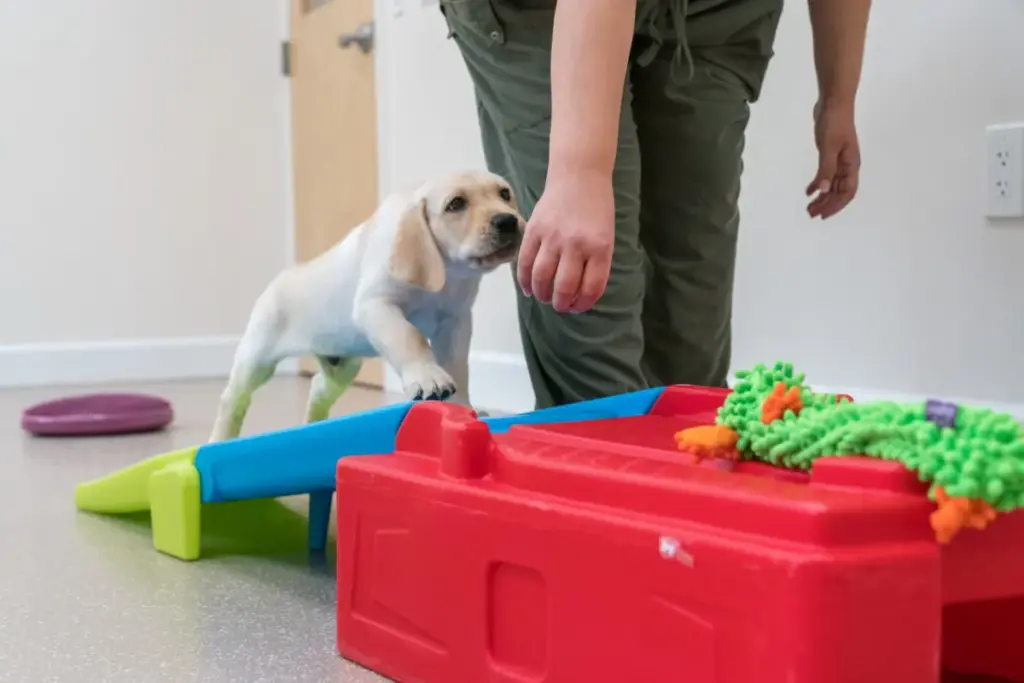
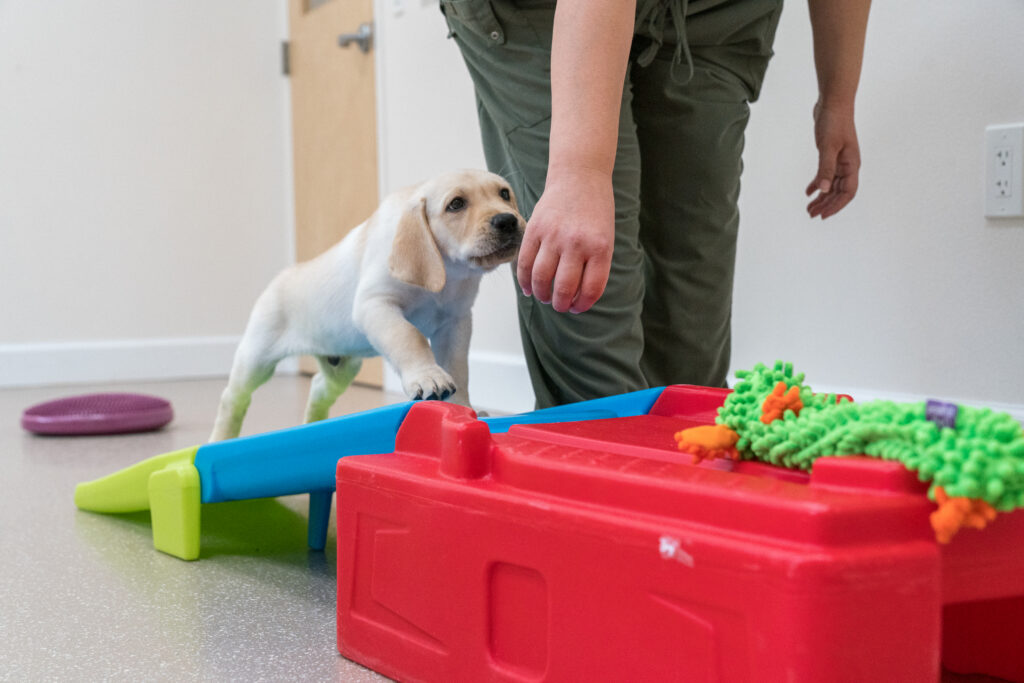
During this timeframe, puppies are introduced to diverse sounds, tactile floor surfaces, varied environments, and friendly people of different ages and appearances. By eight weeks of age, many puppies are ready to transition to volunteer puppy raisers, where these foundational experiences accelerate. By twelve weeks, comprehensive exposure helps cement confidence, preventing fear-based behaviors or anxiety in adulthood. Concurrently, around three months of age, puppies are developmentally ready to begin short, positive-reinforcement training sessions for basic cues.
4. The Juvenile and Adolescent Stage (6 Months and Beyond)
As dogs mature past puppyhood, they enter the juvenile and adolescent stages. Starting as early as six months, puppies frequently test boundaries—much like human teenagers. This period also brings hormonal shifts as most puppies approach reproductive maturity between six and 12 months. Female dogs experience their first estrus cycles, while young males display new hormone-driven behaviors.
Throughout this period, young dogs navigate approximately four distinct "fear periods," during which negative experiences can have an outsized impact on their confidence. Consequently, continued positive reinforcement, structured crate training for routine and independence, and careful exposure to diverse animals and environments remain essential until they enter formal, advanced service training.

Supporting Context & Metrics: The Science of ENS and Environmental Enrichment
To fully appreciate the impact of programs like those at Dogs Inc, it is necessary to examine the specific mechanics and physiological rationale behind Early Neurological Stimulation and subsequent developmental stages.
Understanding Early Neurological Stimulation (ENS)
Originally developed for military canine programs, ENS involves a series of five specific tactile exercises performed once daily between the third and sixteenth days of a puppy’s life. Each exercise lasts approximately three to five seconds per puppy:
- Tactile Stimulation: Holding the puppy in hand and gently tickling them between the toes using a Q-tip.
- Head Up: Holding the puppy vertically with both hands so their head is pointed straight up.
- Head Down: Holding the puppy securely with its head pointed downward toward the ground.
- Supine Position: Holding the puppy so it rests comfortably on its back, relaxed in the handler’s hands.
- Thermal Stimulation: Placing the puppy on a damp, cool towel for a brief, controlled duration.
These exercises do not constitute "training" in the traditional sense. Instead, they activate the neurological system, improving cardiovascular performance, strengthening the adrenal glands, enhancing stress tolerance, and increasing disease resistance.
ENS vs. Socialization: Two Distinct Pillars
A common misconception in canine husbandry is that ENS and socialization are interchangeable terms. In reality, they serve entirely different purposes across separate developmental timelines:

- ENS occurs during the neonatal stage (birth to 2 weeks), focusing on neurological and physiological conditioning through passive handling before the eyes and ears open.
- Socialization occurs primarily from 3 to 12 weeks of age, focusing on active psychological adaptation, confidence-building, and environmental familiarization once the puppy can see, hear, and freely explore.
While ENS lays the internal, biological groundwork, socialization builds the external emotional resilience required to navigate complex human environments.
Official Perspectives: The Philosophy of Dogs Inc
Organizations committed to producing world-class guide and service dogs view early development not as a series of isolated milestones, but as an unbroken continuum of care. Representatives from Dogs Inc emphasize that the creation of a reliable service partner requires a holistic strategy where genetics, health, nutrition, ENS, socialization, and positive reinforcement intersect.
"Preparation for a life-changing partnership does not begin when a dog enters formal harness training; it begins on day one," notes a senior canine development specialist at Dogs Inc. "Every gentle touch in the neonatal box, every carefully managed introduction during the socialization window, and every boundary established during adolescence works together to shape a dog that is resilient, adaptable, and profoundly focused."
Industry experts stress that perfection is never the immediate goal of early puppy protocols. Rather, the objective is emotional maturity and neural plasticity. By minimizing unnecessary distress while introducing controlled, positive challenges, programs like Dogs Inc stack the odds in favor of the puppy, ensuring they possess the baseline temperament required to assist individuals who rely on them for daily independence.
Future Outlook: Raising the Standard for Working Canines
As the science of canine behavior and developmental neurobiology continues to advance, the protocols utilized by leading service dog organizations are constantly refined. The future of guide and service dog breeding points toward even more individualized tracking of behavioral metrics during early developmental windows, allowing trainers to tailor socialization pathways to each specific puppy’s temperament profile.
Furthermore, the integration of advanced puppy-raising networks—where dedicated volunteer puppy raisers work hand-in-hand with breeding and veterinary teams—ensures that the insights gained during the neonatal and transitional stages translate seamlessly into real-world competency.
Ultimately, the rigorous attention given to a puppy’s first weeks of life pays dividends years later when that dog guides a person with visual impairments through crowded city streets, alerts a handler to a medical emergency, or provides steady, unwavering companionship. By investing heavily in the earliest stages of life, organizations like Dogs Inc ensure that their dogs are not merely trained, but truly prepared to change lives from the very beginning.