
Executive Overview
Long before a puppy takes its first deliberate step, learns to walk on a leash, or is tasked with guiding a human through a complex and unpredictable world, a profound transformation is already underway behind the scenes. In the quiet, dimly lit whelping boxes of specialized breeding and training facilities, the foundational architecture of a future guide or service dog is being meticulously constructed.
At organizations like Dogs Inc, the preparation of elite working dogs does not begin when formal obedience training starts at six months or a year of age. Instead, it commences on day one. During the earliest, most vulnerable weeks of life, a puppy’s central nervous system undergoes explosive growth. While newborns are still blind, deaf, and entirely dependent on their mother and littermates, their brains are rapidly absorbing stimuli that will dictate how they perceive, process, and react to stressors later in life.
To optimize this critical developmental window, organizations utilize science-backed protocols such as Early Neurological Stimulation (ENS). Far from being a rigorous training regimen, ENS consists of brief, gentle, targeted exercises designed to stimulate the neurological system safely. When combined with progressive socialization, structured environmental enrichment, and lifetime positive reinforcement, ENS serves as the bedrock for emotional resilience, adaptability, and unwavering focus. This comprehensive report explores the science of early puppy development, the precise mechanisms of Early Neurological Stimulation, and how specialized organizations like Dogs Inc. prepare puppies to become life-changing partners.
Detailed Chronology: From Neonatal Vulnerability to Adolescent Independence
Understanding how a working dog is shaped requires looking at development through a chronological lens. A puppy’s journey from a helpless newborn to a confident, working adult is marked by distinct, highly sensitive developmental stages.
1. The Neonatal Stage (Birth to 2 Weeks)
The neonatal period is defined by utter vulnerability. Newborn puppies cannot regulate their own body temperature, their eyes and ears are tightly sealed, and their world is restricted to the warmth of the whelping box, their mother, and their littermates. They spend the vast majority of their time sleeping and nursing.

Despite their seemingly inactive exterior, profound internal development is occurring. The brain and central nervous system are developing at an astonishing rate. This is the precise window during which Early Neurological Stimulation (ENS) is introduced. Because puppies at this stage are so delicate, ENS exercises are strictly regulated, lasting only a few seconds per maneuver, and are performed exclusively by trained handlers following established protocols. The goal is not to train, but to stimulate neurological pathways through mild, safe stressors, encouraging cardiovascular performance, stronger heartbeats, and improved stress tolerance.
2. The Transitional Stage (2 to 4 Weeks)
As puppies cross the threshold into the transitional stage, the lights and sounds of the world suddenly turn on. Their eyes and ears open, permanently altering their perception of reality. Around three to four weeks of age, puppies begin to explore their immediate surroundings, attempting to stand, wobble on their tiny legs, and even bark. Their deciduous teeth (baby teeth) begin to erupt, signaling the biological shift from exclusive nursing toward soft, and eventually solid, food.
During this phase, social interactions expand rapidly. Puppies begin playing with their littermates, learning critical canine communication cues and bite inhibition. The presence of the mother dog is invaluable here, as she corrects inappropriate behavior and enforces social boundaries.
3. The Socialization Period (3 to 12 Weeks)
Often considered the most crucial behavioral window in a dog’s life, the socialization period bridges the gap between early development and independent learning. Starting around three weeks and extending through twelve weeks, a puppy’s brain is intensely plastic and eager to categorize elements of its environment as either "safe" or "threatening."
- Building Positive Associations: By the time a puppy reaches eight weeks of age, intentional exposure to varied stimuli—different people of diverse ages and appearances, novel surfaces (grass, gravel, tile), unfamiliar sounds, and other vaccinated animals—lays the groundwork for a stable, confident temperament.
- Managing Fear Periods: As puppies mature through this stage, they experience developmental milestones that include natural "fear periods." These are transient phases where puppies may react with sudden wariness to familiar or unfamiliar objects. Handlers must navigate these windows with extreme care, utilizing positive reinforcement to ensure that temporary frights do not solidify into lifelong phobias or aggression.
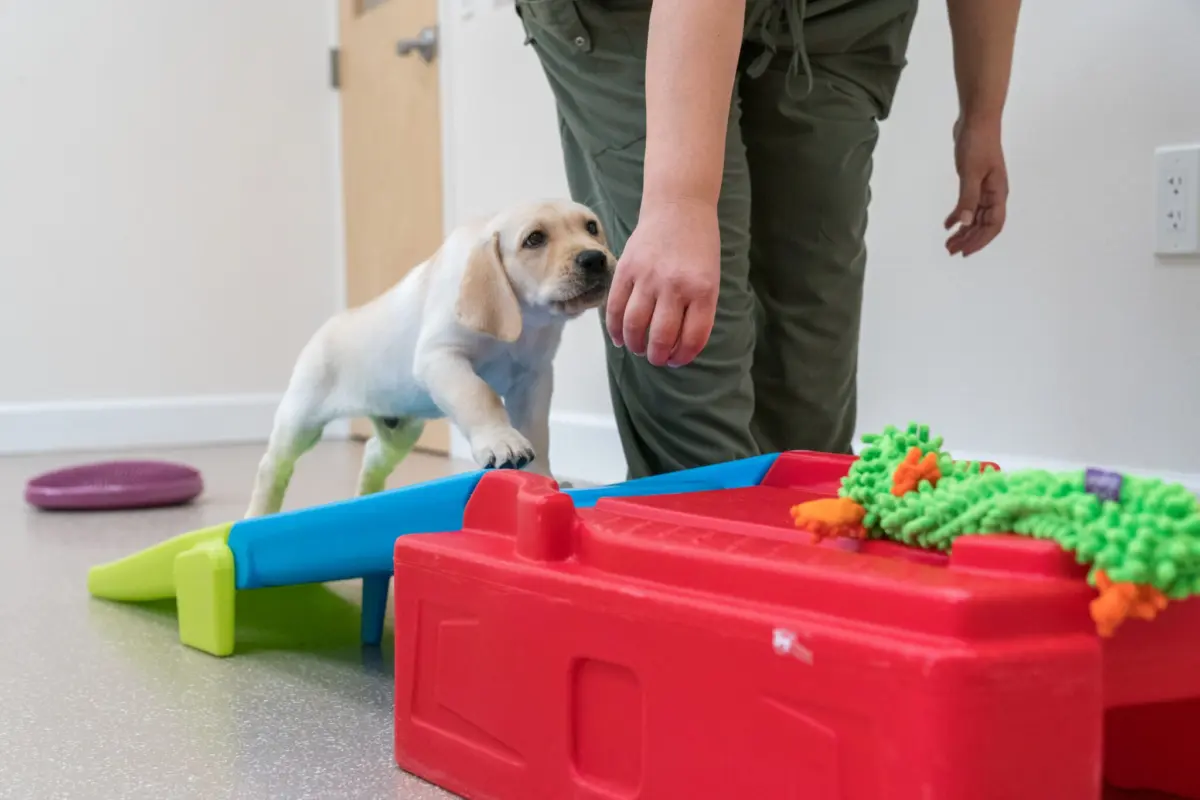
- Foundational Training: By 12 weeks of age, puppies are fully capable of learning basic cues in short, engaging training sessions driven by positive reinforcement. Crate training is introduced to foster early independence and establish comforting daily routines.
4. The Adolescent Stage and Beyond (6 Months to 1 Year)
Just like human children, canine teenagers undergo a turbulent period of hormonal and psychological shifts. The adolescent stage can begin as early as six months of age, marked by boundary-testing and adolescent defiance.

During this timeframe, puppies reach reproductive maturity. Females typically experience their first heat cycle, while males exhibit hormone-driven behavioral adjustments. Concurrently, formal puppy classes and advanced socialization help reinforce manners. By 16 weeks and onward, structured exposure to various species, environments, and community settings ensures that the young dog remains calm, composed, and adaptable in the face of public distractions.
Supporting Context & Metrics: The Science and Mechanics of ENS
To appreciate the value of Early Neurological Stimulation, one must examine its origins and specific execution. Originally developed as the "Bio Sensor" program by the military to improve the performance of canine candidates, ENS has since been adopted by elite service dog organizations worldwide.
How ENS Exercises Work
ENS consists of five specific, gentle tactile exercises administered once daily between days three and sixteen of a puppy’s life. Each exercise is designed to stimulate the neurological system in a way that would not occur naturally in a sedentary neonatal state.
- Tactical Stimulation (Tickling the Foot): Using a cotton-tip applicator, the handler gently tickles the pad of one foot between the toes for approximately 3 to 5 seconds. This stimulates neurological pathways through the extremities.
- Head Held Erect: The puppy is held perpendicularly, with both hands supporting the body, so that its head is pointed straight up toward the ceiling for 3 to 5 seconds.
- Head Pointed Down: The puppy is gently inverted so that its head is pointed downward toward the ground, stimulating the vestibular system.
- Supine Position: The puppy is placed flat on its back, resting in the palm of the handler’s hand, remaining in this vulnerable yet calm position for 3 to 5 seconds.
- Thermal Stimulation: A damp towel that has been cooled in a refrigerator is placed inside a box, and the puppy is placed on top of it (not wrapped in it) for 3 to 5 seconds. This introduces a mild thermal stressor that activates metabolic and physiological adaptive responses.
Quantifying the Benefits
While ENS is only one component of a holistic breeding and rearing program, scientific observations and decades of practical application by working dog organizations indicate several notable physiological and psychological benefits:
- Improved Cardiovascular Performance: Enhanced heart rates and stronger heart contractions.
- Stress Tolerance: Greater adaptability to environmental stress and novel situations.
- Stronger Adrenal Gland Responses: Improved hormonal regulation during high-pressure scenarios.
- Enhanced Immune System Resistance: Anecdotal and observational data suggest that early-stimulated puppies exhibit greater resilience against common illnesses.
However, experts emphasize that ENS is not a silver bullet. A puppy’s ultimate temperament, health, and suitability for working roles are governed by a complex matrix of genetics, maternal care, veterinary health, socialization, environment, and structured training. ENS simply primes the biological canvas so that subsequent learning can take root more effectively.

Official Perspectives: The Philosophy of Dogs Inc.
Organizations dedicated to breeding and training guide and service dogs operate under the understanding that excellence cannot be rushed. Leadership and canine development experts at Dogs Inc. stress that preparing a dog for a life of service requires unwavering intentionality from the moment a litter is conceived.
"Long before a puppy learns to sit, walk on a leash, or one day guide someone through the world, a lot is already happening behind the scenes," notes the canine development team at Dogs Inc. "Early Neurological Stimulation is just one small piece of the bigger picture, but it reflects the thoughtful approach that helps support healthy development from the very beginning."
Service and guide dogs face demands that far exceed those placed on ordinary pets. They must navigate chaotic urban centers, ignore enticing distractions, board crowded public transportation, and maintain absolute emotional equilibrium in the face of unexpected emergencies—all while remaining acutely attuned to the needs of a handler who may be visually impaired, mobility-impaired, or managing invisible disabilities like PTSD.
According to Dogs Inc., these extraordinary capabilities cannot be forged overnight. They are the cumulative result of a structured developmental pipeline:
- Genetic Selection: Pairing parent dogs with proven temperaments, health clearances, and intelligence.
- Neonatal Care & ENS: Maximizing neurological pathways during the first two weeks of life.
- Intentional Socialization: Exposing growing puppies to diverse sights, sounds, and textures between weeks 3 and 12.
- Puppy Raising and Advanced Training: Transitioning young dogs to volunteer puppy raisers who introduce them to public access environments before professional trainers refine their specialized task work.
By investing intensive care into every single milestone, Dogs Inc. ensures that each dog transitions seamlessly from a vulnerable newborn into a confident, life-changing partner.

Future Outlook: The Evolution of Canine Development Protocols
As veterinary science, animal behaviorism, and neurobiology continue to advance, the protocols used to raise working dogs are undergoing continuous refinement. The future of service dog breeding and early intervention points toward even more personalized, data-driven approaches to puppy rearing.
Data-Driven Temperament Tracking
Modern canine development programs are increasingly utilizing behavioral tracking metrics during the first few weeks and months of life. By monitoring how puppies respond to specific environmental enrichments, handlers can identify early indicators of high drive, independent problem-solving, or sensitivity. This data allows trainers to match specific puppies with specialized career paths—distinguishing between those best suited for autonomous guide work, physical mobility support, or complex facility-based service roles—earlier and more accurately than ever before.
Expanding Community Education
Another vital frontier is the education of volunteer puppy raisers and the broader pet-owning public. By demystifying concepts like the neonatal stage, transitional phases, and neurological windows, organizations are empowering everyday dog owners to apply evidence-based handling practices in their own homes. Understanding that early experiences dictate adult behavior encourages proactive socialization and positive reinforcement methods across the entire canine community.
Sustaining the Mission
Ultimately, the journey of a service dog is a testament to the power of deliberate, compassionate preparation. From the fleeting seconds of tactile stimulation in a neonate’s third day of life to the moment a fully trained guide dog proudly harnesses up to lead a handler across a bustling city street, every phase matters.
As organizations like Dogs Inc. continue to refine their methodologies, the horizon shines bright for future generations of working dogs. Through a combination of cutting-edge early intervention, unwavering dedication, and profound respect for canine biology, these programs ensure that the dogs of tomorrow are more than ready to meet the challenges of an ever-changing world—transforming tiny paws into life-changing partners from day one.