
Executive Overview
As global marine ecosystems face unprecedented strain from overfishing, climate change, and pollution, the imperative for sustainable food systems has never been more urgent. Enter Kanagawa-based aquaculture technology startup ARK, which has successfully closed a robust new funding round backed by a consortium of prominent venture capital firms, strategic corporate investors, and major financial institutions.
ARK specializes in the development of modular Recirculating Aquaculture Systems (RAS)—advanced, closed-loop, land-based farming environments that allow diverse fish species to be raised under strictly controlled conditions virtually anywhere on Earth. By decoupling seafood production from traditional open-water marine environments, the company is spearheading a movement to safeguard global food security while simultaneously mitigating the environmental footprint of commercial fisheries.
This newly injected capital will act as a launchpad for ARK’s ambitious international expansion strategy, with a primary focus on the United Arab Emirates (UAE) and Indonesia. Bolstered by governmental backing from Japan—including selection by the Ministry of Economy, Trade and Industry (METI)—ARK is positioning itself as a global ambassador of Japanese aquaculture innovation. With a grand vision encapsulated by CEO Yosuke Kurihara as "creating an eighth sea on Earth," the company is charting a course toward a resilient, decentralized, and sustainable future for seafood production.
Detailed Chronology of Expansion and Funding
ARK’s recent financial milestone is the culmination of a meticulously planned trajectory of technological refinement, strategic government partnerships, and targeted international expansion.
Early 2026: Securing Japanese Government Validation
The momentum leading up to this funding round began earlier in the year when ARK was officially selected by Japan’s Ministry of Economy, Trade and Industry (METI). The government endorsement tasked the company with demonstrating its cutting-edge land-based aquaculture technology in the UAE and Indonesia. This high-profile government-backed project is scheduled to run extensively from November 2026 through April 2028. The initiative is designed to conduct rigorous technical verifications confirming that stable, scalable farmed-fish production can be achieved in vastly different climates and resource-constrained environments.
September 2026: Establishing the Southeast Asian Foothold
In early September, ARK cemented its footprint in Southeast Asia by officially establishing ARK Malaysia. Designed to act as the operational nucleus for the broader Asia-Pacific (APAC) region, this new facility is much more than a regional office. The company has structured ARK Malaysia to serve as a tripartite hub for:
- Commercial Business Operations: Spearheading localized sales, project deployments, and client relations across Southeast Asia.
- Research and Development (R&D): Refining RAS technologies to adapt to tropical conditions and indigenous species.
- Strategic Partnerships: Collaborating with regional stakeholders, academic institutions, and governments to accelerate the adoption of land-based aquaculture throughout the Global South.
The Funding Consortium: Equity and Debt Backing
To fuel this aggressive international roadmap, ARK successfully orchestrated a multi-layered capital raise comprising both equity investments and institutional debt financing.
The equity round drew participation from an impressive roster of venture capital and strategic corporate investors, including:
- UntroD Capital Japan
- Beyond Next Ventures
- BP Capital
- Shizuoka Gas
- Kobashi Holdings
- Ignisia
- Hasegawa Tora Group
- STATION AI
- DEEPCORE Co.
- The W Corporation
In addition to equity financing, ARK secured vital debt funding from traditional financial institutions:
- Resona Bank
- Hokkoku Bank
- Japan Finance Corporation (JFC)
This diversified financial backing not only provides immediate liquidity but also signals strong institutional confidence in ARK’s proprietary RAS technology and commercial viability.
Supporting Context & Metrics: The Mechanics of Modern RAS
To understand why investors are heavily backing ARK, one must examine the mechanics and macro-economic drivers behind land-based Recirculating Aquaculture Systems (RAS).
The Technology: Closed-Loop Efficiency
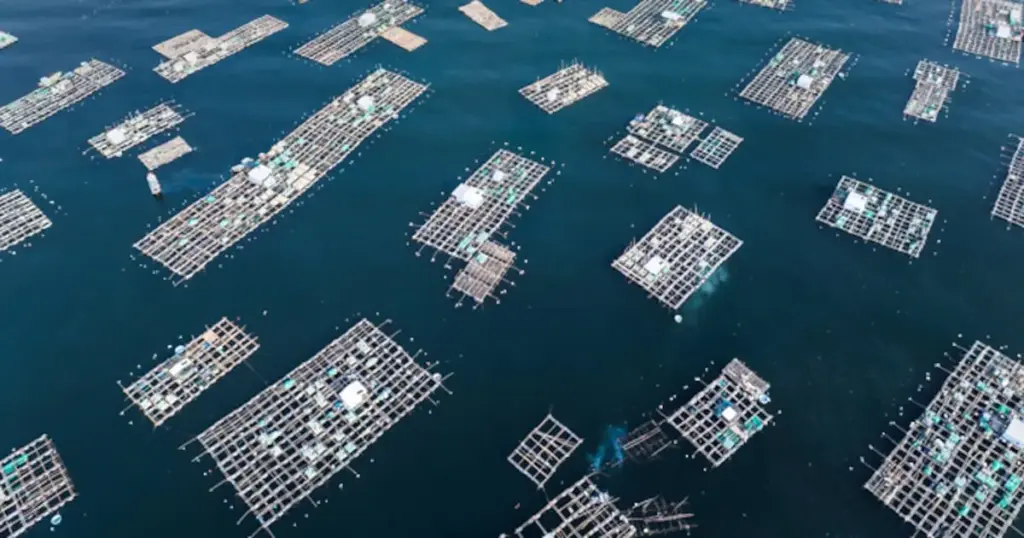
Traditional open-net pen aquaculture exposes fish farms to environmental vagaries, including toxic algae blooms, rising ocean temperatures, sea lice infestations, and industrial pollution. Furthermore, escaping farmed fish can disrupt wild gene pools.
ARK’s modular RAS architecture solves these vulnerabilities through complete environmental isolation:
- Water Conservation: RAS facilities recycle up to 99% of the water used within the system by passing it through advanced mechanical, biological, and ultraviolet (UV) filtration stages.
- Biosecurity: Pathogens and predators are kept entirely at bay, drastically reducing or entirely eliminating the need for therapeutic antibiotics and chemicals.
- Modular Scalability: Unlike massive, fixed-infrastructure land farms that require hundreds of millions of dollars in upfront capital expenditure (CapEx), ARK’s modular approach allows operators to scale capacity incrementally, lowering the barrier to entry for prospective fish farmers.
Macro Drivers: Food Security and Marine Preservation
Global demand for fish protein continues to outpace the natural replenishment rates of wild fisheries. According to international food authorities, over 30% of global fish stocks are currently overfished. At the same time, land-based farming offers complete control over harvest timelines, ensuring a steady, predictable supply of fresh seafood immune to seasonal fluctuations or maritime supply chain disruptions.
Furthermore, land-based aquaculture aligns directly with global sustainability mandates. By producing seafood inland—often near major urban population centers—companies drastically reduce the carbon footprint associated with cold-chain transportation and long-distance cargo shipping.
Strategic Regional Focus: The UAE and Indonesia
ARK’s global deployment strategy targets specific geopolitical and environmental hotspots where food security challenges are acute, and economic support for agricultural innovation is high.
The UAE and the Abu Dhabi Hub
The United Arab Emirates presents an ideal market for advanced land-based aquaculture. Arid climates, scarce freshwater resources, and intense summer temperatures make traditional agriculture and aquaculture nearly impossible. However, the UAE government has made food security a matter of national security, heavily investing in agritech and aquatech solutions.
ARK is strategically zeroing in on Abu Dhabi, capitalizing on its position as a major logistics and trade node along the newly emerging IMEEC (India-Middle East-Europe Economic Corridor).
"Positioned at a key hub along the new IMEEC trade corridor, we will leverage our RAS technology and grouper aquaculture expertise, both proven in harsh environmental conditions, to help build a sustainable seafood supply hub and contribute to food security in the local markets," noted CEO Yosuke Kurihara.
By applying its proprietary expertise in farming species like grouper—which thrive in demanding environmental conditions—ARK intends to prove that high-value seafood can be sustainably cultivated in the Arabian desert.
Indonesia: Island Nations and Decentralized Production
With an archipelago comprising over 17,000 islands, Indonesia relies heavily on marine fisheries for both local nutrition and economic export. However, climate change and localized overfishing threaten these vital coastal resources.
Through its METI-backed demonstration project, ARK aims to deploy its modular RAS units to empower local communities and enterprises in Indonesia to produce reliable, high-quality fish harvests without placing additional pressure on fragile coral reefs and near-shore marine habitats.
Official Statements and Visionary Leadership
The underlying ethos of ARK’s mission is rooted in the democratization of an industry historically dominated by corporate conglomerates or restricted by geographical luck.
"Our modular land-based aquaculture system aims to create a system where diverse fish species can be farmed anywhere by anyone, truly representing an effort to democratize the fisheries industry," stated CEO Yosuke Kurihara during the funding announcement.
Kurihara’s remarks reflect a deliberate pivot toward empowering localized food sovereignty. By lowering the technical hurdles of fish farming through automation and modular design, ARK envisions a decentralized network of independent producers contributing to a unified global food safety net.
Addressing the successful closure of the funding round, Kurihara expressed profound optimism:
"We are delighted, and greatly encouraged, to have successfully closed this funding round with the support of strong partners who share our vision and business strategy. By utilizing the funds raised and working closely with our partners, we will serve as an ark carrying Japan’s aquaculture technologies to the world. Together, we will advance toward our vision of ‘creating an eighth sea on Earth’ and set sail toward a brighter future for both humanity and the oceans."
This sentiment was echoed by representatives of the Japanese government. With land-based aquaculture officially codified as a priority sector under the national growth investment strategy, domestic policy frameworks are actively encouraging innovative agritech startups to expand their horizons internationally.
Future Outlook and Strategic Roadmap
Armed with fresh capital, institutional debt lines, and robust governmental backing, ARK’s immediate and medium-term priorities are clearly defined:
- Talent Acquisition: To support its aggressive overseas scaling, the company plans to aggressively recruit global talent across engineering, marine biology, project management, and international business development.
- R&D and Product Evolution: A portion of the funds will be funneled directly into continuous product refinement, upgrading the efficiency of its modular RAS architecture, and expanding the portfolio of fish species that can be commercially farmed within the system.
- Facility Construction: The development of advanced land-based aquaculture demonstration facilities in the UAE and Indonesia will take center stage as the METI-sponsored projects roll out toward late 2026 and beyond.
- Strengthening the APAC Network: Utilizing ARK Malaysia as the operational bridgehead, the company will deepen commercial ties throughout Southeast Asia, testing and deploying localized business models tailored to the needs of emerging economies in the Global South.
Conclusion
ARK stands at the vanguard of a quiet revolution in global food production. By bridging the gap between advanced Japanese engineering and urgent international food security needs, the company is proving that humanity does not have to choose between economic development and oceanic preservation. As ARK sets sail toward its vision of an "eighth sea on Earth," its modular technology may very well redefine where—and how—our future seafood is grown.