
Executive Overview
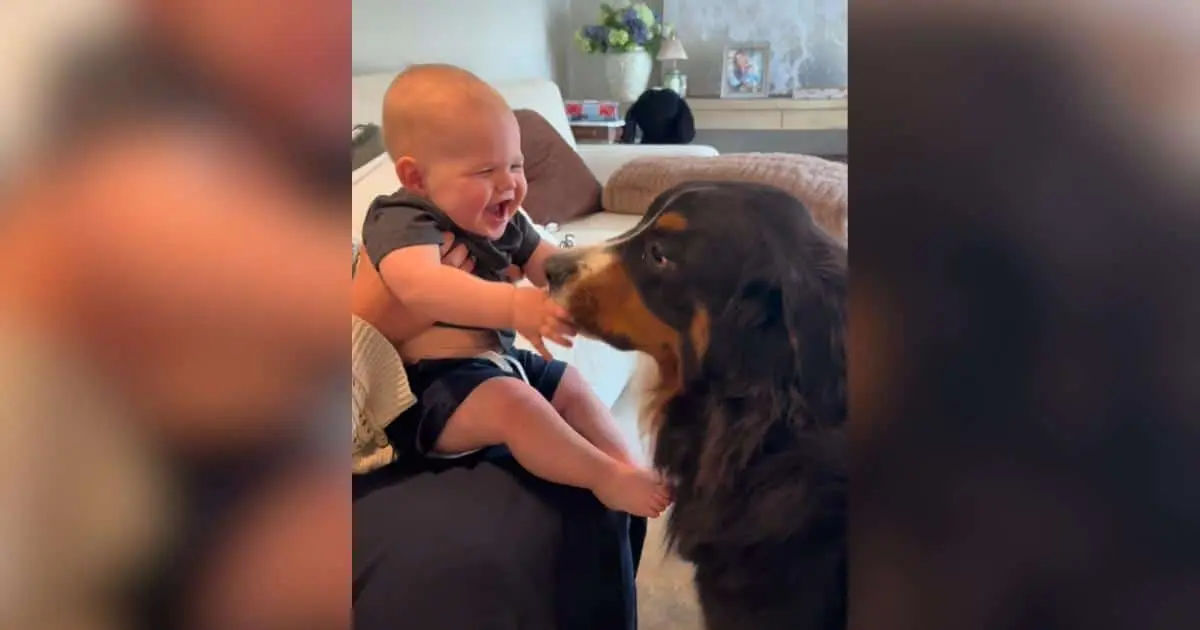
In an era dominated by high-paced digital media and complex social dynamics, the simplest interactions often yield the most profound global resonance. A compelling case study in cross-species bonding has emerged from the digital footprint of a Bernese Mountain Dog named Stallone (documented under the social media handle @stallonetheberner). A recently published video capturing Stallone interacting with his infant human brother has transcended typical lifestyle content, sparking widespread interest in canine behavioral science, early childhood development, and the dynamics of domestic pet integration.
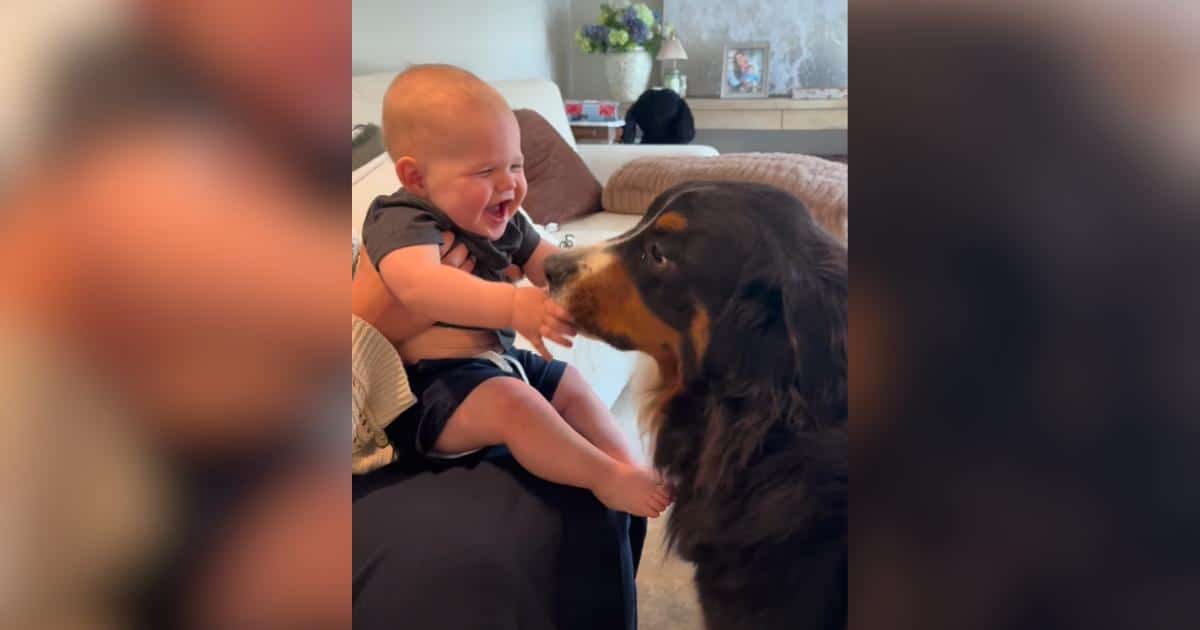
The viral footage depicts a highly coordinated, emotionally resonant interaction: an infant boy, securely supported on a caregiver’s lap, experiencing a series of gentle, tactile greetings from a dog that dwarfs him in both physical stature and mass. Rather than exhibiting signs of overstimulation or fear—common responses in infants confronted with large, unfamiliar stimuli—the infant responds with sustained, deep-bellied laughter and vocalizations of joy.
This analysis examines the developmental trajectory of this specific interspecies relationship, contextualizes the behavioral science of "gentle giant" canine breeds, evaluates the safety and psychological benefits of early pet exposure, and projects the future path of this documented companionship.
Detailed Chronology of a Developing Bond
The viral interaction observed in the family’s latest update is not an isolated event; rather, it represents the culmination of a deliberate, highly supervised, and step-by-step introduction process managed by the infant’s parents. By analyzing the historical archive of their digital documentation, we can reconstruct the chronology of this developing relationship.
[Phase 1: Passive Proximity] ──> [Phase 2: Assisted Tactile Contact] ──> [Phase 3: Active Reciprocal Play]
(Static supervision during       (Direct, parentally guided contact;     (Spontaneous laughter, mutual
  infant floor-play)               finger-licking & scent discovery)       feedback, and shared joy)
Phase 1: Passive Proximity and Baseline Establishment
In the initial months of the infant’s life, the family established a baseline of passive proximity. Early video records show Stallone positioned at a respectful distance during the infant’s supervised floor-play sessions. During this phase, the primary objective was desensitization:
- For the Dog: Acclimating to the unpredictable high-pitched vocalizations, erratic limb movements, and distinct scent profile of a newborn human.
- For the Infant: Developing visual familiarity with a large, dark, and highly active physical presence within his immediate domestic environment.
During this stage, Stallone exhibited low-arousal behaviors—such as lying down with his head resting on his paws—which signaled to the family that the dog did not perceive the new family member as a threat, a toy, or a prey object.
Phase 2: Assisted Tactile Contact and Active Olfactory Investigation
As the infant reached a developmental stage characterized by increased neck strength and sensory curiosity, the parents initiated structured, hand-held introductions. In one documented milestone from earlier this year, the father held the infant securely while allowing Stallone to approach and gently lick the baby’s fingers.
This stage served several developmental purposes:
- Olfactory Mapping: Licking is a primary sensory tool for canines, allowing Stallone to gather chemical data and reinforce his recognition of the baby as a member of the family pack.
- Sensory Habituation: For the baby, the damp, warm sensation of a canine tongue provided an intense tactile stimulus. Initial caution quickly gave way to physical smiles, marking the transition from sensory processing to emotional pleasure.
Phase 3: Active Reciprocal Engagement and Vocalization
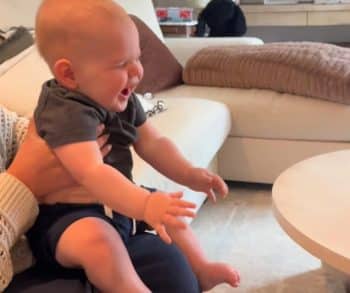
The latest viral video represents the third phase of their relationship: active, self-reinforcing reciprocal engagement. The baby, now old enough to sit upright with minimal support on a lap, is no longer merely a passive recipient of the dog’s presence.
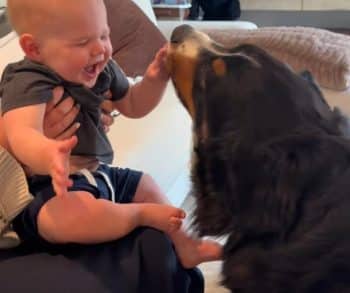
When Stallone leans in to deliver soft, localized licks to the infant’s hands and face, the baby responds with immediate, intense laughter. This vocalization acts as an auditory reward for Stallone, whose calm demeanor remains unbroken. Instead of escalating into hyper-excitement—which could pose a physical hazard given the dog’s weight—Stallone maintains a controlled, gentle posture, returning periodically to deliver further affection in response to the baby’s giggles.
Supporting Context & Metrics
To understand why this interaction is both highly successful and globally appealing, it is necessary to examine the underlying biological, behavioral, and digital metrics that define it.
Breed Analysis: The Bernese Mountain Dog Temperament
The Bernese Mountain Dog (Berner Sennenhund) is a working breed originating from the Swiss Alps. Historically used as draft animals, herders, and farm guardians, the breed’s physical and psychological blueprint is uniquely suited for family integration.
| Physical & Behavioral Attribute | Breed Standard Metric | Relevance to Infant Interaction |
|---|---|---|
| Average Adult Weight | 80–115 lbs (Male), 70–95 lbs (Female) | Demands high levels of physical control and low impulse activity around fragile individuals. |
| Temperament Classification | "Good-natured, self-assured, docile" | Reduces the likelihood of startle-reflexes or defensive aggression. |
| Arousal Threshold | High (Slow to anger or overexcite) | Enables the dog to tolerate sudden infant screams or accidental physical grabs without reacting. |
| Affiliation Drive | Exceptionally High | Promotes a strong desire to remain in close physical proximity to human pack members. |
The "gentle giant" phenomenon is not merely an affectionate colloquialism; it is a selected genetic trait. Bernese Mountain Dogs are characterized by low reactivity to external stimuli. In the viral footage, Stallone’s body language—soft eyes, relaxed ears, slow tail wags, and a loose posture—exemplifies the ideal breed temperament when interacting with delicate family members.
The Science of Pediatric Sensory Development
From a pediatric standpoint, supervised interactions with domestic animals offer profound developmental advantages:
- Immunological Resilience: Epidemiological studies consistently suggest that children exposed to high-shedding pets during their first year of life show a lower incidence of developing asthma, allergies, and eczema. The transfer of benign environmental microbes from the dog to the child helps prime the infant’s developing immune system.
- Cognitive and Emotional Growth: Laughter is one of the earliest forms of human communication. By reacting to Stallone’s physical touch with laughter, the baby is practicing cause-and-effect reasoning. He learns that his vocal expressions of joy are met with continued, non-threatening interaction from his canine companion.
Official Statements and Public Reception
The public reaction to the video shared by @stallonetheberner highlights a collective appreciation for responsible pet ownership and positive animal-child relationships.
Public Commentary and Community Insights
Social media commentators, including veterinary technicians and early childhood educators, have pointed out the exemplary nature of the interaction. One prominent comment noted:
"The magic of this video isn’t just the baby’s laugh; it’s the absolute control and gentleness of the dog. Bernese Mountain Dogs have an innate understanding of their own size when they are well-trained. This is a masterclass in family dog socialization."
Other viewers highlighted the unique pairing, observing that the combination of a massive, fluffy dog and a tiny, squealing baby creates an aesthetic and emotional contrast that is universally appealing.
The Golden Rules of Infant-Dog Interactions
While the video depicts an idyllic scene, animal behaviorists emphasize that such relationships do not happen by accident. Professional training organizations have used the video as an educational opportunity to remind the public of the essential rules governing child-pet interactions:
- Constant Active Supervision: An adult must always be within arm’s reach. In the video, the infant is held securely on a woman’s lap, ensuring immediate physical intervention should either the dog or the baby become overwhelmed.
- Respecting Canine Boundaries: Dogs must always have an escape route. Stallone is not cornered; he actively chooses to approach and can step back whenever he desires.
- Reading Micro-Expressions: Parents must learn to recognize subtle signs of stress in dogs—such as yawning, lip-licking, or showing the whites of their eyes (whale eye). Stallone displays none of these signs, confirming his genuine comfort in the situation.
Future Outlook: The Evolution of a Lifelong Friendship
As the infant transitions from infancy into toddlerhood, the dynamics of his relationship with Stallone will inevitably evolve. The family’s ongoing documentation offers a rare longitudinal look at how a child and a giant dog grow together.

                  [ TODDLERHOOD & BEYOND ]
                             │
         ┌───────────────────┴───────────────────┐
         ▼                                       ▼
[Physical Mobility]                     [Cognitive Empathy]
• Learning to walk alongside Stallone   • Learning gentle touch & caretaking
• Interactive play (fetch, basic commands)• Developing deep emotional security
Anticipated Developmental Milestones
Over the next twelve to twenty-four months, observers can expect to see several key shifts in their daily routine:
- The Transition to Active Play: Once the child begins crawling and walking, he will transition from a passive participant to an active play partner. This will allow for interactive games, such as throwing toys or learning to give simple hand commands, which will further stimulate Stallone’s cognitive engagement.
- Developing Empathy and Responsibility: Growing up alongside a pet teaches children early lessons in empathy, body language interpretation, and caretaking. The toddler will learn the importance of gentle touch, respecting a dog’s quiet time, and eventually participating in feeding and grooming routines.
Conclusion: A Beacon of Positive Digital Content
The ongoing story of Stallone and his little brother serves as a heartening reminder of the profound bonds that can exist between humans and animals when nurtured with patience, training, and respect. In a digital landscape often characterized by division, the simple, unfiltered joy of a baby laughing at the gentle kisses of a giant dog remains a universal language—one that promises to keep audiences captivated for years to come.