
Executive Overview
In an era where global agriculture faces the dual pressures of a burgeoning population and the accelerating impacts of climate change, technological innovation is no longer just a luxury—it is an absolute necessity. Enter Qarbotech, an ambitious agritech startup pioneering a radical approach to maximizing crop productivity. At the heart of the company’s innovation is QarboGrow, a proprietary photosynthesis enhancer formulated from carbon quantum dots synthesized from agricultural waste.
Unlike traditional fertilizers or chemical growth regulators that focus on enriching the soil, Qarbotech’s technology operates at the intersection of quantum physics and plant biology. Designed to capture and convert previously underutilized wavelengths of sunlight into light energy that plants can readily absorb, QarboGrow aims to dramatically upgrade the natural engine of plant growth: photosynthesis.
However, bringing a quantum-level agricultural breakthrough from the laboratory to the muddy realities of global farming has not been without its complexities. While early field trials have yielded staggering results—including yield increases in rice ranging from a modest 10% to an astonishing 180%—the startup has also confronted a significant scientific puzzle: highly variable performance outcomes across different geographies, soil types, and farming systems.
Rather than shying away from these inconsistencies, Qarbotech is confronting them head-on. Armed with a series of recent private and government grants, the company is embarking on an intensive, data-driven mission to decode the complex agronomic variables that dictate how plants respond to enhanced light absorption. From analyzing soil microbiota and nutrient interactions in Southeast Asian rice paddies to studying highly optimized sugar beet operations in the American Midwest, Qarbotech is laying the groundwork for a truly global rollout. Currently conducting pilots in more than 18 countries—spanning the UK, China, Japan, Indonesia, and the US—the startup’s ultimate goal has shifted. It is no longer merely about proving that carbon quantum dots can boost photosynthesis; it is about precisely engineering the agronomic conditions required for farmers to unlock their maximum economic value.
Detailed Chronology: From Agricultural Waste to Global Agritech Pioneer
To truly understand the trajectory of Qarbotech, one must trace the evolution of its core technology from conceptual materials science to field-tested agronomy.
Phase 1: The Genesis of Carbon Quantum Dots in Agriculture
The journey began with a fundamental question: Can we help plants harness light that normally goes to waste? Standard chlorophyll absorbs blue and red wavelengths of the solar spectrum relatively efficiently, but significant portions of sunlight—particularly green and underutilized spectral bands—are either reflected or passed through plant tissues without contributing to biomass accumulation.
To address this, Qarbotech’s scientists turned to carbon quantum dots (CQDs)—nanoparticles possessing unique photoluminescent properties. By utilizing agricultural waste as a sustainable, low-cost carbon precursor, the company developed a scalable method to produce CQDs that can be safely applied to plant leaves. Once absorbed, these nanoparticles act as microscopic light transformers, converting underutilized light wavelengths into fluorescence that chlorophyll can actively utilize for photosynthesis.
Phase 2: Breakthroughs and Anomalies in Southeast Asian Rice Paddies
Initial commercial and experimental validations of QarboGrow focused heavily on staple crops in Southeast Asia, most notably rice. Rice production in this region is vital for food security, yet it often relies on traditional, highly variable farming methodologies.
During early trials, QarboGrow delivered breathtaking results. In certain plots, rice yields surged by anywhere from 10% to an eye-watering 180%. For a small startup, these numbers were both a validation of the technology’s immense potential and a source of operational confusion. Why would one field experience a modest 15% bump while a seemingly identical field a few miles away achieved near-tripled yields?
Chief Executive Chor Chee Hoe and his team recognized that quantum-enhanced photosynthesis does not occur in a vacuum. Plant biology interacts dynamically with external variables, creating a complex web of cause-and-effect that raw yield data alone could not explain.
Phase 3: The Data-Driven Pivot and Government Grants
Recognizing that proof of concept was no longer the primary hurdle, Qarbotech initiated a strategic pivot. In late 2023 and into 2024, the company began aggressively pursuing government and private institutional grants to fund deep-dive agronomic studies.
The immediate objective was to build a comprehensive data pipeline that captures the "nitty-gritty" details of farm operations. This phase involved launching controlled studies—such as a dedicated research program focused on oil palm—to isolate how QarboGrow interacts with specific fertilizer regimes, soil microbiomes, irrigation schedules, and localized microclimates.
Phase 4: US Expansion and Cross-Continental Trials
Armed with deeper analytical frameworks, Qarbotech made its first major strategic push into Western markets, securing trials in the United States centered on sugar beet production. However, this expansion immediately revealed new regional dynamics.
Early US trials showed consistent improvements in internal sugar content, yet the dramatic, headline-grabbing yield spikes observed in Southeast Asian rice fields were notably muted. This discrepancy forced the startup to re-evaluate its hypotheses regarding baseline farming efficiency. Rather than viewing the muted US gains as a failure, Qarbotech interpreted them as a symptom of highly sophisticated, pre-optimized Western agricultural systems.
To bridge this transatlantic gap, Qarbotech partnered with agronomic research institutions in key agricultural hubs such as Illinois and Minnesota. Today, these ongoing trials are helping the company map out how high-tech nutrient management systems interact with quantum-enhanced light absorption, setting the stage for the company’s current footprint across more than 18 countries worldwide.
Supporting Context & Metrics: Unpacking the Variables of Crop Yield
The agricultural technology sector is littered with proprietary additives and miracle sprays that promised the world in controlled laboratory settings only to fail miserably in real-world conditions. Qarbotech’s transparency regarding the variable performance of QarboGrow sets it apart, underscoring the immense complexity of biological systems.
The Physics and Biology of Light Conversion
Photosynthesis is fundamentally an energy-conversion process. Photons strike chlorophyll molecules, initiating a chain of electron transport reactions that convert carbon dioxide and water into glucose and oxygen. However, the solar spectrum is broad, and natural plant pigments cannot capture every photon equally.
By applying carbon quantum dots derived from agricultural waste, Qarbotech introduces a secondary fluorophore onto the leaf surface. These dots absorb photons in spectral regions that chlorophyll ignores and re-emit them at wavelengths that chlorophyll can readily absorb. In theory, this increases the quantum yield of the leaf, raising the total volume of chemical energy produced per unit of incoming sunlight.
The Mystery of the 10% to 180% Yield Spread
In practical agriculture, however, increased photosynthetic capacity does not automatically translate into a linear increase in harvested yield. A plant may produce more sugars via enhanced photosynthesis, but whether those sugars are channeled into grain production, root development, or vegetative growth depends entirely on environmental and physiological bottlenecks—or "limiting factors."
[Incoming Sunlight]
       │
       ▼
[QarboGrow Carbon Quantum Dots] ──► (Converts Underutilized Wavelengths)
       │
       ▼
[Enhanced Chlorophyll Absorption] ──► (Higher Photosynthetic Rate)
       │
       ├────────────────────────────────┐
       ▼                                ▼
[Optimized Farming Systems]     [Sub-Optimal Conditions]
(e.g., US Sugar Beet Trials)    (e.g., SEA Rice Over-Fertilization)
       │                                │
       ▼                                ▼
- Consistent Quality Gains      - Massive Yield Surges (up to 180%)
- Modest Volumetric Spikes      - High Variability / Bottlenecks
As CEO Chor Chee Hoe noted, the extreme variance seen in Southeast Asian rice trials—ranging from 10% to 180%—is tied directly to background operating procedures:
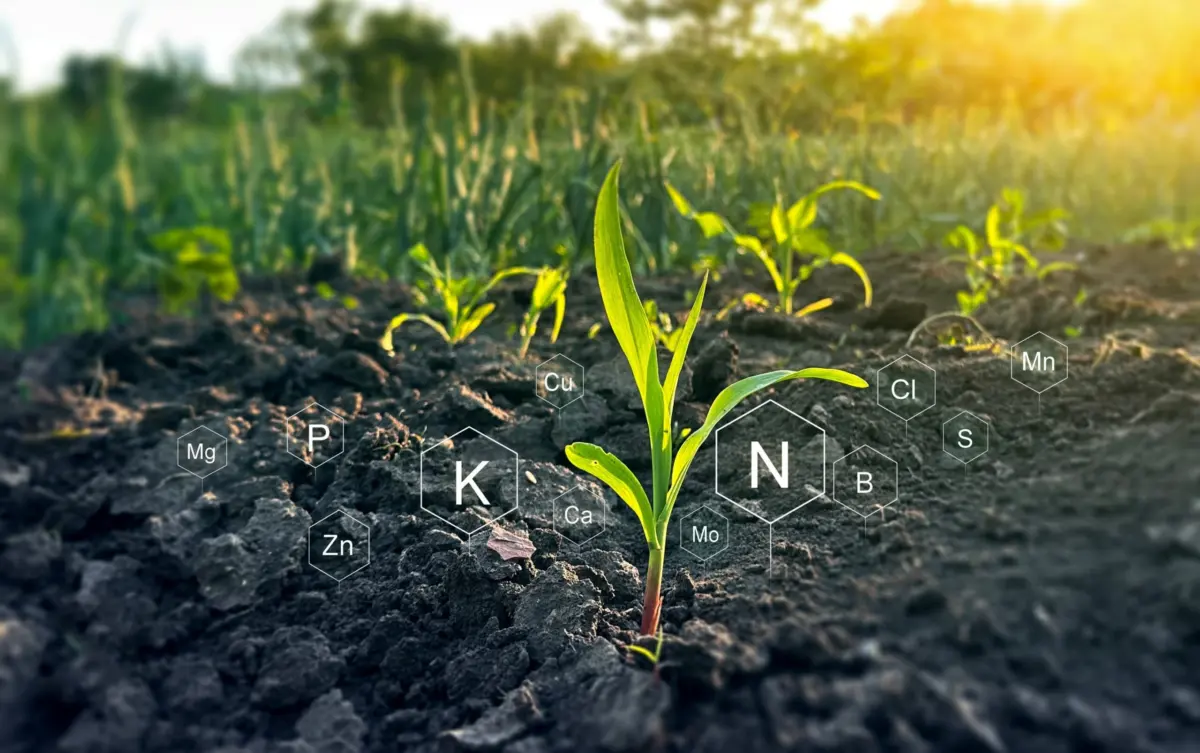
- Nutrient Availability: If a plant experiences a severe nitrogen, phosphorus, or potassium deficiency, simply giving it more solar energy via enhanced photosynthesis is like putting a high-performance turbocharger on an engine starved of fuel. The biological machinery cannot process the extra energy effectively.
- Microbial Activity: Soil health and rhizosphere microbiomes dictate nutrient uptake efficiency. Farms with rich, biologically active soils respond differently to foliar amendments than depleted soils.
- Fertilizer Over-Application Dynamics: In many developing agricultural regions, farmers tend to over-apply chemical fertilizers. When QarboGrow is introduced into an environment with a surplus of available nutrients, the unlocked photosynthetic energy can suddenly supercharge growth, leading to those extreme 180% yield anomalies. Conversely, in ultra-optimized Western systems where nutrient inputs are already calibrated to near-perfection, the baseline is so high that adding a photosynthesis enhancer yields incremental refinements—such as elevated sugar content in beets—rather than massive tonnage increases.
Global Expansion Metrics at a Glance
- Total Pilot Footprint: Active trials across more than 18 countries.
- Key Geographic Markets: United Kingdom, China, Japan, Indonesia, and the United States.
- Primary Crops Studied: Rice (Southeast Asia), Oil Palm (Regional plantation studies), Sugar Beet (US Midwest).
- Core Technology Matrix: Carbon quantum dots sourced entirely from upcycled agricultural waste streams.
Official Statements & Industry Insights
The strategic evolution of Qarbotech is best understood through the direct perspectives of its leadership team, who view data acquisition as the definitive frontier for modern agritech adoption.
Reflecting on the challenges of product performance and regional variability, CEO Chor Chee Hoe offered candid insights into the realities of scaling an agritech innovation:
"Although we are very confident that our technology works, there are a lot of other growth factors that can somewhat limit the maximum performance of our product."
Addressing the critical gaps in field-level intelligence that currently hinder predictable outcomes, Chor emphasized the need to look beyond the bottle and examine the entire farming ecosystem:
"We still have a lot of gaps in our data collection. The missing data is the nitty-gritty details of each farmer’s standard operating procedures. The nutrients and microbes they use, as well as factors such as soil content and different soil varieties. All these different parameters and factors impact the end outcome for farmers."
Detailing the strategic pivot toward comprehensive agronomic research—such as ongoing oil palm studies—Chor outlined the company’s long-term vision for compatibility and optimization:
"We want to know what the complementing SOP will be to maximise our product performance. We want to understand what the limiting factors that would not give the optimum outcome."
Summarizing the core operational challenge facing the startup as it transitions from a science experiment to a global commercial entity, Chor added:
"The challenge now is to get this right. Like, what kind of combination of their current usage of products will help them maximise the outcome? We are going to spend a little more of our resources to study the nutrient elements and how, together with our photosynthesis enhancer, they can strike a balance to maximize yield outcomes."
Future Outlook: The Road Ahead for Quantum Agriculture
As Qarbotech looks toward the horizon, its trajectory offers a fascinating case study in the maturation of agricultural biotechnology. The initial hype surrounding breakthrough innovations often assumes a universal plug-and-play utility across the world’s diverse farming landscapes. Qarbotech’s journey illustrates a more mature, scientifically rigorous reality: true agricultural disruption requires deep contextualization.
Overcoming the Data Deficit
The coming years will see Qarbotech transition heavily from a product-sales model to an integrated advisory-and-inputs model. By pooling data from ongoing trials in Illinois, Minnesota, the UK, China, and beyond, the startup aims to build predictive algorithms or standardized application guidelines. These guidelines will advise farmers not just when and how to spray QarboGrow, but how to calibrate their broader fertilizer and soil management programs to accommodate the surge in photosynthetic energy.
Sustainability and the Circular Economy
Beyond sheer yield metrics, the utilization of agricultural waste to produce carbon quantum dots positions Qarbotech squarely within the burgeoning circular bioeconomy. As global regulatory bodies and consumer markets demand lower carbon footprints from the agricultural sector, inputs that are manufactured from waste products and actively sequester or efficiently utilize carbon will command a significant market advantage.
Scaling the Global Footprint
With pilots active in over 18 countries, the immediate test for Qarbotech will be its ability to translate localized research into localized commercial success stories. Whether helping sugar beet growers in the American Midwest optimize sugar accumulation or assisting Southeast Asian rice farmers in stabilizing hyper-variable harvests, the company’s ultimate success will not be measured by the brilliance of its quantum dots in a physics lab. Rather, it will be measured by the practical, dependable value delivered to farmers working under the open sky, dependent on the unpredictable whims of weather, soil, and sun.