
Executive Overview
Agricultural methane emissions remain one of the most stubborn bottlenecks in the global race to mitigate climate change. While international climate frameworks have increasingly targeted the greenhouse gas—which boasts a warming potential significantly higher than carbon dioxide over a 20-year timeline—efforts to curb emissions from core agricultural sectors like rice cultivation and livestock are hitting a formidable wall. According to leadership at the Global Methane Hub, the primary obstacle is no longer a lack of theoretical ideas, but a severe deficiency in scalable, economically viable, and field-tested solutions.
Current interventions, experts warn, fall drastically short of what is required to achieve meaningful emissions reductions without destabilizing global food security or eroding farmer livelihoods. Challenging the prevailing optimism that existing technologies merely require broader adoption, agricultural strategists argue that the world fundamentally lacks the toolkit needed to transform farming systems at scale. This realization has triggered a strategic pivot: major philanthropic and scientific initiatives are now channeling substantial capital into multi-pronged research accelerators. By simultaneously targeting plant genetics, soil amendments, agronomic practices, and economic incentives, the agricultural sector is attempting to engineer a new generation of climate-smart farming tools before time runs out.
Detailed Chronology and Strategic Evolution
The realization that legacy agricultural practices are insufficient to meet international climate targets has evolved over decades of trial, error, and incremental research.
The Three-Decade Stalemate in Rice Systems
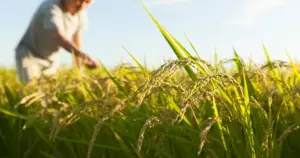
For more than thirty years, agricultural scientists have promoted alternate wetting and drying (AWD) as a primary defense against methane emissions in flooded rice paddies. The biological mechanism is undisputed: by periodically draining water from fields, oxygen is introduced into the soil, suppressing the methanogenic bacteria that thrive in anaerobic, flooded environments.
Yet, despite decades of academic study and international advocacy, AWD has failed to make a systemic dent in global emissions. The chasm between controlled research plots and messy, real-world farm environments has paralyzed adoption. Non-level fields, fractured irrigation infrastructure, and unpredictable seasonal rainfall make water management a logistical nightmare for ordinary farmers. When monsoon rains hit, fields cannot be drained, rendering the protocol useless.
From Fragmented Trials to the $100 Million Accelerator
Recognizing that isolated practices like AWD and biochar applications suffer from fragmented data and a lack of regional reproducibility, the agricultural research community has shifted toward coordinated, large-scale funding models.
Following a successful blueprint established by its Enteric Fermentation Accelerator program—which mobilized over $200 million for livestock methane research and deployed more than $120 million into active projects—the Global Methane Hub launched its $100 million Rice Methane Innovation Accelerator. This initiative marks a structural turning point. Rather than betting on a single silver bullet, the accelerator has codified a comprehensive strategy aimed at halving methane emissions from global rice farming by 2040. The initiative focuses on a synchronized five-pillar research agenda, moving past small-scale academic trials to build standardized, regionally validated deployment protocols.
Supporting Context & Metrics: The Anatomy of Agricultural Methane
To understand why current mitigation strategies are stalling, one must examine the intersection of agronomic science, economic incentives, and environmental metrics.
The Scale of the Challenge
Rice paddies and ruminant livestock are responsible for a substantial share of anthropogenic methane emissions. Rice cultivation alone accounts for roughly 12% of global agricultural methane emissions, feeding billions of people while operating within ancient, resource-intensive ecosystems. Livestock enteric fermentation—the digestive process of cattle, sheep, and goats—contributes an even larger share.
However, scaling solutions across these sectors requires navigating a complex web of environmental variables:
- Soil Microbiomes: Soil amendments like biochar and specialized microbial treatments show localized promise in laboratory and pilot settings, but their efficacy fluctuates wildly depending on soil mineral composition, local temperature, and hydrological cycles.
- Geographic Fragmentation: Unlike industrial point sources, agricultural emissions are diffuse, generated by millions of independent smallholder and commercial farmers operating under vastly different socioeconomic constraints.
- The Productivity Paradox: Every proposed intervention must pass a rigorous operational test: it cannot reduce crop yields or animal productivity, as farmers operate on razor-thin profit margins where any harvest loss threatens economic survival.
The Missing Market Architecture
Perhaps the most critical structural barrier identified by agricultural economists is the complete absence of a market valuation for methane reduction. Hayden Montgomery, agriculture programme director at the Global Methane Hub, points out the glaring economic disconnect:
"Why would a farmer apply a certain compound to the soil because it reduces methane? Why would they give an animal a feed additive to reduce methane? What is the direct benefit to the farmer? There’s no productivity gain. It costs money."
Without direct economic incentives, regulatory mandates, or robust consumer demand pulling low-methane agricultural products off supermarket shelves, voluntary adoption remains a pipedream. Current market signals are largely confined to isolated carbon-market pilot projects—narrow in geographic scope and insufficient to drive a global agricultural transition. Unless governments, private food conglomerates, and conscious consumers establish a financial architecture that rewards low-emission farming, farmers will remain economically cornered.
Official Statements and Industry Insights
The discourse surrounding agricultural decarbonization is increasingly dominated by realists who caution against greenwashing and unproven technologies.
Hayden Montgomery has been blunt in his assessment of industry optimism, challenging the narrative that solutions are already sitting on the shelf waiting for distribution:
"I know a lot of the time there’s a lot of positivity towards ‘we have the solutions; we just need to adopt them’. I don’t subscribe to that. If you look at the evidence behind them and the applicability of the different systems, it just doesn’t get us where we need to get to. There’s no question – we need more solutions."
Echoing these operational hurdles, Woo Wei Li, senior programme officer for agriculture, highlighted the stark realities of implementing water management protocols on the ground:
"We know AWD works. Everybody agrees that if you drain the field more, you’re going to have less methane. But getting farmers to implement that protocol is difficult because of logistical and physical environment challenges. You have non-level fields, irrigation issues and all these practical constraints. When it rains, you can’t drain the field. Those are the very practical, real-world challenges. That’s the problem with AWD."
Woo also addressed the fragility of the data supporting emerging soil interventions, noting that biochar and similar amendments suffer from a lack of macro-level harmonization:
"The studies aren’t done at a large enough scale to show that if you apply the practice in one region and another region, you’ll get the same outcome. There are a lot of promising studies, but they don’t knit together in a coherent enough way."
To counteract these pitfalls, Montgomery emphasizes that future interventions must be rooted in uncompromised scientific integrity to protect agricultural communities:
"First and foremost, we want to make sure it’s done in a way that has scientific rigour. We can’t be playing with farmers’ livelihoods and proposing solutions that aren’t real."
Future Outlook: A Multi-Pronged Horizon
As the global agricultural community looks toward 2040 and beyond, the path forward relies on diversification, stacking interventions, and building institutional trust.
The strategy deployed by the Global Methane Hub avoids betting the house on any single technology. Instead, the upcoming years will see parallel, synchronized investments across five critical research fronts: agronomic practices, specialized soil amendments, advanced plant genetics, targeted methane-reducing agents, and precise measurement and verification tools.
By stacking these solutions—for instance, combining drought-resistant, low-methane rice varieties with precision site-specific crop nutrition and localized soil amendments—researchers hope to compound incremental gains into a cumulative 50% emissions reduction. Crucially, early-action initiatives will focus on quick-win areas where foundational data already exists, such as optimizing site-specific fertilizer use, allowing for rapid, scientifically backed deployment.
Ultimately, technological innovation alone will not suffice. The long-term success of the agricultural transition hinges on closing the market feedback loop. For sustainable farming practices to become the global baseline, consumer preference must evolve into supermarket demand, corporate supply chains must absorb compliance costs, and public policy must establish transparent, scalable economic signals. Until methane possesses a recognized market value, the transition will remain an uphill battle against economic inertia. Through coordinated global acceleration funds, rigorous cross-disciplinary research, and an unflinching look at operational realities, the agricultural sector is finally building the comprehensive framework required to secure both our climate and our food supply.