
Executive Overview
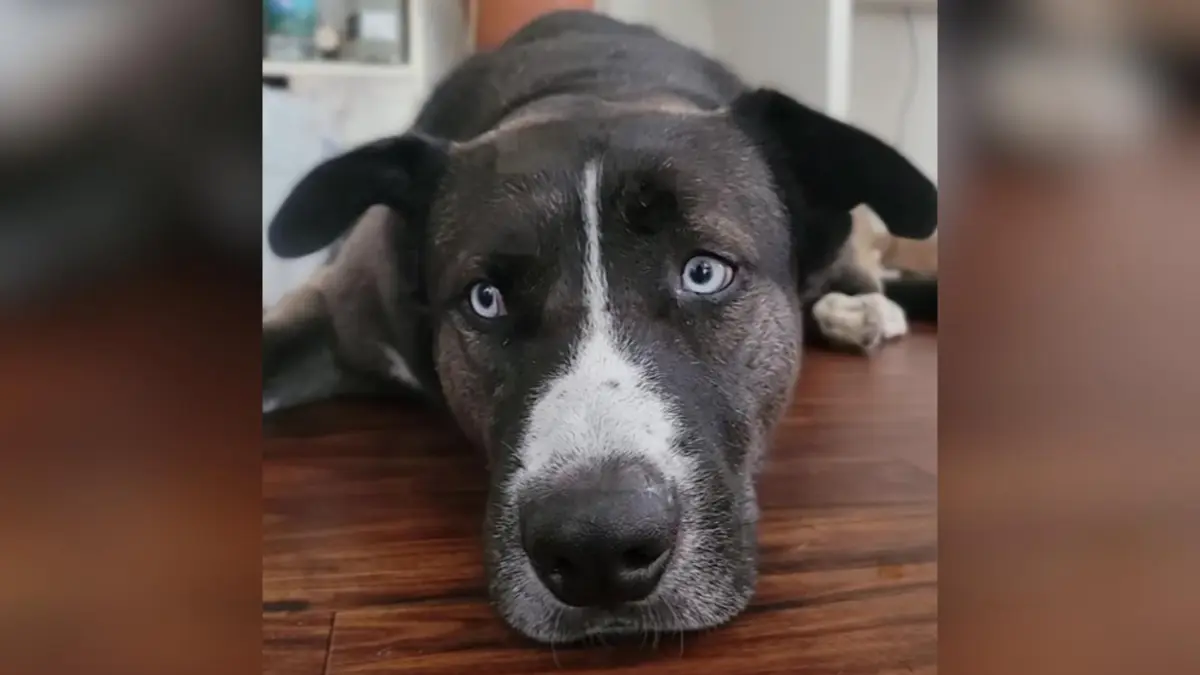
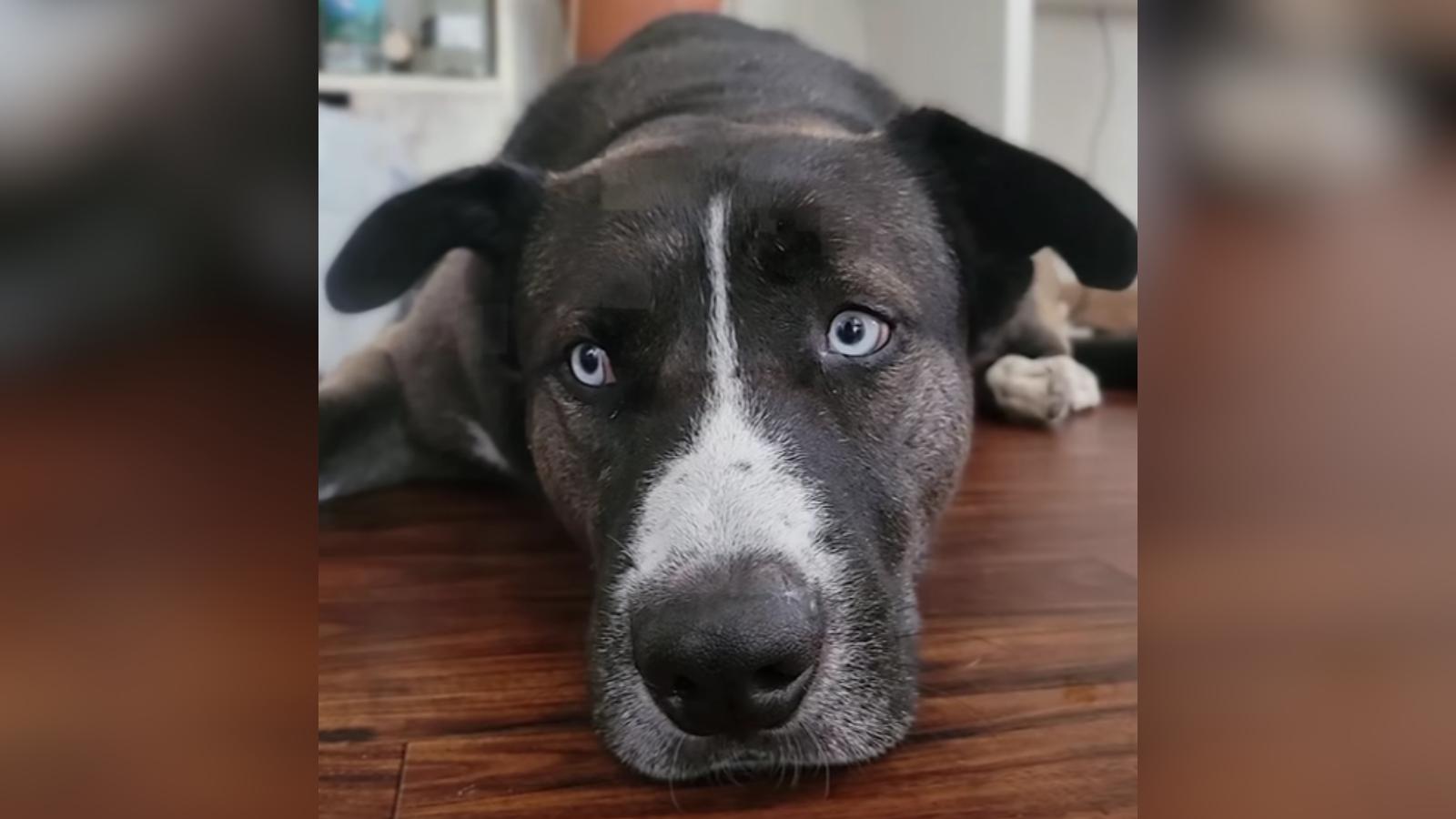
The narrative of animal rescue often focuses on the initial rescue or the moment of adoption, but the transitional period in between—frequently defined by unaddressed trauma, behavioral retreat, and repeated returns—remains one of the most critical challenges in animal welfare. The story of Porter, a dark-coated rescue dog with striking eyes, exemplifies the systemic complexities of canine rehabilitation.
Before securing a permanent home, Porter experienced three consecutive adoption failures. Shelter staff, acknowledging his difficulty in forming interpersonal attachments, cautioned prospective adopters that his prospects for traditional bonding were low. However, what appeared to be chronic emotional detachment was actually a complex response to past physical trauma and environmental neglect.
The turning point occurred when an adopter committed to an open-ended adjustment protocol, prioritizing space and observation over immediate expectations of affection. Months into this transition, a routine veterinary evaluation uncovered physical evidence of historical abuse, prompting an inquiry into Porter’s origins. This search brought to light a hidden relationship: a shelter employee who had originally spent months earning Porter’s trust in an abandoned yard was the very individual overseeing his care through every return.
This comprehensive report details Porter’s behavioral rehabilitation, analyzes the systemic factors contributing to rescue returns, and highlights the crucial role of trauma-informed care in animal welfare.
Detailed Chronology
+-----------------------------------------------------------------------------------+
| CHRONOLOGY OF PORTER'S REHABILITATION                                             |
+-----------------------------------------------------------------------------------+
| 1. RESCUE PHASE                                                                   |
|    - Discovered malnourished & injured in an abandoned yard.                     |
|    - Shelter worker spends months earning his trust prior to intake.              |
+-----------------------------------------------------------------------------------+
| 2. SHELTER & FAILED ADOPTIONS                                                     |
|    - Undergoes three separate adoptions and subsequent returns due to withdrawal. |
|    - Staff advises next adopter: "Give him time before deciding."                 |
+-----------------------------------------------------------------------------------+
| 3. HOME INTEGRATION & FLIGHT RISK                                                 |
|    - Exhibits social avoidance; stays by balcony and doorframes.                  |
|    - Slips out door; recovered 2 blocks away staring down the road.               |
|    - Adopter rejects temptation to return him, doubling down on patience.         |
+-----------------------------------------------------------------------------------+
| 4. BREAKTHROUGH & CLINICAL DISCOVERY                                              |
|    - Porter places head on adopter's knee; engages in fetch at secluded park.     |
|    - 12-Month Vet Visit: Old physical injuries discovered.                        |
+-----------------------------------------------------------------------------------+
| 5. UNCOVERING THE PAST & PERMANENT INTEGRATION                                    |
|    - Adopter visits shelter to inquire; learns worker was the original rescuer.    |
|    - Worker omitted past to prevent bias; reunion confirms deep bond.             |
|    - Worker invited into routine visits; Year 2 milestone celebrated.             |
+-----------------------------------------------------------------------------------+
Phase I: Initial Assessment and Acquisition
Porter’s shelter record reflected a troubling pattern. Labeled as emotionally distant and resistant to human bonding, he spent his days in the corner of his kennel, observing his surroundings with quiet hypervigilance. Having been adopted and returned three times, he was considered a high-risk candidate for permanent placement.
When his eventual adopter visited the facility, shelter workers explicitly stated that Porter struggled with social attachment. Recognizing that immediate return had been the outcome of his previous placements, staff offered a single operational directive: grant the dog extended time to acclimate before rendering a decision on his permanent suitability. Drawn to his quiet demeanor, the adopter finalized the intake paperwork and brought Porter home.
Phase II: Environmental Adjustment and the Flight Incident
Upon arrival at his new residence, Porter was provided with dedicated sleeping quarters, toys, and standard enrichment tools. His initial behavioral baseline, however, was characterized by profound withdrawal:
- Social Avoidance: Porter ignored prepared bedding and toys, positioning himself near the balcony doors to look outside.
- Spatial Distance: When his caregiver entered a room, Porter consistently relocated to adjacent spaces, observing human activity from behind doorframes.
- Non-Interactive Demeanor: Physical contact was neither actively sought nor comfortably received, prompting the adopter to maintain a non-intrusive routine.
       [ BALCONY / EXTERIOR WATCH ]
                  ^
                  |  (Distance Maintained)
                  v
[ DOORWAY OBSERVATION ] <---> [ CAREGIVER SPACE ]
Several weeks into the placement, an accidental door breach led to Porter escaping the property. A search ended two blocks away, where Porter was found stationary at an intersection, gazing down the roadway.
The incident presented a major test for the adopter. While the impulse to return Porter to the facility briefly surfaced, the adopter adhered to the shelter’s original guidance, choosing to reinforce home security measures and extend the adjustment period rather than surrender him.
Phase III: Behavioral Shifts and Physical Rehabilitation
The period following the escape marked a shift in Porter’s social engagement.
- Initial Physical Attachment: Shortly after the escape, Porter voluntarily approached the couch and rested his head directly on his caregiver’s knee—his first documented act of voluntary physical contact.
- Proximity Seeking: Over the subsequent months, his withdrawal diminished. He began following his caregiver through the residence, relinquishing his position of remote observation.
- Recreational Engagement: While indoor play remained unprompted, an outing to a vacant park provided a controlled environment for off-leash exploration. When presented with a tennis ball in an uncrowded space, Porter engaged in his first game of fetch, signaling a shift from survival-oriented hypervigilance to interactive play.
+-------------------------------------------------------------------+
| PROGRESSION OF PORTER'S BEHAVIORAL STAGES                         |
+-------------------------------------------------------------------+
| Stage 1: Remote Observation (Balcony gazing, doorway tracking)    |
| Stage 2: Flight Attempt (Spatial disorientation, boundary testing)|
| Stage 3: Low-Pressure Touch (Head-on-knee gesture)                |
| Stage 4: Active Following (Indoor proximity tracking)             |
| Stage 5: Recreational Play (Unconstrained fetch at public park)   |
+-------------------------------------------------------------------+
Phase IV: Veterinary Examination and Historical Disclosure
Approximately twelve months post-adoption, Porter was presented at a veterinary clinic for annual vaccinations and a wellness examination. During the clinical evaluation, the veterinarian identified clear signs of healed musculoskeletal injuries and dermatological scarring, confirming that the dog had suffered significant physical trauma prior to his shelter intake.
Seeking clarity regarding Porter’s history, the adopter returned to the shelter under the auspices of delivering a food donation and requesting archived records.
                                [ ANTIMORTEM / HISTORICAL TRAUMA DETECTED ]
                                                     |
                                                     v
[ ROUTINE 12-MONTH VET EXAM ] ---> [ ADOPTER RETRACES SHELTER ORIGINS ]
                                                     |
                                                     v
                                [ REVELATION OF RESCUER'S HIDDEN ROLE ]
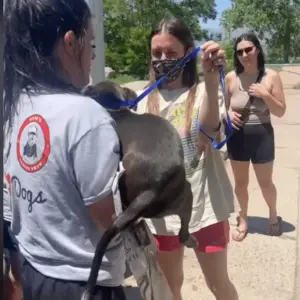
Upon their arrival, the shelter worker who originally managed Porter’s adoption initially expressed concern that the dog was being returned for a fourth time. When clarified that the visit was meant to gather context about his past, the staff member disclosed previously withheld details:
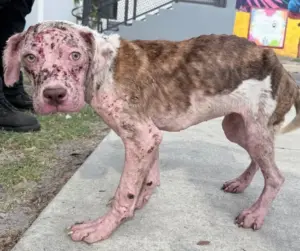
- Discovery: Porter had originally been discovered in the yard of an abandoned residential property, severely malnourished, physically injured, and aggressive toward human approach due to fear.
- Field Rehabilitation: The shelter worker had personally visited the abandoned lot daily over several months, providing food and water to systematically desensitize Porter to human presence until he could be safely transported to the shelter.
- Institutional Constraints: The worker had intended to adopt Porter directly, but rental housing regulations at her residence prohibited dogs.
- The Return Cycle: As a staff member at the intake facility, she had personally processed all three of Porter’s previous adoption surrenders. She deliberately withheld his full trauma history from prospective adopters out of concern that pity-driven adoptions might lead to unrealistic expectations or mismanaged care environments.
During this conversation, Porter voluntarily approached the shelter worker and placed his head on her knee—duplicating the gesture he had used to signal trust with his adopter months earlier.
Supporting Context & Metrics: Analyzing Canine Shelter Retention and Trauma
Porter’s narrative highlights systemic challenges within the animal welfare sector, particularly concerning adoption retention rates, fear-based behavior, and institutional barriers faced by shelter personnel.
1. Adoption Retention and Return Dynamics
Data from national shelter databases indicates that behavioral incompatibility and unmanaged expectations are primary drivers of pet surrenders.
PRIMARY CAUSES OF CANINE SHELTER SURRENDERS
+-----------------------------------------+--------+
| Cause                                   | Share  |
+-----------------------------------------+--------+
| Behavioral Misalignment / Expectation   | 47%    |
| Housing / Rental Restrictions           | 29%    |
| Financial / Resource Constraints        | 14%    |
| Health / Family Personal Circumstance   | 10%    |
+-----------------------------------------+--------+
When animals experience multiple surrender cycles, as Porter did, the risk of chronic stress behaviors increases. Repeated shelter stays can lead to extended periods of high cortisol, manifesting as extreme environmental withdrawal, hypervigilance, or fence-reactivity.
2. The Mechanics of Decompression: The 3-3-3 Guidelines
Veterinary behaviorists frequently reference the 3-3-3 Rule as a baseline framework for evaluating rescue dog integration:
+-------------------------------------------------------------------------------+
| THE 3-3-3 RULE OF RESCUE DOG ACCLIMATION                                      |
+-------------------------------------------------------------------------------+
| FIRST 3 DAYS   | Decompression Phase: High cortisol, feeling overwhelmed,     |
|                | potential retreat/lack of appetite.                           |
+-------------------------------------------------------------------------------+
| FIRST 3 WEEKS  | Acclimation Phase: Starts understanding daily routine, drops  |
|                | defensive guard, displays true behavioral tendencies.          |
+-------------------------------------------------------------------------------+
| FIRST 3 MONTHS | Integration Phase: Builds systemic trust, feels secure within |
|                | the household environment, establishes firm bond.             |
+-------------------------------------------------------------------------------+
In Porter’s case, the decompression timeline was significantly extended due to past trauma. His behavioral timeline demonstrates that dogs with severe trauma may require twice to three times the standard duration at each phase before exhibiting relational trust.
Perspectives & Behavioral Insights
The Adopter’s Perspective: Operational Patience
Reflecting on the integration process, the adopter noted that abandoning traditional milestones for rescue dogs was essential to Porter’s success:
"When you take in an animal that has been returned three times, you have to throw out the standard timetable for affection. The breakthrough didn’t come from forcing interaction; it came from creating a quiet, predictable environment where he wasn’t required to perform socially. When he was ready to connect, he initiated it."
The Shelter Worker’s Dilemma: Strategic Non-Disclosure vs. Transparency
The shelter employee addressed the ethical and operational balance regarding how much background information to share with potential adopters:
"Sharing an animal’s extreme abuse history can sometimes backfire. Adopters often treat the dog with overwhelming, anxious affection right away, which actually heightens a traumatized dog’s stress. My goal was to find someone who would treat Porter normally and simply give him space. Seeing him return three times was devastating, but maintaining high standards for his environment was the only way to ensure his fourth home was his last."
Veterinary Assessment: Physical Correlates of Behavior
A veterinary perspective on trauma rehabilitation confirms the link between physical healing and behavioral recovery:

"Chronic stress and old, unaddressed injuries keep an animal in a perpetual state of fight-or-flight. Once physical pain is ruled out or managed, and environmental stability is maintained, the nervous system can finally transition out of defense mode. Porter’s sudden willingness to play and engage in fetch was a clear clinical indicator that his baseline anxiety had dropped significantly."
Future Outlook & Wider Implications
Long-Term Integration and Community Connections
Following the revelation at the shelter, the adopter established an open-door policy for the shelter worker, inviting her to maintain a presence in Porter’s life.
- Routine Visits: The employee began making regular visits to the residence, bringing toys and participating in outdoor play sessions.
- Anniversary Milestones: By the second anniversary of Porter’s adoption, his home environment was fully established. The household marked the occasion with a formal gathering that included the shelter worker, celebrating his transition from a high-risk shelter resident to a fully integrated companion animal.
+-----------------------------------------------------------------------+
| PORTER'S LONG-TERM INTEGRATION MODEL                                  |
+-----------------------------------------------------------------------+
|  Primary Household Caregiver  <--->  Shelter Worker (Field Rescuer)   |
|                                          /                           |
|                                         /                            |
|                   v                     v                             |
|             [ PORTER: Trauma-Free, Stable Environment ]               |
+-----------------------------------------------------------------------+
Today, Porter exhibits stable behavior, spending his days near his caregiver and welcoming scheduled visits from the individual who first rescued him.
Operational Lessons for Animal Welfare Institutions
Porter’s case highlights several actionable practices for rescue shelters and animal welfare organizations:
- Structured Post-Adoption Support: Shelter systems benefit from offering prolonged decompression guidance to adopters taking on animals with multiple surrenders.
- Housing Policy Advocacy: Strict breed, weight, or species limitations in residential leasing remain a major barrier to pet retention and prevent qualified shelter workers from adopting animals directly.
- Trauma-Informed Adopter Education: Rather than focusing solely on emotional appeals, intake facilities can improve retention by training adopters in non-intrusive, low-pressure integration methods.
Porter’s journey shows that shelter failures often stem from a mismatch between animal timelines and human expectations. When patience is prioritized over quick results, even deeply traumatized animals can achieve long-term stability and permanent home placement.