
Authoritative Analysis on Veterinary Dietetics, Marine Sourcing, and Product Efficacy
Executive Overview
In the rapidly evolving landscape of veterinary dietetics and premium pet care, fish-based canine diets have transitioned from niche therapeutic alternatives to mainstream nutritional powerhouses. Historically reserved for dogs suffering from severe cutaneous adverse food reactions (CAFRs) or chronic inflammatory conditions, marine proteins are now recognized as a primary pillar of optimal canine health.
This comprehensive investigation explores the physiological, ecological, and economic facets of fish-based dog foods. Rich in highly bioavailable proteins, essential long-chain omega-3 fatty acids—specifically eicosapentaenoic acid (EPA) and docosahexaenoic acid (DHA)—and vital micronutrients, marine-derived diets offer unparalleled benefits for systemic health. However, this dietary paradigm is not without its complexities. Issues ranging from heavy metal bioaccumulation and sustainability to formulation differences (such as grain-free versus ancient grain inclusions) require careful evaluation by pet owners and veterinary professionals alike.
This report provides an analytical look at the historical trajectory of fish-based dog foods, examines the underlying biochemical mechanisms that make marine proteins highly beneficial, evaluates six market-leading formulations, and addresses critical considerations for the future of sustainable pet food manufacturing.
Detailed Chronology: The Evolution of Marine Proteins in Pet Food
To understand the current dominance of fish-based diets in the premium pet food sector, it is necessary to trace the historical shifts in commercial pet food formulation over the past several decades.
[1970s-1980s] Commercial Monoculture (Beef & Poultry Dominance)
       │
       ▼
[1990s] Rise of Food Sensitivities & The Novel Protein Paradigm
       │
       ▼
[2000s] The Omega-3 Revolution & Veterinary Dermatology Integration
       │
       ▼
[2010s] Premiumization, Raw Feeding, and Biologically Appropriate Diets
       │
       ▼
[Present Day] Sustainability, Traceability, and Advanced Preservation (Freeze-Drying)
1. The Era of Commercial Monoculture (1970s–1980s)
During the infancy of modern commercial pet food, manufacturing prioritized shelf-stability, cost-efficiency, and agricultural convenience. Diets were heavily reliant on terrestrial animal by-products (primarily beef and poultry) and cheap grain fillers (corn and wheat). Fish was rarely utilized as a primary protein source, instead relegated to low-cost cat food formulations or used minimally as a flavor enhancer in dry kibble.
2. The Novel Protein Paradigm (1990s)
As canine populations expanded and veterinary diagnostics improved, veterinarians began documenting a sharp rise in food allergies and intolerances. Traditional proteins like chicken and beef were identified as the primary culprits behind cutaneous and gastrointestinal hypersensitivities. This catalyzed the search for "novel" proteins. Marine sources, particularly whitefish and salmon, were introduced as hypoallergenic alternatives to which most dogs had no prior immunological exposure.
3. The Omega-3 Revolution (2000s)
As veterinary clinical trials advanced, researchers began to unlock the systemic benefits of polyunsaturated fatty acids (PUFAs). The discovery that marine-derived omega-3s (EPA and DHA) could actively modulate inflammatory pathways transformed fish from a simple "alternative protein" into a functional therapeutic food. Fish-based diets were increasingly prescribed to manage canine osteoarthritis, atopic dermatitis, and cardiovascular decline.
4. Premiumization and "Biologically Appropriate" Diets (2010s)
The humanization of pets led to the "premiumization" of the pet food market. Consumers demanded ingredient transparency, ancestral feeding models, and minimal processing. Brands like ORIJEN and ACANA revolutionized the market by introducing high-protein, grain-free, multi-fish formulas designed to mimic the diverse, wild diets of canine ancestors.

5. The Modern Era: Sustainability and Preservation (Present Day)
Today, the conversation around fish-based pet food has expanded to include environmental ethics, heavy metal monitoring, and advanced nutritional preservation. Technologies such as freeze-drying have allowed manufacturers to offer raw marine nutrition with the shelf-life and convenience of traditional kibble, while third-party certifications like the Marine Stewardship Council (MSC) guide consumers toward ecologically responsible choices.
Supporting Context & Metrics: The Science Behind Marine Nutrition
The nutritional superiority of high-quality fish-based dog foods is rooted in biochemistry. Below is an analytical breakdown of the key macro- and micronutrient profiles that define marine proteins.
1. Protein Bioavailability and Amino Acid Profiles
Fish proteins exhibit exceptionally high biological value (BV), a measure of the proportion of absorbed protein that is incorporated into the proteins of the animal’s body.
| Protein Source | Biological Value (BV) | Digestibility Rate (%) | Common Limiting Amino Acids |
|---|---|---|---|
| Wild-Caught Fish | 92 – 96 | 90% – 95% | None (Highly Balanced) |
| Whole Eggs | 100 | 97% | None |
| Beef | 80 | 85% | Methionine |
| Chicken | 79 | 83% | LYS, Thr |
| Corn Gluten Meal | 40 | 70% | Lysine, Tryptophan |
Because fish muscle fibers are shorter and contain less connective tissue (collagen) than terrestrial meats, they are more easily broken down by canine digestive enzymes. This makes fish-based diets highly suitable for dogs with compromised gastrointestinal systems, seniors, and working dogs requiring rapid nutrient assimilation.
2. The Anti-Inflammatory Pathway of EPA and DHA
The primary therapeutic value of marine diets lies in their concentration of Omega-3 fatty acids, specifically Eicosapentaenoic Acid (EPA) and Docosahexaenoic Acid (DHA). Unlike plant-based omega-3s (such as Alpha-Linolenic Acid found in flaxseed), which require a highly inefficient enzymatic conversion process in dogs, marine-derived EPA and DHA are immediately bioavailable.
When a dog consumes fish-based lipids, these fatty acids are integrated into cell membranes, displacing arachidonic acid (an omega-6 fatty acid). This biochemical substitution shifts the cellular response away from pro-inflammatory pathways:
$$textArachidonic Acid xrightarrowtextCOX/LOX enzymes textPro-inflammatory Eicosanoids (2-series prostaglandins, 4-series leukotrienes)$$
$$textEPA / DHA xrightarrowtextCOX/LOX enzymes textAnti-inflammatory Eicosanoids (3-series prostaglandins, 5-series leukotrienes)$$
This reduction in systemic inflammation directly mitigates the clinical signs of:

- Atopic Dermatitis: Reducing pruritus (itching), erythema (redness), and secondary skin infections.
- Osteoarthritis: Inhibiting matrix metalloproteinases (MMPs) that degrade joint cartilage, thereby preserving mobility.
- Cognitive Dysfunction Syndrome (CDS): DHA supports neural cell membrane fluidity, protecting aging brains from oxidative damage.
Detailed Analysis of Market-Leading Formulations
To assist pet parents and veterinary professionals in navigating the crowded marketplace, we have conducted an in-depth review of six premium fish-based dog foods. Each analysis evaluates ingredient composition, nutritional philosophy, and target demographics.
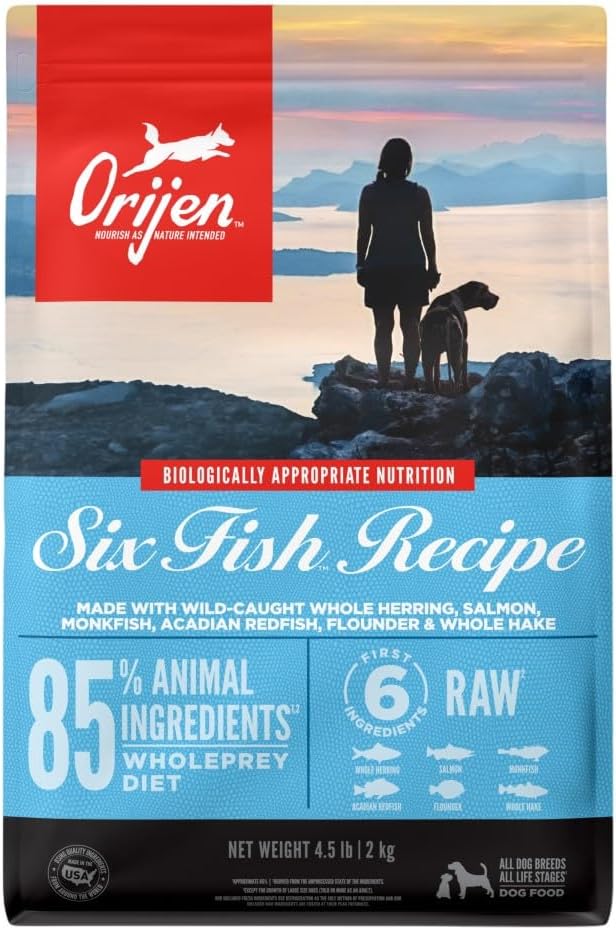
1 – ORIJEN Six Fish Dry Dog Food (Grain-Free & Chicken-Free)
+-------------------------------------------------------------+
|                     ORIJEN SIX FISH                         |
|  [=============================================]  85%       |
|  Animal Ingredients (WholePrey: Fish, Organs, Bone)          |
+-------------------------------------------------------------+- Primary Protein Sources: Whole Atlantic pilchard, whole Atlantic mackerel, whole Atlantic hake, Acadian redfish, silver hake, and whole blue whiting.
- Key Features: 85% premium fish ingredients; 15% vegetables, fruits, and botanicals; completely grain-free and chicken-free.
Formulation Breakdown & Nutritional Efficacy
ORIJEN’s "Biologically Appropriate" philosophy is epitomized in this formulation. By utilizing a diverse array of six distinct, wild-caught fish species, this recipe provides an incredibly rich amino acid profile without the need for synthetic amino acid supplementation.
The inclusion of the fish in "WholePrey" ratios—incorporating the meat, nutrient-dense organs, and cartilage—mimics the natural canine evolutionary diet. This provides natural sources of calcium, phosphorus, glucosamine, and chondroitin, which are vital for skeletal and joint health. Because it is completely free of chicken protein and fat, it serves as an excellent elimination diet for dogs with suspected poultry allergies.
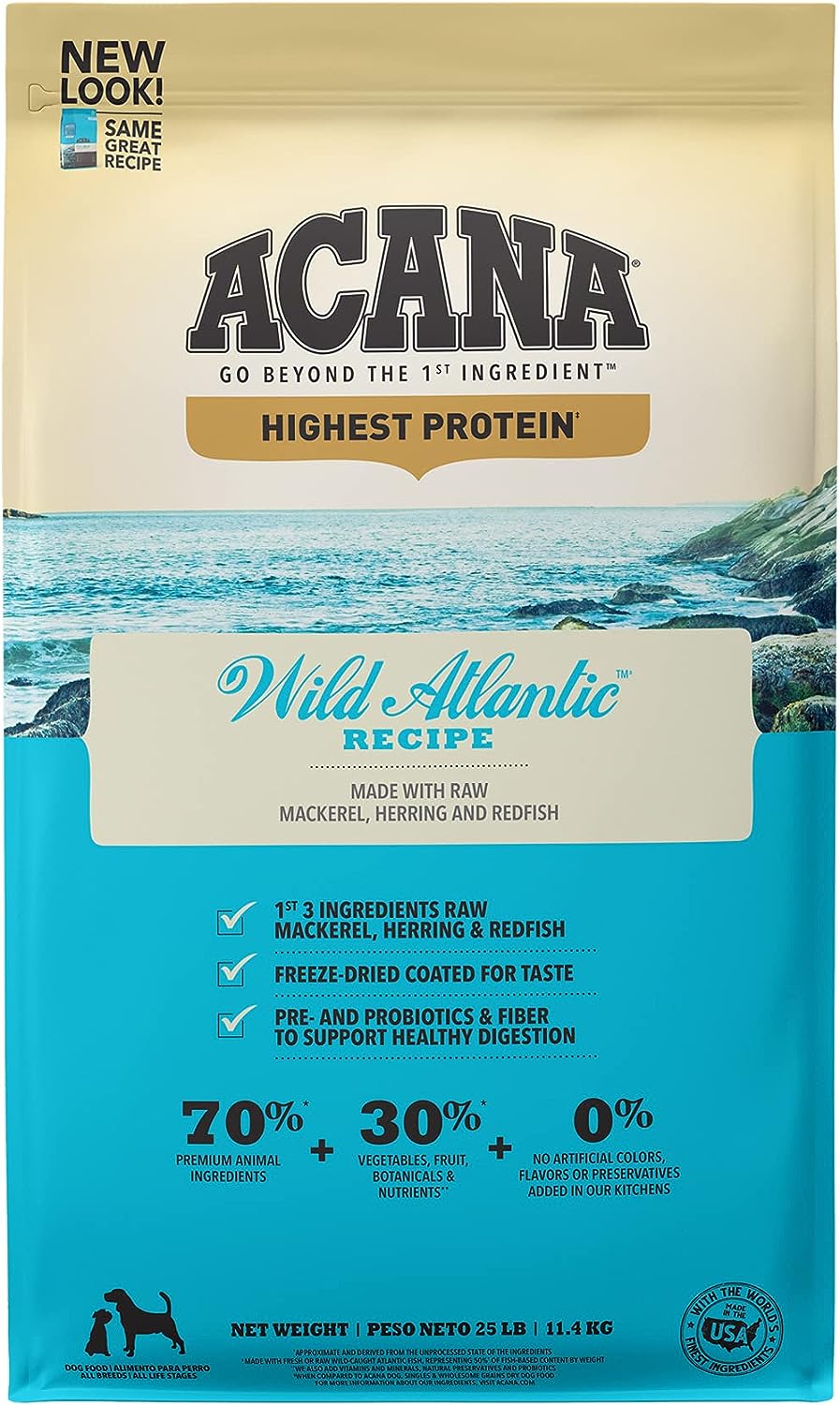
2 – ACANA Highest Protein Dry Dog Food (Wild Atlantic Fish Recipe)
+-------------------------------------------------------------+
|                     ACANA WILD ATLANTIC                     |
|  [=======================================]  70%             |
|  Wild-Caught Fish Ingredients (WholePrey Ratios)             |
+-------------------------------------------------------------+- Primary Protein Sources: Whole herring, whole mackerel, whole Acadian redfish, silver hake, and flounder.
- Key Features: 70% animal-derived ingredients; crafted in regional Kentucky kitchens; rich in naturally occurring Omega fatty acids.
Formulation Breakdown & Nutritional Efficacy
As a sister brand to ORIJEN, ACANA offers a slightly lower, yet still exceptionally high, protein concentration (70% animal ingredients). The Wild Atlantic recipe focuses heavily on cold-water fish sourced from the Atlantic, ensuring high concentrations of EPA and DHA.
The formula is entirely grain-free, substituting grains with low-glycemic carbohydrates such as whole red lentils, pinto beans, and green peas. This promotes stable blood glucose levels and prevents the insulin spikes often associated with corn- or wheat-heavy kibbles. It is highly palatable and formulated to meet the nutritional levels established by the AAFCO Dog Food Nutrient Profiles for all life stages.
3 – Muenster Ancient Grains Recipe with Ocean Fish
+-------------------------------------------------------------+
|                MUENSTER ANCIENT GRAINS                      |
|  [=======================] Hydrolyzed Ocean Fish & Sorghum  |
|  Enhanced with Prebiotics, Probiotics, & Diamond V Yeast    |
+-------------------------------------------------------------+- Primary Protein Sources: Ocean Fish Meal.
- Key Features: Inclusion of ancient grains (quinoa, millet, sorghum); fortified with Diamond V yeast culture, prebiotics, and probiotics; contains glucosamine and chondroitin.
Formulation Breakdown & Nutritional Efficacy
Muenster offers a distinct alternative to the grain-free trend by pairing ocean fish with highly digestible, non-GMO ancient grains. Sorghum, millet, and quinoa provide complex carbohydrates that digest slowly, offering sustained energy levels without taxing the pancreas.
This recipe is highly focused on gastrointestinal health. By integrating Diamond V yeast culture alongside live probiotics, it actively supports the canine microbiome, enhancing nutrient absorption and stabilizing stool quality. The addition of joint-supporting compounds makes this an excellent option for large-breed dogs prone to mobility issues.
4 – Northwest Naturals Freeze-Dried Raw Dog Food (Whitefish & Salmon)
+-------------------------------------------------------------+
|               NORTHWEST NATURALS FREEZE-DRIED               |
|  [==================================================] 100%  |
|  Raw Marine Proteins & Organ Meats (Minimal Processing)     |
+-------------------------------------------------------------+- Primary Protein Sources: Wild-caught Pacific Whitefish and Wild-caught Salmon.
- Key Features: Freeze-dried raw formulation; grain-free, gluten-free, and filler-free; highly versatile (can be fed dry, rehydrated, or as a topper).
Formulation Breakdown & Nutritional Efficacy
For purists seeking to feed a raw diet without the logistical challenges of raw storage, Northwest Naturals provides an exceptional solution. The freeze-drying process sublimates moisture from the raw ingredients under vacuum pressure at sub-zero temperatures. This preserves the delicate structure of proteins, enzymes, and heat-sensitive vitamins that are typically degraded during the high-heat extrusion process of standard kibble.
The combination of whitefish (a lean, easily digestible protein) and salmon (a rich source of healthy fats) offers an optimal balance of low-calorie density and high essential fatty acid content. This formula is ideal for dogs with severe food intolerances, sensitive stomachs, or those recovering from illness.
5 – BIXBI Rawbble Freeze-Dried Dog Food (Chicken & Salmon Recipe)
+-------------------------------------------------------------+
|                    BIXBI RAWBBLE                            |
|  [=============================================]  94%       |
|  Fresh Meat & Organs (No By-Products or Fillers)            |
+-------------------------------------------------------------+- Primary Protein Sources: Chicken, Salmon, Chicken Liver, and Chicken Heart.
- Key Features: 94% meat, organs, and bone; freeze-dried raw technology; human-grade ingredient sourcing.
Formulation Breakdown & Nutritional Efficacy
BIXBI Rawbble combines the nutritional density of pasture-raised chicken with the omega-rich profile of wild salmon. This multi-protein approach ensures a broad spectrum of natural vitamins and minerals, minimizing the reliance on synthetic nutrient packs.
Because it contains 94% meat and organs, the carbohydrate content is virtually negligible, making it an outstanding choice for working dogs, lactating females, or dogs requiring a ketogenic-style diet for metabolic support. Its high digestibility translates to smaller, firmer stools and improved gastrointestinal efficiency.
6 – Zignature Trout & Salmon Limited Ingredient Small Bites
+-------------------------------------------------------------+
|                    ZIGNATURE SMALL BITES                    |
|  [====================] Trout & Salmon (Single-Source-Style) |
|  Physiologically Designed for Small & Toy Breeds            |
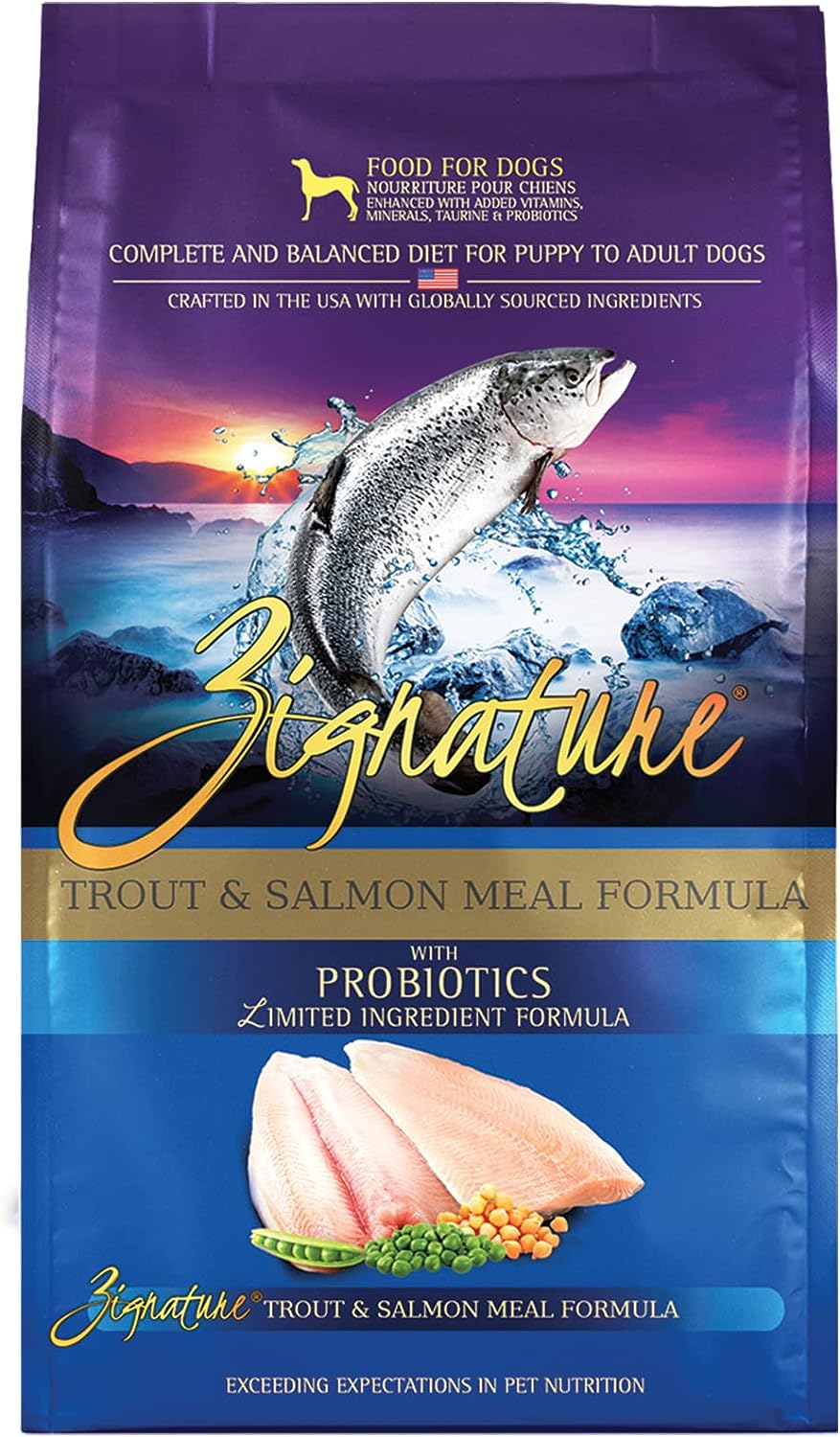
+-------------------------------------------------------------+- Primary Protein Sources: Trout, Salmon Meal, and Salmon Oil.
- Key Features: Limited ingredient formula (LID); small kibble size optimized for smaller jaws; free from chicken, corn, wheat, soy, and dairy.
Formulation Breakdown & Nutritional Efficacy
Zignature is renowned for its commitment to limited-ingredient diets designed specifically for allergen-prone dogs. This formulation focuses solely on cold-water salmon and freshwater trout, eliminating common allergenic binders.
The "Small Bites" kibble size is anatomically tailored for small and toy breeds, reducing choking hazards and promoting proper mastication. Fortified with chickpeas and peas as low-glycemic binders, this diet delivers steady energy while keeping systemic inflammation at bay—a crucial factor for small breeds prone to luxating patellas and joint issues.
Critical Evaluation: Downsides & Veterinary Considerations
While the benefits of fish-based diets are extensive, a professional journalistic analysis must address the potential ecological, toxicological, and nutritional risks associated with these formulations.
                    ┌───────────────────────────┐
                    │  Potential Risk Factors   │
                    └─────────────┬─────────────┘
                                  │
         ┌────────────────────────┼────────────────────────┐
         ▼                        ▼                        ▼
┌─────────────────┐      ┌─────────────────┐      ┌─────────────────┐
│ Toxic Heavy     │      │ Ecological      │      │ High Odor       │
│ Metals (Mercury)│      │ Overfishing     │      │ & Palatability  │
└─────────────────┘      └─────────────────┘      └─────────────────┘
1. Heavy Metal Bioaccumulation and Environmental Toxins
Due to industrial pollution, marine environments contain varying levels of heavy metals (such as methylmercury), polychlorinated biphenyls (PCBs), and dioxins. Through a process known as biomagnification, these toxins accumulate in higher concentrations as they move up the trophic pyramid:
$$textPhytoplankton rightarrow textZooplankton rightarrow textSmall Fish (Sardines) rightarrow textPredatory Fish (Salmon/Tuna)$$
Veterinary nutritionists recommend choosing brands that prioritize smaller, short-lived fish species (like herring, mackerel, and anchovies) over long-lived apex predators, as smaller fish have less time to accumulate heavy metals in their tissues. Reputable manufacturers must provide rigorous, third-party testing metrics verifying that their heavy metal levels fall well below safety thresholds established by AAFCO and the NRC.
2. Ecological Sustainability and Sourcing Ethics
The global pet food industry consumes millions of tons of fish annually, contributing to the strain on wild fish populations. Overfishing threatens marine biodiversity and disrupts oceanic food chains.
To mitigate this, consumers and retailers should actively seek out brands utilizing fish certified by organizations such as:
- Marine Stewardship Council (MSC): Ensures wild-caught fish are harvested using sustainable practices that prevent depletion.
- Best Aquaculture Practices (BAP): Certifies that farmed fish are raised under strict environmental, social, and food safety standards.
3. Olfactory and Palatability Challenges
The natural volatile compounds present in fish oils, while highly appetizing to dogs, can produce a strong aroma that some owners find unappealing. Furthermore, improper storage can lead to rapid lipid oxidation (rancidity), which not only ruins the taste but can also generate harmful free radicals. Proper preservation using natural mixed tocopherols (Vitamin E) and storing food in airtight containers in cool, dry environments is essential.
Official Statements & Veterinary Guidelines
To provide authoritative guidance, we look to the standards set by leading veterinary and regulatory bodies regarding the implementation of fish-based diets.
Association of American Feed Control Officials (AAFCO)
AAFCO maintains strict guidelines on the minimum requirements for Omega-3 fatty acids in canine diets, particularly for growth and reproduction. While adult maintenance diets do not strictly mandate a minimum level of Omega-3s, AAFCO recognizes that maintaining an optimal Omega-6 to Omega-3 ratio (typically between $5:1$ and $10:1$) is vital for mitigating inflammatory conditions.
The American College of Veterinary Nutrition (ACVN)
Board-certified veterinary nutritionists emphasize that when transitioning a dog to a fish-based diet, particularly for diagnostic elimination trials, the transition must be managed carefully:
[Days 1-2]   25% Fish / 75% Old Food
[Days 3-4]   50% Fish / 50% Old Food
[Days 5-6]   75% Fish / 25% Old Food
[Day 7]      100% Fish Diet
"A abrupt transition can overwhelm the pancreatic enzyme capacity and trigger acute gastroenteritis. A gradual, seven-day step-up protocol is recommended to allow the canine microbiome to adjust to the novel protein and lipid structures."
Frequently Asked Questions
1. Can a fish-based diet cause thiamine deficiency in dogs?
Raw fish contains an enzyme called thiaminase, which can degrade thiamine (Vitamin B1) and lead to neurological deficiencies if fed exclusively over a long period. However, commercial fish-based dog foods are either cooked (which inactivates thiaminase) or carefully formulated to ensure adequate, stable thiamine levels, eliminating this risk.
2. How do I know if my dog is having an allergic reaction to fish?
Although rare, fish allergies can occur. Symptoms include intense scratching (especially around the face, paws, and ears), chronic ear infections, hair loss, hives, vomiting, or diarrhea. If you observe these signs, consult your veterinarian immediately for a structured elimination diet trial.
3. Is there a difference in nutritional quality between wild-caught and farmed fish in dog food?
Wild-caught fish generally have a more diverse diet, yielding a more robust micronutrient profile and a higher ratio of omega-3 to omega-6 fatty acids. Farmed fish can sometimes have higher overall fat content but may also contain higher levels of omega-6s depending on their feed. High-quality brands will clearly state their sourcing practices on the packaging.
4. Can puppies safely eat fish-based dog food?
Yes, provided the formula is certified by AAFCO for "Growth" or "All Life Stages." The DHA found in fish is highly beneficial for puppies, as it is a key structural component of brain and retinal development.
5. Why are some fish-based dog foods grain-free while others contain grains?
Grain-free diets use ingredients like peas, lentils, or sweet potatoes as binders. They are excellent for dogs with specific grain sensitivities. On the other hand, formulas containing ancient grains (like sorghum, millet, and oats) provide excellent dietary fiber and steady energy, which can be highly beneficial for dogs with sensitive digestive tracts or those who do not tolerate high legume concentrations.
Future Outlook: The Next Wave of Marine Pet Nutrition
As we look toward the future, the marine pet food sector is poised for technological and ecological transformation.
                                  ┌───────────────────────────┐
                                  │   Future Innovations in   │
                                  │   Marine Pet Nutrition    │
                                  └─────────────┬─────────────┘
                                                │
         ┌──────────────────────────────────────┼──────────────────────────────────────┐
         ▼                                      ▼                                      ▼
┌────────────────────────────────┐    ┌────────────────────────────────┐    ┌────────────────────────────────┐
│      Microalgae Harvesting     │    │   Invasive Species Utilization │    │     Cellular Aquaculture       │
│ Directly tapping the primary   │    │ Harvesting invasive fish like  │    │ Culturing pure fish muscle     │
│ source of EPA & DHA.           │    │ Asian Carp to protect waters.  │    │ tissue in sterile bioreactors. │
└────────────────────────────────┘    └────────────────────────────────┘    └────────────────────────────────┘
1. Microalgae Harvesting
Recognizing that fish do not synthesize omega-3s themselves but accumulate them by eating algae, manufacturers are beginning to bypass the fish entirely. Cultivating marine microalgae in controlled bioreactors allows for the extraction of pure, contaminant-free EPA and DHA. This provides a highly sustainable, vegan-friendly source of these critical fatty acids.
2. Utilization of Invasive Species
In an innovative convergence of ecology and nutrition, forward-thinking pet food brands are beginning to harvest invasive fish species. Utilizing species like the silver carp (commonly known as Copi) in the United States helps restore balance to local river ecosystems while providing a highly nutritious, wild-caught, and sustainable protein source for pets.
3. Cellular Aquaculture
The frontier of biotechnology holds the promise of lab-grown fish meat. By culturing fish muscle tissue from stem cells in sterile bioreactors, the pet food industry of tomorrow may be able to offer biologically identical marine proteins that are completely free of ocean contaminants, heavy metals, and microplastics—all while requiring zero ocean harvesting.
Through scientific innovation, ecological stewardship, and rigorous quality control, the integration of fish-based nutrition into the canine diet remains one of the most effective ways to support long-term health, vitality, and longevity in our canine companions.