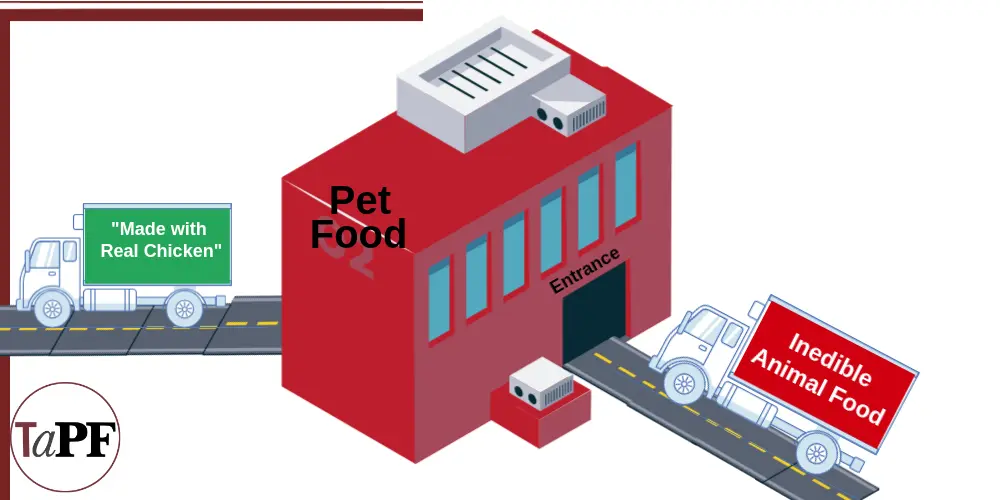
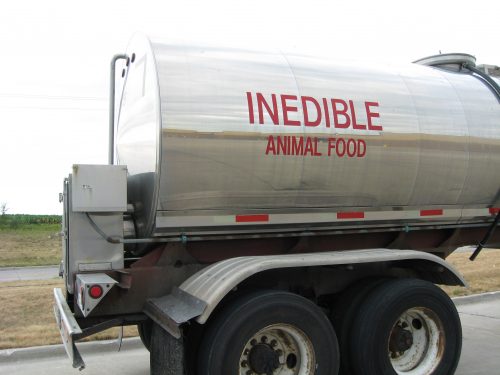
Every day, commercial tanker trucks and heavy-duty shipping containers traverse American highways carrying tons of animal tissue deemed explicitly unfit for human consumption. Under federal law, these containers must bear stark, unyielding warnings: bold text, up to four inches high, declaring the contents as "Inedible—Not Intended for Human Food." These materials consist of condemned parts, diseased tissues, and livestock categorized as "4D"—dead, dying, disabled, or diseased prior to slaughter.
Yet, upon passing through the gates of a commercial pet food manufacturing plant, this legally mandated transparency vanishes.
Through a regulatory division of authority between the United States Department of Agriculture (USDA) and the Food and Drug Administration (FDA), an administrative double standard persists. While the USDA mandates strict, conspicuous labeling for condemned animal tissue during transit, the FDA’s Center for Veterinary Medicine (CVM) permits these same raw inputs to be transformed and packaged under consumer-facing terms like "chicken," "beef," or "pork."
Despite formal petitions from consumer advocacy groups demanding that pet food labels disclose the presence of condemned or diseased animal material, federal regulators have resisted mandates for transparency. This policy gap leaves millions of pet owners unaware of the material distinction between inspected, human-grade meat and non-inspected, condemned animal by-products in commercial pet food formulations.
Detailed Chronology: The Administrative Battle for Ingredient Transparency
The tension between agricultural transport laws and pet food labeling enforcement has unfolded across years of administrative filings, statutory deadlines, and regulatory inaction.
+-----------------------------------------------------------------------------------+
| CHRONOLOGY OF REGULATORY DEVELOPMENTS                                             |
+-----------------------------------------------------------------------------------+
| Pre-2022  | USDA enforces 9 CFR Part 325, requiring explicit "Inedible" labeling   |
|           | for condemned meat transport, while recommending 4D disposal to      |
|           | animal food manufacturers and renderers.                              |
+-----------+-----------------------------------------------------------------------+
| June 2022 | Association for Truth in Pet Food files formal Citizen Petition       |
|           | (Docket FDA-2022-P-1643) with FDA CVM, requesting pet food label      |
|           | disclosures for condemned, inedible, and 4D animal materials.         |
+-----------+-----------------------------------------------------------------------+
| Oct 2022  | Statutory 120-day response deadline under FDA regulations elapses     |
|           | without a substantive decision from the agency.                       |
+-----------+-----------------------------------------------------------------------+
| March 2026| After 1,333 days, FDA issues a final response formally denying the    |
|           | Citizen Petition, stating label disclosure is not necessary to        |
|           | "maintain food integrity" or meet consumer expectations.              |
+-----------+-----------------------------------------------------------------------+
| April 2026| Consumer advocates submit a Petition for Reconsideration, challenging |
|           | FDA's interpretation against federal statutory mandates.              |
+-----------------------------------------------------------------------------------+
The Regulatory Divide: USDA vs. FDA Jurisdiction
For decades, the USDA’s Food Safety and Inspection Service (FSIS) has enforced stringent guidelines under Title 9 of the Code of Federal Regulations (CFR). The agency’s statutory scope remains limited to meat and poultry intended for human consumption. USDA regulations strictly enforce the isolation and explicit marking of inedible animal tissues from slaughter facilities to prevent cross-contamination into the human food supply. However, once condemned material leaves an official USDA-inspected facility and arrives at an animal feed or rendering plant, USDA jurisdiction ends.
Responsibility then transfers to the FDA CVM, which holds regulatory oversight for animal feeds and pet foods under the Federal Food, Drug, and Cosmetic Act (FD&C Act). Rather than requiring pet food processors to maintain the USDA’s transport-level transparency on end-product packaging, the FDA permits these materials to be incorporated into generic ingredient classifications.
The June 2022 Citizen Petition
In June 2022, consumer advocacy group Association for Truth in Pet Food submitted a formal Citizen Petition (FDA-2022-P-1643) to the FDA. The petition cited federal food safety definitions and requested a basic administrative change: if a pet food product utilizes ingredients derived from condemned, diseased, or 4D animal material, the product packaging must conspicuously disclose that fact to the buyer.
Under federal administrative procedures, the FDA is required to respond to Citizen Petitions within 120 days. However, the agency delayed its determination for nearly four years.
The 2026 Denial and Subsequent Appeal
In March 2026—1,333 days after the original filing—the FDA CVM issued its formal denial. The agency reasoned that mandating pet food label disclosures for condemned or diseased animal material was not "necessary to maintain the integrity of the food, or ensure that the food meets consumer expectations."
In April 2026, consumer advocates filed a formal Petition for Reconsideration. Citing statutory language from the FD&C Act regarding misbranding and adulteration, the appeal argues that withholding the sanitary origin of meat inputs misleads consumers and undermines the intent of federal food safety legislation.
Supporting Context & Metrics: Decoding "4D" Meat and Regulatory Mechanics
To understand how condemned animal material reaches commercial pet food bowls, it is necessary to examine the statutory definitions, physical processing mechanisms, and financial scope of the pet products sector.
Defining "4D" Meat and Inedible Material
Under federal agricultural standards, meat discarded from the human food chain generally falls into specific risk classifications:
Dead: Animals that have died by means other than controlled slaughter, including livestock that perished in transit, on farms, or due to extreme environmental conditions.
Dying: Animals in terminal states, moribund condition, or exhibiting acute physiological failure prior to entering slaughter lines.
Disabled: Animals incapable of walking or standing unassisted due to severe trauma, bone fractures, or advanced metabolic disruption.
Diseased: Animals diagnosed with systemic infections, cancerous lesions, abscesses, or pathologically damaged tissue during pre- or post-mortem inspections.
        RAW MATERIAL SOURCES (Slaughterhouses, Farms, Renderers)
                                   |
                  +----------------+----------------+
                  |                                 |
         Inspected Livestock              Condemned / 4D Animals
        (Human Grade Quality)            (Inedible / Uninspected)
                  |                                 |
         USDA FSIS Oversight               USDA Transport Rules
        (Title 9 CFR Part 310)            (Title 9 CFR Part 325)
                  |                                 |
         Human Food Chain                  Labeled: "Inedible - Not Intended
                  |                        for Human Food" (2"-4" Lettering)
                  |                                 |
                  |                       Delivered to Pet Food /
                  |                       Rendering Processing
                  |                                 |
                  +----------------+----------------+
                                   |
                         FDA CVM JURISDICTION
                                   |
                  Final Product Packaging Labeling
                ("Chicken", "Beef", "Meat Meal")
Under Title 9 CFR § 325.11, the USDA prohibits the transport of non-slaughtered or condemned livestock in commerce unless they are directly consigned to renderers or animal food manufacturers:
"When transported from an official establishment or in commerce… the outside container of such inedible products shall be marked conspicuously with the words ‘Inedible—Not Intended for Human Food’ in letters not less than 2 inches high… and not less than 4 inches high in the case of tank cars and trucks."
Despite these strict transport marking mandates, once these materials are processed at a pet food facility—often subjected to high-heat rendering, pressure cooking, and dehydration—the mandatory "inedible" designation drops away under current FDA policy.
Economic Metrics of the Pet Industry
The regulatory debate occurs against a backdrop of significant economic growth in the companion animal sector. Data from the American Pet Products Association (APPA) highlights the financial scale of the market and its contributions to public revenue:
+-----------------------------------------------------------------------------------+
| U.S. PET CARE SECTOR FINANCIAL SUMMARY                                             |
+-----------------------------------------------------------------------------------+
| Metric                                    | Value / Impact                        |
+-------------------------------------------+---------------------------------------+
| Annual Tax Contribution (Federal/State)   | $21.6 Billion (2024 Data)             |
| Total Pet Industry Economic Output        | $260+ Billion Across U.S. Economy     |
| Market Segment Share                      | Pet Food & Treats Represents Largest  |
|                                           | Share of Total Pet Care Expenditures  |
+-----------------------------------------------------------------------------------+
Pet care advocates point out that while pet owners contribute tens of billions of dollars annually in tax revenues, federal regulatory policy continues to shield manufacturers from full disclosure regarding raw ingredient origin.
Official Statements and Regulatory Positions
The ongoing dispute over pet food labeling highlights fundamental disagreements between consumer advocates and federal regulatory agencies regarding public expectations and administrative duty.
The FDA Center for Veterinary Medicine (CVM)
In its March 2026 response denying Docket FDA-2022-P-1643, the agency defended its stance against mandatory disclosure requirements:
"The agency does not believe that pet food label disclosure of condemned, inedible, diseased animal material is necessary to maintain the integrity of the food, or ensure that the food meets consumer expectations."
The FDA’s position relies on historical enforcement discretion. Longstanding policy guides—such as CPG Sec. 675.400 and CPG Sec. 675.200—allow animal food manufacturers to utilize rendered by-products and tissues from dead or diseased animals, provided the finished product does not present an immediate, demonstrable health hazard to the animal.
The USDA Food Safety and Inspection Service (FSIS)
The USDA maintains that its jurisdictional statutory mandate under the Federal Meat Inspection Act (FMIA) applies solely to human food safety. An official agency representative noted in background guidance:
"FSIS regulatory mandates are strictly established to ensure the security, safety, and accurate labeling of the human food supply. The destination and downstream commercial labeling of inedible or condemned animal by-products transferred to animal feed processing fall under the purview of federal animal drug and feed authorities."
Consumer Advocacy: Association for Truth in Pet Food
Susan Thixton, founder of the Association for Truth in Pet Food and a prominent pet food consumer advocate, pushed back strongly against the FDA’s position:
*"Consumers pay high prices for products labeled simply as ‘Chicken’ or ‘Beef,’ expecting that those names reflect wholesome meat. Instead, federal rules allow dead, dying, disabled, and diseased animals to enter pet food plants clearly marked as ‘inedible,’ only to re-emerge on retail shelves with identical ingredient names as human-grade meats.
The assertion by the FDA that consumers do not expect or require disclosure when food contains condemned, diseased animal material ignores basic consumer rights. Pet owners deserve full truth in labeling, not administrative concealment."*
Future Outlook: Legislative Reform, Judicial Review, and Market Dynamics
The ongoing dispute over pet food ingredient disclosure suggests several potential legal, administrative, and economic developments moving forward.
+-----------------------------------------------------------------------------------+
| POTENTIAL SCENARIOS & INDUSTRY PATHWAYS                                           |
+-----------------------------------------------------------------------------------+
| Judicial Challenge    | Filing of an Administrative Procedure Act (APA) lawsuit   |
|                       | against the FDA for arbitrary and capricious denial.      |
+-----------------------+-----------------------------------------------------------+
| State Reform          | State departments of agriculture pursuing independent     |
|                       | commercial feed inspection laws and disclosure standards. |
+-----------------------+-----------------------------------------------------------+
| Market Bifurcation    | Surge in certified "Human Grade" and transparently sourced |
|                       | pet food lines outperforming conventional brands.         |
+-----------------------------------------------------------------------------------+
1. Potential Litigation Under the Administrative Procedure Act
Following the denial of the Petition for Reconsideration, consumer groups may seek judicial review in federal court. Under the Administrative Procedure Act (APA), courts can set aside agency actions deemed "arbitrary, capricious, an abuse of discretion, or otherwise not in accordance with law." Plaintiffs would likely argue that permitting condemned material to be labeled as unreserved "meat" violates the statutory prohibition against false or misleading food labeling under the FD&C Act.
2. State-Level Legislative Alternatives
In the absence of federal mandates, state agriculture departments may step in. Under the Association of American Feed Control Officials (AAFCO) framework, individual states hold legislative authority over local feed distribution. State-level bills requiring explicit disclosures for rendered 4D materials on pet food labels could force national manufacturers to adopt higher transparency standards across supply chains.
Consumer distrust of conventional labeling definitions continues to reshape the commercial marketplace. Demand for fresh, human-grade, and fully traceable pet food formulations has grown rapidly. Industry analysts expect market bifurcation to accelerate:
Standard Commercial Tier: Relies on rendered meals, animal digest, and agricultural by-products permitted under FDA enforcement discretion.
Transparent / Human-Grade Tier: Utilizes USDA-inspected and passed ingredients, manufactured in human food-certified facilities with full supply-chain traceability.
As pet owners become increasingly aware of the legal distinctions governing transport versus retail labeling, public pressure on both regulatory agencies and manufacturers is expected to grow. The central question remains whether federal oversight will evolve toward complete disclosure, or whether the burden of verifying raw ingredient origins will continue to fall entirely on the consumer.