
Executive Overview
Agricultural machinery giant AGCO is signaling a decisive pivot from defensive inventory management to aggressive growth planning, buoyed by an unexpected surge in farmer confidence and sharply rebounding commodity prices. Speaking at Citi’s Global TMT Conference on September 9, 2026, AGCO President, CEO, and Chairman Eric Hansotia, alongside newly appointed Chief Financial Officer and Senior Vice President Indira Agarwal, outlined a forward-looking operational playbook. The executive team detailed how the company is leveraging advanced research and development, artificial intelligence (AI), targeted mergers and acquisitions (M&A), and a booming North American market to redefine its competitive edge.
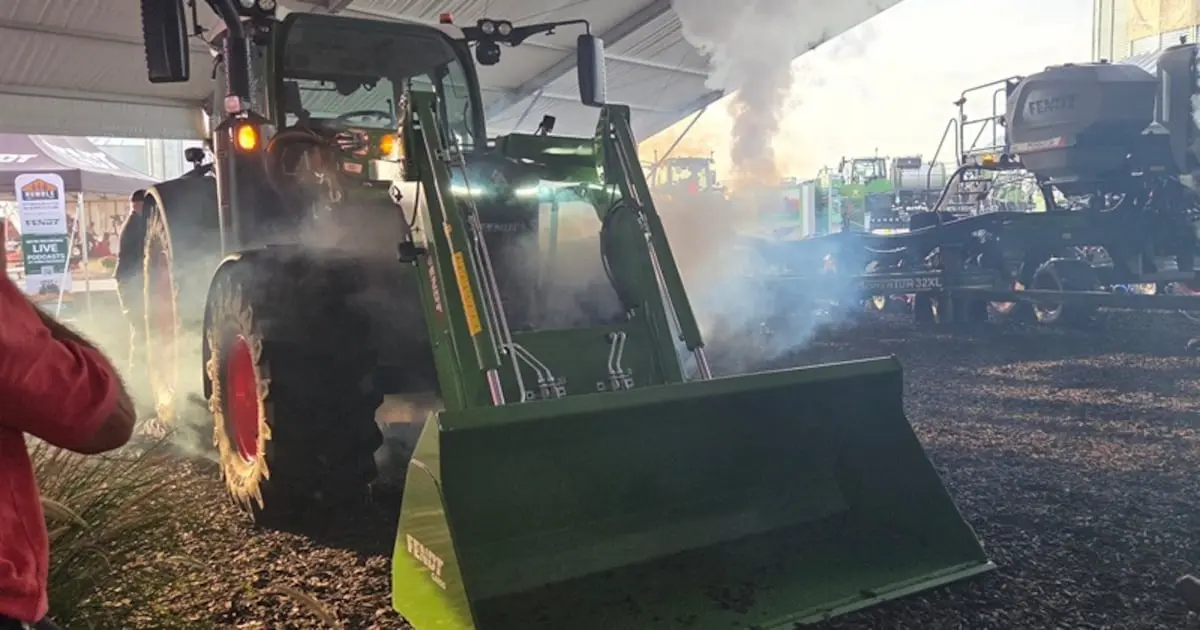
This optimistic outlook follows AGCO’s prominent exhibition at the 2026 Farm Progress Show, where the company showcased advanced machinery—debuting several pieces of equipment in North America for the first time—and experienced a level of direct consumer engagement rarely seen during a traditional down-market cycle. According to Hansotia, the mood among agricultural producers has shifted dramatically over the past two years, moving away from cautious fiscal restraint toward strategic capital deployment.
Fueling this optimism are macroeconomic tailwinds, notably substantial year-over-year gains in corn and soybean futures, alongside structural demand drivers such as the expansion of the biofuels sector and rising global meat consumption. However, as Hansotia emphasized, the modern farming equation relies heavily on efficiency. With input costs—particularly fertilizers—remaining elevated, growers are increasingly turning to advanced agricultural technology to optimize yields while strictly managing resource consumption.
Simultaneously, AGCO’s financial leadership underscored a disciplined yet ambitious capital allocation framework. By focusing M&A activity squarely on precision agriculture, data analytics, and proprietary software layers, AGCO is actively positioning itself as a technology-first leader capable of guiding growers through the next agricultural revolution.
Detailed Chronology: From the Farm Progress Show to the Citi TMT Conference
The narrative of AGCO’s strategic pivot unfolded across two major industry milestones in late August and early September 2026, capturing a rapid transition in market sentiment and corporate messaging.
Late August 2026: Executive Appointments and Show Preperations
In the final week of August 2026, AGCO made critical leadership and operational moves. The company announced strategic appointments across key divisions, including vital moves involving autonomous technology specialists like Sabanto and Ohalo, signaling an intensification of its precision farming capabilities. Concurrently, engineering and manufacturing teams finalized preparations for the 2026 Farm Progress Show, where AGCO intended to roll out a wave of next-generation machinery designed to capture the attention of North American producers.
Early September 2026: The Farm Progress Show Reveal
The turning point arrived during the Farm Progress Show in early September. AGCO made waves across the agricultural sector by introducing several flagship machines and debuting international equipment lines for the first time in North America. Rather than encountering a hesitant audience wary of capital expenditures, AGCO executives were met with unexpected enthusiasm.
Pre-launch and VIP showcase events, which historically attracted modest crowds of around 40 participants, swelled to over 300 highly engaged producers. More remarkably, the enthusiasm translated directly into commercial transactions. Farmers bypassed traditional prolonged deliberation periods, closing significant equipment purchases directly on the show floor—a phenomenon rarely observed in the agricultural machinery sector outside of peak economic cycles.
September 9, 2026: Citi’s Global TMT Conference
Just a week after the Farm Progress Show concluded, Hansotia and Agarwal took the stage at Citi’s Global TMT Conference on September 9 to translate the ground-level enthusiasm into a broader financial and operational strategy.
During the session, Hansotia contrasted the prevailing industry mood with the difficult inventory-clearing cycles that had dominated corporate conversations over the previous 24 to 36 months. While prior years were spent aggressively right-sizing dealer networks and managing supply chain overhangs, the dialogue had officially pivoted. The central question for AGCO and its dealer network was no longer how to weather a downturn, but how to aggressively prepare for structural expansion.
Supporting Context & Metrics: Macroeconomic Drivers and Market Sentiment
The sudden resurgence in farmer sentiment and equipment demand is not occurring in a vacuum; it is underpinned by tangible macroeconomic shifts, resilient commodity pricing, and fundamental changes in global resource economics.
Commodity Price Rebound
A primary catalyst for the renewed optimism among North American producers is the robust performance of key grain markets. According to recent market data compiled by Google Finance, agricultural commodities have demonstrated impressive resilience over the past twelve months:
- Corn Futures: Up nearly 27.58% year-over-year.
- Soybean Futures: Up a comparable 28.80% over the same period.
These elevated price points have fundamentally altered farm balance sheets, restoring profitability and instilling the financial confidence required to invest in heavy capital equipment and advanced technology platforms.
The Three-Tier Demand Generator
During his address at the Citi conference, Hansotia broke down the structural demand drivers reshaping modern agriculture into three distinct pillars:
- Global Food Security & Population Growth: The baseline requirement to produce significantly more grain to feed a growing and increasingly urbanized global population remains the foundational engine of agricultural demand.
- The Biofuels Expansion: Renewable energy mandates and the rapid scaling of the biofuels sector have created a massive, secondary demand generator for traditional row crops, locking in long-term consumption floors.
- The Meat Consumption Multiplier: As emerging economies develop and global living standards rise, increased consumption of animal protein acts as an exponential multiplier for grain demand, given the vast quantities of feed required to support livestock production.
The Input-Output Efficiency Equation
While output demands are scaling rapidly, farmers face persistent pressure from the supply side. Input costs—ranging from synthetic fertilizers and herbicides to diesel fuel—remain volatile and generally elevated.
Rather than simply attempting to scale up acreage, modern producers are caught in a complex efficiency equation. With fertilizer prices climbing, the economic imperative to apply fewer chemicals while protecting or maximizing yield has never been higher. Hansotia noted that this delicate balancing act can only be resolved through the aggressive adoption of technology. Precision application, data-driven variable rate seeding, autonomous field operations, and AI-powered weed-detection systems are no longer luxury additions; they are core operational necessities required to make modern farming financially viable.
Official Statements and Executive Insights
The leadership team at AGCO provided deep insights into the mechanics of their growth strategy, emphasizing a unified vision shared between operational execution and financial stewardship.
Eric Hansotia on Farmer Sentiment and Inventory Management
Reflecting on the stark contrast between historical dealer meetings and the current market environment, Hansotia highlighted the psychological shift among agricultural producers:
"Two years ago, we had maybe 40 farmers that came to a pre-launch. This year, we had over 300 and closed a lot of deals right at the show, which is very unusual. Usually, we don’t do that. So, there was a lot of upbeat sentiment by farmers directly, and then dealers starting to talk about planning for growth."
Detailing the multi-year internal turnaround that prepared AGCO for this moment, Hansotia added:
"We’ve been really managing down inventory. That’s been the whole conversation over the last two or three years. Now, we’re talking about how do we make sure we’re ready for growth? So, sentiment in North America is probably the brightest of any of the markets right now."
Addressing the core economic pressures forcing producers toward technological solutions, Hansotia explained:
"There’s an equation out there where farmers have to grow a lot more grain… There’s a lot more demand for biofuels, which is the second demand generator. The third is as [people] eat more and more meat, it’s a multiplier for grain. So, we have to generate a lot more output. The inputs are all being managed tightly. So, farmers want to use less fertilizers—especially now with fertilizer prices going up—less diesel, less herbicide, all of the inputs. So, the only way to make that equation work is technology."
Indira Agarwal on Capital Allocation and M&A Strategy
Newly appointed CFO and Senior VP Indira Agarwal reinforced the company’s fiscal discipline while outlining how strategic mergers and acquisitions will serve as an accelerant for AGCO’s technological ambitions. Articulating the company’s inorganic growth philosophy, Agarwal stated:
"When we think about M&A, I would say we have a bias in pursuing technology opportunities that help us either accelerate the precision ag roadmap or strengthen our data and our software layer."
Agarwal also detailed AGCO’s comprehensive capital allocation framework, emphasizing that aggressive technology investments do not come at the expense of financial stability:
"We’ve always had a very balanced capital allocation structure where we invest in our business. We protect our engineering investments. We maintain an investment-grade balance sheet, and we pursue targeted technology capability and opportunities, and we return capital to shareholders."
Future Outlook: The Intersection of Hardware, AI, and Precision Ag
As AGCO looks toward the horizon, the company’s strategic roadmap points toward a fully integrated ecosystem where heavy industrial manufacturing converges seamlessly with artificial intelligence, software architecture, and autonomous capabilities.
Accelerating the Precision Agriculture Roadmap
The agricultural machinery sector is undergoing a structural transition comparable to the shift from animal labor to combustion engines. Hardware alone—no matter how powerful or durable—is no longer a sufficient competitive differentiator. By focusing its M&A strategy on acquiring and integrating advanced software layers, data analytics firms, and autonomy specialists like Sabanto, AGCO is transforming its product line from standalone mechanical tools into intelligent nodes within a connected farm ecosystem.
Dealer Network Empowerment
With North American sentiment leading global markets and dealer networks shifting their strategic focus from inventory reduction to expansion planning, AGCO is well-positioned to capitalize on pent-up replacement demand. Aging machinery fleets across the United States and Canada, combined with the proven return on investment offered by modern precision tech, create a highly favorable tailwind for equipment renewals.
Sustaining Engineering and Innovation
By maintaining strict financial discipline while fiercely protecting core engineering budgets, AGCO aims to weather any remaining macroeconomic volatility while continuously pushing the boundaries of what is possible in the field. As commodity markets continue to reward efficient producers, and as environmental and economic pressures mandate reduced chemical and fuel usage, AGCO’s dual focus on heavy machinery excellence and digital software leadership ensures the company will remain a central architect of the future of global agriculture.