What began as a routine, lighthearted errand for sweet treats transformed into a high-stakes, multi-agency animal rescue operation in Sandy Springs, Georgia. When local residents Nicole Motahari and Brandon Lou set out for a standard afternoon cupcake run, they had no inkling that an unexpected, vulnerable stowaway had embedded himself within the mechanical architecture of their automobile.
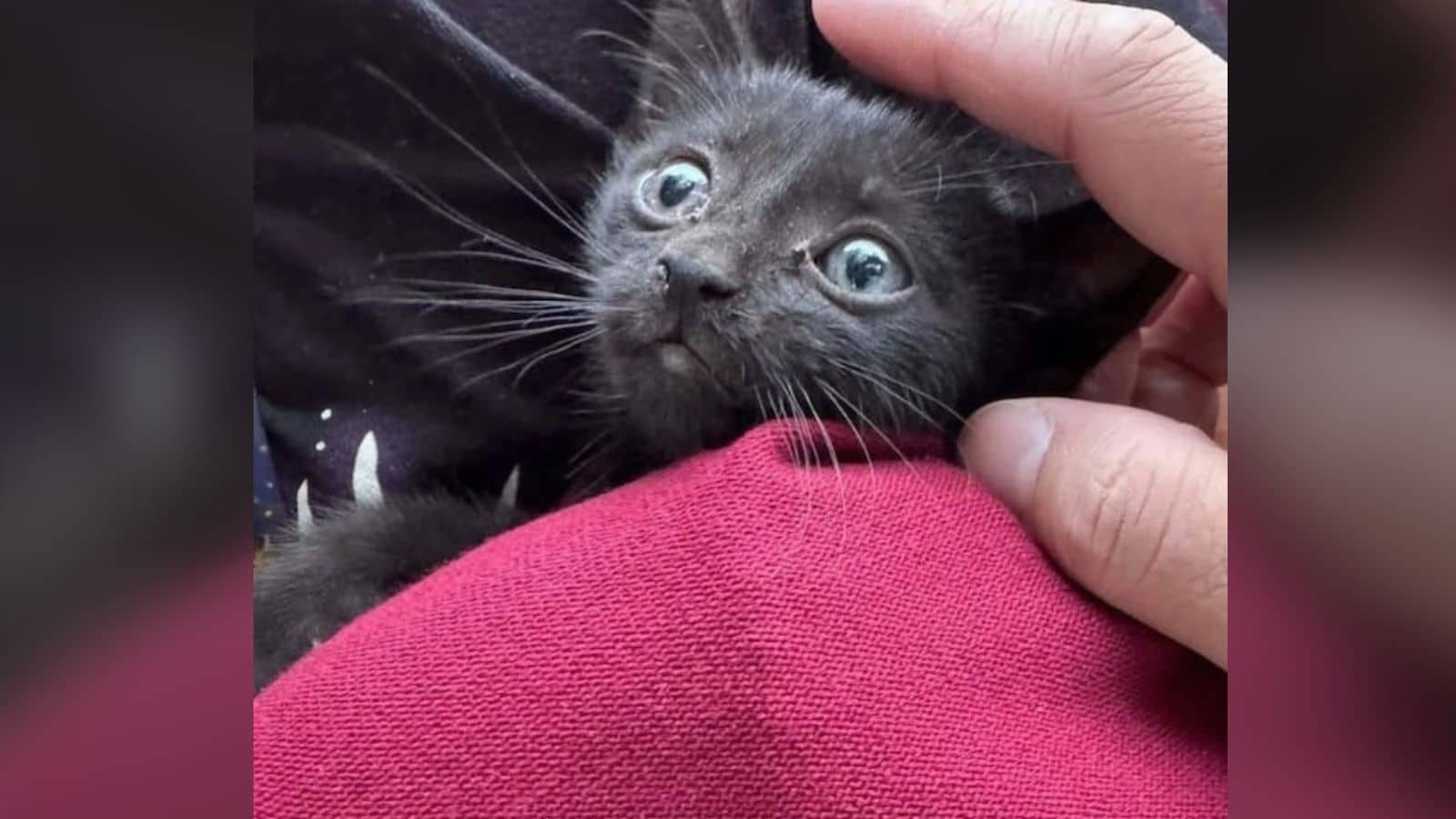
Trapped deep within the vehicle’s wheel well, dangerously close to the suspension and internal machinery, was an extraordinarily fragile black kitten. Estimated to be merely six weeks old and tipping the scales at a minuscule 1.2 pounds, the tiny feline stood virtually no chance of escaping his perilous confinement without specialized human intervention.
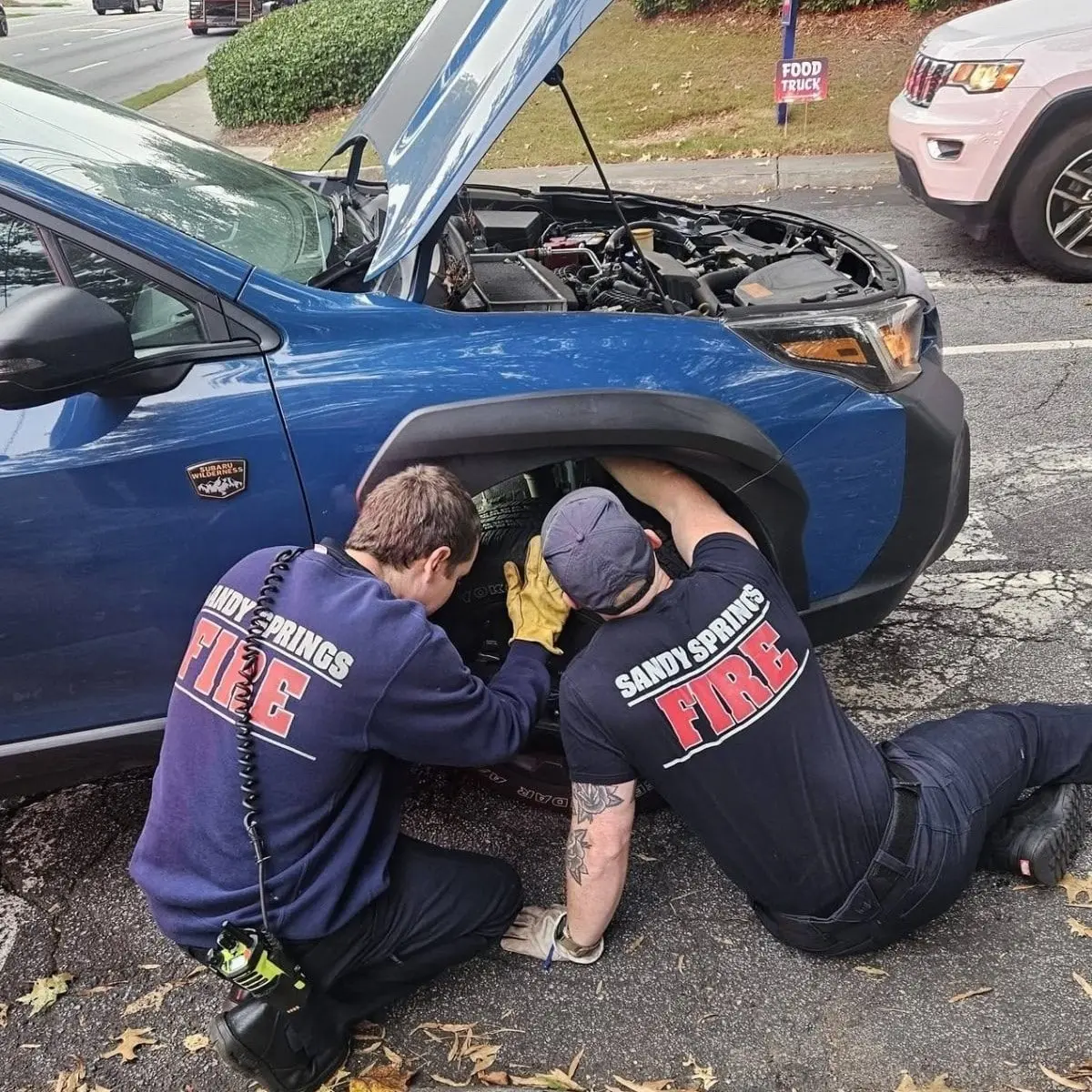
Demonstrating remarkable compassion and civic-minded persistence, Motahari and Lou refused to simply drive away or ignore the faint meows emanating from the car’s undercarriage. Their call to local emergency services triggered a coordinated response involving three dedicated Sandy Springs firefighters and two police officers. What followed was a delicate, patience-testing extraction mission that showcased the best of municipal emergency services going above and beyond standard protocols to save a sentient life.
Not only did the operation conclude safely with the kitten pulled unharmed from the vehicle’s dense mechanical parts, but the story also culminated in a heartwarming adoption. Appropriately dubbed "Friday Shadow"—a nod to his sleek black fur and a serendipitous thematic alignment with the couple’s Halloween wedding anniversary—the kitten transitioned from an outdoor stray facing certain peril to a cherished, permanent member of the Motahari-Lou household. This in-depth report explores the chronology of the rescue, the logistical challenges of vehicular animal extractions, the vital role of community emergency responders, and the broader context of urban stray populations.
Detailed Chronology: From Sweet Cravings to a Feline Emergency
The Discovery
The events unfolded on an ordinary afternoon that promised nothing more complicated than satisfying a culinary craving. Nicole Motahari and Brandon Lou climbed into their vehicle to embark on a routine neighborhood trip to pick up cupcakes. However, moments after arriving at their destination—or perhaps just as they prepared to depart—something unusual disrupted their plans. Faint, distressed vocalizations broke through the ambient street noise.
Upon investigating the source of the sound, the couple realized the cries were coming from inside their own vehicle. A thorough inspection revealed a startling discovery: a living creature was lodged deep within the passenger-side front wheel well, precariously positioned near the suspension and steering components.
For a vehicle in motion, this area is a lethal hazard zone. Rotating tires, high-friction brake systems, and moving metallic joints spell almost certain disaster for any animal trapped within. Recognizing the immediate danger, Motahari and Lou understood that simply starting the engine and driving home could result in a fatal tragedy. They needed immediate help.
The Mobilization of Sandy Springs Responders
Faced with a mechanical maze that human hands could not safely navigate without risking injury to the animal—or damage to the vehicle—the couple contacted Sandy Springs emergency services.
The response was swift and exemplary. Rather than dismissing the call as outside the traditional scope of municipal emergency response, three Sandy Springs firefighters and two police officers reported to the scene. This multidisciplinary team brought not only specialized tools but also the collective patience and problem-solving skills necessary for a delicate extraction.
The Extraction Operation
Extracting an animal from a modern vehicle’s wheel well requires precision engineering and an extraordinarily gentle touch. Kittens possess an uncanny ability to wedge themselves into the tightest, most inaccessible voids, often squeezing into spaces no wider than a soda can.
Positioned perilously close to the suspension system, Friday Shadow was completely immobilized. The responders had to carefully assess the layout of the wheel well, avoiding any sudden movements that might cause the kitten to panic and burrow deeper into the machinery.
Working in tandem, the police officers secured the perimeter and assisted with lighting and tools, while the firefighters utilized their technical expertise to gently maneuver around the vehicle’s hardware. Every second required intense focus. Finally, after careful maneuvering and soothing noises, the rescuers managed to coax and reach the tiny black cat, lifting him free from the dark, metallic trap into the open air.
Supporting Context & Metrics: The Anatomy of Vehicular Animal Encounters
The Vulnerability of Neonatal Felines
The kitten rescued in Sandy Springs was subsequently evaluated and found to be approximately six weeks old, weighing a mere 1.2 pounds. At this developmental stage, kittens are exceptionally vulnerable. Their senses are fully developed, but their motor skills, survival instincts, and physical strength are still lagging.
Urban and suburban environments pose severe threats to neonatal kittens during peak breeding seasons (often referred to as "kitten season," spanning spring through autumn). Seeking warmth, shelter, and safety from predators, stray and feral kittens frequently crawl underneath the hoods of recently parked cars. The residual heat radiating from the engine block acts as a powerful magnet, offering a cozy retreat that quickly turns into a death trap once the vehicle is started.
Statistical Overview of Engine-Bay Rescues
While exact national tallies are difficult to track, animal welfare organizations—such as the ASPCA and local humane societies—report tens of thousands of animal rescue calls annually involving vehicles across the United States.
Frequency: Mechanics and animal control officers note that engine-bay and wheel-well entanglements spike dramatically during winter months (as animals seek engine heat) and during spring/summer kitten seasons (due to an influx of roaming litters).
Survival Rates: The survival rate of animals trapped in vehicles depends heavily on two factors: whether the vehicle’s ignition was turned on while the animal was inside, and the promptness of human intervention. Kittens rescued before a vehicle is put into motion boast a survival rate exceeding 90%, provided they are extracted without trauma.
Economic and Municipal Impact: Municipalities increasingly train first responders in basic animal handling to bridge the gap between human emergencies and animal welfare. The involvement of three firefighters and two police officers in Sandy Springs highlights how public safety agencies recognize that protecting community well-being extends to safeguarding its smallest animal residents.
Official Statements and Community Impact
While formal press releases from municipal departments often focus on crime statistics and fire safety, the Sandy Springs incident quickly captured local media attention due to its heartwarming narrative arc.
Community leaders and animal advocates have continuously praised the response team for their empathy. A representative from local animal welfare circles noted:
"When emergency personnel treat a 1.2-pound kitten with the same urgency and meticulous care as a major structural emergency, it speaks volumes about the character of the agency and the community it serves. First responders see the worst of humanity and tragedy daily; taking the time to save a tiny black cat demonstrates profound compassion."
For Nicole Motahari and Brandon Lou, the event reframed an ordinary Tuesday afternoon into a profound milestone. Speaking about the harrowing experience, the couple emphasized that leaving the kitten behind was never an option. Their dedication transformed what could have been a grim statistic into a story of modern urban rescue success.
Furthermore, the timing of the event carried heavy personal significance. The couple’s wedding anniversary falls on Halloween—a date historically and culturally associated with black cats, mystery, and superstition. Finding a tiny black kitten trapped in their car on the cusp of this symbolic thematic connection felt less like a bizarre coincidence and more like an undeniable sign of fate.
Future Outlook: Friday Shadow’s New Beginning and Advocacy for Drivers
A Permanent Home
Today, Friday Shadow’s journey has reached its ideal conclusion. Rather than being surrendered to an overburdened local shelter or returned to the hazards of an outdoor stray colony, the kitten enjoys a secure, indoor life with Motahari and Lou. Veterinary check-ups following the rescue confirmed that aside from a healthy dose of fright and a dusting of road grime, the kitten emerged from his automotive ordeal completely unscathed.
He now has regular meals, proper medical care, a climate-controlled home, and humans who went above and beyond to ensure his survival.
Lessons and Takeaways for Motorists
Animal rescue organizations and mechanics utilize high-profile incidents like the Sandy Springs cupcake rescue to educate the driving public on preventive measures. Experts recommend the following protocols to prevent accidental injuries to stray animals:
The "Knock-and-Check" Rule: Before starting a vehicle—especially during cold winter mornings or peak breeding seasons—drivers should routinely knock loudly on the hood, stomp their feet near the tires, or give a quick honk of the horn to startle any hidden animals and encourage them to flee.
Inspect Under the Hood: If unusual scratching, meowing, or rustling sounds are detected near the vehicle, drivers should pop the hood and inspect the belt system, wheel wells, and ground beneath the engine block before turning the ignition.
Know Who to Call: As demonstrated by Motahari and Lou, attempting to extract a deeply lodged animal without professional tools can result in injury to both the human and the pet. Contacting local animal control, police non-emergency lines, or fire departments ensures the safe deployment of trained personnel equipped for technical rescues.
Conclusion
The story of Friday Shadow serves as a powerful reminder that compassion can emerge in the most unexpected places. What started as a simple desire for baked goods evolved into a testament to community cooperation, municipal dedication, and human kindness. In saving a 1.2-pound kitten from the gears of a machine, the residents and first responders of Sandy Springs didn’t just rescue an animal—they secured a loyal companion who will forever stand as a furry monument to an unforgettable afternoon.