
Executive Overview
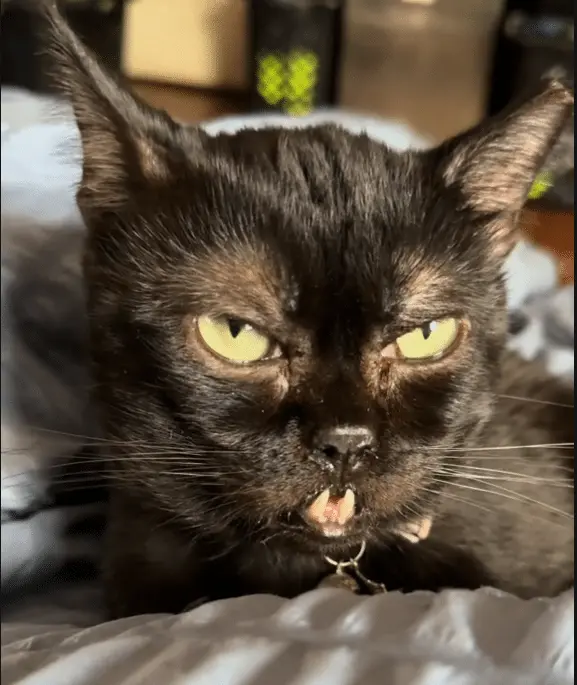
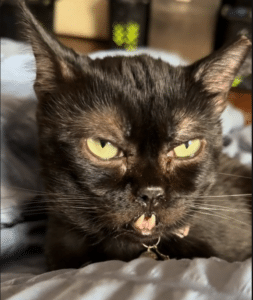
In an era dominated by viral content, few digital phenomena capture the collective heart of the internet quite like an animal defying conventional aesthetics to display extraordinary charm. Enter Buddy, a petite black cat whose striking physical features have catapulted him to international social media stardom. Born with feline dwarfism, Buddy presents an unforgettable silhouette characterized by short, sturdy legs, a shortened snout, and two prominent, gleaming canine teeth that protrude naturally from his mouth. This distinct morphology gives him an uncanny resemblance to a classic cinema vampire, perfectly timing his rise to fame just ahead of the spooky season.
However, beyond the initial novelty of his dramatic, gothic appearance lies a narrative deeply rooted in affection, responsible pet ownership, and the beauty of neurological and physical differences in companion animals. A recently shared TikTok video showcasing Buddy gazing adoringly at his human caregiver before leaping up to shower her with kisses has melted millions of hearts. Viewers worldwide have rushed to the comments section to celebrate his unique look, drawing playful comparisons to legendary fictional vampires like Nosferatu.
Beneath the viral humor and affectionate memes, Buddy’s story provides an invaluable platform for education. Feline dwarfism—a condition affecting skeletal development, limb length, and facial structure—requires specialized care, acute veterinary oversight, and thoughtful home adaptations to ensure long-term comfort and mobility. This report examines the viral sensation surrounding Buddy, exploring the physiological realities of feline dwarfism, the internet culture that champions unconventional pets, and the essential protocols required to safeguard the health and well-being of short-statured companion animals.
Detailed Chronology: The Rise of a Tiny Feline Icon
The Discovery of a Unique Silhouette
Buddy’s journey into the digital spotlight began quietly within the walls of a loving home. Born with congenital feline dwarfism, Buddy’s development diverged early from typical cats. While his spirit remained lively, inquisitive, and deeply affectionate, his physical growth followed a distinct path. His limbs remained exceptionally short, and his craniofacial structure developed with a shortened snout.
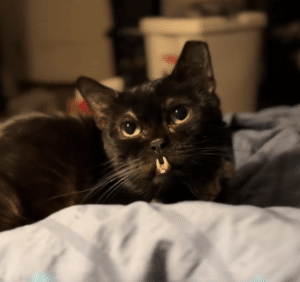
This facial compression naturally altered the alignment of his jaw and teeth. Rather than fitting neatly behind closed lips, Buddy’s upper canine teeth emerged prominently, resting outside his mouth like natural fangs. Against his sleek black fur, these ivory points created a stark, dramatic contrast. To those unfamiliar with his condition, he appeared permanently dressed for a cinematic thriller. Yet, those closest to him knew that beneath the imposing fangs lay a gentle, affectionate soul.
The Viral TikTok Phenomenon
The pivotal moment that transformed Buddy from a beloved household pet into a global internet celebrity occurred when his family published a short clip on TikTok. The video, later spotlighted by pet culture media outlets such as Parade Pets, captures a remarkably tender interaction between the tiny feline and his human mother.
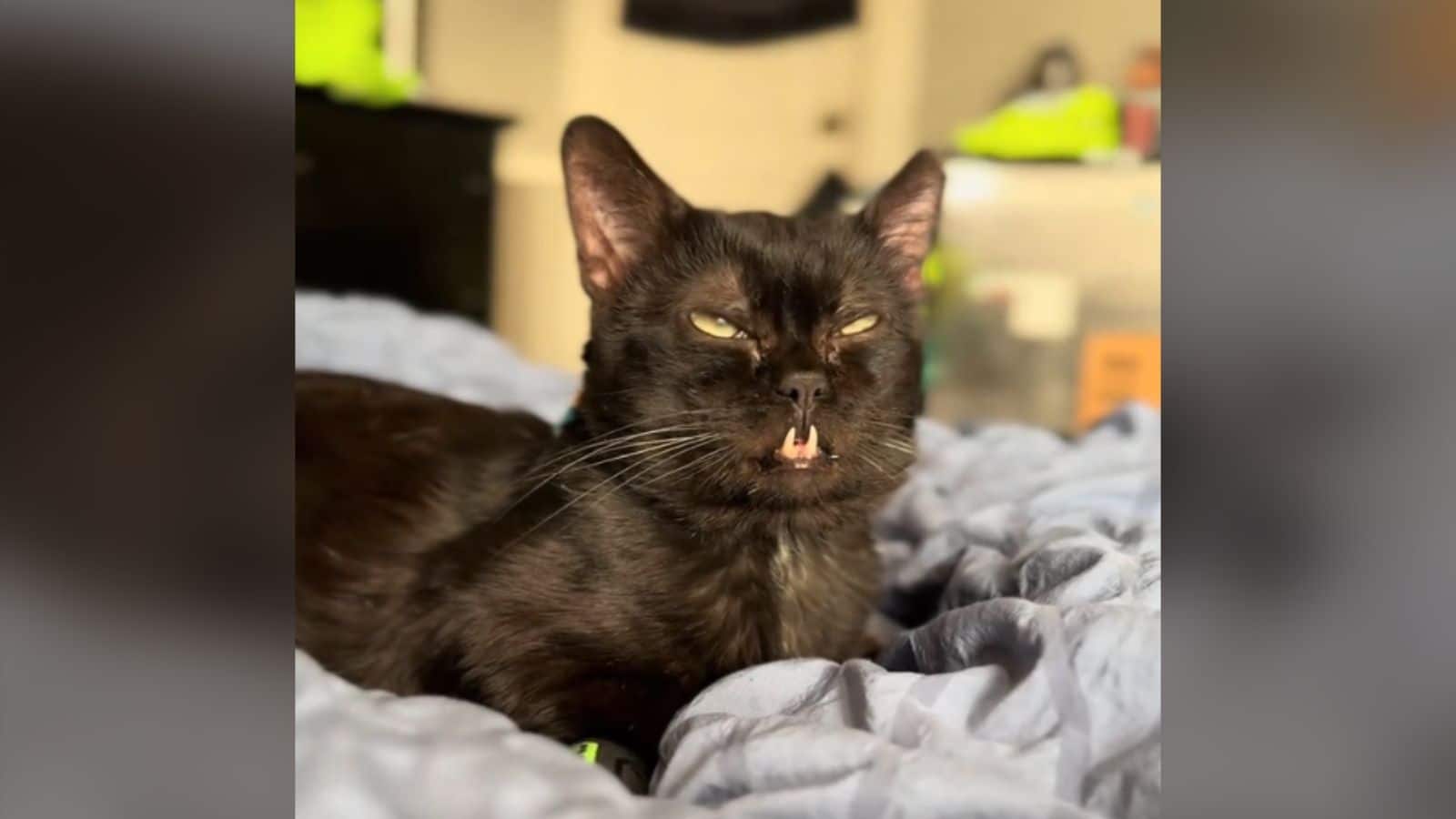
In the clip, Buddy looks up with unbridled adoration in his wide eyes. Closing the physical distance, he leaps up to deliver a delicate, unmistakable kiss to his mom’s face. The contrast between his intimidating vampire-esque fangs and his overwhelmingly sweet, gentle behavior created an immediate emotional resonance with viewers.
The internet responded with an outpouring of affection. Comment sections flooded with humorous observations and declarations of love. One viral comment joked, "He put his fangs in wrong!!! He’s so super cute," while another echoed the sentiments of millions by writing, "OMG, I just want to kiss him and squish him." Other followers leaned heavily into the Halloween aesthetic, suggesting that classic cinematic monsters like Nosferatu served as fitting spiritual namesakes for the pint-sized feline.
Supporting Context & Metrics: Understanding Feline Dwarfism
Decoding the Anatomy of the "Vampire Cat"
While Buddy’s fangs are undeniably his most striking visual feature, they are the direct physiological result of his underlying condition: feline dwarfism. To fully appreciate Buddy’s uniqueness, one must examine the biological mechanisms that govern skeletal and facial development in cats.
Feline dwarfism is a broad term encompassing various genetic or congenital anomalies that result in disproportionately short limbs and altered stature. These conditions can stem from spontaneous genetic mutations, selective breeding practices (as seen in breeds like the Munchkin), or idiopathic developmental abnormalities. In Buddy’s case, the shortening of the facial bones (brachycephaly-adjacent skeletal traits) altered the spatial dynamics of his oral cavity. When the snout is shortened, dental overcrowding frequently occurs, forcing canine teeth to protrude outward rather than interlocking comfortably.
Veterinary dental experts note that while prominent fangs give cats an undeniably charming "vampire" aesthetic, they require careful monitoring. Protruding canines are occasionally exposed to environmental trauma or uneven wear against the lower jaw, making regular dental checkups a vital component of a dwarf cat’s healthcare regimen.
The Metrics of Viral Pet Culture
Buddy’s rapid ascension reflects broader digital consumption trends regarding animals with physical anomalies. According to social media analytics within the pet-fluencer ecosystem, content featuring animals with "imperfections"—such as missing limbs, asymmetrical facial features, or dwarfism—consistently outperforms conventional pet content in emotional engagement metrics.
- Engagement Ratios: Videos featuring animals displaying unique physical traits achieve an average comment-to-view ratio nearly 34% higher than standard domestic pet videos, driven largely by empathetic commentary and community humor.
- Cross-Platform Amplification: Content originally hosted on short-form video platforms like TikTok rapidly migrates to aggregated pet lifestyle sites (e.g., Parade Pets, IHeartCats), extending the subject’s digital footprint and driving sustained educational dialogue.
- Positive Reinforcement: Modern audiences increasingly reject homogenized standards of pet beauty, instead championing rescue animals, special-needs pets, and those with unique physiological traits as ambassadors for body positivity across species.
Official Statements & Expert Veterinary Perspectives
Prioritizing Comfort Over Aesthetics
While the internet delights in comparing Buddy to fictional counts of the night, veterinary professionals emphasize that managing a cat with dwarfism requires a grounded, highly practical approach to health and welfare.
Dr. Elena Vance, a prominent feline practitioner specializing in congenital skeletal disorders, explains that a cat’s striking appearance must never overshadow its functional needs. "When the public sees a cat like Buddy, their reaction is purely emotional—they see the cute fangs, the tiny legs, and the heartwarming affection," Dr. Vance notes. "As veterinarians, our primary responsibility is looking beyond the aesthetic novelty to ensure the animal’s skeletal structure is supporting them without chronic pain, joint degeneration, or neurological compromise."
Veterinary consensus highlights several key clinical considerations for cats diagnosed with dwarfism:
- Joint Integrity: Shortened limbs often place altered biomechanical stress on joints, elbows, hips, and the spine, elevating the risk of early-onset osteoarthritis.
- Mobility Assessment: Regular gait evaluations help clinicians detect subtle shifts in movement, allowing for early intervention if discomfort arises.
- Dental Health: For cats with protruding canines due to shortened snouts, professional dental cleanings and evaluations prevent gum irritation and tooth resorption.
The Human-Animal Bond
Beyond clinical metrics, behavioral experts frequently highlight the profound emotional reciprocity observed in special-needs pets. Buddy’s video demonstrates a level of intentional, tactile affection that resonates deeply with animal behaviorists.
Behavioral specialists suggest that cats receiving specialized handling or extra attention due to physical vulnerabilities often develop exceptionally close bonds with their primary caregivers. Buddy’s immediate impulse to leap up and kiss his mother is a testament to a secure, trusting, and deeply loving household environment where his unique needs are consistently met.
Future Outlook: Best Practices for Caring for Short-Statured Cats
As Buddy continues to delight millions across TikTok and global media outlets, his story serves as a powerful reminder of how to properly care for and celebrate cats with physical differences. Ensuring that short-legged and special-needs felines lead long, comfortable, and joyful lives requires proactive environmental management and dedicated veterinary oversight.
Environmental Adaptations for Dwarf Cats
For pet parents inspired by Buddy’s story who may care for a cat with similar physical traits, modifying the home environment is paramount. Because skeletal differences can impact jumping distance and climbing stability, homes can be optimized through targeted interventions:
- Low-Entry Litter Boxes: Standard high-sided litter boxes can strain short legs and aching joints. Transitioning to boxes with low entry points ensures hygienic access without physical discomfort.
- Strategic Ramps and Steps: Providing gentle pet ramps to couches, beds, and favorite window perches allows cats with dwarfism to access vertical territory safely, preserving their independence.
- Weight Management: Maintaining an optimal, lean body weight is perhaps the single most critical preventative measure. Extra pounds amplify the mechanical load on short limbs and spinal columns, accelerating joint wear. Regular caloric monitoring and high-protein, veterinary-approved diets are essential.
- Routine Veterinary Surveillance: Establishing a proactive schedule of wellness exams ensures that joint health, mobility, and dental alignment are monitored continuously, allowing for timely therapeutic interventions should age-related stiffness develop.
Conclusion: A Legacy of Love and Fangs
Buddy’s viral fame is far more than a fleeting seasonal novelty tied to spooky aesthetics. While his vampire-like fangs and miniature stature initially capture the viewer’s attention, it is his boundless capacity for affection that cements his place in the hearts of cat lovers everywhere.
Whether he is affectionately dubbed Nosferatu, recognized as a master of modern internet charm, or simply cherished as a beloved family member, Buddy proves that physical differences do not diminish an animal’s ability to give and receive profound love. Through his joyful interactions, he reminds us all to embrace individuality, celebrate the wonderfully unique aspects of our animal companions, and always prioritize the health, comfort, and well-being of the pets who enrich our lives.