
Executive Overview
An unexpected and extraordinary archaeological discovery on a remote landmass in the Baltic Sea is fundamentally altering how scientists understand the historical relationship between ancient humans and wild canids. Published in the prestigious journal Proceedings of the National Academy of Sciences (PNAS), a landmark international study has identified wolf remains dating back roughly 3,000 to 5,000 years on the tiny Swedish island of Stora Karlsö.
The finding is paradigm-shifting for several reasons. Stora Karlsö encompasses a mere 2.5 square kilometers and completely lacks native land mammals. Because wolves possess neither the biological capacity nor the migratory drive to cross miles of open sea independently, researchers have arrived at an inescapable conclusion: prehistoric humans deliberately captured and transported these apex predators across the water, likely by boat.
Even more astonishingly, sophisticated genetic sequencing and biochemical testing revealed that these animals were not early domestic dogs, but genuine wolves. Yet, despite their wild genetic lineage, the specimens bore unmistakable hallmarks of close human companionship. Isotopic analysis indicates that the wolves subsisted primarily on a marine-based diet of seals and fish, mirroring the dietary habits of the human seal hunters and fishers who inhabited the island during the Neolithic and Bronze Ages. Furthermore, osteological evaluations showed physical anomalies, including a severe limb injury that healed sufficiently to allow survival, and unusually low genetic diversity—suggesting management, captivity, or selective isolation by human hands.
This groundbreaking research—led by a collaborative consortium of scientists from the Francis Crick Institute, Stockholm University, the University of Aberdeen, and the University of East Anglia—challenges the orthodox view that human interactions with wolves can be understood strictly through the linear framework of dog domestication. Instead, it illuminates a complex, forgotten chapter of human-animal coexistence where prehistoric communities may have regularly captured, managed, and cared for wild wolves, engaging in experiments of closeness that left no descendants in our modern domestic breeds.
Detailed Chronology: Unearthing the Stora Karlsö Mystery
The Archaeological Setting: Stora Fårvar Cave
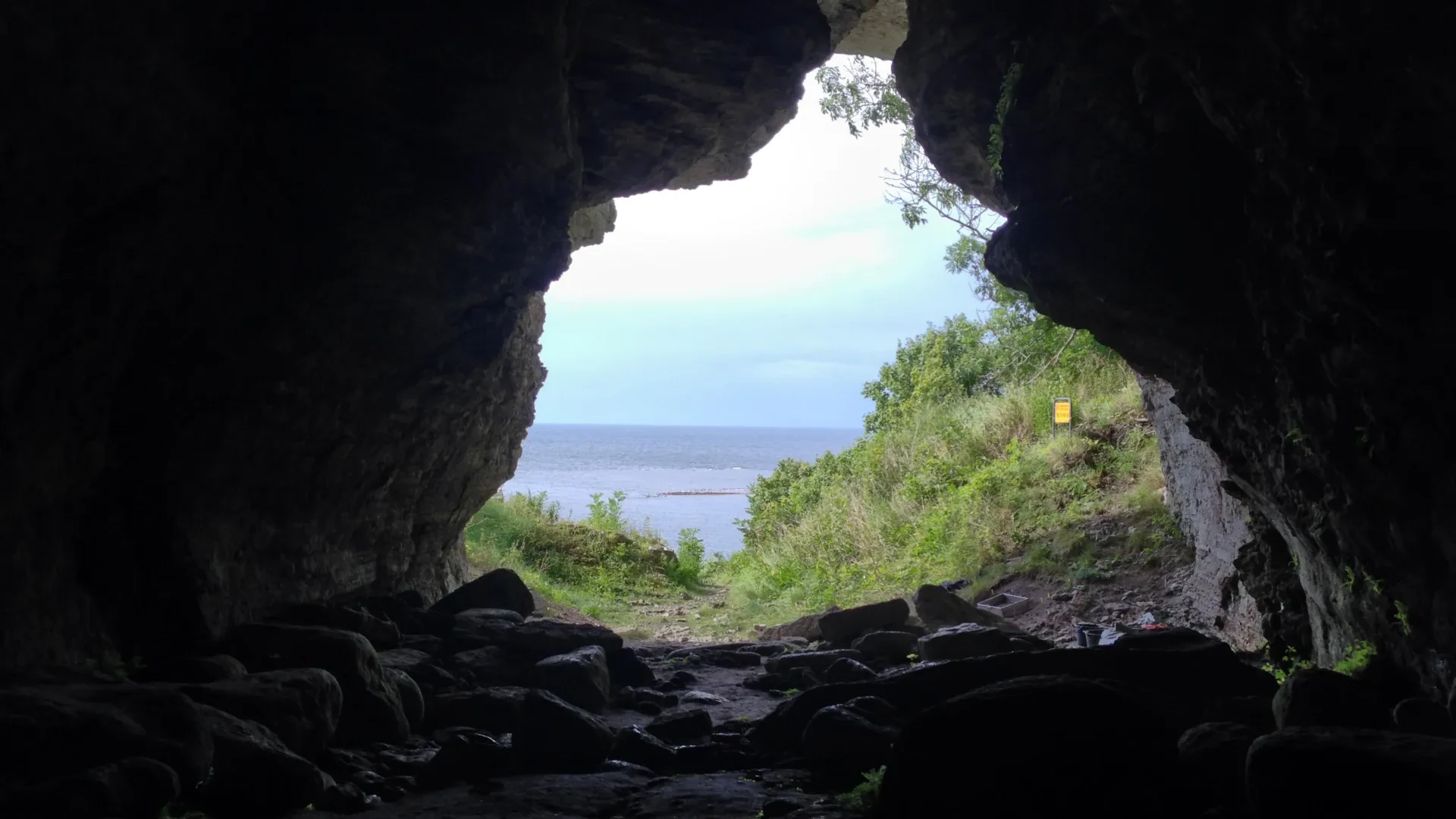
The narrative of this discovery unfolds within the rugged topography of Stora Karlsö, a windswept island situated off the western coast of Gotland in the Baltic Sea. For millennia, this isolated outcrop served as a vital seasonal hub for maritime hunter-gatherers. During the Neolithic and Bronze Ages—eras spanning significant technological shifts from stone tools to early metallurgy—human populations frequented the island to harvest rich marine resources, primarily targeting seals and coastal fish.
Deep inside Stora Fårvar, a prominent cave site on the island utilized heavily by these ancient mariners, archaeologists previously recovered a wealth of faunal remains. Among the bones left behind by generations of seal hunters were the skeletal fragments of canids. For years, these remains were viewed through the standard archaeological lens: refuse left behind by humans who either hunted local wildlife or processed competing predators. However, a multidisciplinary team decided to apply cutting-edge ancient DNA analysis and biomolecular profiling to these specimens, unlocking a story far more intricate than initially imagined.
The Impossible Voyage
To appreciate the magnitude of the discovery, one must look at the geography of the region. Spanning just 2.5 square kilometers, Stora Karlsö is separated from larger landmasses by frigid, treacherous stretches of open Baltic water.
Biologists confirm that wolves are robust swimmers, but they do not voluntarily embark on open-water crossings spanning miles to colonize barren, resource-limited islets. The statistical impossibility of natural migration meant that only one agency could account for the presence of wolves in the Stora Fårvar cave: Homo sapiens.
Roughly 3,000 to 5,000 years ago, Neolithic and Bronze Age mariners navigated the Baltic in dugout canoes or skin-covered boats. The logistical reality that these ancient peoples deliberately captured live wolves—potentially formidable, dangerous carnivores—and transported them across open water points to a high degree of intentionality. These animals were not accidental stowaways; they were valuable cargo.
Unraveling the Biological Evidence
Once the remains were recovered from the archaeological layers, researchers subjected them to rigorous laboratory protocols. Morphological examination suggested canid classification, but morphology alone can be deceptive when distinguishing between ancient, robust dogs and gracile wolves.
To resolve the identity of the animals, geneticists extracted ancient DNA from the specimens. The results were unequivocal: both primary specimens analyzed were genetically pure wolves. Neither individual showed any evidence of genetic admixture with domestic dogs. They were, by every metric of their ancestry, wild Canis lupus.
Yet, the physiological and chemical markers embedded within their bones told a story of a life deeply entangled with human settlements. Isotope analysis—a powerful geochemical technique that examines carbon and nitrogen ratios in bone collagen to reconstruct diet—revealed that the wolves were consuming massive amounts of marine protein. Their trophic level matched that of the human seal hunters perfectly, implying that the animals were either scavenging human waste dumps or being actively fed by human caretakers.
Supporting Context & Metrics: Decoding the Data
To fully comprehend the significance of the Stora Karlsö wolves, it is necessary to examine the specific scientific metrics and methodologies employed by the research consortium. The study relied on a tri-fold analytical approach: osteology, stable isotope analysis, and paleogenomics.
| Analytical Method | Focus of Study | Key Finding | Implication |
|---|---|---|---|
| Osteology | Bone structure and pathology | Severe limb trauma healed over time; smaller body size than mainland counterparts. | Indicates lack of natural survival pressures; potential human care and provisioning. |
| Stable Isotope Analysis | Carbon and nitrogen ratios in collagen | High marine protein consumption (seals, fish). | Wolves shared the exact dietary niche of the island’s human inhabitants. |
| Paleogenomics | Ancient DNA extraction and sequencing | Pure wolf ancestry with exceptionally low genetic diversity. | Points to population bottlenecks, isolation, or human-managed breeding. |
The Genetics of Isolation and Management
One of the most striking technical findings of the study emerged from the sequencing of the most complete ancient wolf genome in the cohort. Dr. Anders Bergström of the University of East Anglia highlighted that this specimen possessed genetic diversity lower than any previously cataloged ancient wolf.
In nature, severely depressed genetic diversity typically occurs in isolated island populations subjected to extreme inbreeding (genetic drift) or during demographic crashes known as population bottlenecks. However, given the context of human transportation and settlement confinement, this low diversity strongly mirrors patterns observed in early stages of animal management or selective breeding. Whether this was the result of deliberate human breeding experiments or simply the consequence of keeping a small, isolated group of captive wolves in a restricted space remains an open question, but the human footprint on their population genetics is undeniable.
Pathology and Care: The Wounded Survivor
Perhaps the most poignant piece of evidence supporting the hypothesis of human care comes from a Bronze Age wolf specimen displaying severe, chronic trauma to a limb bone.
In the wild, a large mammalian carnivore with a debilitating leg injury faces a grim prognosis. Unable to run, stalk, or take down evasive prey like seals or deer, a wild wolf with such a wound would quickly succumb to starvation or predation by rivals.
However, skeletal analysis of this particular specimen revealed that the animal survived the trauma for an extended period, allowing the bone injury to heal significantly before its death. This survival timeline provides compelling circumstantial evidence that the wolf was cared for. Whether fed scraps within a human camp or protected from the rigors of competitive hunting, the animal existed in an environment where its physical disability did not spell immediate death.
Official Statements & Expert Insights
The implications of this discovery have resonated widely across the academic community, challenging long-held dogmas in archaeology, evolutionary biology, and paleozoology.
Dr. Linus Girdland-Flink of the University of Aberdeen, a lead author of the study, emphasized the sheer unpredictability of the findings:
"The discovery of these wolves on a remote island is completely unexpected. Not only did they have ancestry indistinguishable from other Eurasian wolves, but they seemed to be living alongside humans, eating their food, and in a place they could only have reached by boat. This paints a complex picture of the relationship between humans and wolves in the past."
Pontus Skoglund of the Ancient Genomics Laboratory at the Francis Crick Institute and senior author of the study pointed out how the discovery disrupts traditional narratives of canine domestication:
"It was a complete surprise to see that it was a wolf and not a dog. This is a provocative case that raises the possibility that in certain environments, humans were able to keep wolves in their settlements, and found value in doing so."
Dr. Anders Bergström elaborated on the genetic anomalies uncovered during sequencing, framing them within the context of human intervention:
"The genetic data is fascinating. We found that the wolf with the most complete genome had low genetic diversity, lower than any other ancient wolf we’ve seen. This is similar to what you see in isolated or bottlenecked populations, or in domesticated organisms. While we can’t rule out that these wolves had low genetic diversity for natural reasons, it suggests that humans were interacting with and managing wolves in ways we hadn’t previously considered."
Bridging the gap between physical remains and behavioral interpretation, Jan Storå, Professor of Osteoarchaeology at Stockholm University, summarized the broader impact of combining modern science with classical archaeology:
"The combination of data has revealed new and very unexpected perspectives on Stone Age and Bronze Age human-animal interactions in general and specifically concerning wolves and also dogs. It points toward a forgotten chapter in the history of human-canid coexistence."
Future Outlook: Rethinking Prehistoric Coexistence
For generations, popular and scientific discourse has framed the history of human-canid relations through a singular, teleological lens: the domestication pathway. In this traditional view, wild wolves gradually gravitated toward human hunter-gatherer camps to scavenge refuse, initiating a natural, evolutionary self-domestication process that ultimately yielded Canis lupus familiaris—man’s best friend.
The Stora Karlsö discovery shatters the simplicity of this linear model. It demonstrates that prehistoric human-wolf interactions were characterized by experimental, diverse, and localized arrangements that did not always follow the path to permanent domestication.
What Were the Wolves Used For?
As researchers open this new chapter of inquiry, several pressing questions remain unanswered. What utility did Neolithic and Bronze Age seal hunters find in capturing, transporting, and maintaining wild wolves?
Historians and anthropologists suggest several possibilities:
- Status and Symbolism: Maintaining powerful apex predators within a settlement may have served as a symbol of prestige, ritual power, or spiritual significance for island communities.
- Guarding and Utility: Even without full domestication, captive or semi-captive wolves could have served as perimeter alarms, deterrents against competing predators, or companions in specialized hunting contexts.
- Pelt and Resource Harvesting: While isotope data and healed bones suggest living animals were cared for, captive management could also have been a method of securing reliable access to pelts, meat, or other animal resources without relying solely on unpredictable hunts.
Next Steps in Archaeological Science
To answer these questions, the research consortium plans to expand its analyses. Future investigations will likely involve sweeping re-examinations of other isolated archaeological sites across Northern Europe. Researchers are now eager to test whether the phenomenon observed on Stora Karlsö was an isolated anomaly—a localized quirk of Bronze Age Baltic seal hunters—or part of a broader, widespread prehistoric practice of keeping wild carnivores in captivity.
Furthermore, advancements in micro-morphology, proteomics, and spatial analysis of ancient cave deposits will allow scientists to map out the exact micro-environments these wolves inhabited. By analyzing microscopic traces of hair, bedding materials, and coprolites (fossilized feces), paleobiologists hope to reconstruct the daily lives of these captive island wolves in granular detail.
Ultimately, the Stora Karlsö discovery serves as a humbling reminder of the vast complexity of human history. Long before modern civilization codified the boundaries between wild beasts and domestic pets, our ancestors engaged in dynamic, nuanced relationships with the natural world—relationships capable of plucking an apex predator from the mainland, ferrying it across the open sea, and weaving its existence into the fabric of human community.