
Executive Overview
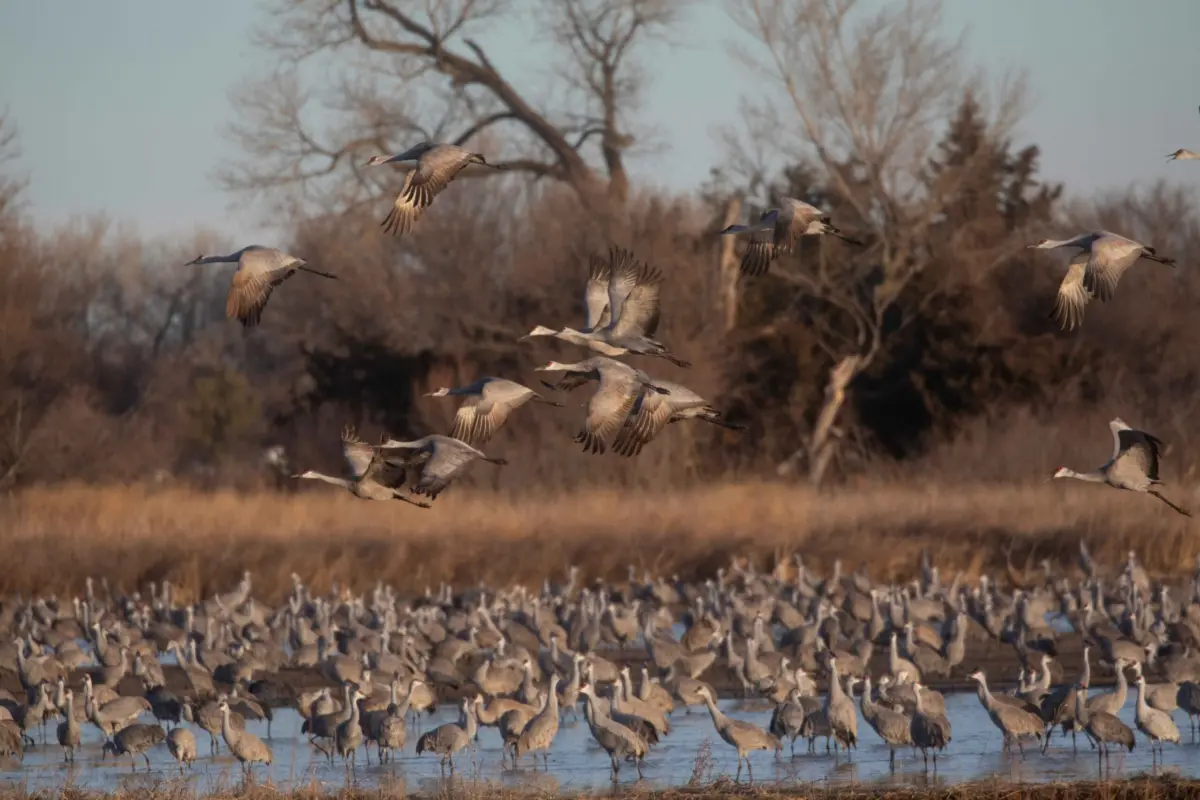
Every spring, a quiet, ancient transformation takes place across the vast river valleys of Central Nebraska. As the chill of winter begins to recede, the skies and shallows of the Platte River come alive with one of the most awe-inspiring wildlife phenomena on planet Earth: the annual migration of the Sandhill Cranes. For millennia, this vital central flyway has served as an indispensable refueling station for hundreds of thousands of these majestic birds on their journey northward.
Amidst this breathtaking biological convergence, the National Audubon Society’s Iain Nicolson Rowe Sanctuary stands as a premier gateway for nature enthusiasts, ornithologists, and wildlife photographers alike. Positioned strategically along the Platte River—the absolute epicenter of the migration corridor—Rowe Sanctuary has officially announced its comprehensive schedule and preparatory guidelines for the upcoming 2027 season.
This advanced announcement offers travelers, conservationists, and ecotourists a crucial window to plan ahead for what is consistently hailed as one of North America’s premier wildlife spectacles. While the specific 2027 calendar dates for guided blind tours are currently being finalized to align with optimal migration patterns, the sanctuary has established key logistical milestones. Detailed program offerings, educational workshops, and speaker series will be officially unveiled in early December 2026, with general public registration slated to open sharply at 9:00 AM CST on January 7, 2027.
This report provides a comprehensive, authoritative breakdown of the upcoming 2027 migration season at Rowe Sanctuary. It explores the intricate logistics of guided crane viewing, contextualizes the ecological significance of the Platte River valley, outlines the rigorous educational programming designed to complement the field experience, and details the essential registration protocols required to secure a spot in this world-renowned wildlife event.
Detailed Chronology: Planning Your 2027 Rowe Sanctuary Experience
Navigating the logistics of a wildlife migration of this scale requires careful planning. Because the Sandhill Crane migration is a natural event driven by environmental cues, weather patterns, and biological imperatives, the operational timeline at Rowe Sanctuary is structured to give visitors the highest possible chance of witnessing the birds in optimal conditions while prioritizing the safety and peace of the wildlife.
The Seasonal Timeline and Major Milestones
To ensure a seamless planning process for visitors traveling from across the globe, Rowe Sanctuary operates on a strict, forward-facing schedule:
- Early December 2026 – Program and Event Unveiling:
Rowe Sanctuary will release its full suite of educational offerings, class schedules, and speaker lineups. This announcement will detail the specific daily classes, expert-led lectures, conservation workshops, and family-oriented activities running concurrently with the migration viewing season. - January 7, 2027 (9:00 AM CST) – Official Registration Opens:
This is the critical date for all prospective visitors. Registration for both crane viewing experiences (blind tours) and supplemental educational programs opens simultaneously. Given the global demand and limited capacity of the viewing blinds, spots typically fill within hours of opening. Reservations can be secured securely online or via phone through the Rowe Sanctuary administrative office. - Spring 2027 – The Migration Window:
Visitors arrive in Central Nebraska to partake in dawn and dusk viewing sessions, educational seminars, and community conservation events as the peak of the migration unfolds along the Platte River.
Understanding the Viewing Formats
Rowe Sanctuary offers specialized guided experiences tailored to capture the daily rhythms of the Sandhill Cranes. The primary offerings fall into two distinct temporal categories:
- Evening Roost Experiences:
Participants are guided into specialized viewing blinds situated directly along the banks of the Platte River just as daylight begins to fade. During this time, massive flocks of cranes—having spent the day foraging in neighboring agricultural fields—begin returning to the safety of the shallow river channels to roost for the night. The experience allows visitors to witness the gradual settling of the birds, accompanied by their iconic, prehistoric bugling calls echoing across the water. - Morning Lift-Off Experiences:
For early risers, morning tours offer an equally dramatic perspective. Visitors enter the blinds in the pre-dawn dark. As the first rays of morning light break over the horizon, the sleeping river awakens. Observers watch and listen as thousands of cranes rouse themselves, stretch their wings, and gradually lift off en masse to begin their daily foraging flights.
Supporting Context & Metrics: The Science and Significance of the Platte River Flyway
To truly appreciate a visit to Rowe Sanctuary in 2027, one must understand the ecological weight of the geography. The Central Nebraska flyway is not merely a random stopping point; it is a biological bottleneck of global importance.
The Ecological Epicenter: Why the Platte River Matters
Each spring, approximately 80% of the world’s population of Sandhill Cranes (Antigone canadensis) converges on a narrow, 80-mile stretch of the Platte River valley in Central Nebraska. This amounts to an astonishing gathering of upwards of 500,000 birds utilizing the region over a period of several weeks, typically spanning from late February through mid-April.
During this migration stopover, the cranes face a critical physiological demand. Having flown hundreds or thousands of miles from their wintering grounds in the southern United States, Mexico, and parts of Central America, the birds must rapidly build up fat reserves to fuel the remainder of their journey to breeding grounds in the northern United States, Canada, Alaska, and Siberia.
The Platte River valley provides the ideal landscape to meet this evolutionary need. The wide, braided, shallow channels of the river offer safe roosting sites overnight, protecting the flightless or resting birds from terrestrial predators such as coyotes, foxes, and raccoons. Meanwhile, the surrounding Platte River Valley agricultural fields—rich with leftover corn and waste grain from the previous autumn harvest—provide a high-calorie diet that allows the cranes to double their body weight in a matter of weeks. Additionally, the damp meadows and wetlands supply vital protein sources like macroinvertebrates, snails, and earthworms, which are essential for breeding conditioning.
The Conservation Mission of Rowe Sanctuary
Established and managed by the National Audubon Society, Rowe Sanctuary encompasses thousands of acres of critical riverine habitat along the Platte. The sanctuary’s core mission is twofold: to protect and restore the natural habitats along the Platte River that are vital for cranes and other migratory waterbirds, and to connect the public directly with the wonders of the natural world.
The sanctuary actively manages its lands through aggressive invasive species removal (such as phragmites and Russian olive trees), wetland restoration, and managed cattle grazing to mimic the natural ecological disturbances once provided by vast herds of American bison. By maintaining wide, open channels free of visual obstructions, Rowe Sanctuary ensures that cranes feel secure when choosing the Platte as their temporary home.
Official Guidelines: Bridging the Gap Between Field Observation and Education
A common point of curiosity—and occasionally confusion—for first-time visitors is the strict operational protocol enforced during guided crane viewing tours. Understanding why these rules exist is fundamental to appreciating the depth of the Rowe Sanctuary experience.
Why Silence is Golden in the Blinds
Unlike traditional ecotourism ventures such as a guided safari, a whale-watching boat tour, or a museum walk, crane viewing at Rowe Sanctuary is conducted under conditions of absolute silence.
During both evening roost and morning lift-off experiences, participants and their guides must remain entirely silent and still for the duration of the time spent inside the viewing blinds. Flash photography, sudden movements, whispering, and mobile device usage are strictly prohibited.
This policy is rooted in rigorous wildlife conservation science:
- Minimizing Anthropogenic Disturbance: Sandhill Cranes are naturally wary of human presence. If startled or disturbed while on their river roosts, the birds may flush prematurely, expending critical biological energy reserves that they desperately need for their migration and upcoming breeding season.
- Maximizing Viewing Quality: Paradoxically, the strict enforcement of silence is what guarantees an exceptional visual experience. When humans remain undetected, the cranes behave entirely naturally, allowing observers in the blinds to witness intimate social behaviors, preening, sparring, and vocalizing at remarkably close range without altering the birds’ natural state.
The Educational Counterbalance: Classes, Lectures, and the Speaker Series
Because guides cannot speak, answer questions, or provide interpretive commentary while inside the blinds, Rowe Sanctuary deliberately structures its visitor experience to include a robust educational component outside of the field tours.
Sanctuary leadership strongly encourages every visitor to weave educational classes, workshops, and lectures into their travel itinerary. These supplemental programs are designed to answer the questions that naturally arise after witnessing the birds in the wild:
- Daily Classes on Crane Behavior: Led by expert naturalists and sanctuary staff, these sessions dive deep into the social dynamics, communication systems, mating rituals, and ecological pressures facing Sandhill Cranes.
- The Renowned Speaker Series: Returning for the 2027 season, this series brings in prominent researchers, conservation scientists, and environmental advocates from across the country. Lecturers present cutting-edge findings on migratory bird conservation, water rights in the American West, habitat restoration projects, and climate change impacts on global flyways.
- Family and Adult Workshops: Hands-on learning opportunities tailored to various age groups ensure that younger generations develop a lifelong appreciation for avian conservation and wildlife stewardship.
Future Outlook: Ensuring Sustainability for Generations to Come
As we look ahead to the 2027 migration season and beyond, the work carried out at Rowe Sanctuary assumes even greater urgency. The convergence of hundreds of thousands of Sandhill Cranes along the Platte River is a testament to the resilience of nature, but it also highlights the fragility of shared ecosystems.
Challenges Facing the Platte River Flyway
The sustainability of the Central Nebraska stopover is inextricably linked to complex regional challenges, including water resource management, agricultural development, and shifting climate patterns. The Platte River system is heavily managed, with upstream dams and water diversions significantly altering historical water flows. Without active conservation intervention, natural river channels would quickly become overgrown with invasive woody vegetation, destroying the wide, open sightlines that Sandhill Cranes require for predator detection and safe roosting.
Organizations like the National Audubon Society and Rowe Sanctuary, working in tandem with state and federal agencies, private landowners, and local communities, serve as the frontline defenders of this irreplaceable habitat. Through continuous habitat restoration, scientific monitoring, and public advocacy, the sanctuary works to ensure that the river remains welcoming to wildlife year after year.
The Role of Ecotourism in Conservation
Public engagement is not merely a supplementary activity at Rowe Sanctuary; it is a vital engine driving conservation success. Every visitor who purchases a ticket for a guided crane viewing tour, registers for an educational class, or attends a Speaker Series lecture directly contributes to the operational funding required to maintain and restore the sanctuary’s lands.
Furthermore, visitors leave Rowe Sanctuary transformed. Armed with firsthand memories of the haunting, bugling calls of the cranes at dawn and a rigorous scientific understanding of migration ecology, these individuals return to their home communities across the United States and the world as ambassadors for wildlife conservation. They carry the message of the Platte River outward, fostering a broader cultural appreciation for the protection of migratory pathways and wetland habitats globally.
Preparing for January 7, 2027
With global interest in ecotourism and birdwatching at an all-time high, demand for the 2027 Rowe Sanctuary season is anticipated to reach peak levels. Prospective travelers are strongly advised to mark their calendars for the December 2026 program announcement to review the available classes, lectures, and event schedules in advance.
When the clock strikes 9:00 AM CST on January 7, 2027, the digital booking portals and phone lines at (308) 468-5282 will open, initiating another chapter in the storied history of human interaction with one of nature’s most magnificent phenomena. By securing reservations early and preparing to engage both in the silent stillness of the river blinds and the active discourse of the educational classrooms, visitors to Rowe Sanctuary in 2027 will not merely observe history—they will actively participate in the ongoing legacy of wildlife conservation along the Platte River.