
Executive Overview
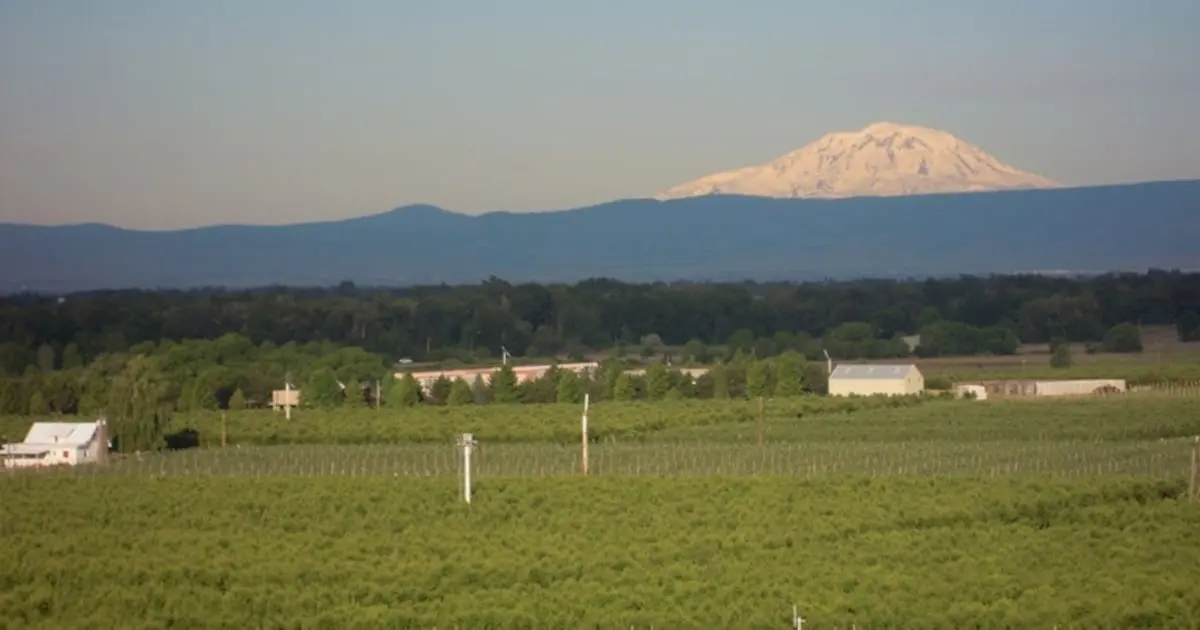
Agtech incubator Reservoir Farms has officially announced a major multi-state expansion that will bring its proven model of agricultural automation and physical Artificial Intelligence (AI) innovation to the Pacific Northwest. Revealed by founder and CEO Danny Bernstein during the FIRA agtech event, the company’s newest hub will open in Yakima, Washington, in the spring of 2027. This strategic move marks Reservoir’s second major expansion outside of California, positioning the incubator directly within one of the world’s most lucrative and labor-intensive specialty crop regions.
For years, Reservoir Farms has served as a critical testing ground for early-stage agricultural technology companies. By providing start-ups with direct access to working farmland, real-world growing conditions, and active farming operations, the incubator bridges the historical gap between software/hardware development and practical field application. The new Washington facility will focus specifically on some of the most complex agricultural sectors in existence: tree fruits, wine grapes, blueberries, and hops. These specialty crops present formidable automation challenges due to delicate handling requirements, uneven terrain, dense canopies, and intensive labor demands.
Supported by strategic investments from major industry players like John Deere and Western Growers, as well as economic development backing from the Tri-City Development Council (TRIDEC), the Yakima hub is poised to accelerate the deployment of rugged physical AI. By partnering with regional authorities such as the Washington Tree Fruit Research Commission, the North American Blueberry Council, and potentially Washington State University (WSU), Reservoir aims to foster an ecosystem where innovators, researchers, and growers collaborate closely to solve chronic agricultural labor shortages, mitigate disease and pest pressures, and secure the long-term economic viability of Pacific Northwest farming.
Detailed Chronology: The Evolution and Expansion of Reservoir Farms
To understand the significance of the Yakima expansion, it is essential to examine the trajectory of Reservoir Farms and how its operational framework has evolved over recent years to become a premier launchpad for agricultural innovation.
Foundations and the Multi-Tier Subscription Model
Reservoir Farms was established to solve a fundamental bottleneck in the agtech sector: the difficulty start-ups face in securing legitimate, large-scale agricultural environments to test prototypes. Laboratory testing and controlled environments rarely replicate the unpredictable variables of open-air farming—weather fluctuations, soil diversity, dust, humidity, and complex crop architectures.
To overcome this, Reservoir developed a multi-tier subscription service that grants agtech start-ups access to physical farmland. This model includes a popular freemium option, democratizing entry for early-stage bootstrap companies that might otherwise lack the capital to lease experimental acreage. Through this infrastructure, innovators can rapidly iterate on their hardware and software solutions under genuine commercial farming pressures.
Establishing the California and Arizona Footprints
Before targeting the Pacific Northwest, Reservoir established deep roots in core agricultural regions across California and Arizona. The incubator currently operates primary testing grounds in Salinas and Sonoma, California, alongside strategic acreage in Arizona. These locations have allowed companies specializing in autonomous weeding, precision spraying, robotic harvesting, and predictive analytics to refine their products across diverse cropping systems, ranging from leafy greens to broadacre crops and vineyards.
The success of these regional hubs attracted significant financial backing. Notably, in August 2026, agricultural machinery giant John Deere invested $10 million in Reservoir Farms, signaling institutional validation of the incubator’s model. This capital infusion, combined with ongoing support from Western Growers, provided the financial runway necessary to plan and execute a broader national footprint.
The Yakima Announcement at FIRA
The momentum culminated on October 20 at the FIRA agtech event, where CEO Danny Bernstein formally unveiled plans for the Washington state facility. Scheduled to open its gates in the spring of 2027, the Yakima incubator will immediately benefit from a ready-made cohort of participating companies. Established Reservoir alumni such as Bonsai Robotics and Sky Sense—alongside new incubator members Cordon and Rootline—have already committed to joining the Washington location, ensuring that cutting-edge vision systems, autonomous navigation tools, and crop management platforms will hit the ground running upon launch.
Supporting Context & Metrics: Why Washington State?
Washington state represents an agricultural powerhouse, particularly within the specialty crop sector. According to United States Department of Agriculture (USDA) data, Washington produces roughly two-thirds of all commercial apples consumed and grown in the United States. Beyond apples, the state is a leading national producer of sweet cherries, pears, blueberries, and wine grapes, alongside a dominant share of the nation’s hop production.
However, this high-value agricultural output comes with acute operational vulnerabilities.
The Labor Crisis and Crop Complexity
Labor is universally cited by Pacific Northwest growers as their single greatest operational expenditure and greatest existential threat. Unlike grain or corn farming, which achieved high levels of mechanization decades ago through massive combine harvesters and standardized planting geometries, specialty crops require a human touch. Picking delicate raspberries, pruning intricate apple orchards, managing sprawling grape vineyards, and harvesting clustered blueberries demand spatial awareness, gentle handling, and selective decision-making that traditional automation has struggled to replicate.
Furthermore, these crops present severe geographical and biological challenges. Orchards and vineyards are three-dimensional, dynamic environments with uneven canopies, changing light conditions, and steep or sloping terrains. Pests and plant diseases specific to the region add layers of risk that require constant monitoring and rapid intervention.
Bridging the Gap: Physical AI Meets Rugged Agriculture
This is where Reservoir Farms’ focus on "rugged physical AI" becomes transformative. Physical AI combines advanced machine learning algorithms with physical machinery—such as autonomous tractors, robotic arms, and intelligent drones—that can operate safely and effectively in unstructured, messy outdoor environments.
By bringing these technologies to Yakima, Reservoir is placing developers directly into the fields where these complex crops are grown. As Bernstein noted, placing builders on real farms alongside growers who demand practical, reliable solutions accelerates the journey from a fragile prototype to a production-ready commercial tool. Start-ups cannot afford to build solutions in a vacuum; they need direct feedback from growers regarding durability, battery life, user-friendliness, and return on investment.
Official Statements and Collaborative Synergy
The success of the Yakima incubator hinges on deep public-private partnerships across the agricultural ecosystem. Reservoir Farms is actively collaborating with key regional bodies, including the Washington Tree Fruit Research Commission, the Tri-City Development Council (TRIDEC), and the North American Blueberry Council.
Economic Development and Institutional Backing
TRIDEC has committed substantial resources to support the incubator, viewing the project as a vital engine for economic development and high-tech job creation in the Tri-Cities region and broader Yakima Valley. By embedding agtech innovation locally, the region stands to attract additional venture capital, technology talent, and manufacturing opportunities.
Equally important are potential collaborative partnerships with academic powerhouses like Washington State University (WSU). Integrating academic research with commercial agtech deployment creates a powerful feedback loop for validation.
Naidu Rayapati, director of the WSU Prosser Irrigated Agriculture Research and Extension Center (IAREC), highlighted the profound impact of these potential collaborations in an official press release:
"Opportunities to bring ag-tech startups together with our faculty to evaluate emerging technologies across diverse cropping systems, including orchards and vineyards, could give growers valuable insights within a single growing season and rigorous validation over multiple seasons, helping them make informed decisions, reduce risks, and improve productivity and profitability."
This sentiment is echoed by Reservoir leadership. Danny Bernstein emphasized the pragmatic reality of the incubator’s operational philosophy:
"Tree fruit, blueberries, wine grapes and hops are some of the hardest crops in the world to automate, and labor is now the biggest cost Washington growers face. Expanding into the Pacific Northwest shows the Reservoir model is working. When you put builders on real farms with growers who will tell them the truth, rugged physical AI goes from prototype to production much faster."
Future Outlook: The Road to 2027 and Beyond
As Reservoir Farms looks toward the spring 2027 opening of its Yakima facility, the agtech landscape stands at a critical inflection point. The intersection of generative AI, computer vision, improved battery densities, and robust sensor suites has unlocked capabilities that were deemed impossible just a decade ago.
However, the ultimate test of any agricultural technology is not how well it performs in a controlled demonstration, but whether it can survive a grueling 14-hour harvest day in a dusty, sun-baked Washington orchard without breaking down. By intentionally choosing to tackle the hardest crops in the world—apples, cherries, blueberries, and hops—Reservoir Farms and its resident start-ups are tackling the ultimate proving ground.
If the Yakima incubator succeeds in accelerating commercial-grade automation for these specialty crops, it will fundamentally redefine the economics of Pacific Northwest agriculture. Growers burdened by rising labor costs and shrinking worker pools will gain reliable tools to safeguard their yields. Meanwhile, early-stage innovators will graduate from the incubator with field-proven technologies ready for global deployment.
With robust financial backing from John Deere and Western Growers, strong regional partnerships with organizations like TRIDEC and the Washington Tree Fruit Research Commission, and active engagement from academic institutions like WSU, Reservoir Farms is well-positioned to cement its status as the premier infrastructure backbone for the future of global agricultural technology. The spring of 2027 will not merely mark the opening of a new testing facility; it will signal the dawn of a new era for mechanized, intelligent, and sustainable specialty crop farming.