
Executive Overview
In an era dominated by screens, digital distractions, and a growing disconnect from the natural world, environmental education has never been more critical. At the Iain Nicolson Audubon Center at Rowe Sanctuary, located along Nebraska’s vital Platte River flyway, a quiet revolution in experiential learning is taking place. Here, field trips are far more than a routine break from the traditional classroom; they are immersive, tactile laboratories where the next generation of conservationists is forged.
By trading textbooks for dip nets, magnifying glasses, and tracking data sheets, students of all ages are learning that conservation is not an abstract concept discussed in distant academic circles. Instead, it is an active, participatory discipline that often begins with getting your hands dirty. From sweeping prairies for insects and dissecting crane forage indicators to tagging migratory monarch butterflies for continent-wide research initiatives, Rowe Sanctuary is transforming passive students into active community scientists.
This comprehensive report explores how Rowe Sanctuary’s multifaceted educational programming bridges the gap between theoretical ecology and boots-on-the-ground environmental stewardship. Through a carefully tiered curriculum that evolves alongside the students, the sanctuary is instilling a deep, lifelong appreciation for ecological interconnectedness, proving that meaningful environmental action begins with simple, unbridled curiosity.
Detailed Chronology: A Scaled Curriculum of Discovery
Rowe Sanctuary’s educational framework is built on a progressive developmental model. As students grow in age and academic capacity, the complexity of their field experiences scales upward, shifting from sensory exploration to rigorous ecological analysis and community science.
Early Childhood: The "Nature Detectives"
For the youngest visitors stepping onto sanctuary grounds, the primary objective is awakening an innate sense of wonder. Through the "Nature Detectives" program, children are encouraged to use their full sensory apparatus to investigate their immediate surroundings. Equipped with hand lenses, binoculars, and monoculars, these budding naturalists learn to look closer at the world beneath their feet and among the brush.
Rather than memorizing taxonomic classifications, they learn to ask foundational scientific questions: What lives under this log? Why does this leaf feel fuzzy? Who left these tracks in the mud? By framing nature as a series of unfolding mysteries, the program lays the groundwork for critical thinking and observation skills that will support all future scientific endeavors.
Elementary and Middle School: Immersive Ecosystem Exploration
As students advance into elementary and middle school, the curriculum expands to encompass specific, vital habitats and ecological mechanics.
- Wild Wetlands: In this module, students wade into wetland environments with dip nets in hand. By scooping through the water and examining the writhing, complex web of macroinvertebrates hiding beneath the surface, students discover the hidden engine of aquatic ecosystems. Educators guide them to understand why wetlands act as nature’s kidneys—filtering water, buffering against floods, and providing indispensable stopovers for waterfowl and shorebirds.
- Prairie Power: Moving from water to land, students plunge into the tallgrass and mixed-grass prairies. Utilizing sweep nets, they harvest and catalog the staggering density of insect life inhabiting the grassland canopy. This activity visually and tangibly demonstrates that a prairie is not an empty field, but a bustling, interconnected metropolis of life where every organism plays a distinct role.
- Birding Basics: Designed to sharpen observational acuity, this program trains students to look and listen. Younger grades use interactive games and monoculars to understand specialized bird adaptations, such as bill shapes and foot structures. Meanwhile, upper-elementary students (grades 4 through 6) step into the shoes of professional ornithologists. They document bird sightings by sight and sound, logging data and exploring the awe-inspiring mechanics of seasonal migration.
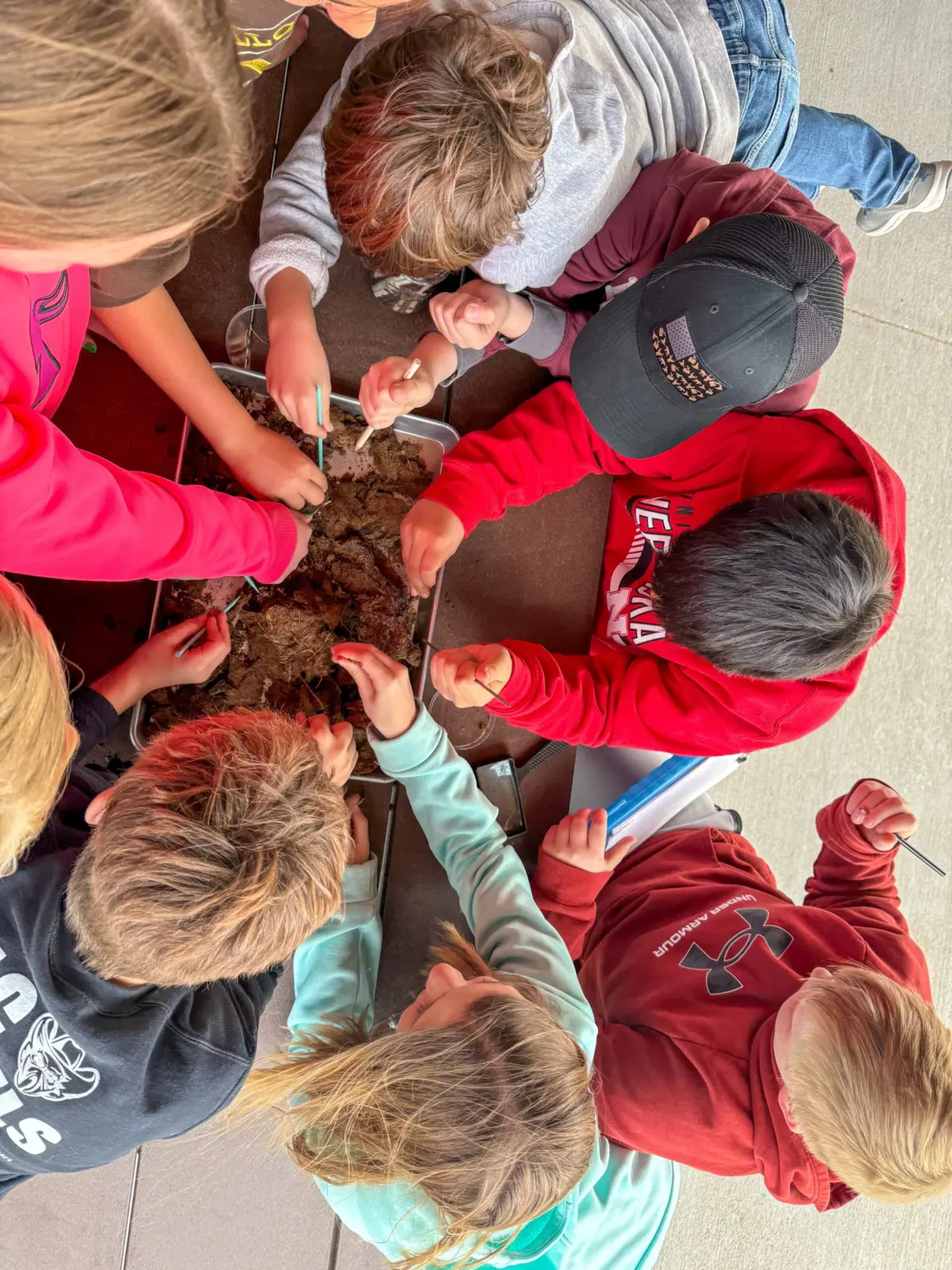
- Crane Season: Capitalizing on Rowe Sanctuary’s premier geographic location along the Platte River, this seasonal program immerses students in the ecology of the legendary Sandhill Crane migration. In addition to exploring crane anatomy and participating in interactive migration games, students engage in hands-on field investigations—including the analysis of crane foraging signs through the dissection of herbivore droppings. This unorthodox, memorable exercise reveals how cranes locate food resources and underscores the complex nutritional strategies required for a successful transcontinental journey.
Middle School and High School: Systems Thinking and Applied Science
For older students, the educational paradigm shifts from localized exploration to macro-level systems thinking and professional resource management.
- The Living Environment: Middle schoolers participating in this module examine the intricate web of biotic and abiotic dependencies. They analyze how flora and fauna rely upon one another and evaluate how anthropogenic (human-caused) activities ripple through physical environments, altering habitats and threatening biodiversity.
- FFA Range and Natural Resources Programs: High school students—particularly those involved with agricultural education and the Future Farmers of America (FFA)—dive deep into applied land management. Their studies encompass native plant identification, range judging, and advanced ecological topics. Participants investigate the nuanced differences between native and invasive species, evaluate habitat management techniques, and study the critical intersections of soil conservation and watershed management.
Supporting Context & Metrics: The Monarch Tagging Initiative
One of the most anticipated components of Rowe Sanctuary’s seasonal programming is its hands-on monarch butterfly tagging initiative, deployed every autumn as millions of monarchs begin their multi-generational journey south toward the oyamel fir forests of central Mexico.
The Science of Citizen Science
The monarch butterfly (Danaus plexippus) migration is one of the most remarkable natural phenomena on the planet, yet it is facing severe threats from habitat loss, climate change, and the decline of native milkweed across North America. To track population health, migration corridors, and survival rates, researchers rely heavily on community science networks.
At Rowe Sanctuary, students participating in fall field trips are integrated directly into this continental research effort through a partnership with Monarch Watch. The process is precise and meticulous:
- Capture: Students safely net migrating monarchs resting or feeding in the sanctuary’s native vegetation.
- Data Collection: Working in pairs or small groups, students determine the sex of the butterfly, assess its overall physical condition, and record the date, time, and geographic coordinates of the encounter.
- Tagging: A microscopic, lightweight adhesive tag—printed with a unique alphanumeric code and contact information for Monarch Watch—is carefully affixed to the discal cell of the butterfly’s hindwing. This tag does not impede flight or aerodynamic stability.
- Release: The butterfly is gently tossed into the autumn air, resuming its southward flight.
Quantitative and Qualitative Impact
While the physical act of tagging takes mere seconds, the cognitive and emotional impact on the student is profound.
- Bridging Scale: Continental migration can feel abstract to a young student sitting in a classroom. Handling a delicate creature that may fly over a thousand miles to a destination it has never seen makes global ecology immediately tangible.
- Real-World Data Contribution: The numbers speak for themselves. Every tag applied by a Rowe Sanctuary student enters a global database. When a tagged butterfly is recovered in Mexico or along the migration flyway, the original data point connects back to the student’s efforts. This closes the feedback loop of the scientific method, teaching youth that their observations hold real scientific value.
- Ecosystem Awareness: Monarchs serve as an ecological "umbrella species." By focusing conservation education on the monarch, students naturally learn about the importance of native milkweeds, the dangers of pesticide use, the necessity of preserving diverse prairie corridors, and the delicate timing required for seasonal ecological events.
Official Statements and Institutional Philosophy
At the core of Rowe Sanctuary’s educational mission is a deeply held philosophy: conservation cannot be mandated solely through policy; it must be cultivated through personal connection.
Education Manager Amanda Hefner, who coordinates the sanctuary’s expansive array of field trips and community programs, emphasizes that the primary goal of the initiative extends far beyond rote memorization of ecological facts.
"Our goal isn’t simply to teach students facts about ecosystems or migration," Hefner explains. "It’s to help them understand that these systems are interconnected and that the choices people make can affect their health and sustainability. We believe that inspiring the next generation of conservationists means giving young people opportunities to experience nature, ask questions, contribute to science, and get involved in caring for the places around them."
This philosophy challenges the traditional, sanitized model of environmental education—where nature is viewed behind glass or through the pages of a textbook. Rowe Sanctuary champions an active, visceral engagement with the outdoors. As leadership frequently summarizes the institutional ethos:
- Sometimes conservation begins with curiosity.
- Sometimes it begins with a discovery.
- And sometimes, it begins with getting your hands dirty.
By validating the messiness of fieldwork—whether wading through muddy wetlands, handling insect-laden sweep nets, or examining wildlife scat—Rowe removes the intimidation factor from science. Nature is presented not as a fragile museum exhibit to be feared and avoided, but as a dynamic, resilient, and welcoming living laboratory.
Future Outlook: Sustaining the Flyway’s Future
As environmental pressures mount across the Great Plains and global climate shifts accelerate, the preservation of critical habitats like the Platte River Valley becomes increasingly paramount. However, protecting land is only half the battle; ensuring that future generations value, understand, and defend these landscapes is the ultimate long-term safeguard for conservation efforts.
Rowe Sanctuary’s ongoing expansion of its educational offerings points toward a promising horizon. By continuously refining its curriculum to align with modern ecological challenges—such as invasive species management, water scarcity, and pollinator decline—the sanctuary ensures that its student visitors are not just learning about the past, but preparing for the realities of the future.
Furthermore, the integration of high school vocational programs, such as FFA range judging and natural resource management, creates a vital pipeline of future agriculturalists, land managers, and conservation scientists. In a region where agriculture and conservation must coexist to ensure ecological sustainability, fostering mutual understanding between young farmers and environmental scientists is a monumental achievement.
Call to Action for Educators and Communities
The success of Rowe Sanctuary’s field trip programming relies heavily on active participation from schools, youth groups, and community leaders across the region. Educational institutions seeking to transform their students’ understanding of the natural world are encouraged to leverage these resources.
For educators, administrators, or community leaders interested in scheduling a transformative field trip experience at the Iain Nicolson Audubon Center at Rowe Sanctuary, inquiries can be directed to Education Manager Amanda Hefner via email at [email protected].
In an uncertain environmental future, programs like those at Rowe Sanctuary provide a steady beacon of hope. By empowering youth to look closer, question deeper, and act boldly, the sanctuary is ensuring that the stewardship of our natural heritage remains in capable, caring, and mud-stained hands for decades to come.