
Executive Overview
An extraordinary archaeological discovery on the isolated Baltic island of Stora Karlsö is fundamentally challenging long-held scientific paradigms regarding the prehistoric relationship between humans and wolves. Published in the Proceedings of the National Academy of Sciences (PNAS), a comprehensive multi-institutional study has identified wolf remains dating back between 3,000 and 5,000 years—encompassing both the Neolithic and Bronze Ages—in an environment where these apex predators could not possibly have arrived through natural migration.
Stora Karlsö, a rugged limestone outcrop covering a mere 2.5 square kilometers off the coast of Gotland, Sweden, features no native terrestrial mammal populations. Because wolves cannot cross open ocean expanses unassisted, researchers have reached an inescapable conclusion: prehistoric humans deliberately transported these animals across the sea, likely via watercraft.
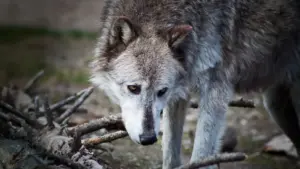
What makes this finding truly revolutionary is not merely the logistics of maritime animal transport, but the intimate, complex relationship it implies. Advanced genetic testing, osteological examination, and stable isotope analysis revealed that these island-dwelling canids were genetically pure wolves, entirely devoid of domestic dog ancestry. Yet, despite their wild genetic lineage, they lived in remarkably close proximity to human settlements. They subsisted on a marine-heavy diet—consisting of seals and fish identical to human consumption patterns—displayed reduced body sizes, and exhibited unusually low genetic diversity indicative of human management or isolation. Most strikingly, skeletal analysis of one Bronze Age specimen revealed a severe, debilitating limb injury that the animal survived, strongly suggesting it received medical attention, food, and shelter from human caretakers.
This collaborative investigation—spearheaded by researchers from the Francis Crick Institute, Stockholm University, the University of Aberdeen, and the University of East Anglia—illuminates a forgotten chapter of prehistoric coexistence. It disrupts the traditional, linear narrative of wolf domestication, which assumes that wolves only interacted with humans along a straightforward trajectory toward becoming domestic dogs. Instead, this discovery exposes a diverse array of historical experiments in human-canid relationships, proving that prehistoric communities occasionally captured, managed, and cared for wild wolves in ways science has rarely considered.
Detailed Chronology
To fully understand the weight of the Stora Karlsö discovery, researchers had to reconstruct a timeline spanning millennia of human activity, environmental isolation, and biological adaptation within the Stora Förvar cave system.
The Neolithic and Bronze Age Context (3,000 to 5,000 Years Ago)
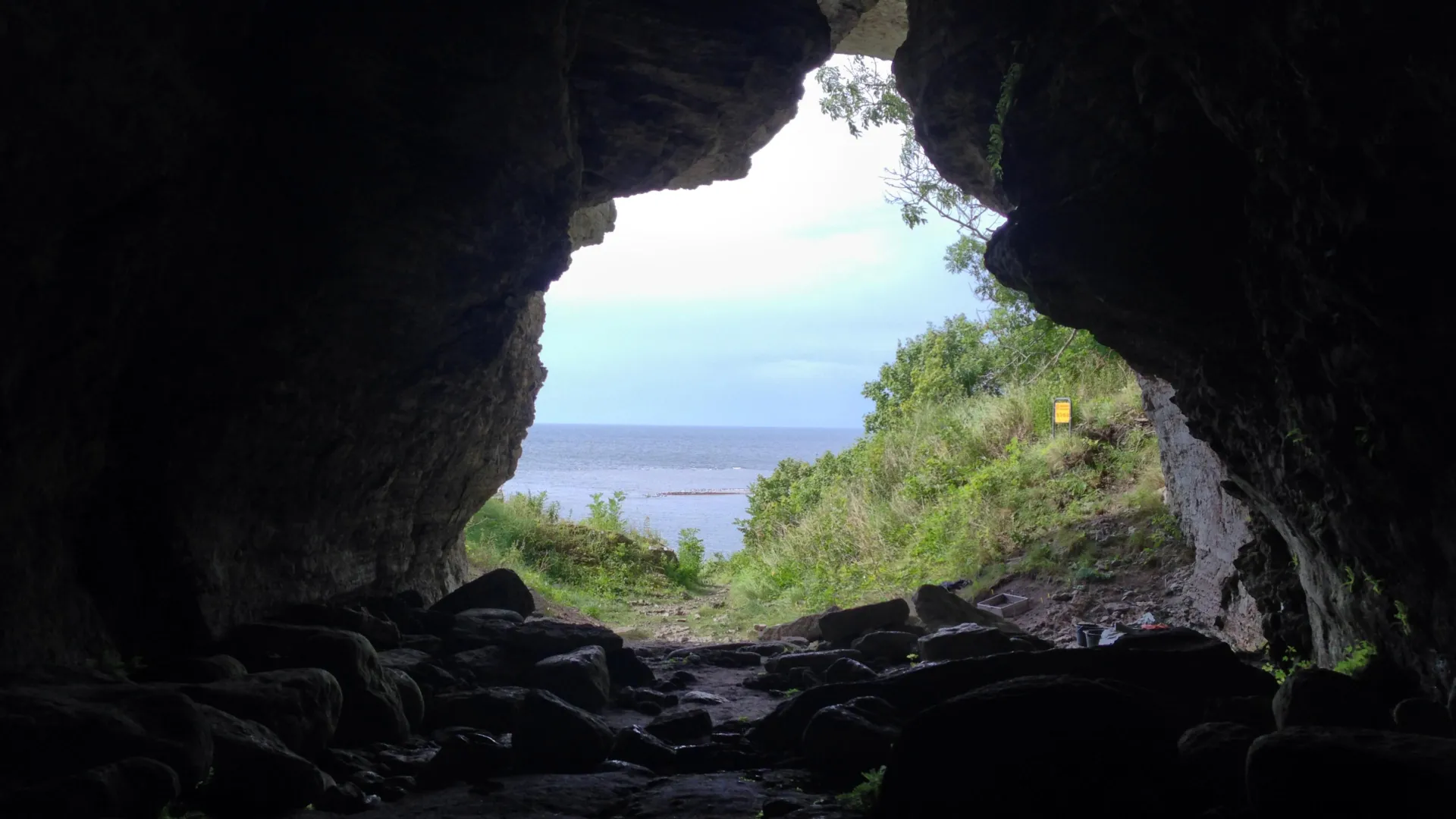
The primary setting for this archaeological revelation is the Stora Förvar cave, a deep karstic formation on Stora Karlsö that served as a vital seasonal basecamp for prehistoric coastal foragers. During the Neolithic (New Stone Age) and subsequent Bronze Age, these communities were heavily reliant on marine resources. Archaeological layers within the cave are dense with the bones of seals, marine fish, and seabirds, testifying to the specialized maritime economy of these ancient hunter-fisher-gatherer societies.
Sometime during this vast temporal window—spanning roughly from 3000 BCE to 1000 BCE—human mariners navigating the Baltic Sea integrated live wolves into their cargo. Whether these animals were captured as cubs for utilitarian purposes, religious or symbolic reasons, or simply out of curiosity, their introduction to Stora Karlsö marked the beginning of an unnatural, human-mediated ecosystem experiment.
Maritime Transport Across the Baltic
The physical isolation of Stora Karlsö is central to the chronological narrative. Situated in the Baltic basin, the island is separated from larger landmasses by deep, open waters. Wolves are capable swimmers over short distances, but they cannot colonize islands separated by kilometers of open sea without deliberate intervention.
The researchers established that these wolves must have been transported by boat. This logistical reality highlights an advanced degree of seafaring capability and animal-handling competence during the Stone and Bronze Ages. Transporting a wild, formidable predator across water requires specialized containment, sedation, or restraint, indicating that these early maritime communities possessed both the technological means and the behavioral confidence to manage live wolves aboard watercraft.
Life, Diet, and Injury Within the Settlement
Once established on the island, the wolves integrated into the human sphere of the Stora Förvar cave occupation. Isotopic analysis of the canine remains provided a chronological window into their daily lives, demonstrating a profound dietary shift from typical mainland wolf diets (which rely heavily on terrestrial ungulates like deer and elk) to a marine-based trophic level matching that of the human seal-hunters.
Later in this chronology—specifically during the Bronze Age—one individual suffered a catastrophic limb fracture. In a natural wilderness setting, such an injury is a death sentence, rendering an apex predator incapable of hunting and leaving it vulnerable to starvation or rival predators. However, osteological markers on the bone revealed that the wolf survived long past the initial trauma. The bone healed sufficiently to leave a permanent pathological record, proving that the animal was sustained by its human companions long after it lost the capacity to procure its own food.
Supporting Context & Metrics
The multi-disciplinary research team deployed an arsenal of cutting-edge scientific methodologies to analyze the Stora Karlsö canids, moving far beyond traditional archaeology to extract deep biological insights.
Genomic Analysis and Purity
Using ancient DNA extraction techniques, geneticists sequenced the complete genomes of the canid specimens recovered from Stora Förvar cave. The results were definitive:
- Taxonomic Identity: Both specimens were confirmed to be Canis lupus (grey wolves).
- Absence of Introgression: Comprehensive genetic mapping revealed zero evidence of dog (Canis lupus familiaris) ancestry or historical interbreeding. They were pure wild wolves.
- Geographic Lineage: Their genetic signatures closely matched those of other ancient Eurasian wolf populations, ruling out an exotic or non-European origin.
Low Genetic Diversity Metrics
One of the most revealing quantitative metrics unearthed during the study was the extraordinarily low genetic diversity found in the sequenced wolf genomes.
- Population Bottlenecking: Genomic markers indicated a severe contraction in genetic variation—lower than any previously documented ancient wolf specimen.
- Comparative Baselines: While natural isolation on a small island can induce genetic drift and bottlenecks over generations, the severity of the diversity loss points strongly toward human management, selective breeding, or the founding of the island population from a single, highly inbred family group or singular mating pair captured by humans.
Morphological Changes: Shrinking Stature
Osteometric analysis—the precise measurement of bones—revealed that the Stora Karlsö wolves were physically smaller than their contemporary mainland counterparts. This morphological deviation aligns with well-documented biological phenomena associated with island dwarfing or adaptation to restricted environments and human-provided diets. When apex predators live in confined spaces and subsist on food scraps or shared provisions rather than strenuous predatory exertion, physical stature often decreases over generations.
Official Statements
The profound implications of the research have drawn commentary from the leading scientists behind the multi-institutional study, emphasizing how the discovery disrupts orthodox evolutionary models.
"The discovery of these wolves on a remote island is completely unexpected," stated Dr. Linus Girdland-Flink of the University of Aberdeen, a lead author of the study. "Not only did they have ancestry indistinguishable from other Eurasian wolves, but they seemed to be living alongside humans, eating their food, and in a place they could only have reached by boat. This paints a complex picture of the relationship between humans and wolves in the past."
The findings force science to reconsider the rigid boundaries historically drawn between wild animals and domesticates. The traditional framework treats wolf-to-dog domestication as a singular, linear pathway driven entirely by natural self-domestication (where wolves scavenging around human campsites gradually evolved into dogs over millennia). The Stora Karlsö discovery suggests parallel, localized experiments that operated outside this standard evolutionary escalator.
"It was a complete surprise to see that it was a wolf and not a dog," noted Pontus Skoglund of the Ancient Genomics Laboratory at the Francis Crick Institute and senior author of the research. "This is a provocative case that raises the possibility that in certain environments, humans were able to keep wolves in their settlements, and found value in doing so."
The genetic anomalies observed in the specimens further underscore intentional human oversight, as explained by Anders Bergström of the University of East Anglia and co-lead author:
"The genetic data is fascinating. We found that the wolf with the most complete genome had low genetic diversity, lower than any other ancient wolf we’ve seen. This is similar to what you see in isolated or bottlenecked populations, or in domesticated organisms. While we can’t rule out that these wolves had low genetic diversity for natural reasons, it suggests that humans were interacting with and managing wolves in ways we hadn’t previously considered."
Finally, osteoarchaeologist Jan Storå, Professor at Stockholm University, highlighted the synergy of combining physical bone analysis with modern paleogenomics:
"The combination of data has revealed new and very unexpected perspectives on Stone Age and Bronze Age human-animal interactions in general and specifically concerning wolves and also dogs."
Future Outlook
The identification of managed wild wolves on Stora Karlsö opens sweeping new avenues for archaeological and genetic research across global prehistoric studies.
Rewriting the Evolutionary Playbook
For decades, paleobiologists categorized ancient canid remains primarily as either wild wolves or domestic dogs, viewing intermediate states as transitional phases toward dog domestication. The Stora Karlsö discovery shatters this binary approach. It introduces the concept of sustained captive management—a scenario where prehistoric humans maintained wild-type animals over generations for utilitarian, cultural, or social purposes without ever crossing the threshold into full biological domestication.
Researchers are now tasked with re-evaluating anomalous canid collections housed in museums worldwide. Sites previously dismissed as containing "oddly sized wolves" or "feral dogs" will likely undergo genomic re-examination to determine whether similar unrecorded experiments in human-wolf coexistence occurred elsewhere in prehistoric Eurasia, the Americas, or Asia.
Expanding Genomic Surveys in Island Contexts
The methodological success of combining osteology, stable isotope dietary tracing, and high-coverage ancient DNA sequencing sets a new gold standard for archaeological investigations. Future expeditions will target other isolated island archipelagos and coastal cave sites where maritime hunter-gatherers operated. By systematically screening ancient faunal assemblages for non-native mammal transport, scientists hope to map the full geographic and temporal scope of prehistoric animal husbandry.
Broadening Our Understanding of Human-Animal Bonds
Ultimately, this research profoundly shifts our philosophical and historical view of ancient human behavior. Prehistoric communities were not merely passive observers of local ecosystems or simple predators locked in competition with other carnivores. Instead, they were active ecological managers capable of complex animal transport, medical care for injured predators, and intricate social negotiations with some of the most dangerous fauna on the planet.
The wolves of Stora Karlsö represent a fascinating, forgotten evolutionary footnote—an experimental chapter of coexistence that never culminated in the domestic dogs we know today, yet reveals a depth of ingenuity, empathy, and complexity in our ancestors that modern science is only just beginning to decode.