Positive reinforcement is universally championed by modern animal behaviorists, trainers, and pet owners as the gold standard for ethical canine education. The foundational premise is elegantly simple: when a dog performs a desired behavior, they receive a reward, thereby increasing the likelihood that they will repeat the action. However, bridging the gap between theoretical behavioral science and daily human application is fraught with subconscious pitfalls. Humans frequently commit subtle errors that undermine their own training goals—a phenomenon clinically recognized as "poisoning the cue."
At its core, a poisoned cue occurs when a command or signal that was originally intended to predict a pleasant outcome accidentally becomes associated with an unpleasant, aversive, or confusing experience. Instead of reinforcing the behavior, the human unintentionally introduces a form of punishment. This article explores the mechanics of how well-intentioned owners inadvertently punish their dogs while trying to reward them, outlines the importance of acute observational skills, details upcoming public appearances and literary updates from renowned animal behaviorist Dr. Patricia McConnell, and provides a snapshot of rural life amid storm recovery and writing deadlines.
Detailed Chronology & Behavioral Mechanisms: How Cues Get Poisoned
The journey of training a dog relies entirely on classical and operant conditioning. When an owner calls their dog, asks for a sit, or uses the dog’s name, these cues act as predictors. To the dog’s brain, the cue signals: "If I do this, something wonderful is about to happen."
However, human physical habits often betray our best intentions. A prime example occurs during routine recall exercises.
The Head-Pat Paradox
In an excerpt from her newly updated classic text, The Puppy Primer, Dr. Patricia McConnell highlights a ubiquitous scene in puppy training classes:
"A word to the wise: Dogs aren’t as fond of receiving head pats as we are of giving them. In every puppy class you can watch owners pat-pat-patting the top of their recently recalled dogs’ heads, believing that they are reinforcing their dogs for coming. However, if you watch for it, you can see the dogs ducking down and turning their heads away as if they didn’t like it."
While humans interpret reaching out and patting a dog’s head as an affectionate gesture, many dogs perceive an overhead hand as an intimidating or physically intrusive gesture. Golden Retrievers are frequently the exception to this rule due to their intense affinity for human contact, but for many other dogs, an unwanted head pat acts as an aversive stimulus.
When a dog is successfully recalled across a yard, arrives enthusiastically, and is immediately met with a heavy-handed pat on the crown of the head, the sequence looks like this to the dog:
Cue: "Fido, come!"
Behavior: Dog runs to owner.
Supposed Reward: Food or praise.
Actual Punishment (The Error): Awkward, intimidating overhead tapping that makes the dog duck and wish to escape.
Over time, the command to "come" or even hearing their own name becomes a predictor of physical discomfort rather than safety and treats. The cue is officially poisoned.
Everyday Traps
The examples of poisoned cues extend far beyond the recall:
The Collar Grab: Calling a dog to come, only to grab their collar tightly the moment they arrive to leash them for departure, turning a positive recall into an abrupt end to their freedom.
The Post-Sit Slap: Asking a dog to sit and immediately slapping the top of their head in celebration. (An insightful human exercise is to pat oneself firmly on the top of the head; most adults quickly realize how unpleasant the sensation is.)
The Bait-and-Switch Lie-Down: Instructing a dog to lie down, only to immediately transition into stressful grooming tasks like nail trimming without bridging the communication gap.
Mitigating the risk of poisoned cues requires owners to transition from passive observers to active, highly literate interpreters of canine body language. Dogs are in a constant state of communication, yet humans routinely miss micro-expressions of stress or discomfort.
Reading the Signals
To determine whether a reinforcement strategy is succeeding or backfiring, handlers must evaluate the dog’s physical response immediately following compliance:
Positive Indicators (Compliance is genuinely rewarding): The dog remains close to the handler, exhibits loose and wiggly body language, wags from the shoulders back, and maintains soft, joyful attention toward the handler or the reward (such as a ball or treat).
Aversive Indicators (The cue is becoming poisoned): The dog turns their head away, avoids eye contact, closes their mouth tightly, stiffens their posture, shifts their weight backward, or attempts to physically retreat from the handler.
The Self-Correction Challenge
Behavioral experts recommend narrowing focus to prevent cognitive overload. Trying to monitor every action all day long is impossible for the average pet parent. Instead, the recommended methodology is:
Select a single behavior to focus on for a defined observation period (such as the recall or the basic sit).
Jot down brief field notes regarding the dog’s immediate post-compliance reactions.
Adjust mechanics—such as replacing head pats with chest scratches, tossing a toy, or delivering high-value food treats without physical restriction—if signs of avoidance appear.
Official Statements, Author Updates, and Events Schedule
As Dr. McConnell finalizes major updates to The Puppy Primer ahead of its October release and puts the finishing touches on her new novel, Away To Me, her upcoming public schedule highlights her ongoing engagement with readers, dog trainers, and the broader animal welfare community.
Upcoming 2026 Public Appearances
July 25, 2026 (1:00 PM – 3:00 PM CT): Minocqua Public Library (Minocqua, WI). Author visit and community discussion.
September 15, 2006 (Bark Fest): A collaborative virtual appearance alongside Cat Warren, Zazie Todd, and Kristi Benson during their renowned Fall Bark Fest.
September 17, 2006 (6:00 PM CT): Hildebrand Memorial Library (Boscobel, WI).
October 7–10, 2006: CANIS Conference (Schaumburg, IL). Dr. McConnell will host an intimate Story Circle for CANIS+ attendees on Thursday, October 8th, followed by a panel discussion focusing on animal welfare and ethics from 4:30 PM to 5:00 PM.
October 15–18, 2006: Wisconsin Book Festival 25th Anniversary Celebration (Madison, WI). Specific scheduling details to be announced.
November 14, 2006: Janesville-Beloit Kennel Club (Janesville, WI). An afternoon lecture exploring her new novel and canine behavioral science.
Future Outlook & Farm Life Dispatch
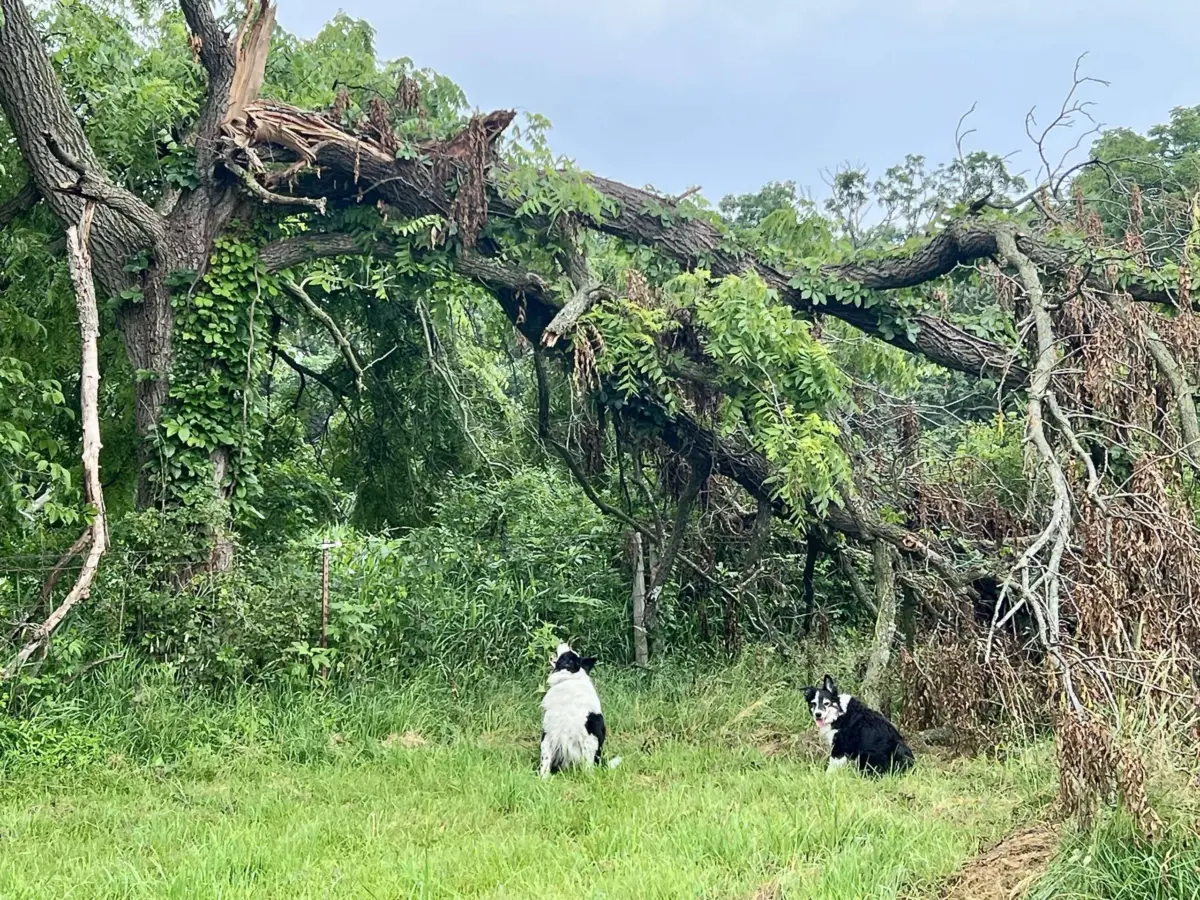
Balancing rigorous writing schedules, professional publishing commitments, and rural farm management presents unique seasonal challenges. With recovery efforts continuing following a severe 70 mph wind storm that swept through the region—requiring heavy chainsaw work and professional arboricultural intervention—daily life on the farm remains dynamic.
Recent weeks have also featured special gatherings, including a visit from detective and real-life CSI agent Colleen Michelson, whose professional expertise proved invaluable in shaping the law enforcement elements within Away To Me. Meanwhile, seasonal maintenance—such as managing garden weed growth despite wrist injuries—coincides with the peak bloom of mid-summer day lilies and evening prairie skies.
As the publishing timeline progresses toward the autumn release of The Puppy Primer and her new novel, the core message for animal lovers remains clear: effective training relies less on human intentions and more on canine perceptions. By paying close attention to how dogs truly experience our rewards, we can eliminate poisoned cues and build deeper, more authentic bonds built on mutual comfort and trust.