
Executive Overview
Following an intensely emotional week centered on the rescue and rehabilitation of hundreds of laboratory beagles, a moment of reprieve is essential. Animal rescue work demands immense emotional stamina, requiring advocates to confront the darkest corners of institutional animal abuse. Yet, amidst the weight of this heavy investigative and rescue labor, nature offers a vital counterweight: the restorative power of spring.
This report explores the duality of animal welfare advocacy—balancing the profound cruelty uncovered at facilities like Wisconsin’s Ridglan Farms with the breathtaking resilience of both rescued animals and the natural world. Drawing upon insights from renowned animal behaviorist and author Dr. Patricia McConnell, this article examines the parallels between human and canine trauma recovery, the logistics of a massive 500-dog intake at the Dane County Humane Society, and the grounding, therapeutic joy found in seasonal renewal.

Detailed Chronology: The Ridglan Beagles and the Road to Recovery
The events unfolding in Wisconsin’s animal welfare community represent a watershed moment for laboratory animal advocacy. For years, Ridglan Farms operated as a massive commercial breeder of beagles destined for scientific experimentation. However, mounting public pressure, legal battles, and documented allegations of animal abuse culminated in a pivotal legal agreement: Ridglan lost its license to sell dogs to laboratories, successfully sidestepping direct criminal convictions for animal abuse through structural concessions.
The Intake at Dane County Humane Society
In the wake of this agreement, the Dane County Humane Society orchestrated a monumental logistical feat, taking in approximately 500 beagles in a single massive triage operation. For shelter staff and volunteers, the influx of 500 dogs unaccustomed to standard domestic life presented unprecedented behavioral and medical challenges.

- The Initial Shock: The dogs arriving from Ridglan Farms bore the psychological and physical hallmarks of long-term confinement in sterile, wire-bottomed cages. Their initial reactions were characterized by a profound, stunned confusion. Having experienced virtually zero socialization, open spaces, or positive human interaction, these animals found themselves thrust into a confusing transition toward becoming beloved family companions.
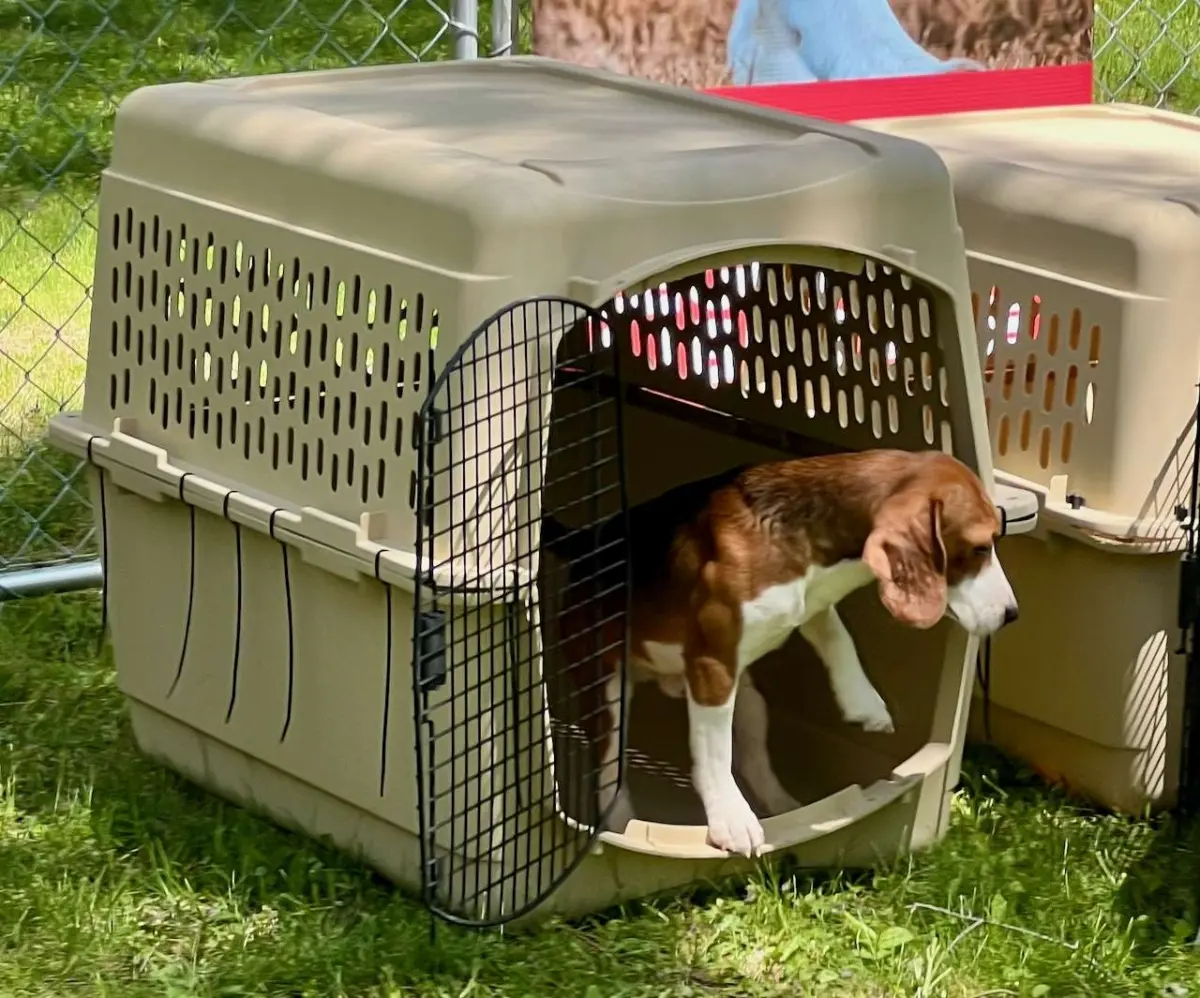
- The First Steps on Grass: Documenting the rehabilitation process reveals the agonizingly slow, beautiful journey of healing. One particular beagle took between 30 and 45 minutes simply to gather the courage to place a single paw on natural grass outside of his crate. The animal repeatedly lifted and pulled back his paw—a literal stutter-step of hesitation rooted in fear and unfamiliarity. Once he finally ventured out, his hind legs struggled to coordinate basic locomotion, unaccustomed to unyielding, uneven terrain.
- Parallel Journeys in Healing: This rehabilitation process closely mirrors the core themes of Dr. McConnell’s acclaimed memoir, The Education of Will. The fundamental neurobiological and psychological principles of recovering from severe trauma remain strikingly similar across species. Whether healing a human survivor of trauma or a laboratory-surviving beagle, the path forward requires patience, safety, and time.
Supporting Context & Metrics: Documenting Trauma and the Lens of Empathy
Capturing the gravity of the Ridglan rescue required specialized visual storytelling. Cinematographer Andria Chamberlin, currently filming a documentary focused on laboratory beagles and cross-species trauma recovery, documented the initial days of the rescue triage. Chamberlin’s lens captured the stark contrast between institutional confinement and the tender, fragile dawn of a new life.
Quantifying the Emotional Impact
- 500 Beagles: The sheer scale of the Dane County Humane Society triage operation, requiring massive mobilization of veterinary resources, foster networks, and behavioral specialists.
- Cross-Species Trauma Parallels: Behavioral science indicates that both dogs and humans process acute institutional confinement through hyper-vigilance, learned helplessness, and profound sensory disorientation.
- The Oxytocin Response: Visual documentation of the rescued beagles—specifically their wide, questioning eyes and hesitant postures—triggers an immediate neurochemical response in human observers, fueling public empathy and driving the volunteer pipeline necessary for long-term foster-to-adopt pipelines.
Official Statements and Institutional Perspectives
While direct legal statements regarding the closure of Ridglan’s breeding pipeline emphasize regulatory settlements, animal welfare organizations have focused heavily on the broader implications of large-scale commercial breeding for research.

Veterinary associations and animal rights watchdogs have long pointed to the inherent welfare compromises of housing highly social animals like beagles in isolation or wire-mesh enclosures. The American Veterinary Medical Association (AVMA) and local advocacy groups noted that while the settlement avoids protracted criminal trials, it permanently alters the landscape of animal sourcing for regional research facilities.
Meanwhile, shelter leadership at the Dane County Humane Society emphasizes that physical rescue is only the first phase. The long-term rehabilitation of these 500 dogs requires specialized behavioral intervention, financial backing from the community, and an unprecedented expansion of foster homes equipped to handle unsocialized adult dogs experiencing the world for the first time.

Future Outlook: Renewal, Education, and Ongoing Advocacy
As the animal welfare community processes the immense undertaking of the Ridglan beagle rescue, attention turns toward the broader systemic issues governing animal research, behavioral health, and public education.
Upcoming Focus Areas
- Canine Behavioral Science: Upcoming discussions will explore the manifestations of ADHD and anxiety in domestic dogs, analyzing how modern living impacts neurological health in companion animals.
- Literary and Educational Outreach: Special initiatives, including major educational sales on behavioral literature, will continue to equip pet owners and trainers with science-based tools for solving complex behavior problems.
- Ongoing Beagle Updates: Future reporting will follow individual success stories from the Ridglan rescue, tracking how dogs that once hesitated to touch the grass eventually transition into confident, cherished pets.
Finding Balance in Nature’s Resilience
Amidst the heavy demands of advocacy, anchoring oneself in the simple, vibrant realities of the natural world remains a vital survival mechanism for animal rescuers. Just as spring brings a dramatic shift in the landscape—from the stark greys of winter to the vibrant hues of native columbine flowers, prairie smoke, and buzzing hummingbirds—so too can the lives of rescued animals transform from black-and-white confinement into full-color freedom.

The arrival of vibrant Baltimore and orchard orioles to suburban feeders, alongside the steady presence of resident dogs like Skip and Maggie posing characteristic questions about work and comfort, serves as an essential reminder. We must never lose sight of joy, even if it is found simply in the delicate curve of a single flower petal or the hesitant step of a beagle touching grass for the very first time.