The North American commercial pet food market is undergoing a major structural shift. Traditionally dominated by dry extruded kibble and canned rations, the industry’s largest legacy manufacturers—often referred to colloquially as "Big Pet Food"—have rapidly expanded into the refrigerated and frozen "fresh" dog food category. Driven by shifting consumer demand toward humanized pet nutrition, legacy giants including Mars Petcare, Blue Buffalo (General Mills), Hill’s Science Diet (Colgate-Palmolive), Wellness Pet Food, and Fromm Pet Food have launched fresh product offerings.
However, an exhaustive investigation into this market expansion reveals a landscape characterized by regulatory ambiguity, extreme price disparities, and a near-total absence of verifiable premium ingredient standards. Despite marketing campaigns that evoke farm-fresh wholesome ingredients, only one major brand entering this space offers a product legally classified as "human-grade." The remaining products rely on standard feed-grade ingredients and conventional processing, yet command prices as high as $17.28 per day for a medium-sized dog.
Furthermore, state and federal regulatory bodies—specifically the U.S. Food and Drug Administration (FDA) and the Association of American Feed Control Officials (AAFCO)—have failed to establish a legal definition for "fresh" pet food. In the absence of statutory parameters, manufacturers are free to apply the label "fresh" to products that are raw, gently cooked, refrigerated, frozen, shelf-stable, or heavily processed. Concurrently, these major manufacturers have notably neglected the feline market, offering zero fresh cat food lines across their expanding portfolios.
Consumer advocates, led by TruthaboutPetFood.com and the Association for Truth in Pet Food, caution that legacy kibble conglomerates may be engaging in predatory pricing tactics—testing consumer price elasticity or intentionally pricing fresh alternatives at astronomical rates to drive budget-conscious pet owners back to high-margin dry kibble.
Detailed Chronology: The Corporate Rush to Capitalize on Fresh Pet Food
The current expansion of legacy kibble giants into the fresh food sector represents a calculated effort to recapture market share lost over the past decade to boutique direct-to-consumer fresh food startups.
+----------------------------------------------------------------------------------+
|                              CORPORATE TIMELINE                                  |
+----------------------------------------------------------------------------------+
|  2022         | Mars Petcare acquires NomNom (DTC fresh food brand).            |
|               | Mars Petcare acquires Champion Petfoods (Orijen & Acana).       |
+---------------+------------------------------------------------------------------+
|  Early 2026   | Major rollouts of fresh lines across legacy brands:              |
|               |  - Mars: Royal Canin "Fresh Health Nutrition" & Orijen "Fresh Prey"|
|               |  - Wellness: "Protein Bowls"                                    |
|               |  - Blue Buffalo: "Love Made Fresh"                              |
|               |  - Hill's Science Diet: "Fresh Roll"                            |
|               |  - Fromm: Bonnihill Farms "Chickibowls"                         |
+---------------+------------------------------------------------------------------+
|  March 2026   | Orijen "Fresh Prey" enters retail channels at peak pricing.     |
+---------------+------------------------------------------------------------------+
|  August 2026  | Initial retail price adjustments detected (e.g., Petco drops     |
|               | Orijen price by $2.00/pouch), revealing aggressive margin testing|
|               | and dynamic market calibration by legacy producers.             |
+----------------------------------------------------------------------------------+
2022: The Acquisition Phase
Recognizing the rapid growth of the fresh pet food category, global conglomerate Mars Petcare initiated aggressive strategic acquisitions to secure immediate infrastructure and brand recognition.
NomNom Acquisition: Mars Petcare acquired NomNomNow Inc. (NomNom), a prominent direct-to-consumer fresh pet food manufacturer, bringing a pre-established subscription customer base under the corporate umbrella.
Champion Petfoods Acquisition: In late 2022, Mars Petcare acquired Champion Petfoods, the manufacturer behind the premium Orijen and Acana brands, laying the groundwork for high-end fresh product lines.
Early 2026: Commercial Rollouts and Line Extensions
Following years of formulation and integration, legacy manufacturers launched a wave of fresh dog food offerings across retail networks, big-box pet retailers, and grocery stores:
Mars Petcare expanded its fresh ecosystem across three distinct operating arms: NomNom, Royal Canin (Fresh Health Nutrition), and Orijen (Fresh Prey).
Wellness Pet Food introduced its Protein Bowls line.
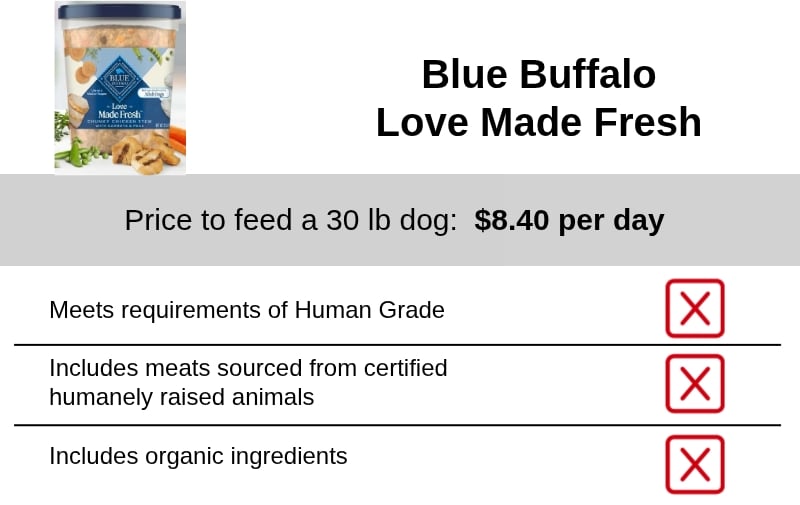
Blue Buffalo rolled out its Love Made Fresh tub-based wet/fresh meals.
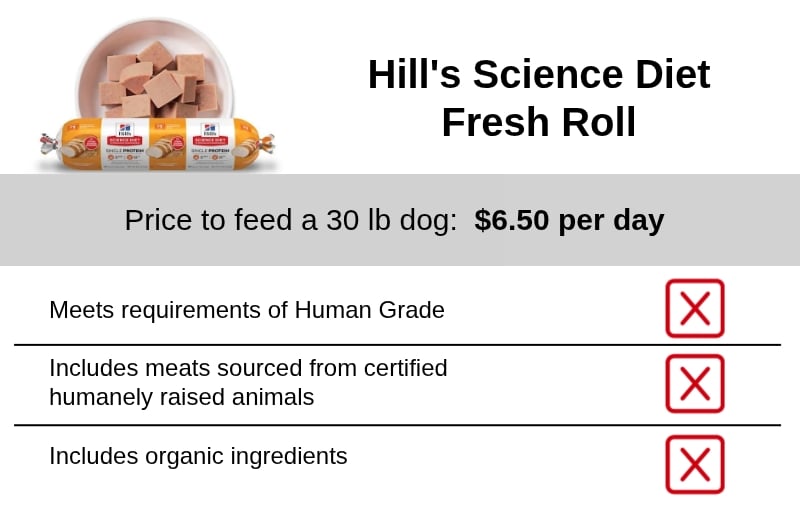
Hill’s Science Diet entered the refrigerated section with its Fresh Roll single-protein recipes.
Fromm Pet Food introduced Bonnihill Farms Chickibowls, offering both bowl and roll formats.
March 2026 – August 2026: Pricing Volatility and Retail Adjustments
Upon immediate release, corporate fresh food lines hit retail shelves at record-high price points. However, within months, market tracking revealed noticeable price fluctuations. For instance, when Mars Petcare’s Orijen Fresh Prey line debuted in March 2026, it was offered at a premium price point. By August 2026, major retailers like Petco had slashed prices by $2.00 per pouch, indicating that initial retail valuations faced consumer pushback, forcing corporate manufacturers to recalculate their price elasticity models.
To understand the cost structure and quality metrics of Big Pet Food’s fresh offerings, feeding estimates were analyzed based on standard manufacturer and retailer feeding guidelines for a healthy 30-pound adult dog.
+-----------------------------------------------------------------------------------+
|               COMPARATIVE DAILY COST ANALYSIS (30 LB DOG)                         |
+-----------------------------------------------------------------------------------+
| Brand / Product Line          | Format       | Human-Grade? | Daily Cost (USD)    |
+-------------------------------+--------------+--------------+---------------------+
| Hill's Science Diet Fresh Roll| Roll         | No           | $6.50               |
| Blue Buffalo Love Made Fresh  | Tub / Fresh  | No           | $8.40               |
| Wellness Protein Bowls        | Bowl / Fresh | No           | $9.15               |
| NomNom                        | Pouch        | No           | $11.20              |
| Orijen Fresh Prey             | Pouch        | YES          | $13.50              |
| Fromm Chickibowls             | Roll / Bowl  | No           | $14.27              |
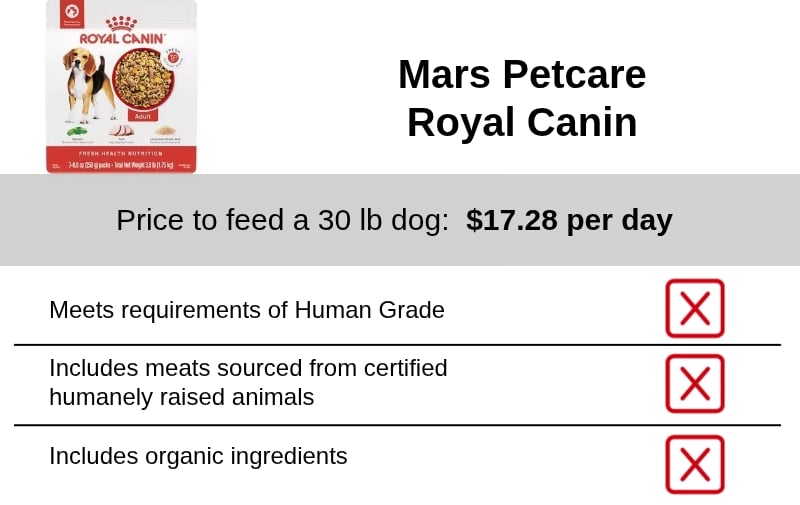
| Royal Canin Fresh Health      | Pouch / Fresh| No           | $17.28              |
+-----------------------------------------------------------------------------------+
| OVERALL PRICE RANGE: $6.50 to $17.28 / day                                        |
+-----------------------------------------------------------------------------------+
The "Fresh" Landscape: Brand-by-Brand Breakdown
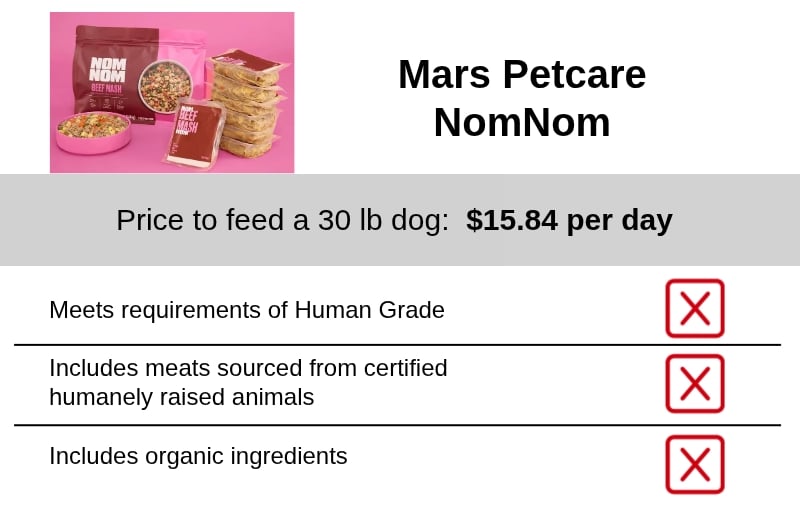
1. NomNom (Mars Petcare)
Product Line: Fresh prepared meals.
Claims Analysis: Does not claim human-grade status. Does not claim meats are sourced from certified humanely raised animals. Does not contain organic ingredients.
Claims Analysis: Does not claim human-grade status. Does not claim meats are sourced from certified humanely raised animals. Does not contain organic ingredients.
Target Feeding Format: Refrigerated/chilled formulations sold via veterinary and specialized retail channels.
Estimated Daily Cost (30 lb dog):~$17.28 / day
3. Orijen (Mars Petcare / Champion Petfoods)
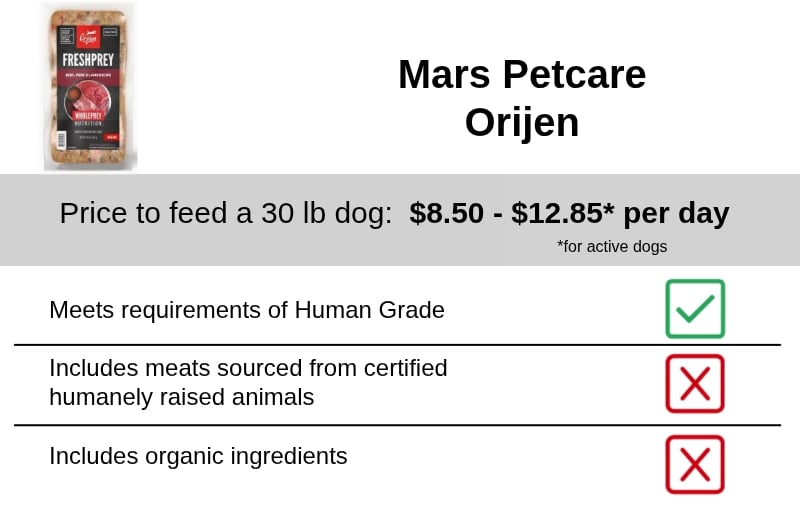
Product Line:Fresh Prey (e.g., Beef, Pork, and Lamb Recipe)
Claims Analysis:Makes an explicit Human-Grade claim on the product label, manufactured in a licensed human food facility. Does not claim meats are sourced from certified humanely raised animals. Does not contain organic ingredients.
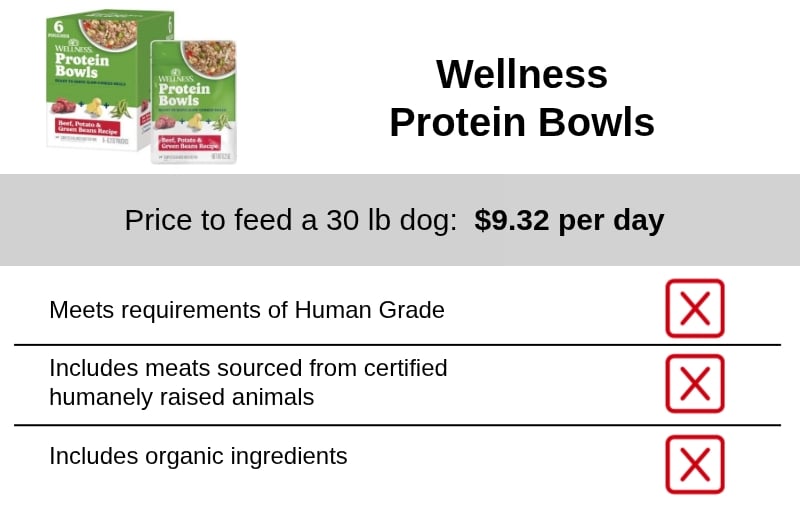
Product Line:Protein Bowls (e.g., Beef, Potato, & Green Beans Recipe)
Claims Analysis: Does not claim human-grade status. Does not claim meats are sourced from certified humanely raised animals. Does not contain organic ingredients.
Product Line:Love Made Fresh (e.g., Chicken Stew Adult Dog Tub)
Claims Analysis: Does not claim human-grade status. Does not claim meats are sourced from certified humanely raised animals. Does not contain organic ingredients.
Target Feeding Format: Chilled tubs/stews.
Estimated Daily Cost (30 lb dog):~$8.40 / day
6. Hill’s Science Diet (Colgate-Palmolive)
Product Line:Fresh Roll (e.g., Single Protein Chicken & Brown Rice)
Claims Analysis: Does not claim human-grade status. Does not claim meats are sourced from certified humanely raised animals. Does not contain organic ingredients.
Claims Analysis: Does not claim human-grade status. Does not claim meats are sourced from certified humanely raised animals. Does not contain organic ingredients.
Target Feeding Format: Gently cooked bowls and sliceable rolls.
Estimated Daily Cost (30 lb dog):~$14.27 / day
Financial Discrepancies and Price Distortion
The data demonstrates massive pricing discrepancies that appear detached from ingredient quality or manufacturing complexity:
                  DAILY COST TO FEED A 30 LB DOG ($ USD)

  Hill's Fresh Roll  [$$$$$$.50]  $6.50
  Blue Buffalo       [$$$$$$$$$.40]  $8.40
  Wellness           [$$$$$$$$$$.15]  $9.15
  NomNom             [$$$$$$$$$$$$.20]  $11.20
  Orijen (Human-Grade)[$$$$$$$$$$$$$$.50]  $13.50
  Fromm Bonnihill    [$$$$$$$$$$$$$$$.27]  $14.27
  Royal Canin        [$$$$$$$$$$$$$$$$$.28]  $17.28
                     +----+----+----+----+----+----+----+
                     $0   $3   $6   $9   $12  $15  $18
The Feed-Grade vs. Human-Grade Paradox:
Mars Petcare’s Royal Canin charges $17.28 per day for its Fresh Health Nutrition line, despite the product being feed-grade and manufactured under standard pet feed guidelines.
Conversely, Mars Petcare’s Orijen Fresh Prey, which is legally manufactured in a licensed human food facility and explicitly labeled Human Grade, costs $13.50 per day—nearly $4.00 less per day than Royal Canin’s feed-grade offering.
The Fresh Roll Discrepancy:
In the refrigerated "roll" segment, Hill’s Science Diet costs $6.50 per day.
Fromm’s Bonnihill Farms charges $14.27 per day for a virtually identical packaging style and feed-grade ingredient structure—representing a price mark-up of more than 119%.
Traditional Fresh Pouch Variants:
Between traditional fresh tub/pouch formats (NomNom, Royal Canin, Wellness, Blue Buffalo), daily feeding expenses range from $8.40 to $17.28.
Blue Buffalo ($8.40) and Royal Canin ($17.28) both utilize feed-grade supply chains, yet Royal Canin costs more than double Blue Buffalo.
The Regulatory Vacuum: FDA and AAFCO Non-Definitions
A primary factor contributing to consumer confusion is the total lack of regulatory oversight regarding the term "fresh."
Absence of Legal Definition: Neither the FDA Center for Veterinary Medicine nor AAFCO provides a legal definition or regulatory standard for "fresh pet food."
Permissive Labeling: Because "fresh" carries no statutory standard, pet food manufacturers can legally apply the claim to products regardless of processing severity, preservation method, or shelf life. A product labeled "fresh" may be raw, lightly cooked, high-pressure processed (HPP), frozen, defrosted, refrigerated, or even shelf-stable.
Feed-Grade vs. Human-Grade Standard: Under federal and state laws, standard pet food ingredients (feed-grade) are governed by relaxed regulatory oversight, allowing ingredients that do not pass USDA inspection for human consumption. To legally claim Human Grade, the finished product must be made entirely from ingredients inspected and passed by the USDA fit for human consumption and manufactured in a fully licensed human food processing facility. Of all legacy manufacturers entering this market, only Orijen meets this threshold.
Zero Feline Representation: Despite cats requiring high-moisture, protein-dense fresh diets due to their biology as obligate carnivores, none of the legacy manufacturers included in this analysis have developed or commercialized a fresh cat food line. The corporate pivot remains exclusively focused on dogs, where market volume and profit margins are higher.
Official Statements & Industry Perspectives: Advocate Analysis vs. Market Realities
Pet food consumer advocate Susan Thixton, founder of TruthaboutPetFood.com and representative at the Association for Truth in Pet Food (ATPF), has publicly criticized the pricing strategies and labeling practices of major commercial manufacturers entering the fresh category.
"We have to wonder what games these traditional pet food manufacturers are playing with their prices," stated Thixton. "Are they experimenting with price to see what pet owners will pay for their fresh options? Or are some trying to drive the price of fresh pet food up to prevent more pet owners from affording this option—making pet owners believe they cannot afford fresh pet food and pushing them back to traditional dry kibble?"
Thixton points to corporate price corrections as evidence of dynamic margin testing:
"When we first reported on Mars Petcare’s Orijen fresh pet food in March 2026, it carried a significantly higher price tag. Within five months, retailers like Petco dropped the price by $2.00 per pouch. Why is the highest-priced pet food on the market—Royal Canin—almost twice the price of lowest-priced alternatives when both are feed-grade and manufactured similarly?"
Corporate Positioning
While legacy conglomerates have not publicly addressed allegations of price suppression or aggressive margin testing, corporate press releases continuously frame these line extensions as responses to consumer demand for minimal processing and premium ingredients. However, ingredient panel audits conducted by consumer advocacy groups reveal that:
0% of the evaluated corporate fresh products use certified organic ingredients.
0% claim animal proteins sourced from certified humanely raised livestock.
85.7% (6 out of 7 brands) rely strictly on feed-grade ingredients rather than human-grade components.
Future Outlook: Price Sensitivity, Market Stabilization, and Regulatory Reform
As major kibble manufacturers expand their fresh dog food footprints, the pet food sector is entering a transitional phase characterized by heightened consumer scrutiny and impending regulatory debates.
+----------------------------------------------------------------------------------+
|                            FUTURE MARKET TRAJECTORY                              |
+----------------------------------------------------------------------------------+
|  Short-Term (1-2 Years)  |  • Continued retail price volatility as legacy brands |
|                          |    test consumer price ceilings.                      |
|                          |  • Potential price compression driven by independent  |
|                          |    human-grade competitors.                           |
+--------------------------+-------------------------------------------------------+
|  Mid-Term (3-5 Years)    |  • Heightened consumer advocate pressure on AAFCO and |
|                          |    FDA to establish a legal definition for "fresh."   |
|                          |  • Mandatory labeling disclosures differentiating     |
|                          |    human-grade from feed-grade processing.            |
+--------------------------+-------------------------------------------------------+
|  Long-Term Category Shift|  • Eventual expansion of fresh offerings into feline  |
|                          |    dietary lines.                                     |
|                          |  • Greater supply chain transparency forced by        |
|                          |    informed pet owner demographics.                   |
+----------------------------------------------------------------------------------+
Key Trends to Watch:
Retail Price Normalization: The massive spread between $6.50/day and $17.28/day for feed-grade fresh foods is likely unsustainable. As consumers become educated on the difference between feed-grade and human-grade fresh foods, manufacturers commanding top-tier pricing for feed-grade recipes (such as Royal Canin and Fromm) will face market pressure to adjust pricing downward or elevate ingredient sourcing standards.
Regulatory Pushback on "Fresh" Claims: Organizations such as the Association for Truth in Pet Food are expected to step up petitioning at AAFCO and FDA meetings. Demands will focus on defining "fresh" to prevent shelf-stable or heavily processed feed-grade foods from co-opting the term, ensuring clear labeling distinctions for consumers.
Invasion of Feline Fresh Categories: The complete absence of fresh cat food options from Big Pet Food leaves a major opening for boutique brands. Legacy manufacturers will inevitably be forced to launch dedicated feline fresh options to capture lost market share in the cat nutrition sector.
Shift Toward True Human-Grade Transparency: As corporate giants market feed-grade products in fresh-looking tubs and pouches, independent human-grade manufacturers will leverage their legal facility status as a key market differentiator, pushing the entire pet food industry toward greater ingredient supply chain disclosure.