
Executive Overview
Agriculture is standing at the precipice of a high-tech revolution, driven by the urgent need for greater operational efficiency, sustainability, and data-driven decision-making. At the vanguard of this movement is California-based agtech startup TerraBlaster, a company poised to redefine how the world measures, understands, and manages soil health. Just one year after securing a $4 million pre-seed funding round, TerraBlaster has successfully closed a heavily oversubscribed $12.5 million seed financing round.
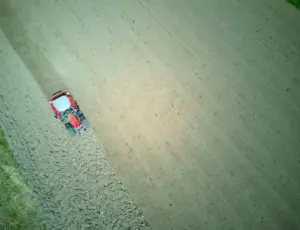
This fresh capital injection will accelerate the company’s ongoing research and development (R&D), expand aggressive field trials across the agricultural heartland of the American Midwest, and pave the way for long-term hardware integrations with standard farm machinery such as tractors, planters, and combines.
Founded early last year by seasoned agtech veteran Jorge Heraud, TerraBlaster is commercializing a sophisticated analytical technique traditionally confined to heavy industrial and metallurgical laboratories: laser-induced breakdown spectroscopy (LIBS). By miniaturizing and ruggedizing this technology into a tractor-pulled implement known as the Blaster 1000, TerraBlaster is bridging the gap between high-precision laboratory physics and the rigorous demands of commercial crop production.
In an era defined by volatile global supply chains, rising input costs, and mounting environmental scrutiny over fertilizer run-off, TerraBlaster’s timing could not be more critical. The startup’s proprietary approach generates data resolutions up to 16 times greater than traditional soil sampling methods, all while operating at a cost structure competitive with conventional lab testing. By unlocking unprecedented hyperlocal insights into nutrient stratification and soil chemistry, TerraBlaster is providing growers with the actionable intelligence needed to optimize fertilizer usage, boost yields, and secure an estimated $45 per acre in combined cost savings and productivity gains.
Detailed Chronology: From Lab Physics to Field Implementation
To understand the magnitude of TerraBlaster’s market entry, one must trace the evolutionary path of its foundational technology and the rapid commercial scaling achieved by its leadership team.
Genesis and the Pre-Seed Foundation
TerraBlaster was formally established early last year by Jorge Heraud, a recognized luminary in the agtech space whose previous ventures laid foundational stones for modern precision farming. Recognizing that conventional soil testing had remained largely unchanged for decades—relying on sluggish, generalized physical samples sent to off-site laboratories—Heraud envisioned a real-time, in-situ solution that could capture the true spatial variability of agricultural soils.
To fund the initial prototyping and engineering of this ambitious concept, TerraBlaster quietly raised $4 million in a pre-seed funding round. This capital allowed the nascent startup to adapt LIBS technology—historically utilized in material science labs to assess the elemental composition of materials, such as measuring carbon concentrations in structural steel—for biological and geological field applications.
Overcoming the Engineering Challenge
Adapting a high-precision optical technology from a sterile, vibration-free laboratory bench to the punishing, dusty, and dynamic environment of a working agricultural field presented monumental engineering hurdles. Heraud and his engineering team focused on building a durable, tractor-pulled mechanism that could reliably interact with varying soil types, moisture levels, and residue densities.
The resulting innovation is the Blaster 1000. As this specialized implement is towed across a field, it mechanically opens shallow, V-shaped trenches in the soil. Within these trenches, the system fires a high-powered laser down to the critical root zone. The laser vaporizes a microscopic speck of soil, creating a localized plasma plume. By recording and analyzing the optical emissions of the light given off as this plasma cools, the system instantly identifies the elemental composition of the sample.
Scaling to the Oversubscribed Seed Round
Building upon successful proof-of-concept trials and surging investor enthusiasm for hardware-enabled agronomy solutions, TerraBlaster returned to the venture capital market. The resulting $12.5 million seed round was significantly oversubscribed, reflecting high institutional confidence in the startup’s trajectory.
The round was spearheaded by prominent venture firm Ulu Ventures, with strategic participation from a powerhouse syndicate including Ag Startup Engine, Artesian, Builders Vision, Khosla Ventures, Reservoir, Sunna, and Trailhead Capital. This diverse coalition of agtech, venture capital, and impact investors provides TerraBlaster with not only the financial runway required for commercial scaling but also deep strategic networks across the agricultural ecosystem.
Commercial Roadmap: Presales and 2027 Delivery
With its financial foundation secured, TerraBlaster has outlined an aggressive timeline for commercial deployment. The company plans to open presale ordering for the Blaster 1000 later this year, with the first commercial production units slated for delivery to early-adopter farmers and agronomists in the spring of 2027.
Crucially, TerraBlaster is structuring its pricing model to eliminate financial friction for growers. Rather than introducing an exorbitant premium for disruptive technology, the company aims to price its service comparably to traditional lab-based soil testing.
"The typical charge from the lab is about between somewhere around $4-5 per acre," notes founder Jorge Heraud. "So, that’s more or less where we want to be, but come in with this high resolution. We measure more things. We have this measurement that measures stratification and is highly accurate."
Supporting Context & Metrics: The Crisis of Conventional Sampling
To fully appreciate TerraBlaster’s market disruption, one must analyze the systemic limitations of legacy soil testing methodologies and the macroeconomic pressures currently confronting global agriculture.
The Limits of the 2.5-Acre Grid
For decades, professional agronomists and progressive farmers have relied on grid soil sampling to guide fertilizer management. In this traditional workflow, a technician traverses a field, physically collecting core soil samples across a standardized grid—most commonly at a 2.5-acre interval. These composite samples are bagged, shipped to a regional laboratory, chemically digested, and analyzed days or weeks later.
While this approach was a massive step forward when it was popularized decades ago, it suffers from critical structural flaws:
- Spatial Blind Spots: Soil characteristics are inherently heterogeneous. Extensive geological and agronomic studies demonstrate that soil properties, organic matter, pH, and nutrient concentrations can vary significantly across distances as short as 70 to 90 feet. A single composite sample taken over a 2.5-acre zone inherently averages out these localized spikes and troughs, masking nutrient deficiencies in one corner of the grid while overestimating fertility in another.
- Lag Time: The temporal gap between pulling a sample in the field and receiving results from a lab can stretch from several days to weeks. By the time a farmer receives recommendations, field conditions, weather patterns, or crop growth stages may have shifted.
- Destructive and Superficial Data: Traditional lab methods provide a generalized snapshot of the topsoil, frequently failing to capture vital vertical stratification—how nutrients and minerals are distributed at varying depths down to the actual root zone.
TerraBlaster’s Hyperlocal Resolution Advantage
TerraBlaster’s Blaster 1000 upends these limitations through hyper-dense data collection. By measuring soil metrics within targeted 80-by-80-foot areas, the startup’s LIBS technology delivers a data density approximately 16 times higher than conventional 2.5-acre grid sampling.
Furthermore, the data is delivered directly to agronomists and farmers in a streamlined .CSV file format, allowing for seamless integration into existing farm management software (FMS) and variable-rate fertilizer applicators. Because the laser penetrates deep into the V-shaped trench, the system captures true vertical stratification, offering a multi-dimensional profile of the root zone that traditional surface core samples miss entirely.
Macroeconomic Pressures and Fertilizer Volatility
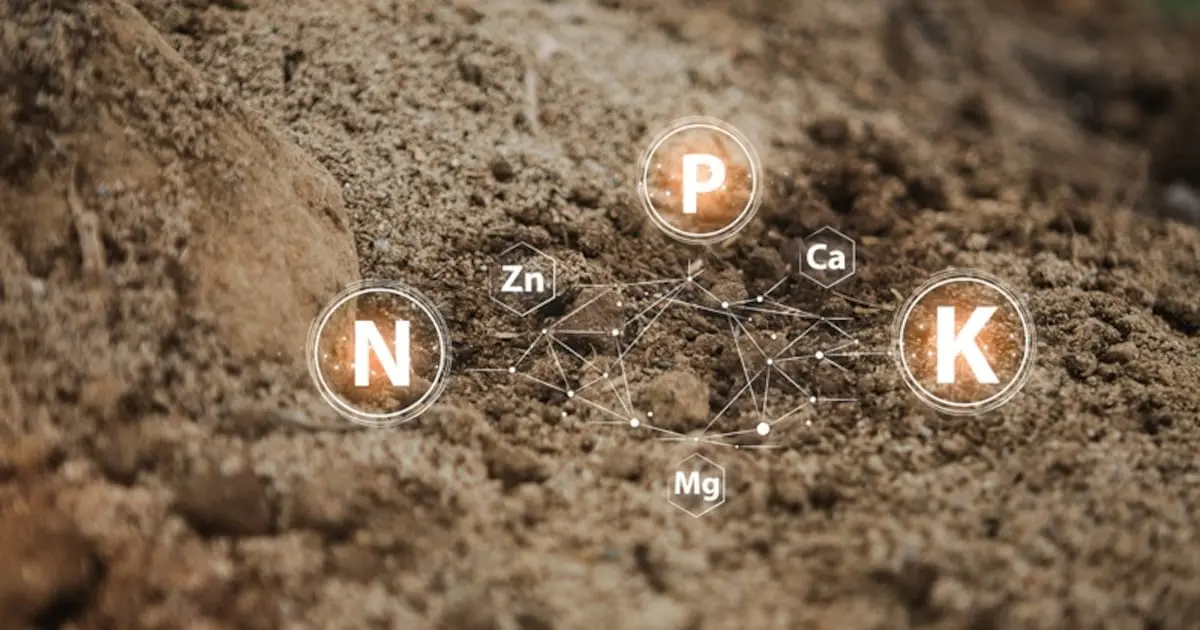
TerraBlaster’s commercial acceleration arrives at a time of severe turbulence in global agricultural supply chains. Geopolitical tensions, including disruptions stemming from the Iran conflict, have introduced extreme price volatility into global fertilizer markets. Nitrogen, phosphorus, and potassium (NPK) inputs represent one of the single largest variable operating expenses for grain and row-crop producers.
When fertilizer prices spike or supplies become constrained, inefficient application methods can instantly erode a farm’s profit margins. Conversely, under-applying nutrients to save costs can stunt crop development and devastate harvest yields. Farmers are trapped in a high-stakes balancing act where precision is no longer just an environmental buzzword—it is a matter of financial survival.
The $45 Per Acre Economic Dividend
By utilizing TerraBlaster’s high-resolution LIBS data, growers can transition from blanket or generalized variable-rate applications to hyper-precise, micro-targeted nutrient placement. According to Heraud, this level of precision unlocks an average economic benefit of $45 per acre in combined cost savings and yield improvements.
- Input Optimization: By identifying precise areas of nutrient deficiency, farmers avoid wasting expensive fertilizer on soils that are already saturated, while ensuring deficient zones receive adequate support.
- Yield Enhancement: Directing nutrients precisely where plants can access them during critical developmental windows maximizes photosynthetic efficiency and biomass accumulation.
"For the same amount of expenditure, you can get higher yields because you’re putting the fertilizer in the right places, and that’s very good for farmers," Heraud elaborates. "It stretches every dollar that they spend on fertilizer."
Official Statements & Industry Perspectives
The rapid ascent of TerraBlaster and the enthusiastic backing of its $12.5 million seed round underscore a broader industry consensus: hardware-driven agtech is entering a golden age. Leadership and institutional backers have increasingly emphasized the practical, bottom-line utility of the startup’s innovations.
Jorge Heraud, drawing on decades of experience in automation and agricultural sensing, emphasizes that technology must directly address the economic realities of the modern farmer. Reflecting on the transition of LIBS from metallurgy to agronomy, Heraud notes that the core mission has always been about translating complex laboratory physics into accessible, field-ready tools.
"Historically, LIBS technology is used in material labs to detect the presence of certain elements, like how much carbon is in steel," Heraud explained during discussions with industry analysts. Bringing that same rigorous elemental detection down to the farm level represents a quantum leap in agronomic visibility.
Investors in the oversubscribed seed round echoed these sentiments, pointing to TerraBlaster’s ability to solve a universal, high-cost pain point for growers worldwide.
Representatives from Ulu Ventures, which led the funding round, highlighted the startup’s capital efficiency and clear path to commercialization. By pairing a seasoned entrepreneurial team with a truly differentiated technological moat—adapting laser spectroscopy for subterranean soil analysis—TerraBlaster has positioned itself as an indispensable asset in the future of sustainable crop production. Additional participation from specialized agtech funds like Trailhead Capital and Khosla Ventures reinforces the industry-wide belief that hardware innovations capable of optimizing chemical and fertilizer inputs will define the next decade of agricultural investment.
Future Outlook: The Horizon of Autonomous Soil Sensing
Looking beyond the upcoming spring 2027 commercial rollout of the Blaster 1000, TerraBlaster’s strategic horizon is defined by aggressive hardware integration and technological expansion.
Expanding Midwest Field Trials
With the capital secured from the recent seed financing, TerraBlaster is scaling its empirical validation efforts. The startup is dramatically expanding its field trial footprint across the American Midwest. These trials are designed to test the Blaster 1000 across a diverse array of soil orders—from the heavy, glacial tills of the Western Corn Belt to the dynamic alluvial soils of river basins—ensuring the LIBS calibration models maintain peak accuracy across varying organic matter levels, soil textures, and moisture regimes.
Embedding Intelligence into Everyday Machinery
The ultimate long-term vision for TerraBlaster extends far beyond a standalone towed implement. In his discussions on product evolution, Jorge Heraud outlined the startup’s roadmap to embed its proprietary LIBS sensor technology directly into standard agricultural machinery.
By engineering the sensing units to be integrated into everyday farm equipment—including tractors, high-clearance sprayers, planters, and combine harvesters—TerraBlaster aims to make soil data collection a continuous, passive process. Imagine a future where a farmer measures soil fertility while simultaneously planting seeds, or maps nutrient depletion profiles in real-time as a combine harvests the autumn crop. This continuous feedback loop would transform modern agronomy from an episodic, sampling-based discipline into a continuous, real-time feedback system.
Conclusion: Redefining Global Agronomy
TerraBlaster’s $12.5 million seed round is more than just a successful venture capital milestone; it is a clear validation of deep-tech innovation meeting urgent agricultural demand. By liberating advanced spectroscopic analysis from the laboratory and mounting it onto tractor frames, the company is dismantling the century-old compromises of grid soil sampling.
As the agricultural sector navigates the intersecting pressures of climate variability, economic volatility, and the imperative for sustainable intensification, tools like the Blaster 1000 offer a clear path forward. By delivering 16 times more data resolution at a price point competitive with traditional testing—and unlocking an average of $45 per acre in value—TerraBlaster is not merely measuring the soil; it is actively cultivating the future of global farming.