
Executive Overview
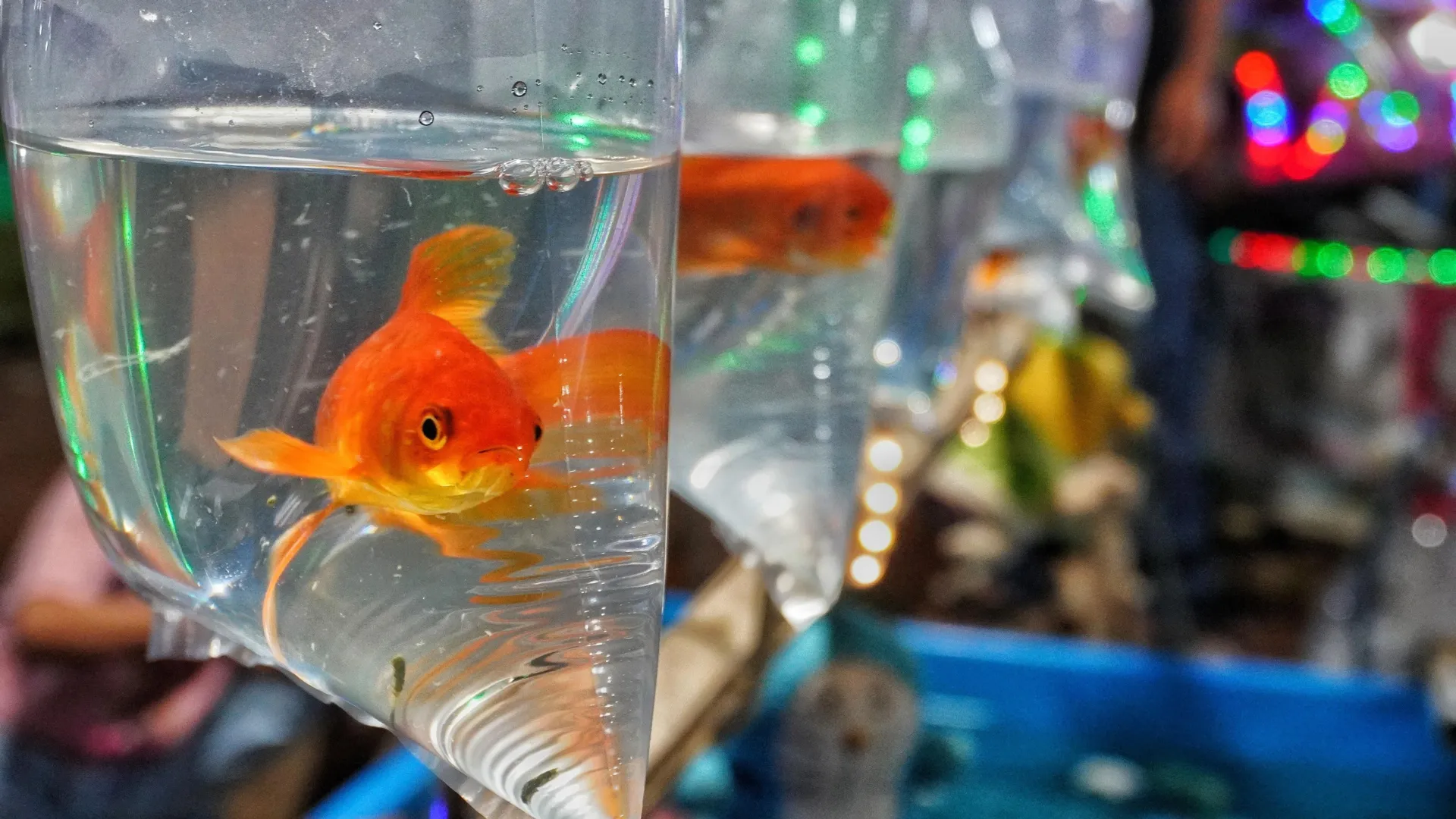
To millions of households worldwide, the goldfish (Carassius auratus) is the quintessential starter pet—a serene, golden-hued occupant of glass bowls and filtered indoor aquariums, often associated with tranquility, minimal maintenance, and childhood innocence. However, a groundbreaking, peer-reviewed study recently published in the prestigious Journal of Animal Ecology shatters this benign domestic illusion. Conducted collaboratively by environmental researchers at The University of Toledo and the University of Missouri, the research provides some of the most rigorous and definitive experimental evidence to date that discarded or escaped goldfish are not mere aquatic oddities in the wild; they are potent ecological disruptors capable of triggering catastrophic regime shifts in freshwater habitats.
The findings deliver an urgent, unequivocal warning to pet owners, natural resource managers, conservationists, and legislative policymakers alike. While releasing an unwanted pet into a local pond, river, or lake is frequently rationalized by compassionate owners as an act of kindness—a return to a "natural" life—science reveals it is often an ecological death sentence for the native environment. Once established in the wild, goldfish undergo remarkable physiological transformations, growing far beyond their diminutive tank sizes, churning up lakebeds, devouring native aquatic life, and destabilizing delicate aquatic food webs.
As freshwater biodiversity faces unprecedented pressures from climate change, habitat loss, and pollution, the invisible threat of the ornamental pet trade has emerged as a frontline conservation crisis. This investigative report examines the methodology, findings, real-world implications, and necessary policy responses surrounding the invasive goldfish phenomenon, detailing how a creature bred for human amusement has become a formidable agent of environmental degradation.
Detailed Chronology: Unveiling the Goldfish Threat
For decades, anecdotal observations from anglers, park rangers, and ecologists suggested that goldfish dumped into public waterways could survive and multiply, occasionally growing to the size of dinner plates. Yet, despite these alarming field accounts, hard experimental data isolating the specific, direct impacts of goldfish—as opposed to general overfishing or broad ecological degradation—remained surprisingly scarce.
To bridge this critical scientific knowledge gap, a dedicated team of researchers led by Dr. William Hintz, an associate professor in The University of Toledo’s Department of Environmental Sciences and Lake Erie Center, alongside Hannah Barrett and Dr. Rick Relyea of the University of Missouri, embarked on a comprehensive, highly controlled experimental project. Their objective was to move beyond observation and definitively quantify the systemic damage caused by Carassius auratus across varying aquatic landscapes.
The Mesocosm Experiments
To replicate natural lake conditions while maintaining rigorous scientific control, the research team utilized large outdoor freshwater mesocosms—essentially oversized, artificial ponds engineered to mimic the complex dynamics of real-world ecosystems. These mesocosms allowed scientists to monitor biological and chemical shifts over time, tracking interactions between water quality, phytoplankton, aquatic invertebrates, filamentous algae, and native fish populations.
The team deliberately structured the experiment to evaluate goldfish performance across two distinct freshwater trophic states:
- Oligotrophic Waters: Nutrient-poor, typically clear waters with low biological productivity.
- Eutrophic Waters: Nutrient-rich waters characterized by high primary productivity, often prone to severe algal blooms.
By introducing goldfish into these controlled environments and employing both additive and substitutive experimental designs, the researchers were able to rigorously separate the specific, compounding effects of goldfish from general variations in total fish biomass. The results were startling. In both nutrient-poor and nutrient-rich ecosystems, the presence of goldfish initiated profound, systemic disruptions, fundamentally altering the trajectory of the aquatic environments.
The Mechanism of a Regime Shift
Perhaps the most alarming discovery of the research was the documentation of what aquatic ecologists term a "regime shift." In environmental science, a regime shift represents a critical threshold where an ecosystem, under sustained ecological stress, abruptly reorganizes from one stable state into a fundamentally different—and typically severely degraded—condition.
When goldfish penetrate these aquatic systems, they act as active catalysts for such shifts. Because goldfish are bottom-feeders belonging to the carp family (Cyprinidae), they systematically root through benthic sediments in search of food. This continuous foraging behavior suspends fine silts and sediments into the water column, drastically reducing water clarity. The cloudier water blocks sunlight, choking out submerged native vegetation while simultaneously releasing trapped nutrients back into the water. This nutrient surge frequently triggers explosive, toxic algal blooms, completely transforming a clear, biodiverse lake into a turbid, green, species-poor wasteland. Once an ecosystem crosses this structural threshold and enters a degraded regime, reversing the damage requires monumental financial investments, intensive remediation, and years of active ecological restoration.
Supporting Context & Metrics: The Scale of the Ornamental Invasion
To fully comprehend the gravity of the University of Toledo and University of Missouri study, one must examine the broader socio-economic and ecological pipeline that facilitates the global distribution of ornamental aquatic species.
The Global Pet Trade Pipeline
The international pet trade is a multi-billion-dollar industry that moves billions of live animals across international borders and domestic supply chains annually. Goldfish, first domesticated in ancient China over a thousand years ago through the selective breeding of wild Prussian carp (Carassius gibelio), are among the most mass-produced and widely distributed freshwater fish on earth.
Because they are inexpensive, hardy, and readily available, they are frequently purchased on impulse, particularly for children or temporary displays (such as carnival prizes or classroom pets). Unfortunately, this high turnover rate correlates directly with high rates of abandonment. When pet owners tire of cleaning tanks, moving homes, or watching their pets outgrow small enclosures, many succumb to the psychological comfort of "setting the animal free."
Furthermore, accidental escapes are extraordinarily common. Waterfront properties, backyard ornamental ponds, and municipal water features frequently overflow during heavy storms and seasonal flooding events. When these artificial water features connect with local drainage basins, creeks, or rivers, captive goldfish instantly transition into wild, invasive colonizers.
Biological Superpowers of the Invasive Goldfish
What makes Carassius auratus such a devastating invasive species once it escapes captivity? Biology has equipped goldfish with a suite of evolutionary survival traits that give them a massive competitive edge over native fauna:
- Extreme Environmental Tolerance: Goldfish can survive in waters with severely depleted oxygen levels (hypoxia) that would easily kill native sportfish like trout or bass. They can endure near-freezing winter temperatures by burying themselves in mud and drastically slowing their metabolism, and conversely, they tolerate high summer water temperatures.
- Phenotypic Plasticity and Explosive Growth: In a small glass bowl, goldfish growth is largely constrained, leading to the persistent urban legend that fish only grow to the size of their container. In reality, this is a myth rooted in stress and poor water quality. When introduced to an open lake or river with abundant food resources, goldfish experience rapid compensatory growth, routinely expanding from a few inches into heavy, robust specimens weighing several pounds and measuring over a foot in length.
- Omnivorous Generalist Diet: Goldfish are relentless, opportunistic feeders. They consume vast quantities of zooplankton, aquatic insects, snails, detritus, and fish eggs. By stripping the ecosystem of foundational prey species, they starve native predatory and forage fish of essential nutrients.
- High Reproductive Output: As prolific spawners, female goldfish can release tens of thousands of eggs in a single spawning season. This high fecundity allows small populations to explode exponentially within just a few short years, overwhelming local eradication efforts.
Official Statements and Expert Perspectives
The collaborative research team emphasizes that combating this ecological threat requires an immediate paradigm shift in how environmental agencies, retailers, and the general public view common aquarium pets.
Dr. William Hintz, lead investigator of the study, associate professor in UToledo’s Department of Environmental Sciences, and researcher at the Lake Erie Center, pulled no punches when discussing the disconnect between public perception and ecological reality:
"It is critically important to inform the public that their pets can become pests that will harm freshwater ecosystems. The evidence is now clear—releasing a goldfish into the wild might be seen as an act of kindness, but it can turn into a major ecological threat."
Dr. Hintz’s warning underscores a profound psychological hurdle in conservation biology: well-meaning citizens who commit environmental infractions out of misplaced empathy. Unlike industrial pollution or agricultural runoff, biological pollution via pet release is driven by individual human sentiment, making targeted public education campaigns uniquely challenging.
Echoing these concerns, co-author Dr. Rick Relyea—professor in the University of Missouri College of Agriculture, Food and Natural Resources and director of Mizzou’s Johnny Morris Institute of Fisheries, Wetlands and Aquatic Systems—detailed the aggressive physical impacts goldfish inflict upon introduction:
"If goldfish are released into the wild, they rapidly grow into very large fish that stir up lake sediments, consume large numbers of prey, and compete with native fish."
Relyea and his colleagues stress that natural resource management agencies must elevate goldfish from a whimsical novelty to a high-priority invasive species requiring proactive regional monitoring, rapid-response eradication protocols, and stringent regulatory frameworks.
Future Outlook: Mitigation, Policy, and Public Action
Mitigating the invasive goldfish crisis demands a multifaceted, proactive strategy spanning consumer education, retail responsibility, municipal infrastructure, and legislative reform. Without concerted intervention, freshwater ecosystems near urban centers will face continuous, cumulative degradation.
1. Reforming Public Education and Consumer Behavior
The front line of defense against invasive goldfish is the human mind. Educational initiatives must be aggressively scaled up across multiple touchpoints:
- Point-of-Sale Warnings: Pet stores, garden centers, and online aquatic retailers should be mandated to provide clear, standardized care and disposal warnings at the point of purchase, educating buyers on the lifespan, ultimate size, and ecological dangers of releasing pets.
- School and Community Outreach: Science curricula in primary and secondary schools should incorporate modules on invasive species and biodiversity, utilizing the goldfish as an accessible case study.
2. Establishing Safe Surrender Infrastructure
Telling pet owners not to release animals is insufficient; society must provide accessible, practical alternatives for unwanted pets. Communities should establish:
- Pet Store Take-Back Programs: Encouraging or incentivizing commercial pet stores to accept healthy surrendered fish.
- Aquarium Society Networks: Partnering with local hobbyist clubs and rescue organizations to rehome aquatic life.
- Municipal Surrender Facilities: Designated drop-off points at animal shelters or nature centers equipped to handle aquatic surrenders humanely.
3. Enhancing Natural Resource Management and Infrastructure
For natural resource agencies, shifting toward proactive management is paramount:
- Flood Mitigation Engineering: Designing stormwater management systems, retention ponds, and ornamental water features with physical barriers—such as screens and double-drain systems—to prevent captive fish from escaping into natural waterways during heavy precipitation events.
- Early Detection and Rapid Response (EDRR): Implementing regular environmental DNA (eDNA) sampling and electrofishing surveys in public ponds and urban waterways to detect nascent goldfish populations before they undergo catastrophic regime shifts.
- Targeted Eradication: Utilizing approved, selective bio-control methods or rotenone treatments where necessary to eliminate established invasive populations before they permanently alter local food webs.
Conclusion
The research from The University of Toledo and the University of Missouri serves as an urgent wake-up call. The golden fish swimming peacefully in a living room tank is an apex disruption waiting to happen if introduced to the wild. By bridging the gap between rigorous scientific research and public consciousness, society can protect fragile freshwater ecosystems from the unintended consequences of misplaced compassion—ensuring that our natural lakes and rivers remain vibrant, biodiverse, and resilient for generations to come.