
Executive Overview
On what began as a routine, albeit harrowing, afternoon in Kennewick, Washington, local emergency responders turned a potential catastrophe into a triumphant story of compassion and quick-thinking heroism. A violent residential fire ripped through a family home, filling the neighborhood with thick, blinding smoke and threatening lives within minutes. While the human occupants managed to evacuate the premises safely before emergency crews arrived, a vulnerable population of tiny residents remained trapped inside: a litter of vulnerable kittens, completely surrounded by toxic fumes and intense, life-threatening heat.
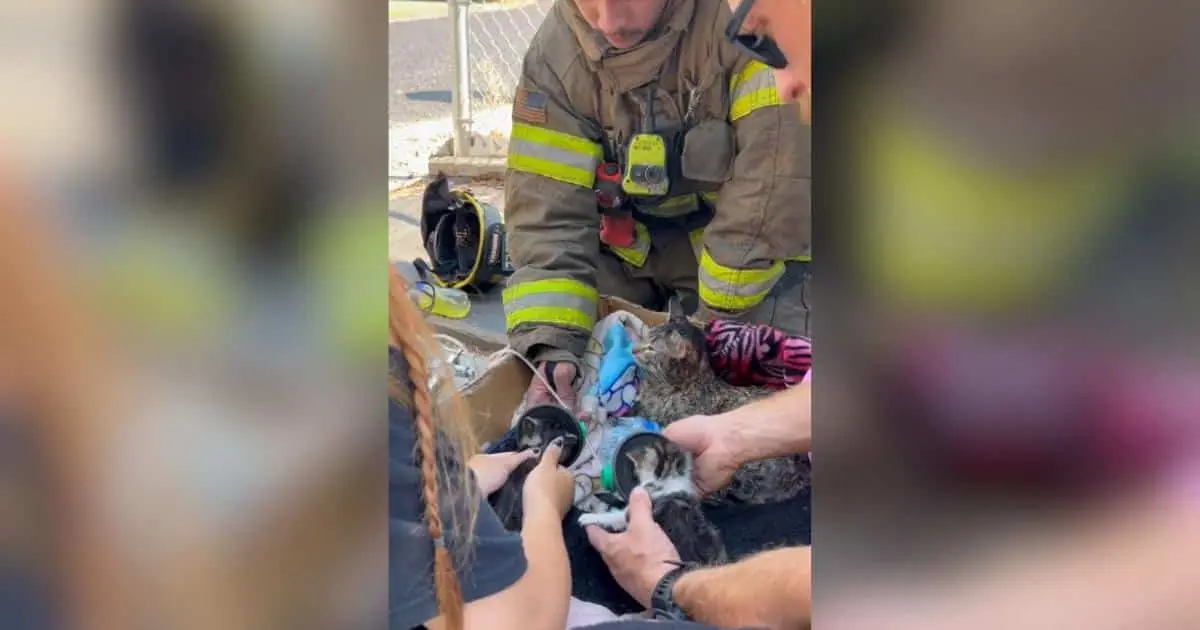
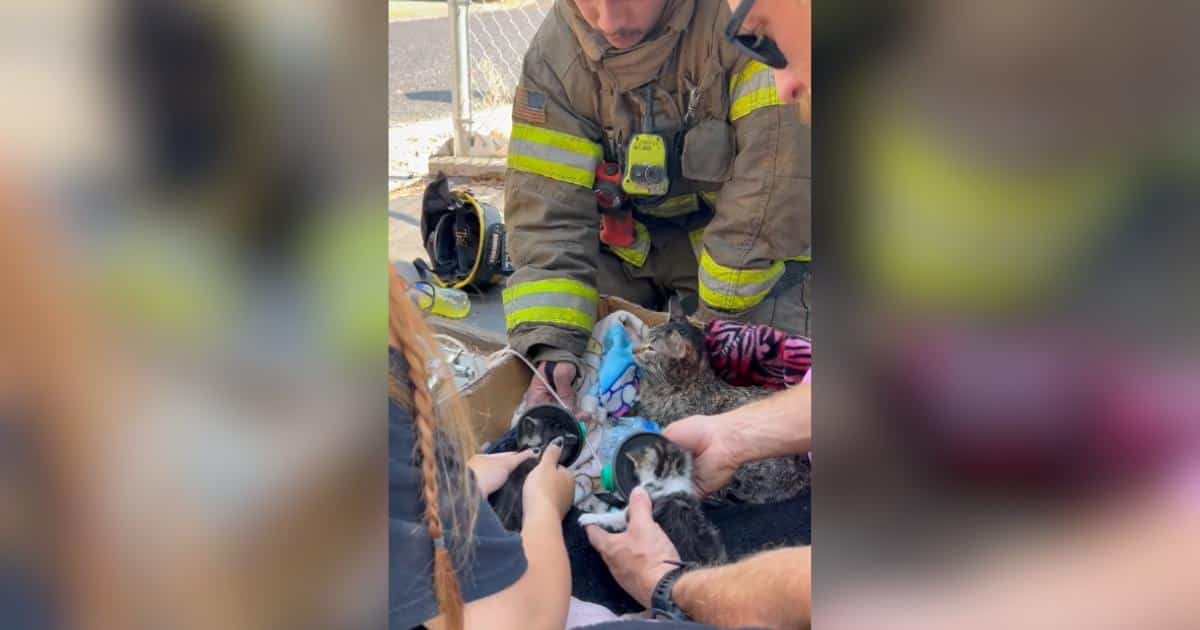
Rather than treating the incident as a standard structural fire, Kennewick Fire Department personnel executed a high-risk interior search specifically to rescue the defenseless animals. Once brought out into the fresh air, the feline survivors received specialized medical attention using pet-specific oxygen equipment—highlighting a critical, often-overlooked facet of modern municipal firefighting. Remarkably, no human injuries or fatalities were reported during the incident, though the structure suffered extensive damage and required localized utility shutdowns by Benton PUD. This comprehensive account explores the chronology of the Kennewick blaze, the specialized veterinary-support equipment deployed at the scene, official insights regarding animal safety protocols during house fires, and the profound community impact of saving society’s smallest, most defenseless victims.
Detailed Chronology of the Kennewick Fire Incident
The Initial Alarm and Arrival
The emergency unfolded rapidly on a residential street in Kennewick. Thick, dark plumes of smoke were visible from blocks away as the blaze rapidly consumed the interior of the dwelling. According to local reports, the call came in during the afternoon, prompting an immediate, multi-engine response from the Kennewick Fire Department.
Upon arrival, incident commanders faced a classic high-stakes scenario: an active, aggressive structural fire accompanied by downed or compromised power lines in the immediate vicinity. The compromised electrical infrastructure posed an immediate electrocution hazard to personnel attempting to scale ladders or establish hose lines near the perimeter of the property. Consequently, first responders had to coordinate swift tactical adjustments, calling for emergency utility intervention from Benton PUD to cut off electricity to the grid servicing the affected sector.
Evacuation and the Discovery of Trapped Lives
While utility crews worked to secure the area, engine companies deployed lines and launched an aggressive interior attack. Despite the intense heat and near-zero visibility caused by heavy smoke, crews managed to bring the main body of the fire under control with remarkable speed, preventing the flames from spreading entirely to neighboring structures.
At the onset of the firefighting operations, initial reports provided a glimmer of relief: all human residents had successfully escaped the burning building unharmed. However, as Incident Command debriefed the distraught homeowners, a critical piece of information emerged. In the chaos and panic of the rapid evacuation, several tiny kittens had been left behind, unaccounted for in the rear sector of the house.
The Interior Search and Rescue Operation
Recognizing that time was of the essence—as smoke inhalation is frequently more lethal than burns in structural fires—firefighters immediately formed a rescue detail. Equipped with self-contained breathing apparatuses (SCBAs) and thermal imaging technology, crews re-entered the structurally compromised and smoke-choked residence.
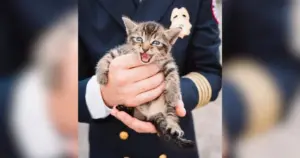
Navigating zero-visibility conditions by feel and sound, the team systematically searched the rooms where pets typically shelter during moments of high stress. Within minutes, the rescuers located the tiny, frightened animals. Huddled together and overwhelmed by the heat and unfamiliar roar of the blaze, the kittens were gently gathered by the firefighters and carried out of the burning structure into the safety of the open air.
Supporting Context & Metrics: Specialized Rescue Equipment and Animal Physiology
The Science of Smoke Exposure in Small Animals
The physical mechanics of smoke inhalation differ drastically between humans and small domestic pets. Kittens, with their rapidly developing respiratory systems and diminutive body masses, are exponentially more vulnerable to toxic airborne byproducts—such as carbon monoxide, hydrogen cyanide, and particulate soot—than adult humans.
When a structure burns, synthetic materials, furniture, and household electronics release complex chemical cocktails. Even when an animal manages to avoid direct thermal burns from flames, the inhalation of superheated air and toxic smoke rapidly compromises pulmonary function. This leads to acute respiratory distress, carbon monoxide poisoning, and secondary pulmonary edema. In the critical minutes immediately following extraction from a fire, the administration of supplemental oxygen is often the single variable that determines survival.
Specialized Pet Oxygen Masks: Anatomy of an Invention
Historically, firefighters attempting to revive pets overcome by smoke were forced to improver human oxygen masks, pressing them awkwardly against an animal’s muzzle or improvising with makeshift cones. This methodology frequently resulted in massive oxygen leakage, rendering the treatment ineffective.
[Oxygen Cylinder / Regulator]
       │
       ▼
[Oxygen Delivery Tubing]
       │
       ▼
[Conical Rubberized Pet Mask] ──► (Designed for airtight seal over canine/feline muzzle)
       │
       ▼
[Direct Pulmonary Stabilization of Rescued Animal]
The Kennewick Fire Department’s successful deployment of specialized pet oxygen masks underscores a progressive shift in emergency medical services (EMS) for animals. Unlike standard human non-rebreather masks—which are flat and contoured for a human nose and chin—pet oxygen masks feature a tapered, conical design crafted from flexible rubber or durable plastic.
These masks are engineered to accommodate varying anatomies, ranging from large-breed dogs down to fragile newborn kittens. The flexible rim creates an airtight seal around the animal’s snout and muzzle, ensuring that 100% of the prescribed oxygen flow enters the respiratory tract. By integrating these specialized tools into their frontline apparatus, agencies like the Kennewick Fire Department can bridge the gap between pre-hospital rescue and emergency veterinary stabilization.
Official Statements and Operational Challenges
Navigating Hazardous Infrastructure
The Kennewick fire was complicated not only by the interior fuel load of the burning home but also by external utility hazards. The destruction of local power lines required rapid cross-agency cooperation. Benton PUD crews acted efficiently to isolate the grid, mitigating a dangerous threat to firefighters operating heavy hoses and metallic ladders in wet, chaotic conditions.
Fire officials noted that while property loss was severe, the strategic containment of the fire prevented catastrophic secondary losses to adjacent neighborhood properties. Investigations into the exact origin and ignition source of the fire remained active in the days following the incident, as fire marshals worked closely with the displaced homeowners.
The Human Element: Empathy in Uniform
Public information officers and responding crew members emphasized that emergency response extends far beyond extinguishing flames and mitigating property damage. For the Kennewick firefighters, the psychological reward of the day rested entirely in the successful preservation of life—regardless of species.
"A badly damaged home can eventually be repaired or rebuilt," noted one department representative reflecting on the rescue. "The opportunity to carry a living animal out of the smoke cannot be replaced." This ethos reflects a growing cultural standard within modern fire services, where animal rescue is treated not as an incidental afterthought, but as an integral pillar of community protection and public service.
Future Outlook: Household Preparedness and Animal Safety Protocols
Integrating Pets into Disaster and Emergency Plans
The dramatic Kennewick rescue serves as an urgent educational reminder for pet owners nationwide. Municipal fire departments frequently encounter scenarios where well-meaning residents place their lives at extreme risk by attempting to re-enter burning structures to search for pets.
To mitigate these risks and optimize response times, emergency management agencies advocate for proactive household emergency planning:
- Strategic Placement of Supplies: Keep pet carriers, leashes, and emergency food supplies near primary exit points so they can be grabbed instantly during a rapid evacuation.
- Current Identification: Ensure that all pets wear breakaway collars with up-to-date microchip data and ID tags, facilitating swift reunification if an animal bolts during the chaos of a fire.
- Emergency Alert Stickers: Utilize reflective pet alert stickers (such as those recommended by emergency safety organizations) on front and rear doors or windows. These notify arriving fire crews of the exact number and species of animals inside the residence.
- Designated Responders: Never re-enter a burning building. Instead, immediately inform the first arriving company officer of the exact last-known location of any trapped animals, allowing trained professionals with proper respiratory gear to conduct the search.
The Broader Impact on Municipal Fire Services
As pet ownership rates reach historic highs across North America, fire departments are increasingly prioritizing specialized training and equipment donations geared toward animal rescue. Programs funded by charitable organizations and non-profits frequently supply local stations with pet oxygen mask kits.
The successful outcome in Kennewick stands as a testament to the value of these investments. By combining old-fashioned physical bravery with modern veterinary-support technology, the Kennewick Fire Department transformed what could have been an unmitigated tragedy into a shining example of community protection. For the tiny kittens saved from the brink that afternoon, a dedicated team of first responders turned a potential disaster into a second lease on life.