In the face of rapidly escalating climate volatility, wildland-urban interface (WUI) fires have become one of the most unpredictable threats to rural and suburban communities across the American West. In Spokane, Washington, this threat materialized with devastating speed, catching residents unprepared as flames swept through dry brush and residential properties. Among those caught in the direct path of the inferno was Donna Carberry, a local resident whose survival came down not to early warning sirens or emergency broadcasts, but to the extraordinary instincts and fierce loyalty of her German Shepherd, Shadow.
While Donna remained inside her home, unaware that a fast-moving wildfire had already breached her property line and consumed her barn, Shadow sensed the imminent danger. Through persistent and frantic physical intervention, the dog alerted his owner just moments before the house was engulfed. The subsequent escape, marked by a grueling 32-hour roadside ordeal, underscores the profound vulnerabilities faced by rural pet and livestock owners during natural disasters.
This investigative report examines the chronology of the Spokane fire escape, the physical and emotional toll of the disaster on the Carberry household, the critical role played by grassroots volunteers and national animal welfare organizations, and the broader policy implications for emergency pet and livestock management in disaster-prone regions.
Detailed Chronology
[Saturday, Approx. Noon]
Wildfire breaches property -> Barn destroyed -> Shadow alerts Donna -> Escape facilitated by Good Samaritans
       │
       ▼
[Saturday, 12:00 PM to Sunday, 8:00 PM]
Donna, Shadow, and cat stranded on roadside -> Evacuation routes congested -> Exposure to smoke and heat
       │
       ▼
[Sunday, 8:00 PM]
Horse-evacuation volunteer rescues Donna -> Transport to emergency shelter and veterinary care
       │
       ▼
[Post-Disaster Phase]
Donna hospitalized/wheelchair-bound -> Best Friends Animal Society steps in to care for Shadow
The Unseen Threat and the Instinctual Alarm
On the afternoon the wildfire struck, the atmosphere in rural Spokane was deceptively normal inside the Carberry home. Donna Carberry was occupied indoors, insulated from the initial signs of the approaching disaster. Outside, however, dry winds were driving a wall of fire through the surrounding vegetation with terrifying velocity.
Before any smoke had penetrated the house or emergency alerts had registered, Shadow, Donna’s German Shepherd, exhibited a sudden and dramatic behavioral shift. Recognizing a mortal threat through olfactory and auditory cues imperceptible to humans, the dog grew increasingly desperate. Shadow began throwing his entire body weight repeatedly against the back door, barking frantically.
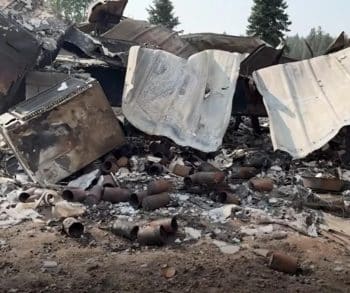
Initially bewildered by the unusual and aggressive behavior, Donna went to investigate the source of her dog’s distress. Upon opening the door, she was met with a catastrophic scene. The wildfire had already swept through her property, completely destroying her barn. The flames had advanced up her back steps, ignited her wooden deck, and were actively climbing the exterior siding of her home.
"My barn had already burned down and the fire had come up the back steps and onto the deck and was already going up the side of my house," Donna later recalled in an interview with the Best Friends Animal Society. "So, he literally saved my life."
A Landscape Consumed: The Flight from the Flames
With the house actively burning and thick, toxic smoke choking the air, the window for escape was closing rapidly. The fire had already compromised Donna’s primary means of self-evacuation; her truck and horse trailer, parked in the driveway, were engulfed in flames and rendered useless.
As the property was surrounded by fire, a group of passing Good Samaritans intervened. Acting quickly under hazardous conditions, these individuals assisted Donna in fleeing the property, helping her evacuate alongside Shadow and her domestic cat. The escape was narrow, leaving behind her home, her outbuildings, and her beloved horses.
The 32-Hour Roadside Vigil
Escaping the immediate flames did not signal the end of the crisis. The speed of the wildfire had triggered a chaotic, mass evacuation of the Spokane area, paralyzing local transportation routes and overwhelming emergency services.
Donna, Shadow, and her cat found themselves stranded on the shoulder of a nearby road. From approximately 12:00 PM on Saturday until 8:00 PM on Sunday—a span of 32 hours—the trio remained on the roadside. As evacuees fled past them, Donna and her animals endured prolonged exposure to falling ash, heat, and dense smoke. Throughout this grueling ordeal, Shadow refused to leave Donna’s side, acting as both a physical guardian and a source of emotional stability amidst the chaos.
Key Milestones of the Roadside Ordeal:
• Duration: 32 Hours (Saturday 12:00 PM – Sunday 8:00 PM)
• Conditions: Dense smoke, high ambient heat, active evacuation zone
• Assets Lost: Truck and horse trailer destroyed; personal mobility compromised
• Resolution: Intervention by a horse-evacuation volunteer
The standoff ended Sunday evening when a young woman, who was actively volunteering to transport stranded horses from the fire zone, spotted Donna. Realizing that Donna had been stranded without food, water, or shelter for over a day, the volunteer cleared space in her transport vehicle, loaded Donna, Shadow, and the cat, and drove them to a designated safe zone.
Supporting Context & Metrics
The Vulnerability of Rural Infrastructure and Livestock
The Spokane wildfire highlights a critical vulnerability in emergency management: the high-risk profile of rural properties containing livestock. Unlike urban evacuations, rural residents face complex logistical hurdles, particularly when transporting large animals under short notice.
Asset Type
Status Post-Fire
Immediate Evacuation Challenges
Primary Residence
Destroyed / Severely Damaged
Rapid exterior ignition via deck; lack of early indoor smoke detection.
Barn & Outbuildings
Completely Destroyed
Rapid fuel consumption; housing for vulnerable livestock.
Truck & Horse Trailer
Destroyed in Driveway
Loss of self-evacuation capability; stranded the owner on-site.
Horses (Qty: 3)
2 Deceased, 1 Survived
High-stress transport logistics; dependency on specialized trailers.
Domestic Pets (Qty: 2)
Both Survived (Dog & Cat)
Relied entirely on canine warning and volunteer transport.
For Donna, the loss was deeply personal. While one horse survived the fire and was later relocated to a neighbor’s farm, two of her beloved horses perished in the flames. This tragic outcome is common in fast-moving wildfires, where the time required to hitch trailers and load stressed animals often exceeds the minutes available before a fire front arrives.
The Science of Canine Threat Detection
Shadow’s ability to detect the fire before Donna is grounded in canine physiology. Dogs possess an olfactory sensitivity that is estimated to be 10,000 to 100,000 times more acute than that of humans. In a wildfire scenario, a dog can detect microscopic pyrolysis products (the chemical precursors to open flames) and volatile organic compounds in smoke miles before they are visible.
Additionally, canine hearing extends into the infrasound range, allowing them to hear the low-frequency crackle of burning timber and the structural collapse of distant buildings long before human ears can register the sound.
Official Statements and Institutional Support
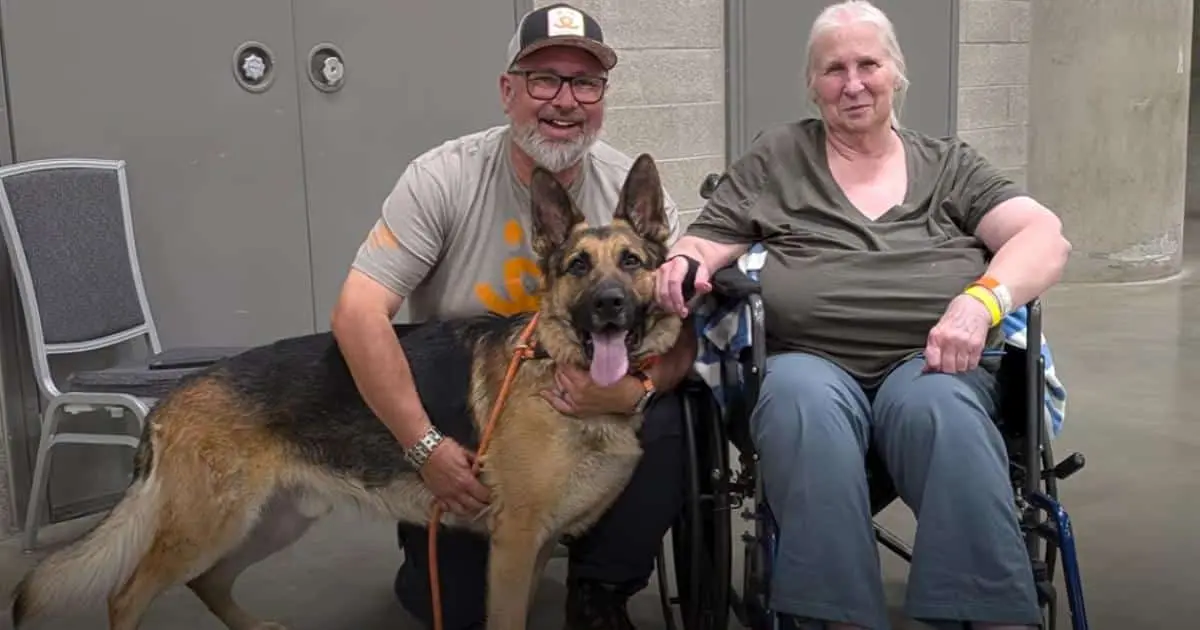
Following the initial escape and rescue, Donna faced a secondary crisis. During the chaotic evacuation and subsequent relocation, she suffered a severe fall, requiring immediate medical treatment. The injury left her temporarily wheelchair-bound and unable to perform the physical tasks required to care for an active, large-breed dog like Shadow while she began the process of rebuilding her life.
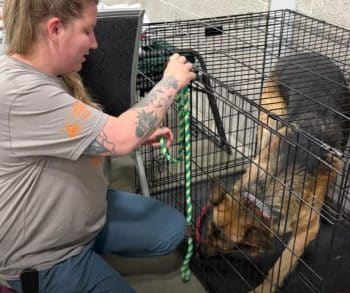
Recognizing the urgent need for intervention, Best Friends Animal Society, a leading national animal welfare organization, stepped in to provide emergency temporary housing and veterinary support for Shadow. This allowed Donna to focus on her physical rehabilitation and secure stable housing without the added pressure of daily pet care, while ensuring the bond between her and her rescuer remained unbroken.
"By taking care of him, you are taking care of me."
— Donna Carberry, in a statement to Best Friends Animal Society
In a public statement detailing the case, representatives from Best Friends Animal Society emphasized the critical role that temporary boarding programs play in disaster recovery:
"In the wake of natural disasters, human and animal welfare are inextricably linked. When survivors are displaced or injured, providing a safe, temporary sanctuary for their pets is not just an act of animal rescue—it is a vital component of human recovery. Shadow saved Donna’s life; our mission was to ensure that Donna did not lose her protector in the aftermath."
Future Outlook
Rebuilding from the Ashes
The road ahead for Donna Carberry is long, marked by the physical challenges of recovering from her injuries and the emotional weight of losing her home and her horses. However, the survival of Shadow, her cat, and one of her horses offers a foundation of hope. Currently, her surviving horse and cat are being boarded at a supportive neighbor’s farm, while Shadow remains under the expert care of Best Friends Animal Society, awaiting a reunion as soon as Donna’s physical recovery and housing situation stabilize.
Current Placement of Surviving Animals:
1. Shadow (German Shepherd): Temporarily boarded with Best Friends Animal Society
2. Surviving Horse: Sheltered at a local neighbor's agricultural property
3. Domestic Cat: Co-located with the surviving horse at the neighbor's farm
Policy Implications for Emergency Management
The circumstances of Donna and Shadow’s survival highlight several areas where local and state emergency management agencies can improve disaster response frameworks:
Integration of Pet-Inclusive Evacuation Plans: Emergency transit systems and temporary shelters must establish clear protocols for accommodating domestic pets to prevent owners from refusing evacuation or becoming stranded on roadsides.
Mutual Aid Networks for Livestock: The successful rescue of Donna’s surviving animals by a horse-transport volunteer underscores the need for formalized, county-backed networks of volunteer trailer operators who can be dispatched systematically during wildfires.
Targeted Support for Vulnerable Demographics: Emergency services require improved databases to identify and prioritize elderly, disabled, or isolated rural residents who lack independent transport during rapid evacuation orders.
Through the devastation of the Spokane wildfire, the story of Donna and Shadow stands as a testament to the power of animal intuition and loyalty. While the fire claimed her property and livelihood, it failed to sever the bond between a devoted dog and the owner he refused to leave behind.