
Executive Overview
In a groundbreaking archaeological discovery that is forcing scientists to completely rethink the complex, ancient relationship between humanity and apex predators, researchers have unearthed ancient wolf remains on a tiny, isolated island in the Baltic Sea—a location the animals could not possibly have reached without deliberate human intervention.
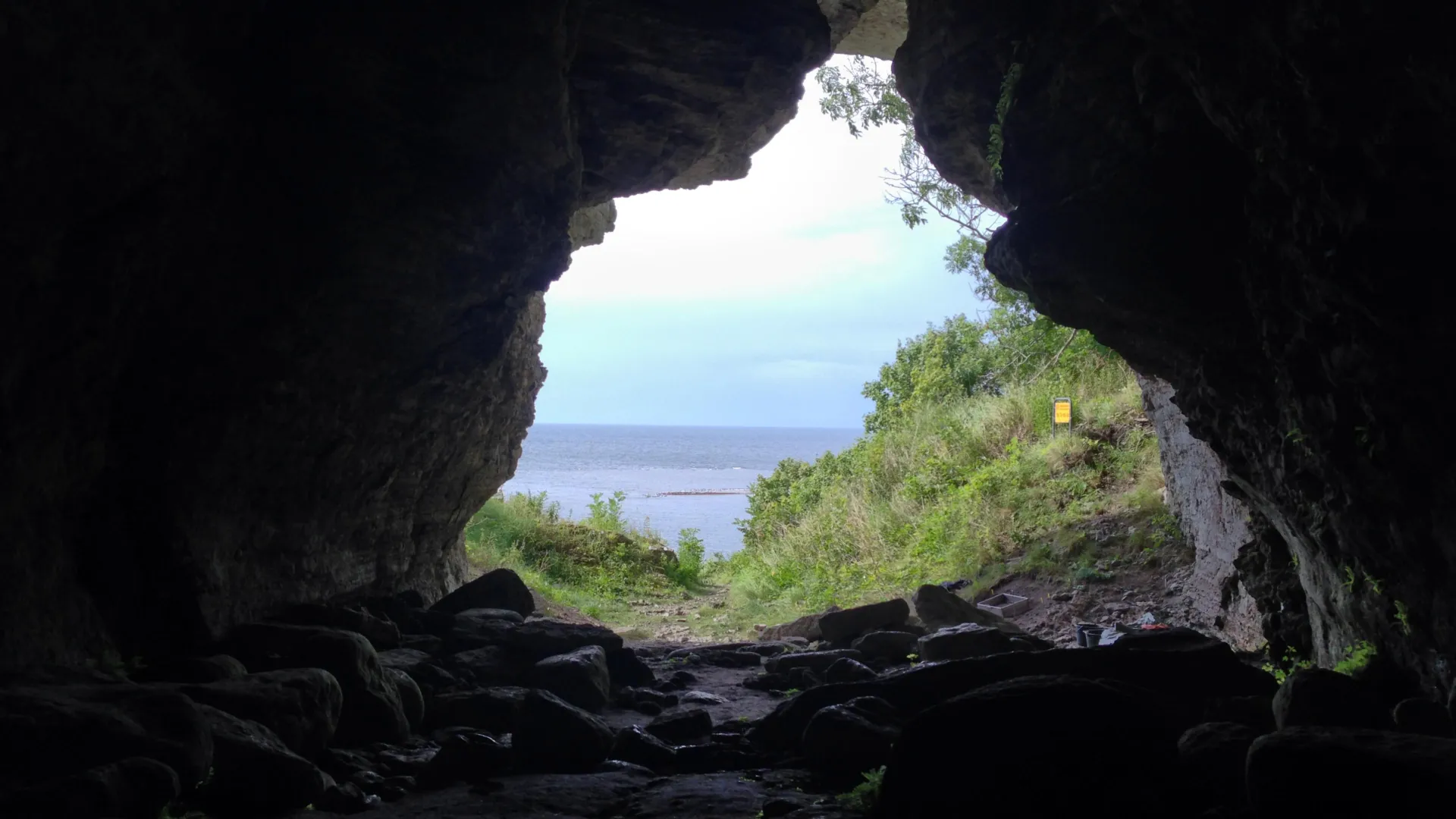
Published in the prestigious journal Proceedings of the National Academy of Sciences (PNAS), the multidisciplinary study was spearheaded by an international coalition of leading scientists from the Francis Crick Institute, Stockholm University, the University of Aberdeen, and the University of East Anglia. The findings center on the Stora Förvar cave, located on Stora Karlsö, a minuscule, limestone-rich Swedish island spanning a mere 2.5 square kilometers.
Dated to between 3,000 and 5,000 years old, bridging the transition from the late Neolithic period to the Bronze Age, the recovered remains belong unquestionably to Canis lupus—the grey wolf—rather than early domesticated dogs. Yet, despite their pure wild ancestry, these wolves lived a life inextricably intertwined with human activity. Advanced biochemical and genomic analyses reveal that these creatures were transported across open water by boat, sustained on a diet of marine mammals shared by human seal hunters, and may have even been kept, managed, or cared for within human settlements.
This unexpected revelation shatters the binary view of prehistoric human-wolf interactions—long believed to be strictly characterized by fierce competition, avoidance, or outright hostility. Instead, the discovery provides provocative evidence of early, localized experiments in keeping apex predators. While these specific island lineages did not directly contribute to the emergence of the modern domestic dog, they illuminate a forgotten chapter of mammalian history where humans and wild wolves forged surprisingly close, cooperative bonds long before the dawn of modern civilization.
Detailed Chronology: Unearthing the Stora Karlsö Mystery
To fully understand the magnitude of the discovery, one must look closely at the geography and deep history of Stora Karlsö. Situated off the western coast of Gotland in the Baltic Sea, the island is completely isolated from the European mainland. During the Neolithic and Bronze Ages, this rugged outcrop served as a seasonal hub for maritime hunter-gatherers. Archaeological evidence unearthed from the Stora Förvar cave—a massive karst cave that pierces the island’s limestone cliffs—indicates that the site was heavily utilized by ancient communities specializing in seal hunting, deep-sea fishing, and coastal foraging.
Because Stora Karlsö possesses no native land mammals due to its sheer isolation and small landmass, any terrestrial carnivore appearing on its shores during prehistory had to arrive via human transport. Wolves do not voluntarily swim vast expanses of open, frigid Baltic water, nor do they drift across on ice floes in a manner that would establish a stable, long-term presence on a 2.5-square-kilometer rock.
The timeline of the site’s use and the canid remains spans millennia:
- Neolithic Foundations (Circa 5,000 Years Ago): As human seafaring capabilities advanced across Northern Europe, coastal populations increasingly exploited the rich marine resources of the Baltic. It was during this era of intensive maritime expansion that the earliest of the recovered wolf remains date. The presence of these animals suggests that early boat-builders and seal hunters were not merely transporting themselves and their gear, but occasionally hauling live, large carnivores across the sea.
- Bronze Age Continuity (Circa 3,000 Years Ago): The habitation and utilization of the Stora Förvar cave persisted through the Bronze Age. Later wolf remains recovered from the site demonstrate that the presence of these animals on the island was not a singular, anomalous event, but rather a recurring or sustained phenomenon spanning generations.
- The Modern Archaeological Excavation: The bones, meticulously preserved within the alkaline, nutrient-rich cave floor sediments, lay dormant for millennia before being recovered by archaeologists. Modern scientific techniques—ranging from accelerator mass spectrometry (AMS) radiocarbon dating to ancient DNA (aDNA) extraction and stable isotope analysis—were subsequently deployed to unlock the secrets locked inside these ancient fragments.
Supporting Context & Metrics: Genetics, Diets, and Island Biogeography
The multi-pronged scientific investigation utilized cutting-edge laboratory methodologies to cross-examine the physical bones, their genetic blueprints, and their chemical signatures. The results paint a vivid, multi-dimensional picture of how these prehistoric wolves lived, fed, and suffered.
1. Genomic Identity: Pure Wolves, Not Dogs
One of the most intense debates surrounding ancient canid remains involves distinguishing between early domesticated dogs (Canis familiaris) and wild wolves (Canis lupus), as the two species readily hybridized and shared similar skeletal morphologies during transitional periods.
Using targeted ancient DNA enrichment techniques, researchers successfully sequenced the genomes of two canid bones recovered from the cave. The genetic data delivered an unambiguous verdict: the animals were pure-bred Eurasian wolves. They displayed zero genetic admixture or ancestry tracing back to early domestic dogs. Genetically, they were indistinguishable from contemporary wild wolves roaming the mainland forests of Northern Europe and Eurasia.
2. Dietary Isotopes: Eating at the Human Table
While their DNA marked them as wild wolves, their chemical makeup told a different story of survival. Stable isotope analysis of carbon and nitrogen locked within the collagen of the wolf bones revealed a startling dietary signature.
Mainland wolves of the era relied heavily on terrestrial prey, such as red deer, roe deer, and wild boar. However, the Stora Karlsö wolves showed a heavy, sustained enrichment in marine isotopes. Their diet consisted predominantly of marine mammals—specifically ringed and grey seals—as well as fish. This diet matched the isotopic signature of the human seal hunters who occupied the Stora Förvar cave.
This profound dietary overlap provides the smoking gun for human provisioning. On an island devoid of large native land herbivores for wolves to hunt independently, the animals must have fed directly on the scraps, carcasses, or deliberate portions left behind by the human inhabitants.
3. Morphological Adaptations and Genetic Bottlenecks
Physical examination of the skeletal remains revealed two notable anomalies:
- Stunted Stature: The Stora Karlsö wolves were noticeably smaller than typical mainland wolves of the same period. This size reduction is a classic evolutionary response known as "island dwarfism," where large animals shrink over generations due to limited space and restricted resources.
- Severe Genetic Bottlenecks: Analysis of the most complete wolf genome recovered from the site revealed extraordinarily low genetic diversity—significantly lower than any other ancient wolf genome documented to date. Such extreme levels of inbreeding and reduced diversity are characteristic of isolated island populations experiencing severe demographic bottlenecks, or, conversely, populations tightly managed and tightly bred under human control.
4. Evidence of Care and Injury Survival
Perhaps the most poignant evidence of human-wolf proximity comes from a Bronze Age wolf specimen bearing a severe, healed fracture to a limb bone. In the wild, a debilitating leg injury that critically compromises mobility is a death sentence for an apex predator, preventing it from running down swift prey and resulting in starvation or predation.
The fact that this specific wolf survived the severe injury strongly implies that it was sheltered, fed, and cared for. Whether kept within a crude enclosure, tethered, or simply tolerated within the human settlement where mobility was not required to secure a meal, this individual’s survival underscores a protective, symbiotic relationship between people and a wild carnivore.
Official Statements & Expert Analysis
The profound implications of the Stora Karlsö discovery have resonated deeply across the global archaeological and genetic research communities. The lead authors and senior investigators involved in the study emphasize that these findings compel a fundamental rewritings of how prehistoric human-animal dynamics are interpreted.
"The discovery of these wolves on a remote island is completely unexpected," stated Dr. Linus Girdland-Flink of the University of Aberdeen, a lead author of the study. "Not only did they have ancestry indistinguishable from other Eurasian wolves, but they seemed to be living alongside humans, eating their food, and in a place they could only have reached by boat. This paints a complex picture of the relationship between humans and wolves in the past."
The presence of wild predators integrated into human settlements challenges the neat, linear narratives traditionally used to explain the evolution of dogs. Rather than a simple, steady progression from fearful avoidance to wolf taming, the Baltic data suggests diverse, localized experiments in animal management.
"It was a complete surprise to see that it was a wolf and not a dog," noted Pontus Skoglund of the Ancient Genomics Laboratory at the Francis Crick Institute and senior author of the research. "This is a provocative case that raises the possibility that in certain environments, humans were able to keep wolves in their settlements, and found value in doing so."
The genetic anomalies observed in the ancient specimens provided a fascinating puzzle for population geneticists, opening new avenues for understanding how early human interventions shaped animal genomes before formal domestication was locked in.
Anders Bergström of the University of East Anglia, a co-lead author, commented on the genetic data: "The genetic data is fascinating. We found that the wolf with the most complete genome had low genetic diversity, lower than any other ancient wolf we’ve seen. This is similar to what you see in isolated or bottlenecked populations, or in domesticated organisms. While we can’t rule out that these wolves had low genetic diversity for natural reasons, it suggests that humans were interacting with and managing wolves in ways we hadn’t previously considered."
Integrating osteological data with cutting-edge genomics proved critical in unlocking mysteries that neither discipline could have solved in isolation. Jan Storå, Professor of Osteoarchaeology at Stockholm University and co-author of the study, emphasized the power of this interdisciplinary synthesis:
"The combination of data has revealed new and very unexpected perspectives on Stone Age and Bronze Age human-animal interactions in general, and specifically concerning wolves and also dogs," Professor Storå remarked. "It demonstrates that our ancestors’ interactions with the animal kingdom were far more versatile, experimental, and nuanced than the archaeological record has historically let on."
Future Outlook: Implications for Archaeology, Evolution, and Conservation
As the scientific community digests the revelations emerging from the Stora Förvar cave, the Stora Karlsö study opens up several exciting frontiers for future archaeological research and evolutionary biology.
Rewriting the Prehistoric Playbook
The paradigm that early humans interacted with wolves solely as competitors for game, or as the exclusive progenitors of the domestic dog, must now be discarded in favor of a more nuanced model. Prehistoric communities were opportunistic and highly adaptable. In coastal and island environments where seal hunting yielded abundant fatty resources, keeping wolves—perhaps for companionship, guard duties, fur, or ritual purposes—may have provided tangible cultural or survival benefits.
Broadening Genomic Surveys
Prompted by the Stora Karlsö findings, researchers are now reviewing other isolated archaeological sites across Northern Europe, Scandinavia, and the Mediterranean. Investigators are re-examining canid remains previously classified simply as "large dogs" or "indeterminate canids" to determine whether other prehistoric populations quietly transported, managed, or experimented with wild wolf lineages on islands or isolated peninsulas.
Conservation and the Modern Canid Genome
Beyond archaeology, these ancient genomes offer valuable baseline data for modern conservation biology. Understanding how historical wolf populations responded to isolation, population bottlenecks, and human proximity provides context for modern wildlife management, habitat fragmentation, and the reintroduction of apex predators into human-dominated landscapes.
Ultimately, the ancient wolves of Stora Karlsö stand as silent testaments to an ancient maritime world where human curiosity and adaptability knew no bounds. Transported across the stormy Baltic waves thousands of years ago, these magnificent animals bridge the gap between wild nature and human society, offering an unforgettable glimpse into the deep, varied, and frequently surprising history of our species’ relationship with the animal kingdom.