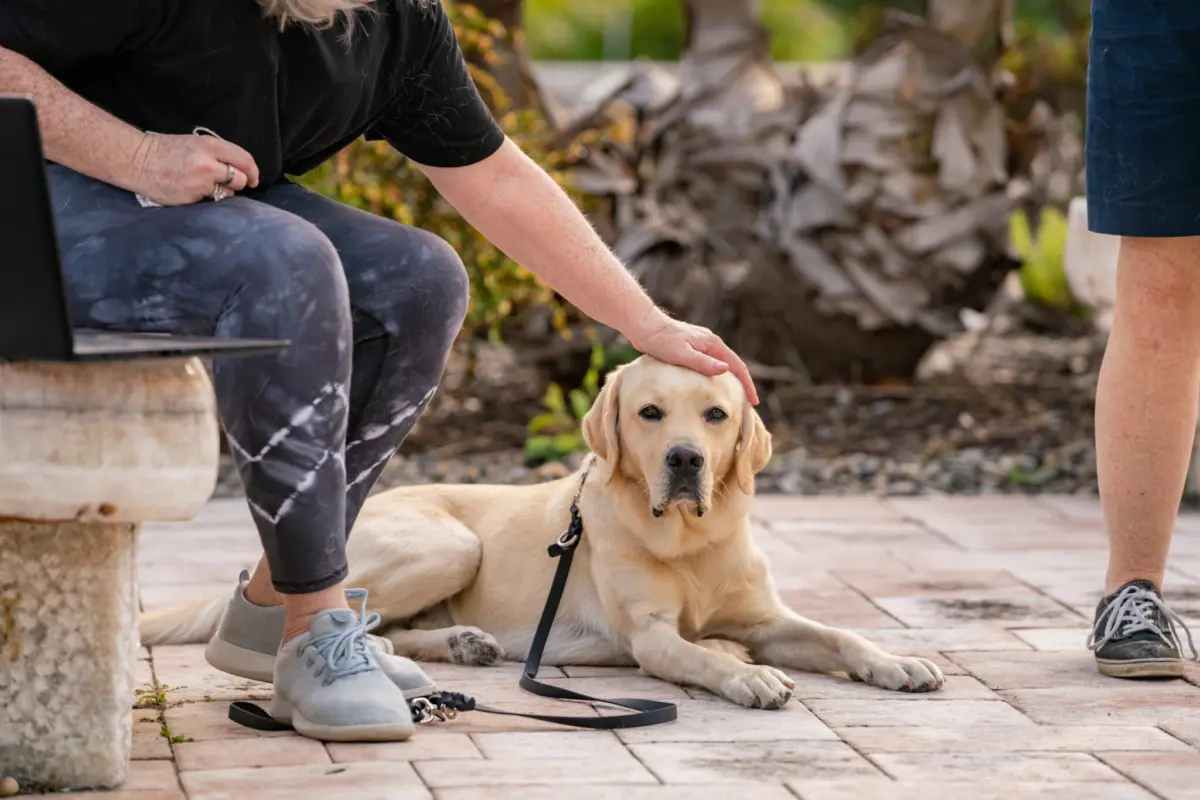
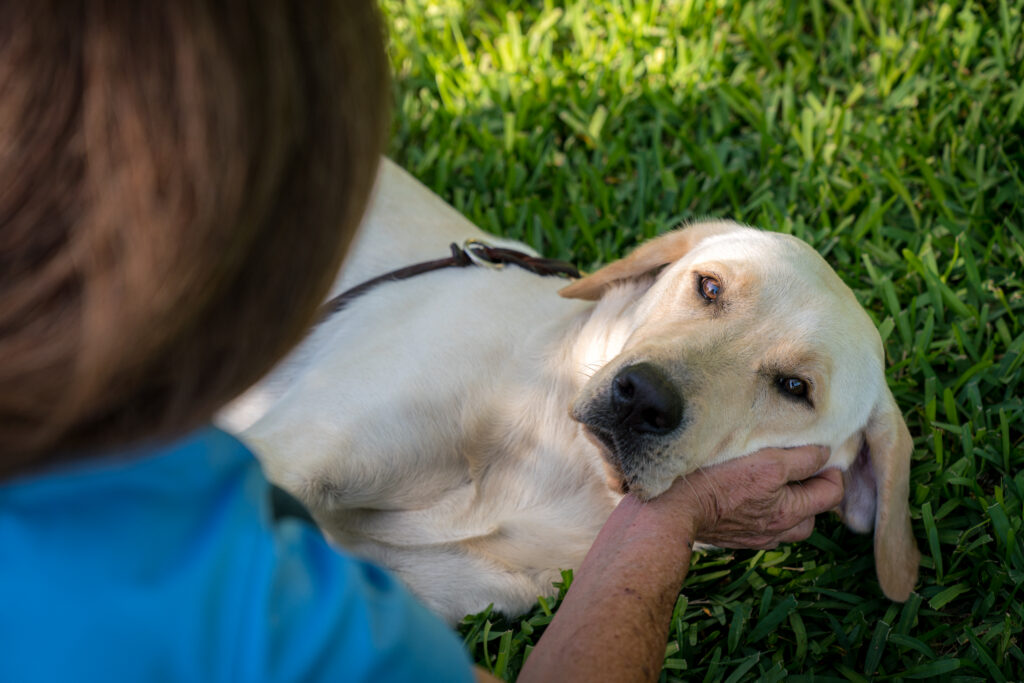
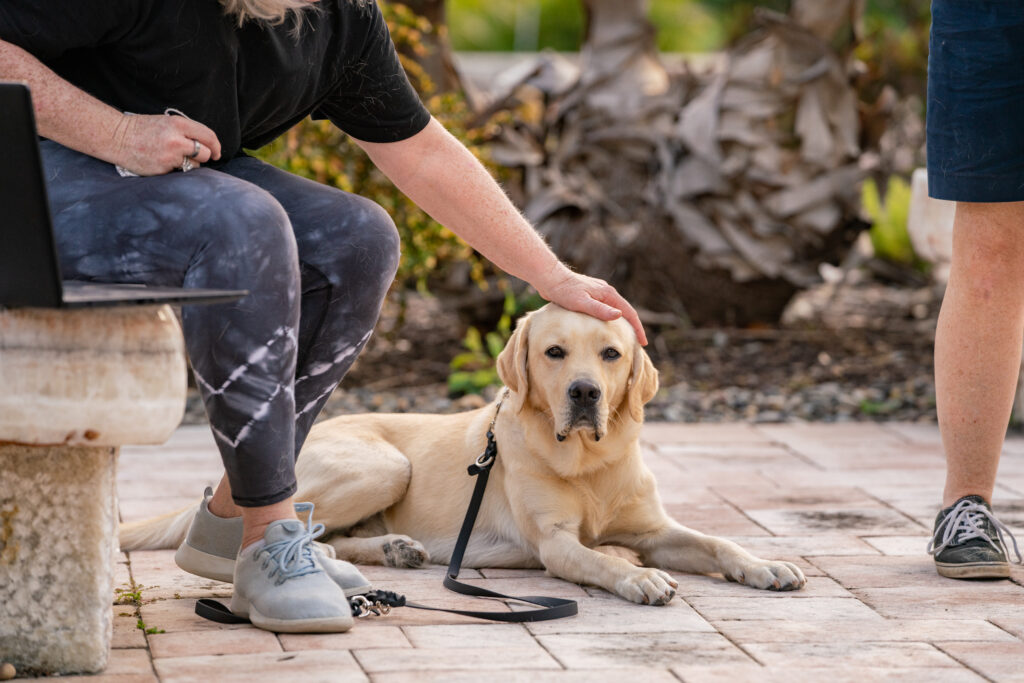
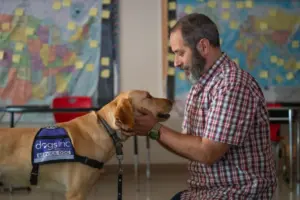
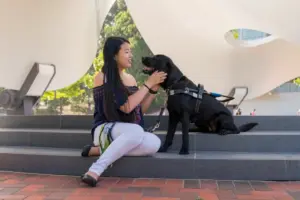
In an era defined by hyper-connectivity and public integration, encountering a working service dog in grocery stores, restaurants, transit hubs, and corporate offices has become an everyday occurrence. To the untrained eye, these animals often appear effortlessly calm, beautifully groomed, and unfailingly friendly. It is an entirely natural human instinct to look down, smile, and feel an immediate urge to reach out, offer a gentle pat, or whisper a word of praise. Yet, beneath this seemingly harmless interaction lies a complex web of safety protocols, legal definitions, and operational dependencies.
The short answer to a frequently asked public question is definitive: no, you should not pet a service dog while it is working.
Proper service dog etiquette is not merely a matter of social courtesy; it is a vital pillar of accessibility, independence, and physical safety for individuals living with disabilities. When well-meaning members of the public distract a working dog with sounds, gestures, or unsolicited physical contact, the consequences can range from minor navigation errors to catastrophic medical emergencies. This comprehensive report explores the fundamental mechanics of service dog partnerships, examines the historical and legal frameworks that govern them, outlines critical behavioral etiquette for adults, children, and business establishments, and looks ahead to how public education can safeguard these life-altering relationships.
Detailed Chronology and Legal Evolution of Working Canine Support
To fully understand the modern protocols surrounding service dogs, one must examine the legal and social evolution that brought these specialized animals into mainstream public spaces. The integration of assistance dogs into society is not a recent cultural trend, but the result of decades of advocacy, specialized training innovations, and landmark civil rights legislation.
The Post-WWI Foundation and Early Mobility Support
While historical accounts note the use of rudimentary guide dogs in ancient civilizations and early European training programs, the modern service dog movement gained its formal footing in the aftermath of World War I. Faced with thousands of soldiers returning with severe visual impairments caused by mustard gas and trench warfare, German trainers pioneered systematic methods for schooling German Shepherds as dedicated guide dogs. In 1929, pioneer Dorothy Eustis established formal standards in Switzerland, subsequently bringing the movement to the United States with the founding of organizations dedicated to pairing visually impaired individuals with loyal, highly trained canines.
The Expansion of Tasks Beyond Vision
For decades, the cultural perception of a service dog was strictly synonymous with guide dogs for the blind. However, as medical science, veterinary behavioral understanding, and assistive technology advanced through the latter half of the 20th century, the role of the working dog underwent a profound evolution. Trainers recognized that canine intelligence, acute sensory perception, and deep empathy could be harnessed to assist individuals with a vastly broader spectrum of physical and neurological disabilities.
By the 1970s and 1980s, mobility assistance dogs were being trained to retrieve dropped items, pull wheelchairs, and press emergency elevator buttons. Concurrently, medical alert dogs were introduced to detect physiological shifts associated with conditions like epilepsy, diabetes, and severe cardiac anomalies long before human instruments could register a crisis. Later milestones included the integration of psychiatric service dogs and post-traumatic stress disorder (PTSD) support dogs, which help veterans and trauma survivors navigate panic attacks, crowds, and hypervigilance.
The Codification of Rights: The Americans with Disabilities Act (ADA)
The turning point for public access occurred with the passage of the Americans with Disabilities Act (ADA) in 1990. Under federal law, service dogs were legally defined not as pets, but as necessary medical equipment required to afford individuals with disabilities equal access to public life.
The ADA established rigorous legal definitions:
Task-Oriented Training: A service dog must be individually trained to do work or perform tasks directly related to the handler’s disability.
Species Limitation: Under current federal regulations, only dogs (and, in specific operational contexts, miniature horses) are recognized as service animals. Emotional support animals (ESAs), which provide comfort simply through their presence, do not possess the same public access rights because they lack specific task-oriented training.
Public Accommodation Mandate: Businesses, non-profits, and state/local government agencies must permit service dogs to accompany their handlers into all areas where the general public is normally allowed.
This legal framework transformed public spaces into shared environments, creating an urgent need for widespread public education regarding how non-disabled citizens should interact—or rather, refrain from interacting—with working teams.
Supporting Context & Metrics: The Anatomy of a Working Partnership
To appreciate why a stray pat on the head or a friendly whistle can disrupt a service dog, one must examine the extraordinary level of conditioning, focus, and cognitive load required of these animals.
[Distraction Introduced]
       │
       ▼
[Handler Cues Ignored]
       │
       ▼
[Loss of Spatial/Medical Vigilance]
       │
       ▼
[Potential Compromise of Handler Safety]
The Cognitive Load of the Working Dog
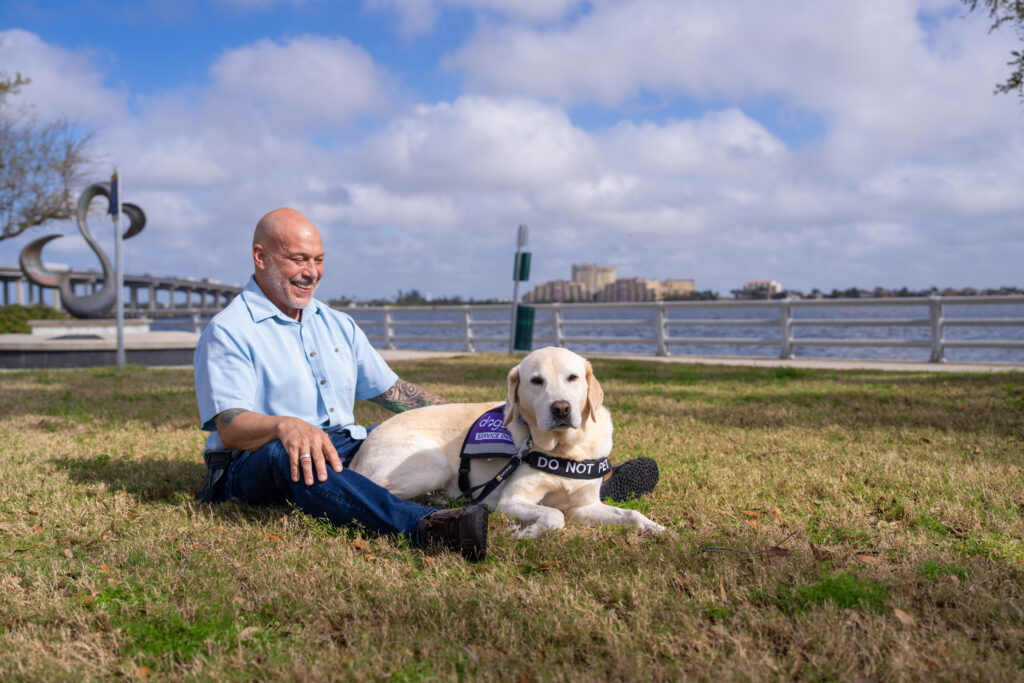
Unlike domestic pets whose primary responsibilities are leisure and companionship, a service dog operates under a rigorous professional standard. When on duty—typically signaled by the wearing of a specific harness, cape, or leash configuration—the dog enters an active operational mindset.
In bustling public environments like crowded airports, busy shopping malls, or noisy restaurants, a working service dog must simultaneously process hundreds of environmental stimuli while filtering out distractions. The dog must ignore dropped food, the presence of other pets, sudden loud noises, and the movements of passing crowds. Its entire focus must remain anchored on the handler’s physical posture, subtle gait changes, hand signals, and verbal cues.
Quantifying the Cost of Distraction
Behavioral specialists in canine training emphasize that when an uninvited person approaches a working dog, several cascading effects occur:
Dopamine Spike and Break in Concentration: Even a brief acknowledgment (a soft coo, a hand reaching out to touch fur) triggers a positive reward pathway in the dog, breaking its concentration loop.
Delayed Response Times: In the event of an impending medical emergency—such as an oncoming seizure, blood sugar crash, or panic attack—milliseconds matter. A dog whose attention is divided may miss the nuanced biochemical or postural indicator that signals a looming episode.
Compromised Spatial Navigation: For handlers with visual impairments or mobility limitations, the dog acts as a living compass and physical stabilizer. If the dog shifts its body weight to investigate a stranger, the handler risks losing their balance or colliding with an undetected obstacle.
Surveys conducted by assistance dog training organizations reveal that active handlers experience interruptions from well-meaning strangers multiple times per week—and in high-traffic urban areas, multiple times per day. Each interruption forces the handler to expend precious mental energy managing the public interaction rather than focusing on their daily life, errands, or professional duties.
Official Guidelines and Expert Protocols
Navigating the social landscape when encountering a service dog team requires adherence to established protocols endorsed by advocacy groups, accessibility experts, and canine behavioral institutions.
The Golden Rule: "Talk to the Person, Not the Dog"
The foundational principle of service dog etiquette is shifting the focus of attention away from the animal and toward the human handler. When passing a service dog team, individuals should look at the handler if communication is necessary, maintaining normal conversational etiquette while completely ignoring the animal.
“When you see a service dog, remember that you are looking at a working professional. The best way to show respect is to let them do their job undisturbed.”
The Decision Matrix: Asking Permission
The answer to the question “Can you pet a service dog?” is fundamentally contextual: always ask first, and be prepared to accept a polite refusal.
When the Dog is Working: If the dog is wearing its working gear, is actively guiding, tethered tightly to a wheelchair, or focused on the handler, interaction is strictly off-limits.
When the Dog is Off Duty: Some handlers occasionally remove the dog’s vest during extended seated activities—such as sitting at a restaurant table or boarding a long-haul flight—indicating that the animal is taking a scheduled break. Even in these scenarios, permission must be explicitly requested.
The Power of Graceful Acceptance: If a handler declines an interactive request by stating, "We’re working right now," the appropriate response is a polite, non-judgmental acknowledgment such as, "Understood, have a wonderful day," followed by immediate disengagement.
Common Behavioral Pitfalls to Avoid
Well-intentioned citizens frequently commit specific behavioral errors that compromise service dog operations. The public must actively avoid:
Making High-Pitched Noises or Whistles: Attempting to "get the dog’s attention" through animal calls or kissing noises diverts the animal’s auditory focus away from environmental hazards.
Offering Food or Treats: Tossing a French fry, piece of kibble, or biscuit toward a service dog is exceptionally dangerous. Not only does it break training discipline, but it can also expose the dog to severe dietary allergens or toxic ingredients (such as onions, xylitol, or chocolate), directly threatening the animal’s health.
Allowing Pet Dogs to Approach: Pet owners who permit their unleashed or leashed companion animals to rush up to a service dog create high-stress environments. Inter-dog aggression or even overly exuberant play can permanently traumatize a service dog, forcing it into costly retraining or early retirement.
Asking Intrusive Medical Questions: Under the ADA, businesses are legally restricted to asking only two questions when a service dog’s status is unclear: (1) Is the dog a service animal required because of a disability? and (2) What work or task has the dog been trained to perform? Private citizens have no legal or social right to interrogate handlers about their personal medical diagnoses.
Age-Appropriate Etiquette: Educating the Next Generation
Children are naturally drawn to animals. The sight of a calm, beautifully behaved Labrador Retriever or Golden Retriever walking calmly through a public space can evoke overwhelming excitement in young minds. Consequently, teaching children proper service dog etiquette represents a critical component of youth civic education.
Framing the Lesson for Children
Parents and educators can utilize service dog encounters as teachable moments to instill core values of empathy, respect, and patience. Rather than viewing the restriction as a negative rule ("You can’t touch that dog"), adults should reframe the narrative around the dog’s vital responsibilities:
"Look at that dog’s special vest; that means he is on the clock helping his person stay safe today."
"Just like firefighters or doctors have a job to do when we see them working, this dog has an important mission right now. We can admire him quietly from a distance."
By encouraging children to observe the dog’s calm demeanor without approaching, parents help cultivate a generation of adults who naturally respect personal boundaries and disability accommodation.
Business and Corporate Responsibilities
Public accommodations—including retail stores, hotels, healthcare facilities, restaurants, and entertainment venues—bear a legal and ethical responsibility to foster welcoming, compliant environments for service dog teams.
Operational Best Practices for Staff
Employees and management teams should approach service dog teams with standard customer service courtesy:
Treat the Handler Normally: Greet the human guest as you would any other customer. Do not make the dog the focal point of the interaction.
Maintain Physical Distance: Never pet, feed, or distract the animal while conducting business transactions.
Understand Legal Boundaries: Ensure that front-line staff are thoroughly trained in ADA compliance regulations regarding permissible inquiries, preventing staff from demanding medical documentation, special identification cards, or certification papers, which are not federally required under U.S. law.
By maintaining an unobtrusive, professional posture, businesses ensure that handlers can navigate commercial spaces with dignity and autonomy.
Future Outlook: The Horizon of Accessibility and Awareness
As societal awareness surrounding invisible disabilities, neurodivergence, and physical accessibility continues to expand, the cultural perception of service dogs is undergoing a positive transformation.
Technological and Training Advancements
Organizations dedicated to breeding and training elite assistance dogs—such as industry leaders like Dogs Inc—are continuously refining their socialization and training curricula to adapt to increasingly complex urban landscapes. Modern service dogs are subjected to rigorous environmental exposure training, preparing them to maintain composure amidst dense crowds, public transit surges, and evolving technological infrastructure.
The Vision for the Future
Looking ahead, the ultimate goal of public awareness campaigns is the total normalization of service dog teams as routine, respected members of civic life. When the general public understands that a service dog is a lifeline of independence rather than a public petting attraction, the benefits ripple outward:
Handlers can navigate schools, workplaces, and recreational venues with reduced anxiety and heightened safety.
Service dogs can execute their life-saving tasks without dangerous cognitive interruptions.
Communities grow more inclusive, empathetic, and attuned to the diverse needs of disabled citizens.
Conclusion
The next time you spot a service dog gracefully navigating a crowded terminal, a bustling grocery aisle, or a quiet office lobby, pause to appreciate the extraordinary partnership unfolding before you. Remember that behind the dog’s calm exterior lies a complex system of specialized training, unwavering loyalty, and vital medical or physical support.
By respecting the team’s operational workspace, refraining from uninvited physical contact or vocal distractions, and always asking permission before initiating interaction, you play an active role in supporting the freedom, safety, and independence of individuals with disabilities. A little awareness, paired with profound respect, goes a long way toward building a more accessible and considerate world for all.