
Executive Overview
In the global race to curb runaway climate change, policymakers and environmental scientists are increasingly turning their attention to an invisible, highly potent adversary: methane. As governments worldwide strive to meet increasingly stringent climate targets under international agreements, the agricultural sector—particularly ruminant livestock production—finds itself under intense scrutiny.
At the heart of this challenge lies a persistent industry dilemma best captured by a classic adage: “You can’t manage what you can’t measure.”
For decades, quantifying methane emissions from individual cattle in real-world, commercial farming environments has remained a formidable hurdle. Traditional measurement techniques have largely been restricted to controlled laboratory settings, respiration chambers, or high-cost, macro-level regional estimations that fail to capture the nuances of individual animal biology, feed efficiency, and herd management. Without hyper-granular data, developing targeted mitigation strategies, proving the efficacy of novel feed additives, or rewarding sustainable farming practices has been exceptionally difficult.
Enter ZELP, a UK-based agricultural technology pioneer founded in 2017. Positioned at the vanguard of climate-smart agtech, the company has spent years developing hardware and software solutions specifically designed to track and reduce livestock greenhouse gas (GHG) emissions.
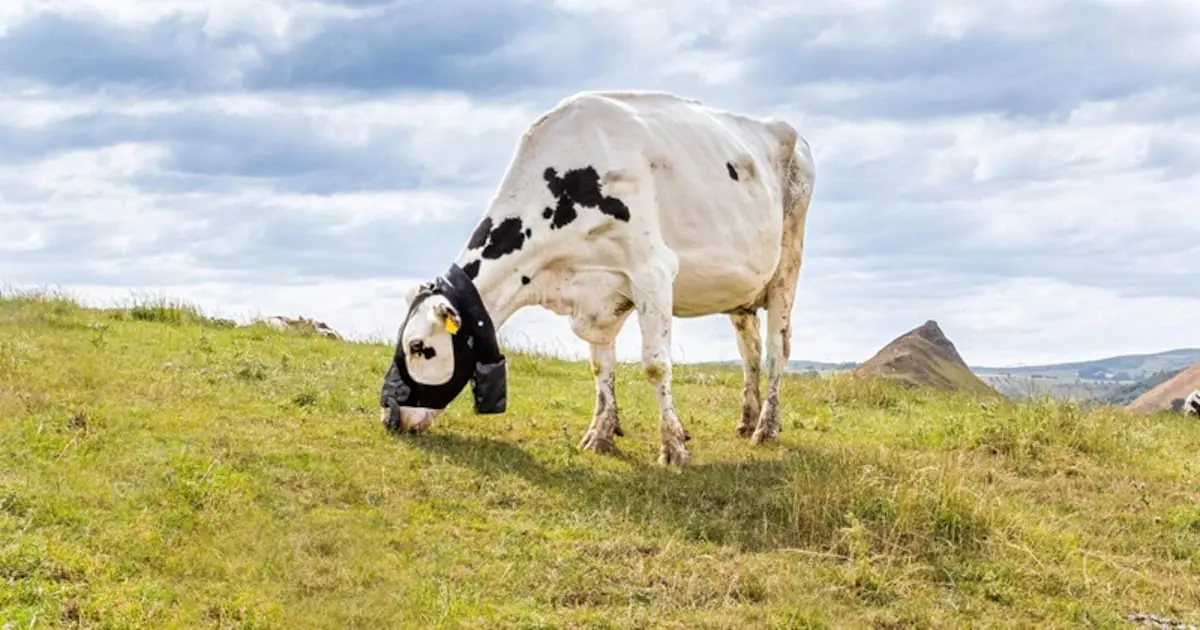
On August 26, ZELP achieved a major milestone by officially unveiling ZELP Sense—a breakthrough wearable device engineered to continuously, practically, and affordably measure methane and carbon dioxide emissions from individual cows in real-world farming environments. Backed by strategic grant funding from the Global Methane Hub’s prestigious $200 million Enteric Fermentation R&D Accelerator, ZELP Sense aims to revolutionize how the livestock industry approaches sustainability.
By feeding real-time emission analytics into a dedicated cloud platform known as ZELP Insight, the technology bridges the gap between environmental accountability and operational productivity. With initial commercial rollouts planned across Australia, the European Union, New Zealand, North America, and the United Kingdom, ZELP is poised to transform agricultural measurement from a theoretical exercise into an everyday, scalable routine.
Detailed Chronology: The Journey from Concept to Commercialization
1. Inception and Early Foundations (2017)
The genesis of ZELP dates back to 2017, when a team of engineers, animal scientists, and entrepreneurs in the United Kingdom recognized a critical gap in the climate action toolkit. While heavy industries, energy sectors, and transportation networks were aggressively deploying telemetry, sensors, and continuous monitoring systems, the agricultural sector lacked practical tools to monitor enteric fermentation emissions at the animal level.
Recognizing that livestock production would face unprecedented pressure to decarbonize in the coming decades, the founders established ZELP with a clear mission: to build scalable, hardware-driven solutions that turn livestock into active participants in climate mitigation.
2. Research, Development, and Prototype Iteration (2018–2023)
The intervening years saw intensive research and development cycles. Early on, the company understood that any viable agricultural hardware must meet three unforgiving criteria:
- Durability: It must withstand harsh farm environments, including mud, manure, extreme weather, and the physical battering of herd behavior.
- Animal Welfare: It must be lightweight, non-invasive, and comfortable enough for cattle to wear continuously without disrupting natural behaviors such as grazing, ruminating, and socializing.
- Cost-Effectiveness: It must be affordable enough to deploy across entire commercial herds without destroying profit margins.
During this period, ZELP balanced the refinement of measurement capabilities with the development of active mitigation prototypes. The company established research partnerships with academic institutions, veterinary bodies, and commercial farms to test, validate, and recalibrate sensor accuracy against gold-standard laboratory equipment.
3. Institutional Support and Financial Acceleration
A critical turning point in ZELP’s scaling journey arrived through strategic alignment with major climate philanthropic bodies. The company secured vital grant funding from the Global Methane Hub’s $200 million Enteric Fermentation R&D Accelerator. This capital injection provided the runway necessary to transition ZELP from a promising research-and-development enterprise into a commercial-grade manufacturer capable of satisfying international demand.
4. The August 26 Launch and Market Entry
On August 26, ZELP officially pulled back the curtain on ZELP Sense. The launch announcement detailed the technical specifications, software integration, and initial commercial footprints of the wearable device.
Rather than entering a speculative market, ZELP launched with immediate commercial validation. The device has already secured substantial pre-orders from a diverse cross-section of the agricultural supply chain, including feed additive manufacturers, animal health corporations, and enterprise-scale farming operations.
As manufacturing ramps up to produce thousands of units, the company is actively laying the groundwork for immediate deployment in key agricultural powerhouses—including Australia, the EU, New Zealand, North America, and the UK—while quietly evaluating secondary markets for future expansion.
Supporting Context & Metrics: The Scale of the Agricultural Methane Challenge
To appreciate the significance of ZELP’s technology, one must examine the staggering scale of the global methane crisis and the unique physiological mechanisms of ruminant livestock.
The Global Methane Footprint
According to data compiled by the Food and Agriculture Organization (FAO) of the United Nations, approximately 600 million tonnes of methane are emitted into Earth’s atmosphere annually. Of this total, human activities—ranging from fossil fuel extraction to waste management—account for roughly 60%.
Within the anthropogenic (human-caused) emissions category, agricultural production is responsible for nearly half. Enteric fermentation—the natural digestive process by which ruminants like cattle, sheep, and goats break down fibrous plant material in their stomachs—represents the single largest source of agricultural methane.
+-------------------------------------------------------------------+
|               GLOBAL METHANE EMISSIONS BREAKDOWN                  |
+-------------------------------------------------------------------+
| Total Global Emissions: ~600 million tonnes                       |
|   ├── Natural Sources: ~40%                                       |
|   └── Human-Caused (Anthropogenic) Sources: ~60%                  |
|         └── Agricultural Contribution: ~50% of anthropogenic      |
|               └── Primary Driver: Enteric Fermentation            |
+-------------------------------------------------------------------+
Why Methane Matters in Climate Policy
Methane ($CH_4$) is a potent greenhouse gas. While carbon dioxide ($CO_2$) remains in the atmosphere for centuries, methane has a relatively short atmospheric lifespan—breaking down after approximately 12 years. However, its immediate global warming potential (GWP) is staggering: over a 20-year timescale, methane is roughly 80 times more potent than carbon dioxide at trapping heat in the atmosphere.
This unique combination of high potency and short lifespan makes methane the ultimate climate "leverage point." Rapidly reducing agricultural methane emissions offers one of the few pathways to slow near-term global warming, buying vital time for the global economy to achieve deep decarbonization in energy and heavy industry.
The Data Deficit in Livestock Farming
Despite the urgency, the agricultural industry has historically lacked precise tools to track herd emissions at the individual level. Farmers have had to rely on generalized emissions factors—broad mathematical averages based on herd size, feed type, and geographic region.
These broad strokes fail to account for individual animal variance. Two cows eating the exact same feed in the same pasture can exhibit wildly different methane output levels due to genetics, gut microbiome composition, and metabolic efficiency. Without device-level data, farmers cannot identify high-emitting animals, measure the exact impact of dietary interventions, or generate verified carbon credits that command premium prices in emerging sustainability markets.
Official Statements and Technological Deep Dive
In an exclusive interview with AgNavigator, Francisco Norris, CEO of ZELP, illuminated the core philosophy driving the company’s innovation and detailed the mechanics of their newly released hardware.
The Philosophy of Measurement
Reflecting on the foundational hurdle of agricultural decarbonization, Norris emphasized:
"When it comes to reducing greenhouse gas (GHG) emissions like methane, data is everything. Or as the industry idiom goes, ‘you can’t manage what you can’t measure.’"
Inside ZELP Sense: Engineering and Functionality
Elaborating on the engineering achievement behind the August 26 product launch, Norris described ZELP Sense as "a low cost, very practical device for continuously measuring methane and carbon dioxide emissions from individual cows in real-world settings."
- Form Factor and Placement: The device is ergonomically designed to be placed near a cow’s nostril. Because ruminants expel the vast majority of enteric methane via eructation (burping) through the mouth and nose, capturing air samples in close proximity to the muzzle provides an accurate, continuous stream of emission data without requiring invasive rumen cannulation or confinement in respiration chambers.
- Advanced Beta Features: Beyond tracking methane and carbon dioxide, ZELP Sense includes a sophisticated beta feature capable of providing dry matter intake (DMI) estimations. This bridges environmental tracking with herd nutrition management, offering farmers actionable insights into feed efficiency.
- Seamless Cloud Integration: Raw sensor data does not sit idle on the device. Instead, it is transmitted in near real-time to ZELP Insight, a proprietary software platform. Through this dashboard, farmers, herd managers, and researchers can monitor, analyze, and report methane emissions down to the individual animal level.
Future Outlook: Mitigation, Scaling, and Industry Transformation
As ZELP transitions from its initial product launch into widespread commercial deployment, the company’s strategic roadmap for the coming year is both ambitious and sharply focused.
Commercial Deployment and Strategic Partnerships
According to CEO Francisco Norris, the primary objective for the next 12 months is to support surging demand across a diverse stakeholder ecosystem. This includes:
- Enterprises and Food Brands: Major dairy and beef processors seeking to decarbonize their supply chains to meet science-based targets.
- Researchers and Academic Institutions: Independent bodies conducting field trials on breeding, genetics, and feed efficiency.
- Governments and Policymakers: Regulatory agencies seeking reliable measurement infrastructure to verify national inventory reporting.
- GHG Mitigators: Companies developing feed additives, seaweed supplements, and biological inhibitors that require empirical proof of efficacy in commercial herds.
To fuel this rapid expansion, ZELP is already looking ahead toward a future equity raise designed to finance broader commercial deployment and scale manufacturing capacity from thousands of units to industrial-grade volumes.
The Horizon: Moving from Measurement to Mitigation
While ZELP Sense represents a massive victory for agricultural data collection, the company’s long-term vision extends far beyond monitoring. ZELP is continuing intensive development work on its companion wearable device, ZELP Mitigate.
While ZELP Sense diagnoses and quantifies the problem, ZELP Mitigate is designed to actively neutralize methane emissions at the point of exhalation. By combining continuous, hyper-accurate measurement with active on-animal mitigation, the company hopes to provide a comprehensive, all-in-one hardware solution for sustainable farming.
The Ultimate Vision for the Livestock Industry
Summarizing the long-term horizon for ZELP and the global agricultural sector, Norris offered a compelling vision of the future:
"The ideal scenario for us in the longer term is that methane measurement becomes a much more practical, a much more scalable and routine type of activity across the livestock industry, and that this continues to help, in an ever-increasing way, mitigation efforts and productivity improvements across this supply chain."
By transforming livestock monitoring from an expensive, academic exercise into a practical, everyday routine, ZELP is equipping farmers with the tools they need to prove their environmental stewardship. In doing so, the company is demonstrating that productivity and sustainability are not mutually exclusive goals—they are two sides of the same coin in the modern agricultural revolution.