
By Abby Knepprath, Collier County Anchor Steward, with Environmental Desk Reporting
Published by Audubon Florida Conservation News
Executive Overview
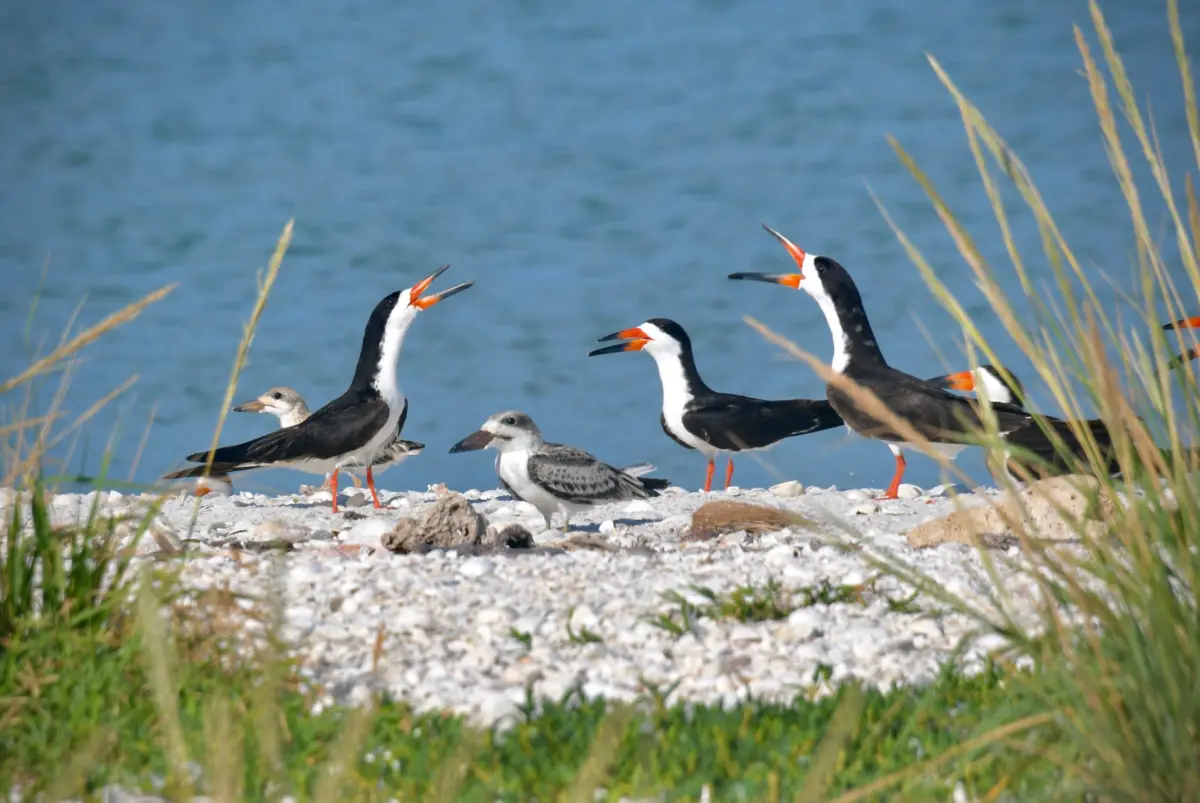
Along the sun-drenched, high-traffic coastlines of Florida, a quiet yet high-stakes drama plays out every spring and summer. While millions of tourists and residents flock to the shore for relaxation, recreation, and commerce, an ancient ritual unfolds right beneath their beach towels and flip-flops. Ground-nesting sea and shorebirds—including the striking Black Skimmer (Rynchops niger), the diminutive Least Tern (Sternula antillarum), and the camouflaged Wilson’s Plover (Charadrius wilsonia)—return to the coastal sands to incubate eggs and raise their young.
To the casual observer, the nesting sites of these avian species appear shockingly rudimentary. Unlike songbirds that weave intricate cups of twigs and moss, or raptors that construct massive fortresses high in the forest canopy, coastal shorebirds build nests that consist of little more than a shallow, unadorned depression scraped into the sand. This seemingly vulnerable strategy looks like a recipe for disaster in an environment dominated by crashing waves, shifting dunes, and intense summer heat. Yet, evolutionary history tells a different story: this minimalist nesting approach has successfully sustained these populations for millennia.
However, the modern beach is a radically altered landscape. The primary threat to these native species is no longer merely the caprice of nature, but the overwhelming footprint of modern human civilization. Heavy foot traffic, unleashed pets, speeding beach vehicles, coastal development, and human-subsidized predators have transformed a once-wild sanctuary into a gauntlet of hazards.
This in-depth report explores the evolutionary rationale behind shorebird nesting behaviors, examines the profound historical transformation of Florida’s coastlines, details the escalating pressures threatening modern colonies, and outlines the critical conservation interventions required to ensure these vulnerable species survive for future generations.
Detailed Chronology: The Evolutionary Roots and Modern Collision Course
To understand the plight of modern shorebirds, one must first look backward through deep time, tracing the historical relationship between these birds and the coastal ecosystems they inhabit.
Pre-Columbian Era: The Pristine Coastline
For thousands of generations, the ancestors of today’s Black Skimmers, Least Terns, and plovers enjoyed a vast, uninterrupted expanse of dynamic coastal habitat. Florida’s coastline was characterized by sweeping, shifting barrier islands, expansive salt marshes, and open, dynamic beach environments largely free from permanent anthropogenic alterations.
During this epoch, shorebird nesting strategies were masterclasses in evolutionary adaptation. By laying eggs directly on the open sand in shallow scrapes, birds achieved two vital survival goals:
- Unobstructed Field of View: Open sand nests allowed incubating parents to spot approaching avian or terrestrial predators from hundreds of yards away, giving them ample time to sound the alarm, fake injury to lure predators away, or aggressively dive-bomb intruders.
- Camouflage: The speckled, earth-toned eggs and downy chicks of shorebirds evolved to mimic the exact visual texture of crushed shell and sand, rendering them virtually invisible to predators scanning the dunes from above.
Natural mortality factors—such as tropical storms, extreme high tides (storm surges), and native predators like ghost crabs, gulls, and snakes—were simply part of the cyclical rhythm of the ecosystem. Populations naturally fluctuated, but the sheer scale of available habitat ensured overall species resilience.
The Anthropocene Shift: Development and Fragmentation
The rapid expansion of human populations along Florida’s coasts over the past century fundamentally severed the historical continuity of the ecosystem. What were once hundreds of miles of remote, interconnected barrier islands became heavily armored, commercialized, and populated corridors.
- Mid-to-Late 20th Century: Real estate development boomed. Sea-walls, high-rise condominiums, hotels, and sprawling single-family homes replaced natural dunes. The creation of wide public beaches designed primarily for recreation compressed shorebird populations into increasingly narrow, fragmented strips of available sand.
- The Rise of the Edge Effect: Human settlements introduced artificial food waste—trash, open dumpsters, and discarded picnic scraps—which exponentially boosted populations of generalist predators, most notably the American Crow (Corvus brachyrhynchos), Fish Crow (Corvus ossifragus), and introduced mammals like raccoons, feral cats, and coyotes (Canis latrans). Unlike the native predators of the past, these opportunistic species thrive in close proximity to humans and have become devastating predators of shorebird eggs and flightless chicks.
- The 21st-Century Recreation Economy: Today, millions of tourists visit Florida beaches annually. High-density beach tourism brings kite flying, drones, off-road vehicles, unleashed dogs, and constant foot traffic directly into areas that double as critical wildlife nurseries.
Supporting Context & Metrics: The Anatomy of Modern Shorebird Vulnerability
To grasp the severity of the conservation challenge, one must examine the specific behavioral traits of these birds and the quantitative pressures they face on modern beaches.
The Biology of the Scrape
Why do shorebirds stubbornly refuse to change their nesting habits in the face of human encroachment? The answer lies in strict evolutionary programming.
- Black Skimmers rely on broad, open expanses of sand where colonial nesting provides collective defense. Hundreds of pairs may nest in close proximity, mobbing potential predators in coordinated aerial assaults.
- Least Terns, the smallest members of the gull and tern family in North America, often nest in loose colonies on wide beaches or, increasingly, on flat gravel rooftops when natural beach habitat becomes completely unavailable.
- Wilson’s Plovers prefer solitary territories near coastal lagoons and mudflats, using cryptic camouflage and distraction displays ("broken-wing acts") to draw predators away from their hidden clutches.
Because these birds lack the anatomical adaptations required to carry nesting materials (such as feet suited for grasping branches or bills designed for weaving), they are ecologically bound to ground-nesting. Their survival strategy depends entirely on absolute stillness, cryptic camouflage, and the protective isolation of open space.
Quantitative Pressures on Coastal Ecosystems
| Threat Factor | Direct Impact on Shorebirds | Mitigation Strategy |
|---|---|---|
| Human Foot Traffic & Beachgoers | Causes incubating adults to flush from nests, leaving eggs exposed to lethal solar radiation or hypothermia; results in accidental crushing of camouflaged eggs and chicks. | Installation of symbolic fencing, educational signage, and seasonal buffer zones. |
| Unleashed Dogs & Pets | Triggers intense panic responses; dogs chase, flush, and occasionally kill flightless chicks or destroy hidden nests. | Strict enforcement of local leash laws and designation of pet-free conservation zones. |
| Avian Predators (Crows & Gulls) | Subsidized by human trash, crow populations have exploded, leading to high rates of egg and chick predation. | Comprehensive waste management, secured trash receptacles, and predator deterrence protocols. |
| Vehicular & Boat Traffic | Beach-cleaning vehicles and recreational vehicles can crush nests hidden in tire ruts; boat wakes erode nesting islets. | Regulation of beach-driving schedules and establishment of slow-speed marine zones near bird islands. |
Official Statements and Conservation Perspectives
Wildlife biologists, conservation stewards, and environmental advocates emphasize that shorebird survival is no longer a matter of natural selection alone; it requires active, hands-on human intervention.
"When people ask why shorebirds insist on nesting on crowded, busy beaches, the answer is simple: the beach is their ancestral home, written into their biological code long before high-rises and boardwalks existed," explains Abby Knepprath, Collier County Anchor Steward. "They aren’t choosing to be in our way; we have expanded into theirs. Because the natural balance has been disrupted by human activity, these birds now require our active stewardship to bridge the gap between their ancient instincts and modern realities."
Conservation agencies point out that public awareness is the single greatest variable in breeding success. When beachgoers understand that a seemingly empty patch of sand is actually a bustling avian maternity ward, behavior changes rapidly.
"Audubon Florida and our dedicated network of volunteers and municipal partners work tirelessly every spring to post nesting boundaries, monitor active colonies, and engage directly with the public," notes a regional conservation director. "We don’t want to close the beach to people; rather, we want to share the shore. With simple adjustments—like respecting roped-off areas, packing out all trash, and keeping dogs on leashes—residents and visitors can ensure that the next generation of skimmers, terns, and plovers takes flight."
Future Outlook: Sharing the Shore for Generations to Come
The long-term outlook for Florida’s ground-nesting shorebirds hangs in a delicate balance. Climate change presents an escalating existential threat, with rising sea levels and intensified tropical storm seasons frequently washing away low-lying nesting habitats before chicks can fledge. Concurrently, human population growth in coastal counties guarantees that recreational pressure on beaches will only increase in the coming decades.
However, targeted conservation frameworks offer a clear path forward. Success stories from managed beaches across Florida demonstrate that when communities invest in proactive stewardship—combining symbolic fencing, volunteer education programs, stringent pet control ordinances, and active predator management—shorebird productivity rebounds significantly.
The survival of species like the Black Skimmer, Least Tern, and Wilson’s Plover serves as an important ecological indicator. Healthy, productive shorebird colonies reflect a vibrant, resilient coastal ecosystem—one that benefits not only wildlife, but human communities as well by maintaining natural dune integrity and biodiversity.
Ultimately, the responsibility rests on our collective willingness to coexist. By understanding the evolutionary constraints of these remarkable birds and modifying our beachgoing habits accordingly, we can ensure that the distinctive calls of nesting shorebirds remain a permanent fixture of Florida’s dynamic coastal landscape for millennia to come.