
Executive Overview
The global wildlife conservation narrative has long relied on a powerful, redemptive trope: the confiscated or rescued animal, torn from the cruel grips of the illegal wildlife trade, rehabilitated by human hands, and triumphantly bounding back into its native forest. To the public, to donors, and to animal welfare advocates, this moment represents the ultimate conservation victory—nature healing itself.
However, a groundbreaking scientific study published in the journal Global Ecology and Conservation shatters this comforting illusion. Conducted by an international team of primatologists and conservationists from Anglia Ruskin University, Plumploris e.V., and the University of Western Australia, the research reveals a sobering reality. For certain vulnerable species, releasing animals back into the wild without meticulous ecological planning does not lead to survival; instead, the wild becomes a literal "death trap."
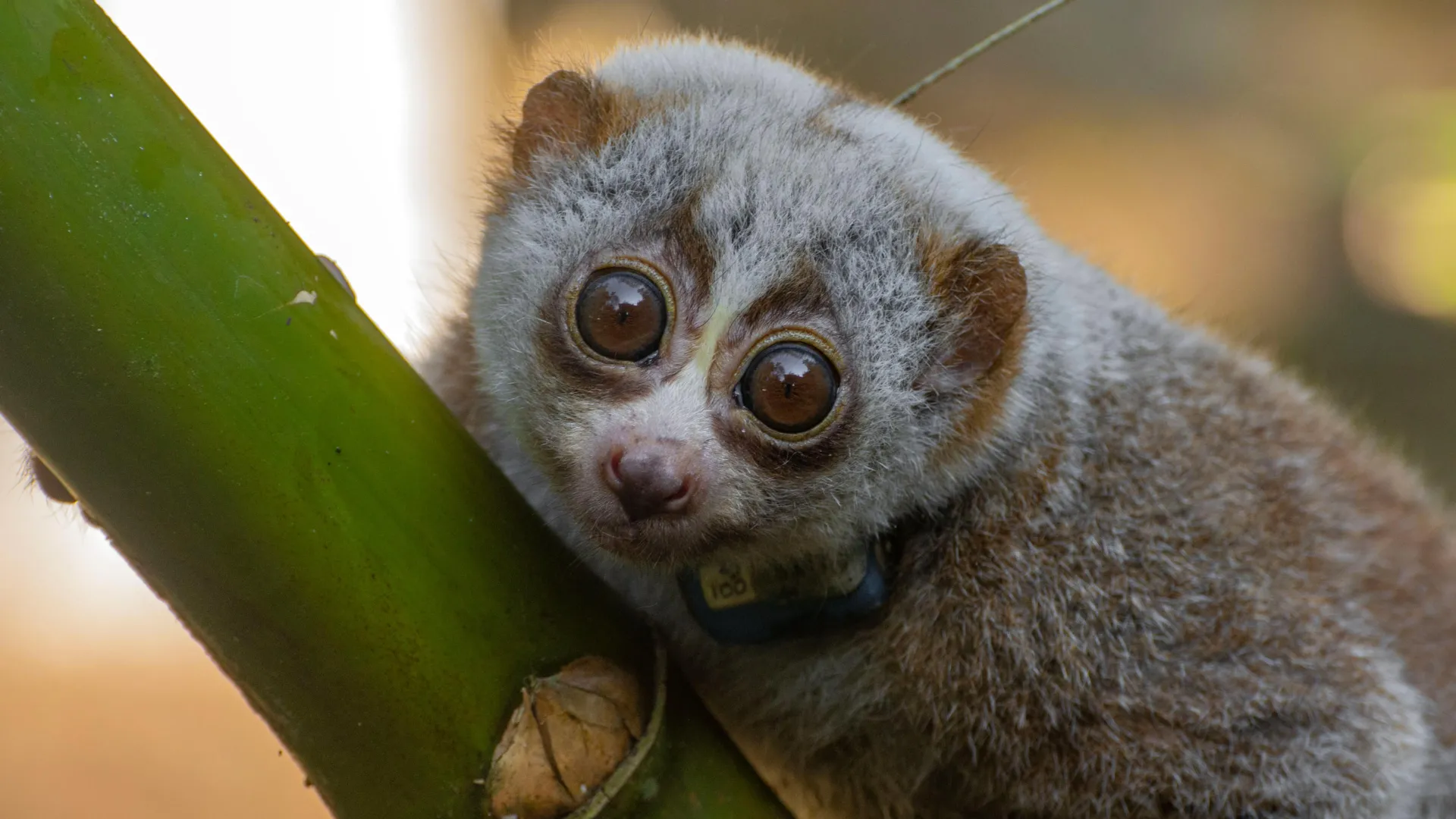
At the center of this investigation is the Bengal slow loris (Nycticebus bengalensis), a mesmerizing primate whose large, wide-set eyes and gentle appearance have made it a prized target for the underground exotic pet trade. While rescuing and reintroducing these animals is driven by the best of intentions, the new data demonstrates that ill-conceived releases can precipitate catastrophic mortality rates. In a tracked cohort of nine rehabilitated Bengal slow lorises released into a protected national park in northeastern Bangladesh, a staggering 77.7% died within months of their return.
Worse still, these deaths were not caused by starvation, disease, or human poaching—the traditional bugbears of reintroduction programs. Rather, they were violently slaughtered by their own kind. Driven by intense territorial instincts and armed with a specialized, venomous bite, resident wild slow lorises systematically hunted and killed the naive newcomers.
This investigation explores the mechanics of this conservation crisis, examining how captivity distorts animal behavior, why poorly planned releases turn forests into wildlife "dumping grounds," and what the scientific community must do immediately to overhaul rescue and reintroduction protocols worldwide.
Detailed Chronology: Tracking the Fate of the Nine Bengal Slow Lorises
To understand how a well-intentioned conservation effort unraveled into tragedy, researchers embarked on a rigorous, high-stakes tracking study in northeastern Bangladesh. The chosen site—a prominent national park—had historically served as a routine destination for local authorities and wildlife rescue organizations looking to offload confiscated animals.
The Methodology and Setup
The research team, led by senior author Professor Anna Nekaris OBE and lead author Hassan Al-Razi of Plumploris e.V. Bangladesh, secured radio collars onto nine rehabilitated Bengal slow lorises. These collars allowed scientists to monitor the daily movements, survival rates, and behavioral patterns of the animals post-release.
In theory, the national park offered a secure, protected habitat complete with dense canopy cover and natural food sources. In practice, it was already a hyper-competitive landscape teeming with established, territorial populations of wild slow lorises.
The Staggering Timeline of Mortality
The timeline of survival following the release paints a devastating picture of swift attrition:
- The First 10 Days: The danger manifested almost immediately. Within a mere 10 days of stepping out of transport crates and into the forest canopy, three of the nine slow lorises were dead.
- The Six-Month Mark: Over the following months, the situation worsened. Four additional animals perished, bringing the total death toll to seven out of nine within half a year.
- The Final Survivors: Only two of the original nine animals managed to beat the odds and establish long-term survival.
Forensic Findings: Death by Territory
Of the seven fatalities, researchers managed to recover four physical carcasses for post-mortem analysis. The forensic evidence was uniform and unmistakable: every single recovered body bore severe, localized bite wounds clustered around the head, face, and digits.
These injuries are the unmistakable signatures of intraspecific aggression. Slow lorises are among the most fiercely territorial mammals in the arboreal canopy. Unlike gregarious species that might welcome or tolerate newcomers, resident slow lorises view unfamiliar arrivals as existential threats to their foraging grounds, sleeping sites, and mating territories.
Furthermore, the physical toll of captivity appeared to directly influence survival rates. The data revealed a grim inverse correlation: animals that had spent longer periods in captivity survived for fewer days in the wild. Captivity degrades natural conditioning, weakens muscle mass, disrupts natural behavioral development, and leaves animals dangerously unequipped to navigate complex social hierarchies upon release.
Interestingly, the two animals that miraculously survived displayed unique behavioral adaptations. They traveled across significantly larger home ranges than those that died, actively avoiding established territories and sidestepping deadly confrontations with resident lords of the canopy. The animals that perished, conversely, exhibited heightened alertness, frantic movement patterns, and an inability to blend into or navigate the intricate social landscape of the forest.
Supporting Context & Metrics: The Crisis of the Slow Loris and Flawed Reintroductions
To contextualize the tragedy in Bangladesh, one must understand the immense pressures facing slow lorises on a global scale.
Victims of the Illegal Pet Trade
Slow lorises belong to the genus Nycticebus and are native to the dense tropical and subtropical forests of South and Southeast Asia. Their captivating appearance—characterized by huge, expressive eyes, a soft coat, and slow, deliberate movements—has made them viral sensations on social media platforms. Videos of tickled lorises or pets reacting to human touch have fueled a catastrophic global demand within the illegal pet and traditional medicine trades.
Consequently, all slow loris species are classified by the International Union for Conservation of Nature (IUCN) as:
- Vulnerable
- Endangered
- Critically Endangered
Because these primates are frequently intercepted by law enforcement agencies, customs officials, and wildlife NGOs, thousands end up in rescue centers. The sheer volume of rescued animals creates immense logistical and financial pressure on rehabilitation facilities to "do something" with them. The most emotionally satisfying—and publicly expected—solution is release back into the wild.
The "Dumping Ground" Phenomenon
According to lead author Hassan Al-Razi, the practice of rescuing and releasing wildlife has accelerated dramatically across South Asia. However, the operational reality of these releases is often deeply flawed.
Rather than conducting exhaustive environmental impact assessments or evaluating the carrying capacity of target forests, authorities and well-meaning groups often select release sites based entirely on logistical convenience. Forests close to roads, urban centers, or rescue facilities are repeatedly used as default drop-off points. Over time, these locations transform into functional "wildlife dumping grounds."
When a forest is already operating at or near its biological carrying capacity—meaning every square acre of territory is claimed, defended, and utilized by resident animals—introducing a batch of naive, captive-stressed animals is an ecological disaster. The habitat cannot absorb them; it can only expel or destroy them.
[Rescued Animal in Captivity]
       │
       ▼ (Logistically Convenient Release)
[Saturated Forest / High Resident Density]
       │
       ▼ (Territorial Defense & Venomous Bites)
[Lethal Confrontation: The "Death Trap"]
The Unique Danger of Venomous Primates
Compounding the danger of these territorial clashes is the unique biological weapon possessed by the slow loris. Slow lorises are the world’s only venomous primates.
When threatened, a loris licks a gland on its inner arm (the brachial gland), mixing the secretion with its saliva to activate a potent toxin. They then deliver this venom through specialized, comb-like lower teeth (toothcombs). In a territorial dispute between a wild loris and a captive-stressed release candidate, these venomous bites can cause necrosis, severe infection, and rapid death. The naive release animals, lacking the refined dodging skills and social savvy of their wild counterparts, were catastrophically outmatched in these venomous turf wars.
Official Statements: Perspectives from the Frontlines of Conservation
The findings of this study have sent shockwaves through the global conservation community, prompting leading experts to call for an urgent reassessment of traditional rescue-and-release dogma.
Professor Anna Nekaris OBE: Challenging the Feel-Good Narrative
Professor Nekaris, a world-renowned primatologist, founder of the Little Fireface Project, and Professor of Ecology, Conservation and Environment at Anglia Ruskin University, did not mince words when discussing the cultural pressures facing conservationists.
"It’s assumed that returning confiscated or rescued animals to the wild is always a positive conservation story," Professor Nekaris stated. "Our research shows that for highly territorial species like slow lorises, releasing them into areas that are already densely populated can be a death trap."
She emphasized that public sentiment often drives bad science:
"Many rescued endangered species are often released because the public expects it, but for animals such as the Bengal slow loris, this is not always the best course of action. Without fully understanding the animal’s behaviour, its time spent in captivity and the density of resident populations at the release site, reintroductions may do more harm than good."
Hassan Al-Razi: Exposing Institutional Shortcuts
Hassan Al-Razi, team leader of Plumploris e.V. Bangladesh and lead author of the study, shed light on the systemic failures plaguing regional wildlife management.
"Rescue and release have become an increasingly common practice in Bangladesh. Many wild animals, including slow lorises, are rescued and subsequently released back into the wild," Al-Razi noted.
However, he pointed out that convenience frequently overrides conservation science:
"In many cases, these releases are conducted inappropriately. For forest-dwelling species, release sites are often selected based on logistical convenience rather than ecological suitability. As a result, certain forests have effectively become dumping grounds for rescued animals and are no longer appropriate release sites."
Crucially, Al-Razi warned that the slow loris is merely a case study for a much broader, systemic failure across the animal kingdom:
"Although our research has focused on the Bengal slow loris and demonstrated the consequences of such practices, we believe similar patterns likely affect many other species."
Future Outlook: Reimagining Wildlife Rescue, Rehabilitation, and Reintroduction
The implications of the Anglia Ruskin University and Plumploris e.V. study extend far beyond the forests of Bangladesh. Conservation agencies worldwide must confront an uncomfortable truth: releasing an animal without rigorous preparation is not an act of conservation; it is an act of abandonment.
To bridge the gap between emotional welfare and rigorous ecological science, the conservation sector must implement sweeping reforms across five key pillars:
1. Mandatory Pre-Release Carrying Capacity Studies
Before any animal is cleared for release, conservationists must conduct comprehensive ecological surveys to determine local population density. If a forest already maintains a stable population of resident territory holders, it must be marked as closed to new releases of the same species.
2. Tailored Rehabilitation Protocols
The data clearly shows that prolonged captivity erodes survival odds. Rehabilitation facilities must move beyond basic feeding and medical care to incorporate behavioral conditioning. Animals must be trained to forage naturally, recognize predators, and develop social avoidance strategies. Furthermore, individuals that have spent excessive years in human hands—erasing their wild instincts—may need to be permanently housed in high-standard sanctuaries rather than forced into fatal reintroductions.
3. Shift from Logistical Convenience to Habitat Suitability
Governments and NGO directors must abandon the practice of releasing animals into easily accessible national parks simply because they are close to urban rescue centers. Reintroduction sites must be selected purely on ecological merit, prioritizing degraded forests that have low resident densities but adequate resources, thereby reducing territorial friction.
4. Long-Term Post-Release Monitoring (Telemetry and Beyond)
While charismatic megafauna like rhinos, elephants, and big cats routinely receive intensive radio-collar and GPS monitoring, smaller taxa—such as reptiles, amphibians, and small-bodied mammals like slow lorises—are frequently released and forgotten. Funding must be allocated to ensure that all reintroduction programs include mandatory post-release tracking phases to evaluate success, identify mortality causes, and refine methodologies.
5. Public Education and Expectation Management
Conservation organizations must engage in transparent public communication. Donors and wildlife enthusiasts must be taught that a "successful rescue" does not automatically culminate in a forest release. Educating the public about the brutal ecological realities of territorial competition will help build support for alternative outcomes, such as lifetime sanctuary care for animals that cannot safely return to the wild.
Conclusion
The plight of the Bengal slow loris serves as a profound cautionary tale for the modern conservation movement. In our eagerness to undo the cruelties inflicted by the illegal wildlife trade, we risk falling into the trap of emotional expediency—believing that any freedom is better than captivity.
As Professor Nekaris, Hassan Al-Razi, and their colleagues have demonstrated, freedom without preparation, ecological context, and respect for animal social structures is an illusion. If the conservation community heeds this warning, the tragic deaths of these nine slow lorises can catalyze a much-needed renaissance in global reintroduction standards—ensuring that when we open the cage door, we are genuinely offering a second chance at life, rather than walking an animal to its execution.