
Executive Overview
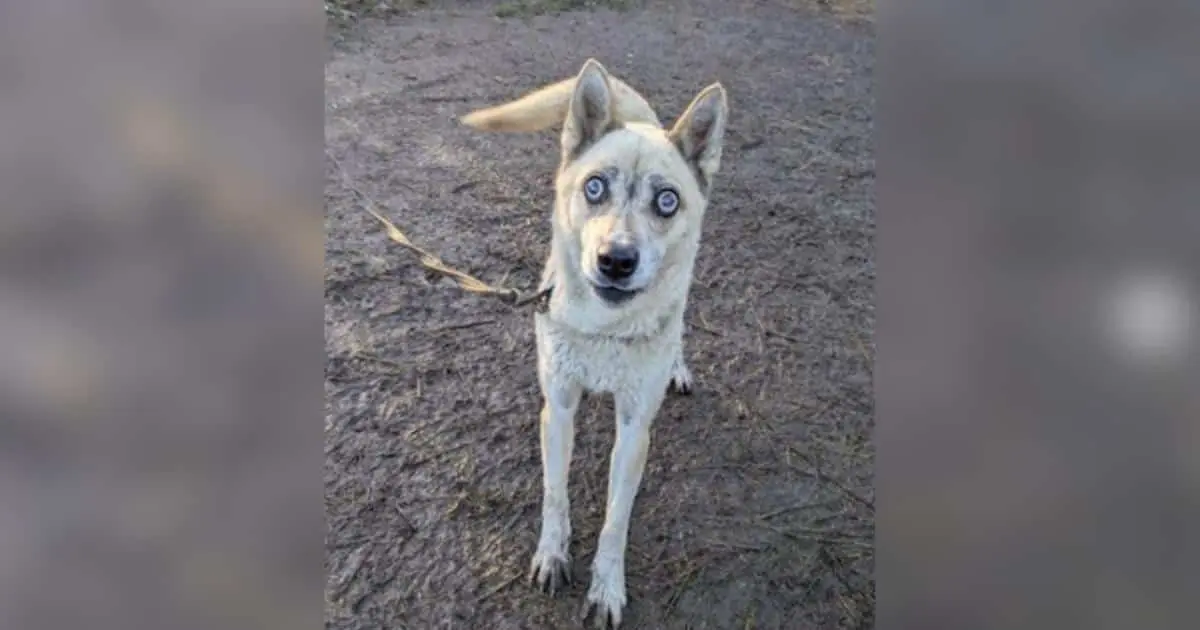
On New Year’s Eve, a rescue operation by the Royal Society for the Prevention of Cruelty to Animals (RSPCA) in London uncovered a severe case of chronic animal neglect that highlights the intersection of animal welfare, veterinary ethics, and canine cognitive adaptability. Cookie, a three-year-old Siberian Husky, had spent her formative years tethered in a yard, relegated to the role of an outdoor guard dog. Denied basic veterinary care, she navigated her confined world in total darkness, her blindness masked by her reliance on olfactory and auditory cues.
Upon her rescue, veterinary diagnostics revealed that Cookie was not merely blind but was living with severe, untreated bilateral glaucoma and buphthalmia—a pathological enlargement of the eyeballs. The resulting intraocular pressure had subjected the dog to years of chronic, debilitating pain.
This investigative report details Cookie’s journey from a neglected sentinel to a rehabilitated family companion. It examines the complex veterinary decisions behind her bilateral enucleation (surgical removal of both eyes), the specialized behavioral protocols utilized to overcome her severe separation anxiety, and her eventual integration into a permanent home.
Cookie’s case serves as a landmark study in animal resilience, shedding light on the capacity of blind canines to map complex domestic environments and the critical importance of public awareness surrounding veterinary ophthalmic diseases.
Detailed Chronology
[New Year's Eve] Rescued by RSPCA from London yard -> [January] Diagnosed at Finsbury Park with Glaucoma & Buphthalmia -> [Late Jan] Undergoes Bilateral Enucleation Surgery -> [February] Placed in Foster Care with the Regans -> [Spring] Behavioral Rehabilitation & Home Mapping -> [Summer] Official Adoption1. The Discovery and Extraction
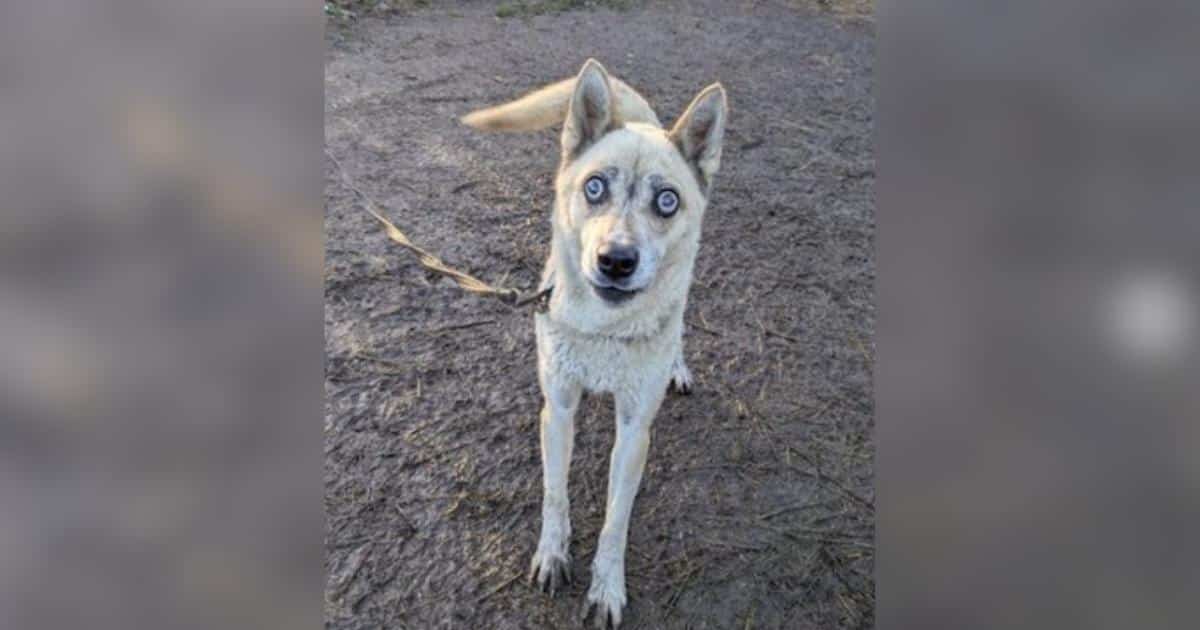
On New Year’s Eve, RSPCA Animal Rescue Officer Sam Matthews responded to a report regarding a tethered dog at a commercial/residential site in London. Upon arrival, Matthews discovered Cookie, a young Siberian Husky, secured by a short tether. Her movement was severely restricted, confining her to a small radius littered with environmental hazards.
While her former owner dismissed her ocular abnormalities as a benign, lifelong condition that required no medical intervention, Matthews observed significant globe enlargement and corneal opacity. Cookie was using her acute senses of hearing and smell to compensate for her lack of vision, allowing her to react to external stimuli in a manner that partially masked her complete blindness. Recognizing signs of active physical suffering, Matthews secured an independent veterinary assessment, which legally certified that the dog was in a state of neglected illness, enabling the RSPCA to seize Cookie and transport her to safety.
2. Clinical Diagnosis at Finsbury Park Animal Hospital
Cookie was admitted to the RSPCA’s Finsbury Park Animal Hospital in North London. A comprehensive ophthalmic examination revealed two concurrent, advanced pathologies:
- Bilateral Glaucoma: A condition characterized by impaired drainage of aqueous humor, leading to a pathological increase in intraocular pressure (IOP). Normal canine IOP ranges between 10 to 25 mmHg; in advanced glaucoma cases, pressure can exceed 50 to 60 mmHg, causing persistent, migraine-like headaches and irreversible optic nerve damage.
- Buphthalmia: Commonly referred to as "ox eye," this condition occurs when chronic high pressure stretches the elastic coats of the globe, resulting in abnormally enlarged, protruding eyeballs.
The clinical team concluded that Cookie’s blindness was irreversible. More critically, her eyes were no longer functional organs but sources of constant, high-grade pain.
3. The Surgical Decision: Bilateral Enucleation
The veterinary team, led by RSPCA Chief Veterinary Officer Charlotte Beckett, faced an ethical and clinical dilemma. Performing a bilateral enucleation—the surgical removal of both eyes—is a drastic procedure that carries significant aesthetic and psychological implications for pet owners.
However, diagnostic evidence suggested that Cookie had been blind since puppyhood. Because her neurological pathways had already adapted to a non-visual existence, removing the physical sources of her pain would not disrupt her spatial awareness. The surgery was successfully performed in January, permanently relieving the chronic pressure within her orbital cavities.
+---------------------------------------------------------+
|                CANINE BILATERAL ENUCLEATION             |
|                                                         |
|  [ Pre-Op: Chronic Pain ] ----> [ Surgical Removal ]    |
|  - IOP > 50 mmHg                - Globe excised         |
|  - Optic nerve damaged          - Muscles sutured       |
|                                                         |
|  [ Post-Op: Pain Relief ] <---- [ Orbital Closure ]     |
|  - Zero pressure pain           - Skin closed           |
|  - Sensory compensation         - Rapid recovery        |
+---------------------------------------------------------+
4. Transition to Foster Care and the Road to Recovery
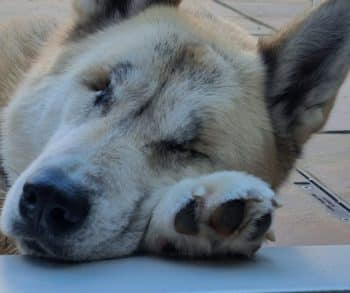
Following a successful surgical recovery at the Millbrook Animal Centre in Surrey, Cookie was placed into temporary foster care in February. She was matched with Paul and Anna Regan of Bracknell, Berkshire. The Regans, who were grieving the loss of their beloved dog Wilf, had registered as foster carers to support canine rehabilitation without immediately committing to permanent ownership.
When Cookie arrived, she still bore surgical sutures across her closed eyelids. Despite the trauma of her surgery and the unfamiliarity of her new environment, her initial behavior was marked by high curiosity and an eagerness to connect with her caregivers.
Supporting Context & Metrics
To fully understand the success of Cookie’s rehabilitation, it is necessary to analyze the scientific principles of canine sensory compensation, the specific challenges of breed-specific neglect, and the behavioral metrics used during her transition.
Canine Sensory Compensation and Spatial Mapping
Dogs possess an extraordinary ability to navigate without sight, relying on a cognitive process known as sensory substitution. While humans rely on vision for approximately 80% of their environmental input, canines rely heavily on their olfactory and auditory systems.
       [Olfactory Receptors]  ---> 300 million (vs. 6 million in humans)
       [Auditory Range]       ---> Up to 45,000 Hz (vs. 20,000 Hz in humans)
       [Vibrissae (Whiskers)] ---> Detects subtle air currents & obstacles
To assist Cookie in developing an accurate spatial map of their home, the Regans implemented structured environmental modifications:
- Tactile Bordering: Padded bumpers were installed on sharp furniture corners and door frames, acting as physical cues that prevented head trauma while Cookie calibrated her steps.
- Static Layouts: Furniture placement was kept completely static. Relocating a single chair can disrupt a blind dog’s internal spatial map, leading to disorientation and anxiety.
- Olfactory Anchoring: Specific scents or carpet textures were used to denote transitions between rooms, allowing Cookie to identify her location within the household using her paws and nose.
Overcoming Separation Anxiety: A Data-Driven Approach
Having spent her life tethered outdoors, Cookie had never experienced a structured domestic environment. Her rescue and subsequent surgery left her highly dependent on her new human caretakers. This manifested as severe separation anxiety when she was left alone, characterized by vocalizations (howling) and barrier frustration at entryways.
To address this, the RSPCA’s clinical behavior team designed a systematic desensitization protocol. The objective was to gradually increase her threshold for isolation without triggering a panic response.
| Phase | Target Duration of Separation | Behavioral Response / Metrics |
|---|---|---|
| Phase 1 | < 5 Minutes | High anxiety, immediate vocalization, pacing at the exit door. |
| Phase 2 | 15–30 Minutes | Mild pacing, transition from standing to lying down near the door; vocalizations ceased. |
| Phase 3 | 60–90 Minutes | Ability to settle on a designated bed; engagement with food-dispensing puzzle toys. |
| Phase 4 | 120+ Minutes | Full adaptation; resting behavior maintained throughout the separation period. |
Through incremental training sessions, Cookie’s separation tolerance was successfully extended to over two hours, allowing her to remain calm and secure in her environment.
Official Statements
RSPCA Chief Veterinary Officer, Charlotte Beckett
"Bilateral enucleation can seem like an incredibly drastic measure to a pet owner, but in Cookie’s case, it was the single most compassionate option available. Her eyes were non-functional, severely diseased, and—crucially—causing her immense, continuous pain due to the extreme pressure of bilateral glaucoma. Because Cookie had likely adapted to blindness during her early development, removing the physical source of her discomfort allowed her true personality to emerge. Her recovery is a testament to how quickly animals can thrive once they are freed from chronic, silent pain."
RSPCA Animal Rescue Officer, Sam Matthews
"When I first found Cookie, she was tethered in a yard, left to act as a security measure despite being completely unable to see. It was heartbreaking to see a dog of her breed—known for their high energy, intelligence, and need for human companionship—confined in such a sensory-deprived state. Her eyes were visibly enlarged and clouding, yet she was doing her absolute best to understand the world around her through sound and smell. Securing her release was vital. Seeing her now, living a life of comfort and safety, is why we do this work."
Adopters, Paul and Anna Regan
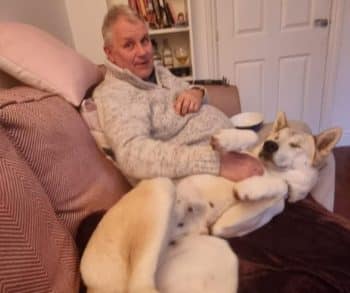
"We initially signed up to foster because the loss of our dog Wilf had left a massive void in our lives, but we weren’t sure we were ready to adopt again. When we met Cookie, she still had the stitches from her surgery, but she walked straight up to us and leaned in for comfort. The resilience she showed was astounding.
Teaching her to navigate our home required patience, from padding the door frames to keeping our furniture exactly where it was, but she learned incredibly fast. She even managed to steal a three-kilogram brisket right off the counter, which proved to us that her lack of sight certainly wasn’t slowing her down! She has brought so much joy back into our home, and adopting her was the easiest decision we’ve ever made."
Future Outlook
Cookie’s successful transition from a neglected guard dog to a pampered family pet carries significant implications for animal welfare organizations and veterinary practices worldwide. Her story was prominently featured by the RSPCA in the lead-up to International Blind Dog Awareness Day, serving as an educational case study to dismantle common misconceptions about blind animals.
Key Takeaways for Animal Welfare and Veterinary Science:
- Challenging the Stigma of Blindness: Many owners and shelters hesitate to care for blind dogs, fearing that their quality of life will be severely compromised. Cookie’s case proves that with structured environmental management and behavioral support, blind dogs can lead active, fulfilled, and highly independent lives.
- Addressing the Cruelty of Unregulated Guarding: Cookie’s background highlights a persistent welfare issue: the use of active, sensitive breeds (like Siberian Huskies) as tethered, outdoor guard animals. Animal welfare agencies continue to lobby for stricter regulations regarding tethering and outdoor confinement, especially for dogs with undiagnosed medical conditions.
- The Importance of Early Ophthalmic Screening: Glaucoma is a highly painful condition that is frequently misdiagnosed or ignored in its early stages. Increased public and veterinary education regarding the signs of elevated intraocular pressure—such as persistent redness, cloudiness, or subtle behavioral changes—is crucial to preventing chronic suffering in companion animals.
Through her new life in Berkshire, Cookie has become an ambassador for special-needs animals everywhere. Her journey demonstrates that when veterinary expertise is paired with dedicated rehabilitation, even the most neglected animals can find their way out of the dark.