
Executive Overview
Along the southeastern shores of Utah’s sprawling Great Salt Lake, a quiet ecological transformation is unfolding. For years, the expansive uplands of the National Audubon Society’s Gillmor Sanctuary were choked by dense thickets of invasive tamarisk trees—a thirsty, non-native species that displaced native flora, altered soil chemistry, and completely reshaped the landscape. This dense, arboreal canopy was fundamentally hostile to the region’s native wildlife, particularly species that evolved alongside open, unobstructed vistas.
Among the most impacted was the Burrowing Owl (Athene cunicularia), a charismatic, ground-dwelling raptor that depends on short-grass prairies, sparse shrublands, and wide-angle visibility to spot approaching predators and hunt prey. Stripped of their preferred habitat and facing a severe shortage of subterranean nesting infrastructure, local populations of these unique owls had dwindled.
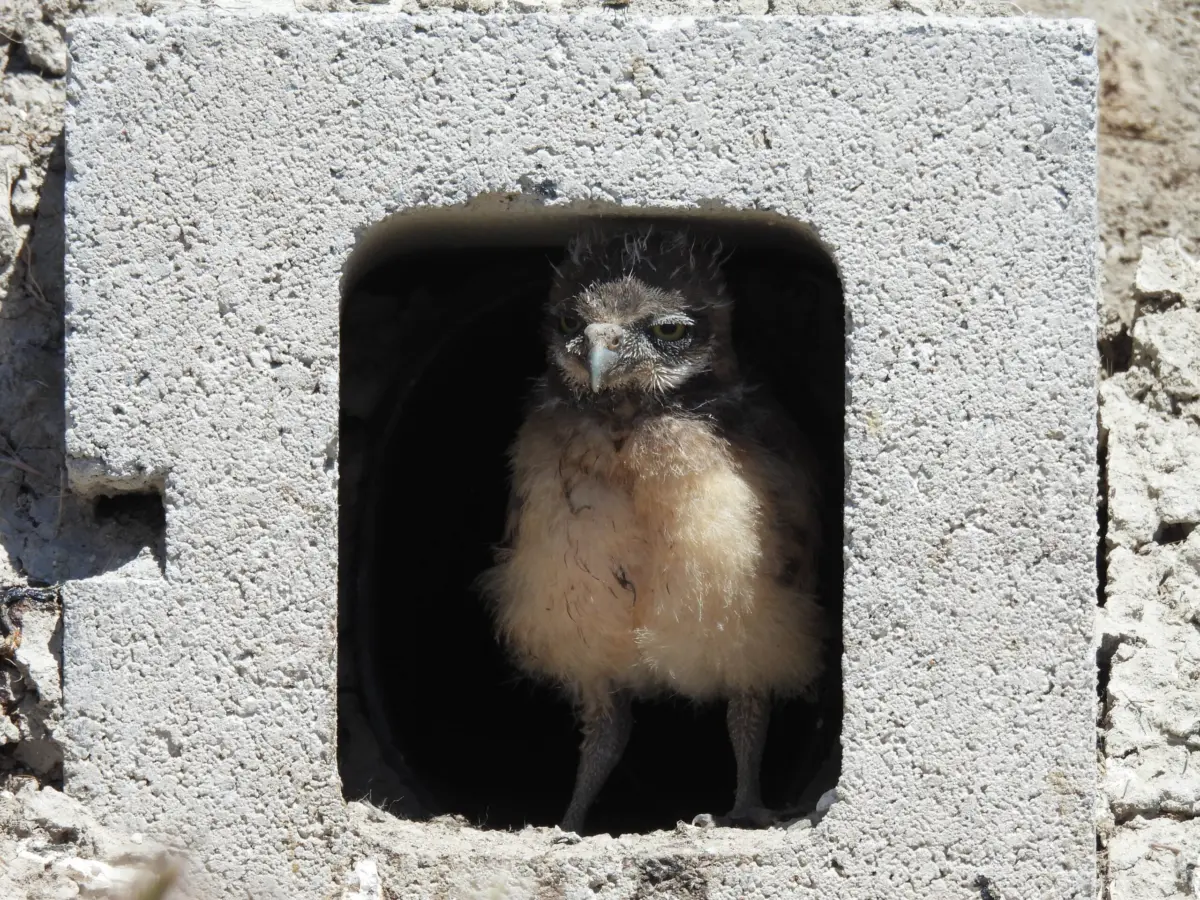
Today, however, the narrative has shifted dramatically. Through a massive, multi-year restoration initiative spearheaded by Audubon staff, regional conservation partners, and an army of dedicated volunteers, more than a thousand acres of invasive tamarisk have been eradicated. To complete the ecosystem’s rehabilitation, conservationists engineered and installed a network of reinforced artificial burrows designed to replace the natural dens lost to time, erosion, and livestock activity.
The results have stunned even seasoned biologists. Anticipating a multi-year waiting period for the territorial owls to discover and occupy the new subterranean real estate, project coordinators watched in awe as nearly 80 percent of the initial nest sites were claimed during their very first season. Some burrows welcomed occupants within a mere 72 hours of installation. Every single occupied nest successfully fledged owlets, marking a triumphant milestone for Great Salt Lake conservation.
This ambitious initiative demonstrates that targeted, hands-on habitat restoration—when paired with grassroots community engagement and structural engineering—can reverse population declines for vulnerable grassland species. As the project expands, Gillmor Sanctuary is rapidly becoming a blueprint for saline lake ecosystem management across the American West.
Detailed Chronology: From Tamarisk Thickets to Subterranean Havens
The journey to restoring the Gillmor Sanctuary for Burrowing Owls required a meticulous, step-by-step chronology of environmental healing, community mobilization, and structural innovation.
Phase One: Clearing the Canopy
The foundational phase of the project tackled the pervasive invasion of tamarisk (also known as saltcedar). These resilient trees had established dense monotypic stands across the sanctuary uplands, consuming massive amounts of water and creating a visual barrier that rendered the landscape uninhabitable for grassland-obligate birds.
Utilizing heavy machinery and specialized cutting techniques, conservation crews cleared over a thousand acres of tamarisk. The removal instantly flooded the dormant seed bank with sunlight. To accelerate ecological recovery, conservationists and volunteers hand-seeded the cleared acreage with a carefully curated mix of native grasses, shrubs, and forbs. As native vegetation rebounded, the stage was set for the return of indigenous fauna.
Phase Two: Diagnosing the Subterranean Deficit
While removing the trees successfully restored the open-landscape aesthetic required by Burrowing Owls, field biologists quickly identified a critical missing link: a severe lack of safe, stable nesting locations.
Unlike most owls, Burrowing Owls do not build their own nests. Instead, they rely almost entirely on underground burrows excavated by fossorial mammals such as badgers, desert tortoises, and prairie dogs. Over time, many of the sanctuary’s natural burrows had collapsed. This natural decay was drastically accelerated by the heavy footprint of large ungulates, including cattle and bison, which frequently traversed and wallowed above the fragile subterranean chambers.
With natural burrow creation unable to keep pace with environmental degradation, the sanctuary faced a bottleneck. Natural burrows existed only in sparse, isolated pockets, severely limiting the number of breeding pairs the landscape could support.
Phase Three: Engineering Upcycled Safe Havens
Recognizing the urgent need to boost nesting capacity, Audubon turned to the broader Salt Lake Valley conservation community. Project designers engineered a durable, reinforced artificial burrow system utilizing upcycled materials.
These human-made structures were deliberately engineered to withstand the crushing weight of large mammals walking or resting overhead, ensuring long-term structural integrity while remaining easily accessible and maintainable for wildlife biologists.
Site selection was treated as a science of its own. Technicians placed the artificial burrows exclusively in areas where invasive tamarisk had been cleared and where the topography offered the owls an unobstructed, 360-degree view of the surrounding terrain. This high visibility is vital; it allows nesting adults to continuously monitor for avian and terrestrial predators while providing immediate access to the short-stature grasslands and sparse shrub patches where they forage for rodents, insects, reptiles, and small birds.
Phase Four: Community-Powered Installation
The physical deployment of the burrows was a monumental group effort. In a powerful display of community-based conservation, teams of scientists, students, and civic groups converged on the sanctuary.
Armed with shovels, enthusiasm, and a shared mission, volunteers worked alongside field staff from Audubon’s Gillmor Sanctuary and Saline Lakes programs. In the initial push, the collective installed 18 artificial burrows, successfully establishing nine distinct nest sites.
Subsequent planning has outlined the installation of 14 additional burrows, which will bring the sanctuary’s grand total to 32 functional burrows comprising 16 high-quality nesting sites.
Phase Five: The 2026 Breeding Season Breakthrough
The spring and summer of 2026 marked the ultimate test of the project: the first full breeding season following the installation of the underground structures.
Biologists braced for a prolonged waiting period, estimating it could take up to two years for territorial Burrowing Owls to locate, trust, and settle into the artificial networks. Instead, nature responded with unprecedented speed. Seven out of the initial nine nest sites—nearly 78 percent—were claimed by breeding pairs almost immediately. One burrow famously welcomed its first resident a mere three days after installation.
Monitoring protocols tracked the pairs through incubation, hatching, and fledging. To the immense relief and excitement of the project teams, every single active nest successfully raised a clutch of healthy owlets, validating the rigorous engineering and placement strategies.
Supporting Context & Metrics: Data Behind the Success
To fully appreciate the scope of the Gillmor Sanctuary restoration, one must examine the hard metrics and ecological principles guiding the initiative.
Landscape Metrics
- Acreage Restored: Over 1,000 acres of invasive tamarisk cleared from upland zones.
- Initial Deployment: 18 reinforced artificial burrows installed, creating 9 primary nesting sites.
- Projected Total: 32 total burrows across 16 engineered nesting sites upon completion of phase two.
- Occupancy Rate (Year One): ~78% of installed sites successfully claimed by breeding pairs within the first season.
- Fledging Success Rate: 100% of occupied artificial nests successfully raised and fledged young.
The Ecological Profile of the Burrowing Owl
The Burrowing Owl is an ecological indicator species for healthy western grasslands and shrub-steppes. Weighing a mere five to six ounces, these long-legged raptors possess unique behavioral adaptations. They are crepuscular and diurnal (active during dawn, dusk, and daylight hours), standing sentinel outside their burrows on dirt mounds or fence posts.
Their diet is broad and opportunistic, consisting primarily of large insects (such as beetles and grasshoppers) during the summer, and shifting toward small mammals (voles, mice, and pocket gophers) and reptiles during the breeding season. By regulating rodent and insect populations, Burrowing Owls play an integral role in maintaining the trophic balance of the Great Salt Lake basin.
However, their reliance on subterranean infrastructure makes them uniquely vulnerable to habitat fragmentation, agricultural conversion, rodenticide programs, and livestock trampling. The loss of native burrow-excavating mammals across the Intermountain West has made human-assisted nesting structures an increasingly vital conservation tool.
Official Statements and Stakeholder Insights
The triumph at Gillmor Sanctuary was not achieved in isolation; it represents the convergence of academic institutions, non-profit conservation organizations, state agencies, and passionate local volunteers.
Project leads emphasize that the initiative’s success hinges entirely on collaborative synergy. According to regional conservation coordinators, the synergy between heavy-duty habitat restoration—such as mechanical tree removal—and micro-habitat enhancement (like artificial burrow installation) represents a paradigm shift in how degraded saline lake ecosystems are managed.
"A saw, a shovel, some seed, and a dedicated community have made a positive difference for grassland birds in our corner of the Great Salt Lake ecosystem," note project organizers in field summaries.
The collaborative framework bridged diverse sectors of the Utah community. Organizations that rolled up their sleeves and joined Audubon in the field included:
- HawkWatch International
- Tracy Aviary
- Sageland Collaborative
- Friends of Great Salt Lake
- Great Salt Lake Institute
- The Jordan River Commission
- Salt Lake Community College
- Boy Scouts of America
Furthermore, financial backing for this large-scale ecological intervention was provided by major grants and philanthropic foundations, including the National Fish and Wildlife Foundation’s America the Beautiful Challenge Grant and the Browning Foundation. Their investment underscores the national and regional significance of safeguarding the biodiversity of the Great Salt Lake watershed.
Future Outlook: Sustaining the Momentum
Buoyed by the extraordinary success of the 2026 nesting season, the National Audubon Society and its partners are looking ahead with ambitious plans to expand and refine their conservation framework at Gillmor Sanctuary.
Habitat Expansion and Maintenance
Clearing invasive tamarisk was merely the opening salvo. Future conservation efforts will target remaining patches of non-native vegetation across the sanctuary’s uplands, systematically replacing them with diverse, native seed mixes designed to permanently stabilize the soil and enhance forage availability for both raptors and their prey base.
Concurrently, maintenance protocols will be established for the artificial burrows. Because subterranean environments are subject to settling, moisture accumulation, and occasional blockage by shifting soils or opportunistic rodents, field crews will conduct annual inspections prior to each spring migration. This ensures that the structures remain structurally sound, safe, and attractive to arriving owls year after year.
Long-Term Scientific Monitoring
The rapid adoption of the artificial burrows has opened a unique window for ongoing scientific research. In an ongoing partnership with HawkWatch International, Audubon researchers will intensify population monitoring efforts.
By tracking banded individuals, measuring clutch sizes, and analyzing juvenile survival rates, scientists aim to gain granular insights into the health, genetic diversity, and migratory patterns of local Burrowing Owl populations. This long-term dataset will help refine best practices for grassland restoration, providing an empirical framework that can be replicated across other saline lake ecosystems in the Great Basin and beyond.
A Beacon of Hope for the Great Salt Lake
The ecological health of the Great Salt Lake has faced intense public scrutiny in recent years, frequently shadowed by concerns over receding water levels, declining wetland acreage, and associated environmental stressors. Amid these systemic challenges, the thriving Burrowing Owl population at Gillmor Sanctuary serves as a powerful reminder of the resilience of nature when given a helping hand.
By combining scientific rigor, structural innovation, and the tireless energy of a devoted community, conservationists have proven that local actions can yield profound, positive outcomes. The return of the Burrowing Owl to the shores of the Great Salt Lake is more than a localized avian victory—it is a testament to what can be achieved when people unite to heal the land.