
Executive Overview
The intersection of agriculture and artificial intelligence reached a defining milestone with John Deere’s official unveiling of "JD," an advanced generative AI chatbot designed to serve as a centralized intelligence hub for modern farming operations. Debuted at the 2026 Farm Progress Show (FPS), JD represents a monumental leap in the agricultural machinery giant’s digital strategy. Built directly on top of established data ecosystems like the John Deere Operations Center, the chatbot bridges the gap between raw agronomic data and actionable, real-time decision-making.
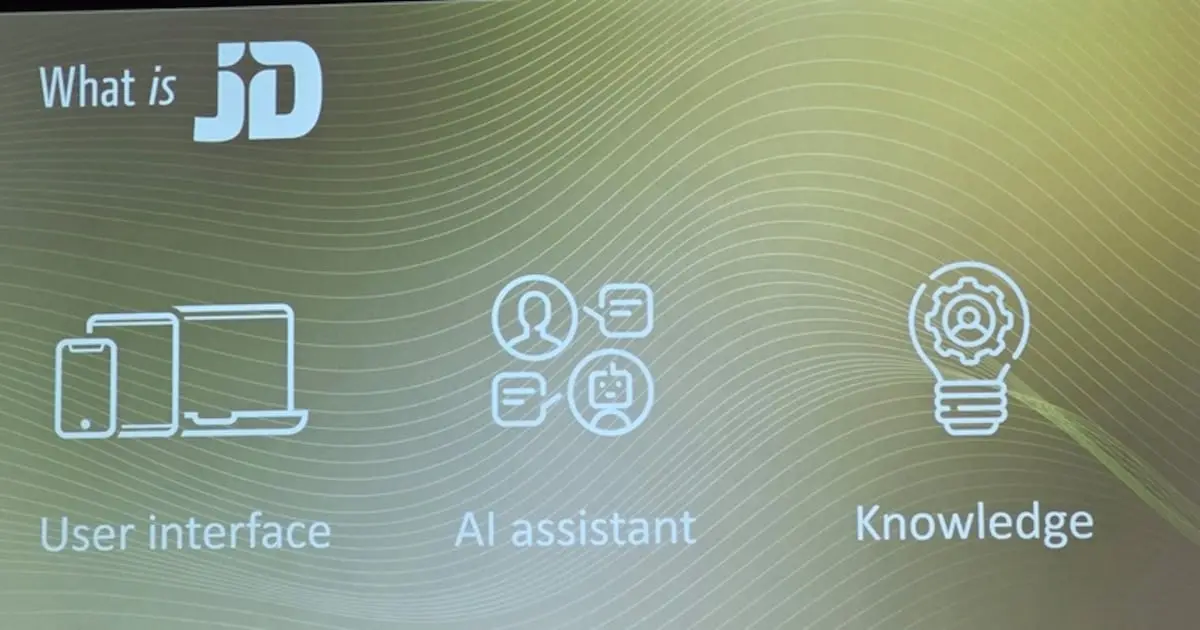
Rather than requiring producers to navigate complex software interfaces, pore through dense spreadsheets, or manually cross-reference machine telemetry, JD enables farmers to converse naturally with their operations. By utilizing text prompts via mobile and desktop applications—with in-cab G5 display integrations currently undergoing rigorous testing—the AI assistant transforms how agriculturalists interact with their machinery, fields, and historical yields.
This rollout is not an isolated technological experiment; it is the culmination of a multi-year digital roadmap initiated by John Deere to digitize its vast repositories of operational knowledge. From streamlining equipment maintenance to delivering comparative performance analytics across mixed fleets, JD is poised to redefine the efficiency, profitability, and operational cadence of modern farms across the globe.
Detailed Chronology: The Evolution of John Deere’s AI Roadmap
To understand the magnitude of the JD chatbot release, one must trace the deliberate, step-by-step evolution of John Deere’s digital architecture over recent years. The company’s transformation from a traditional heavy machinery manufacturer into a precision-ag technology leader has accelerated significantly through distinct, calculated phases.
2025: Digitizing the Knowledge Base
The foundational groundwork for JD was laid in 2025, a critical period during which John Deere systematically digitized its comprehensive library of operator manuals, technical documentation, service guides, and parts catalogs. For decades, these invaluable resources were trapped in physical manuals or cumbersome digital PDFs. By transforming this institutional knowledge into a machine-readable format, John Deere created the intelligence engine required to power the John Deere Equipment Mobile app’s early experimental AI assistant.
This phase proved essential. It established that generic, off-the-shelf large language models (LLMs) are insufficient for the specialized demands of modern agriculture. Farmers do not merely need general answers; they require precise, equipment-specific diagnostics, torque specifications, calibration steps, and troubleshooting workflows tailored to exact serial numbers and model years.
August 31, 2026: Tech Day and the Public Reveal
The trajectory shifted dramatically on August 31, 2026, during John Deere’s exclusive Tech Day preceding the Farm Progress Show. Industry stakeholders, technology analysts, and agricultural journalists gathered to witness the unveiling of the unified JD chatbot framework. Jackson Baca, Group Product Marketing Manager for Digital Foundation at John Deere, laid out the company’s definitive vision for the ecosystem during press briefings.
Baca emphasized that the long-term architectural goal is consolidation rather than fragmentation. Rather than forcing producers to juggle multiple disconnected software utilities, John Deere is actively working to merge the equipment-focused capabilities of Equipment Mobile with the agronomic and operational depth of the Operations Center. The result is "JD"—a single, cohesive artificial intelligence interface.
September 2026 and Beyond: The Farm Progress Show Debut
Unveiled publicly at outdoor lots 144 and 153 during the 2026 Farm Progress Show, JD transitioned from a concept demonstration to an active tool deployed in the field. Early adopters and show attendees were given firsthand demonstrations of how the chatbot processes complex queries, parses telemetry, and synthesizes data streams in seconds. Concurrently, product engineering teams initiated beta testing for in-cab G5 display integration, signaling that hands-free, voice- or touch-activated AI assistance inside the tractor cab is the next frontier slated for commercial release.
Supporting Context & Metrics: Precision Ag Pays Off
The launch of the JD chatbot arrives at a fascinating financial and operational crossroads for John Deere. Recent fiscal evaluations, including the company’s Q3 2026 earnings reports, underscore a broader industry trend: while traditional large-scale agricultural equipment sales have experienced cyclical softening and market normalization, investments in precision agriculture technology continue to yield robust returns.
The Economics of Data-Driven Farming
Modern farming operations generate staggering volumes of data every second a machine spends in the field. From real-time yield monitors and soil electrical conductivity maps to fuel burn rates, implement slip percentages, and variable-rate fertilizer prescriptions, the modern combine or tractor is essentially a rolling data center.
However, collecting data has never been the primary bottleneck for farmers; analyzing it has. Historically, extracting meaningful insights required hours of post-harvest data cleaning, desktop software manipulation, and complex layer-overlaying. For many producers, the time investment required to unearth actionable intelligence outweighed the perceived economic benefit.
JD addresses this friction head-on. By lowering the barrier to data interrogation, the chatbot democratizes high-level agronomic and mechanical analysis. A farmer no longer needs to be a data scientist or a geographic information system (GIS) expert to discover why a specific field underperformed, which tractor configuration delivered the lowest cost-per-acre during tillage, or how much fuel was consumed idling across the fleet during harvest prep.
Bridging the Labor Gap
Compounding the need for advanced digital tools is the ongoing agricultural labor shortage. Farm managers and owner-operators are routinely forced to do more with fewer experienced hands. When operators encounter equipment faults, complex terminal settings, or unfamiliar operational procedures in the field, precious time is lost waiting for dealer support or searching through manuals.
By integrating specialized AI assistants directly into the workflow—both remotely via mobile/desktop apps and natively within the G5 cabin display—John Deere is equipping operators with an expert co-pilot. This reduces downtime, accelerates troubleshooting, and ensures that even less-experienced operators can perform at peak efficiency levels.
Official Statements and Real-World Implementation
To fully grasp how the JD chatbot alters daily agricultural management, industry leadership and early-adopting producers offer vital perspectives on its practical utility.
The Corporate Vision: Streamlining the User Experience
During the Tech Day briefings, Jackson Baca articulated the core philosophy guiding the development of the JD assistant. The overarching design principle is radical simplicity through consolidation.
"We don’t want a scenario where customers are engaging with multiple JD AI assistants. We want them to engage with one AI assistant underneath JD — that’s the vision," Baca explained to AgNavigator.
Furthermore, Baca emphasized that JD transcends simple novelty status by being deeply embedded within the existing software architecture that farmers already rely on for daily management.
“JD is a true AI assistant, and that’s because it’s got the user interface that’s already embedded where our customers already use and analyze their data,” Baca noted.
By avoiding standalone apps that require separate logins and data exports, John Deere has ensured that the AI meets the farmer inside their established digital workflow.
The Producer’s Perspective: Case Study of Feikema Farm
Theory and corporate strategy are ultimately validated in the dirt. To demonstrate real-world efficacy, John Deere showcased operational case studies during the 2026 Farm Progress Show rollout, highlighting the experiences of Shawn Feikema, owner and operator of Minnesota-based Feikema Farm.
Feikema, who integrated early iterations of the technology into his daily farm management routines, detailed how the chatbot fundamentally alters decision velocity. Farming has always been a high-stakes endeavor dictated by tight seasonal windows; weather delays, pest pressures, and market fluctuations demand rapid pivots.
“Since JD, I type a question, and it just basically takes a little bit, compiles a bunch of data, [and] kicks me out an answer,” Feikema shared. “It allows me to make a decision faster, and in today’s world everything happens faster and faster and faster.”
Before the advent of generative AI tools tailored to ag data, Feikema noted that the sheer manual labor required to query historical farm records made deep analysis prohibitive.
“It just allows a whole other level of analysis that we’ve had before, but you didn’t have the infrastructure to make it worthy of your time to go look for it.”
By removing the administrative friction of data analysis, tools like JD allow producers to shift from reactive firefighting to proactive, strategic enterprise optimization.
Future Outlook: The Next Horizon for Agricultural AI
As John Deere showcases the JD chatbot to thousands of attendees at the 2026 Farm Progress Show, the broader implications for the agricultural technology sector are profound. The introduction of JD signals that generative AI is moving past the hype cycle and entering deep enterprise integration within heavy industries.
What Lies Ahead on the Roadmap
Looking forward, several key milestones will define the evolution of John Deere’s AI initiative:
- In-Cab G5 Display Deployment: While mobile and desktop access provides powerful remote management capabilities, the ultimate deployment target is the tractor and combine cab. Successfully bringing the JD chatbot to G5 displays means operators can query machine data, receive diagnostic assistance, and adjust operational parameters hands-free while actively working the field.
- Ecosystem Unification: Over upcoming product cycles, the complete integration of equipment documentation (formerly housed in Equipment Mobile) and operational agronomics (Operations Center) into a single, seamless conversational interface will be finalized.
- Predictive and Prescriptive Intelligence: As the LLM behind JD ingests broader datasets—incorporating regional weather models, macroeconomic commodity trends, localized agronomic trial results, and predictive maintenance telemetry—the chatbot will evolve from a reactive query-and-response tool into a proactive advisor. Imagine receiving a morning briefing from JD warning that soil moisture depletion in a specific pivot corner warrants an irrigation adjustment, alongside instructions on the optimal tractor speed to minimize soil compaction given current moisture levels.
Industry-Wide Implications
John Deere’s aggressive push into embedded generative AI establishes a new competitive benchmark for the entire agricultural machinery sector. Competitors and independent ag-tech startups will be forced to accelerate their own conversational AI integration strategies.
However, John Deere holds a formidable competitive advantage: the sheer depth of its proprietary machine telemetry, combined with the entrenched market penetration of the John Deere Operations Center. By successfully translating this vast data ocean into accessible, natural-language insights through JD, the company is solidifying its transformation from an iron-and-steel manufacturer into an indispensable technological partner for the modern grower.
For farmers attending the 2026 Farm Progress Show at outdoor lots 144 and 153, the message is clear: the future of agriculture is conversational, data-driven, and seamlessly integrated into the palm of the hand and the glass of the cab.