
Executive Overview
Water starts to feel like an all-day necessity, favorite foods lose their rich complexity, and the mouth carries a persistent, sticky coat upon waking. For many, these subtle shifts are initially dismissed as minor inconveniences—a byproduct of a long workday, a restless night, or simple aging. Yet, oral moisture is the unsung regulator of oral health. When saliva production shifts—whether plummeting into dry mouth (xerostomia) or surging unexpectedly—it impacts foundational human functions: speaking, eating, swallowing, and sleeping.
This comprehensive report examines the complex physiological role of saliva, why variations in its production cause such widespread disruption, and how general dentists serve as crucial diagnostic partners. By bridging the gap between everyday discomfort and systemic health, general dentists help patients decode what their bodies are communicating, protecting teeth from acid and bacteria while guiding them toward effective, personalized interventions.
Detailed Chronology: The Progression of Saliva Changes and Oral Health
Understanding how saliva variations impact the oral cavity requires examining the timeline of symptoms, physiological consequences, and professional intervention.
Phase 1: The Subtle Onset
In the earliest stages, saliva changes are rarely alarming. Patients may notice a minor dry sensation after speaking for long periods, slight difficulty swallowing dry foods like bread or crackers, or a sticky feeling upon waking. Many attempt to self-manage these symptoms with hard candies, frequent sips of water, or over-the-counter mints.
Phase 2: The Cascading Disruption
If the underlying cause remains unaddressed, the body’s protective balance shifts. Without adequate saliva to wash away food debris and neutralize bacterial acids, the oral ecosystem deteriorates. Patients often progress to experiencing:
- Persistent Bad Breath (Halitosis): Caused by unchecked bacterial proliferation and cellular debris accumulation.
- Mucosal Sensitivity and Sores: Delicate soft tissues in the mouth become prone to friction, irritation, and minor ulcerations.
- Dysgeusia (Altered Taste): Taste buds lack the fluid medium required to properly dissolve food molecules, dulling flavor profiles.
- Dentist Complications: Removable appliances begin to chafe against dry, unlubricated gum tissues, making everyday wear painful.
Phase 3: Structural Damage and Professional Intervention
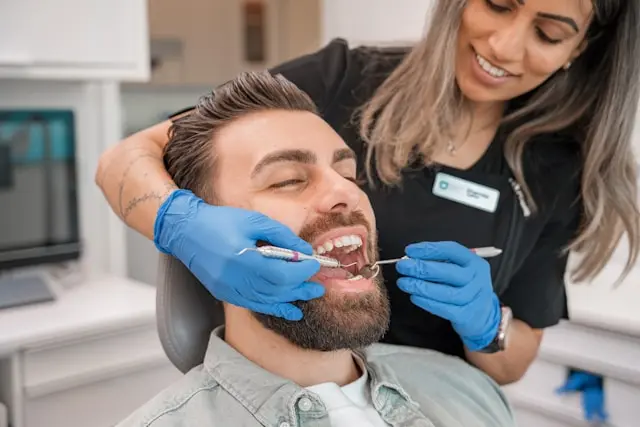
Left unchecked for months, chronic saliva reduction accelerates tooth decay, particularly along the vulnerable gumlines where saliva pooling is naturally low. This is the stage where routine dental visits become critical. A general dentist does not merely treat a cavity; they investigate the root cause, mapping the timeline of symptoms against medication changes, hydration habits, and systemic health indicators to formulate a restorative and preventative strategy.
Supporting Context & Metrics: The Biological and Clinical Landscape
Saliva is far more than simple water; it is a complex biological fluid composed of electrolytes, mucus, antibacterial compounds, and enzymes essential for digestion.
+-----------------------------------------------------------------+
|                       FUNCTIONS OF SALIVA                       |
+-----------------------------------------------------------------+
|  [Protection]   - Washes away food particles                    |
|                 - Neutralizes bacterial and dietary acids       |
+-----------------------------------------------------------------+
|  [Digestion]    - Contains enzymes (amylase) to break down food |
|                 - Lubricates bolus for comfortable swallowing   |
+-----------------------------------------------------------------+
|  [Maintenance]  - Keeps oral soft tissues supple and healthy   |
|                 - Remineralizes tooth enamel via minerals       |
+-----------------------------------------------------------------+
The Multifactorial Causes of Saliva Shifts
Salivary gland dysfunction rarely happens in a vacuum. Clinical data demonstrates that alterations in saliva flow typically stem from one of several primary categories:
- Pharmacological Side Effects: Over 500 commonly prescribed and over-the-counter medications inhibit salivary flow. Drugs used for hypertension, depression, anxiety, chronic pain, allergies, and urinary incontinence are frequent culprits.
- Systemic Health Conditions: Autoimmune disorders—most notably Sjögren’s syndrome—directly attack moisture-producing glands. Diabetes, thyroid disorders, and neurological conditions can also alter salivary output.
- Lifestyle and Environmental Factors: Chronic mouth breathing (often due to nasal congestion or sleep apnea), smoking, alcohol consumption, and persistent psychological stress significantly diminish oral moisture.
- Nutritional Deficiencies and Dehydration: Inadequate fluid intake or vitamin deficiencies compromise cellular function within the salivary glands.
Comparative Analysis: Home Management vs. Professional Intervention
| Approach | Primary Benefit | Operational Limitations |
|---|---|---|
| Increased Water Consumption | Eases mild, transient dryness caused by dehydration or environmental factors. | Ineffective against drug-induced xerostomia, autoimmune gland damage, or structural blockages. |
| Sugar-Free Gums and Lozenges | Mechanically stimulates remaining salivary glands to temporarily boost flow. | Provides only short-term relief and fails if underlying glandular output is severely depleted. |
| Topical Rinses and Toothpastes | Soothes irritated mucosal tissues and introduces specialized remineralizing agents. | Addresses symptoms rather than identifying or treating the core systemic trigger. |
| Comprehensive General Dental Exam | Identifies early decay patterns, traces symptoms to root causes, and coordinates multi-disciplinary care. | Requires an active appointment and potential collaboration with primary medical physicians. |
Official Statements and Research Insights
Medical and dental research institutions emphasize that saliva changes should never be casually dismissed as an inevitable part of aging.
According to findings from the National Institute of Dental and Craniofacial Research (NIDCR), dry mouth is a recognized clinical indicator that warrants thorough medical and dental evaluation rather than simple symptomatic masking. Their clinical guidelines stress that persistent xerostomia places patients at an exponentially higher risk for rampant cervical decay, periodontal disease, and oral fungal infections such as candidiasis.
Furthermore, the National Institute on Aging (NIA) highlights that older adults are statistically more vulnerable to saliva fluctuations due to polypharmacy—the concurrent use of multiple medications. Because aging populations frequently take a combination of cardiovascular, neurological, and analgesic drugs, the compounding anticholinergic effects drastically reduce salivary gland output.
Clinical experts advocate for proactive communication between patients, general dentists, and physicians. When a patient presents with sticky oral tissues or altered viscosity, the dental professional acts as an investigative anchor. By reviewing complete medication profiles and assessing oral tissue health, the general dentist helps translate subtle physical symptoms into actionable health data.
Future Outlook: Modern Diagnostic Approaches and Preventative Care
The management of salivary health is undergoing a technological and clinical evolution. Looking forward, the intersection of general dentistry and systemic wellness is yielding more sophisticated tools for early detection and patient empowerment.
Advancements in Diagnostics
Emerging diagnostic protocols increasingly recognize saliva as a rich diagnostic biofluid. Beyond simple moisture tracking, clinicians are exploring salivary diagnostics to monitor systemic markers, inflammatory states, and metabolic health. For the general dental practitioner, this elevates the status of saliva from a protective oral lubricant to a key indicator of overall bodily wellness.
Tailored Preventative Strategies
Future dental care models place heavy emphasis on customized preventative frameworks for patients experiencing chronic saliva reduction. These include:
- Prescription-Strength Fluoride Regimens: High-concentration fluoride toothpastes and gels applied via custom trays to shield vulnerable enamel from acid erosion.
- Advanced Saliva Substitutes: Bio-mimetic gels and sprays formulated to replicate the exact viscosity, pH balance, and mineral content of natural human saliva.
- Collaborative Care Networks: Streamlined communication channels between general dentists, primary care physicians, and specialists (such as rheumatologists or endocrinologists) to adjust medication dosages or manage underlying systemic conditions without compromising oral integrity.
Empowering the Patient
Ultimately, the future of managing saliva changes rests on patient education and early intervention. By moving away from self-treatment strategies—such as consuming sugar-loaded hard candies that inadvertently feed decay-causing bacteria—patients are learning to partner with their general dentists at the first sign of oral dryness.
Recognizing that a sticky mouth or an altered sense of taste is a biological signal rather than a trivial annoyance allows individuals to protect their teeth, preserve their comfort, and safeguard their overall health for years to come.