
Executive Overview
The modern landscape of remote work has fundamentally altered the domestic ecosystem. For millions of professionals who transitioned to home offices over the past several years, the daily routine is no longer defined by the quiet solitude of empty corporate cubicles, but rather by the demanding, high-energy presence of co-habitants who happen to have four legs, fur, and zero concept of professional etiquette.
While the psychological and emotional benefits of pet ownership are well-documented—ranging from lowered stress hormones to increased daily physical activity—the intersection of remote labor and high-drive canine companionship has birthed a distinct logistical challenge: the work-from-home distraction crisis.
For many pet parents, balancing video conferences, delicate client interviews, and intensive data analysis with the relentless demands of bored, under-stimulated dogs has become a daily endurance test. Traditional distraction tactics—ranging from standard rubber treat-dispensers to rawhide chews and bully sticks—frequently fall short. They either present choking hazards, disappear in a matter of seconds, or leave behind a sticky, unhygienic nightmare that requires arduous manual cleaning.
Enter the Woof Pupsicle, a meticulously engineered, modular enrichment toy that has rapidly transitioned from a viral internet sensation to an essential operational tool for remote workers and pet behaviorists alike. By rethinking the traditional hollow-cavity design popularized decades ago by classic chew toys, the Pupsicle offers a screw-apart, dishwasher-safe structure capable of holding both premade and DIY frozen treats.
This comprehensive review explores the genesis of the remote-work pet management crisis, evaluates the mechanical and behavioral engineering of the Woof Pupsicle, analyzes real-world performance metrics across diverse canine demographics, and offers an authoritative assessment of its value proposition for modern households.
Detailed Chronology: From Puppy Blues to the Remote-Work Breaking Point
To understand the profound impact of modern canine enrichment devices, one must first examine the evolutionary arc of contemporary pet ownership. The journey typically begins with a leap of faith: bringing home a high-energy puppy.
The Early Days: Chaos and Cute Distractions
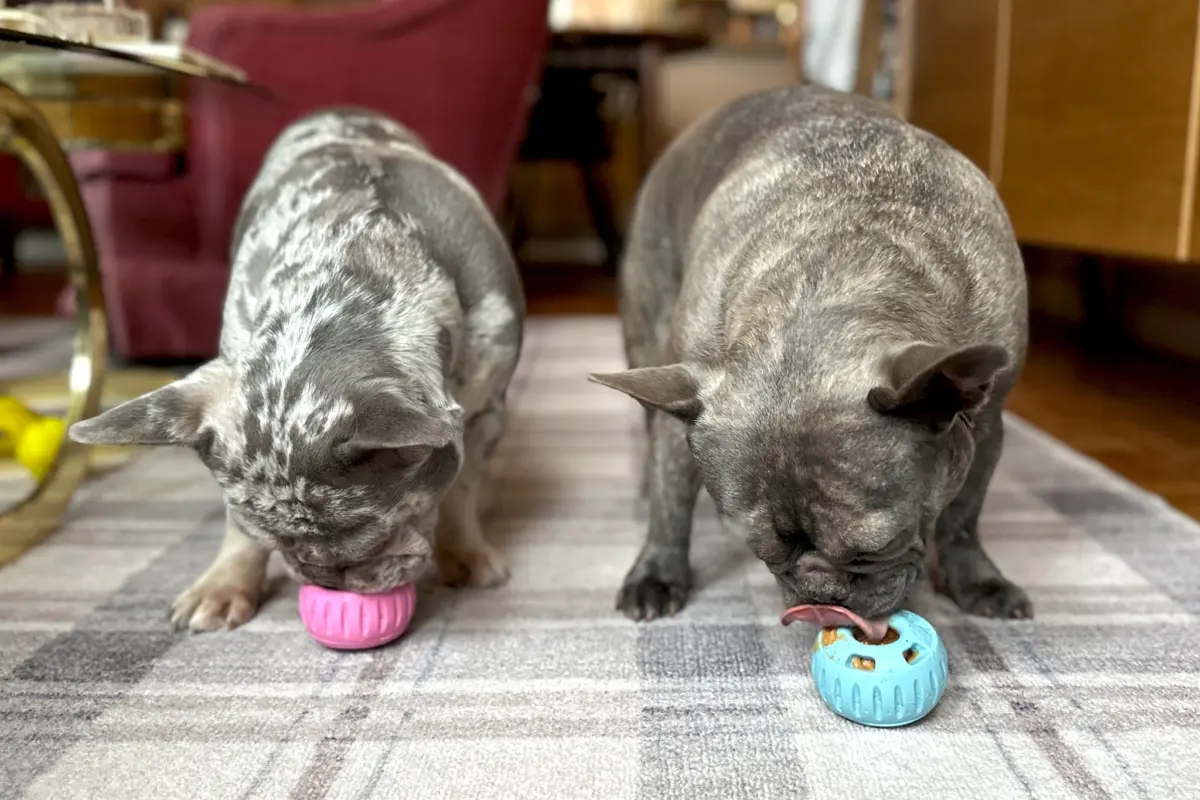
Consider the typical timeline of a first-time dog owner. Five days after moving into a new home, an ambitious couple brings home a stubborn, blue-eyed French bulldog puppy named Oswald. Armed with naive confidence gleaned from childhood memories of family pets, they quickly discover that modern urban puppy-rearing is an exercise in sleep deprivation and property management. The initial phase is characterized by a grueling potty-training gauntlet, a collection of four chewed-up television remotes, and bleary-eyed 3:00 a.m. shuffles into the cold night air.
Yet, these trials are inevitably softened by the endearing idiosyncrasies of canine companionship: the comforting weight of a warm body nuzzling into the crook of a neck, or the familiar, comforting scent of corn-chip paws.
Buoyed by the passage of time—and perhaps suffering from a mild case of selective memory—owners often make the consequential decision to expand their pack. Four years later, a fearless two-year-old female dog named Mabel enters the picture. While the transition from one dog to two small dogs introduces manageable adjustments—such as navigating synchronized winter wardrobe changes with mini puffer coats and surrendering what little real estate remained on the bed—a far more disruptive operational challenge emerges.
The Remote Work Collision
The true stress test arrives when hybrid or fully remote work models collide with multi-dog households. Energetic, social breeds do not understand the concept of billable hours, project deadlines, or high-stakes video calls.
In a typical remote work environment, the friction points are immediate and persistent:
- The Interruption Cycle: Dogs whine, paw at knees, and vocalize the moment an owner picks up the phone or sits down at a dining-room table workstation.
- The Desktop Interference: Attempting to type an important email while two rambunctious dogs engage in a spirited play-fight directly across the keyboard makes maintaining a professional demeanor on platforms like Google Meet or Zoom nearly impossible.
- The Vacuum of Focus: Standard toys fail to hold attention for longer than a few minutes, leaving the owner in a perpetual loop of redirection that shatters deep-focus work states.
The Search for Salvation
For months, owners cycle through a litany of stopgap solutions. Bully sticks demand hyper-vigilant supervision to prevent choking hazards; dental chews are ingested in the blink of an eye; and traditional one-piece rubber Kongs present a notorious post-consumption cleanup dilemma, leaving behind stubborn remnants of peanut butter that defy both dog tongues and the upper racks of standard dishwashers.
Salvation finally arrives through word-of-mouth recommendations—in this case, a thoughtful gift from a mother-in-law: the Woof Pupsicle. This modular, refillable, dishwasher-safe enrichment device shifts the paradigm of canine distraction, offering a reliable window of uninterrupted focus for the beleaguered remote worker.
Supporting Context & Metrics: Engineering, Hygiene, and Usability
What separates the Woof Pupsicle from decades of legacy pet toys is its departure from monolithic, single-cavity molding. To truly evaluate its utility, one must analyze its physical architecture, cleaning mechanics, and the economic and nutritional variables of its treat ecosystem.
Mechanical Architecture and Design
At its core, the Woof Pupsicle is constructed from two firm, durable rubber halves that screw together securely. This threaded mechanism solves the primary historical pain point of enrichment toys: extraction and sanitation.
- The Cleaning Advantage: Because the device unscrews completely, owners are no longer forced to contort bottle brushes into narrow, dark chambers to scrape away dried organic matter. The Pupsicle can be split apart and placed directly on the top rack of a household dishwasher.
- Thread Maintenance: Long-term users and editorial testers note that consistent exposure to high-heat dishwashing cycles can occasionally strip the smooth coating on the plastic or rubber threads, making the unit slightly stiff to open and close. A simple maintenance hack—applying a light coating of cooking oil to the threads—restores smooth operation instantly. Hand-washing is also recommended by product experts to prolong the life of the surface coating.
- Size Variations: Recognizing that a one-size-fits-all approach fails in the pet product market, Woof manufactures the Pupsicle across a tiered sizing matrix:
- Small: Tailored for dogs weighing 10 to 25 pounds (ideal for French bulldogs, Chihuahuas, and small terriers).
- Large: Engineered for dogs weighing 25 to 75 pounds.
- Extra Large: Designed for giant breeds exceeding 75 pounds.
- Power Chewer Variant: Constructed with denser, heavy-duty materials for aggressive chewers who treat standard rubber as a snack.
The Treat Ecosystem: Premade vs. DIY
The operational efficiency of the Pupsicle relies heavily on what goes inside it. Owners generally choose between two distinct operational pathways:
- Premade Treat Balls: Manufactured by Woof, these solid treat inserts drop seamlessly into the unscrewed Pupsicle, requiring zero prep time. Available in flavors like chicken, beef, and peanut butter—with specialized formulations featuring functional additives like probiotics for gut health or magnesium and tryptophan for calming—these balls can be frozen in advance to maximize licking time. For busy professionals facing an unexpected video call, a premade ball provides an immediate, zero-friction deployment.
- DIY Custom Fillings: For budget-conscious or culinary-minded pet parents, the Pupsicle is compatible with a wide array of household ingredients. Using silicone molds specifically manufactured for the Pupsicle, owners can freeze custom batches of:
- Unsweetened, xylitol-free peanut butter
- Plain Greek yogurt
- Low-sodium beef or chicken broth
- Pumpkin purée, mashed bananas, and oatmeal
- Blends of ground meat and rice
Performance Metrics Across Dog Demographics
Data gathered from product designers, software engineers, and pet journalists reveal striking variations in how different breeds interact with the Pupsicle:
| Dog Demographics | Weight / Breed Type | Preferred Setup | Average Lick Duration | Behavioral Impact |
|---|---|---|---|---|
| Ozzie & Mabel | ~20 lbs (French Bulldogs) | Small Pupsicle + Premade Balls / DIY Yogurt | 30 to 60 minutes | Calms pre-call anxiety; eliminates desk interruptions. |
| Dave | 65 lbs (Mixed Breed) | Large Power Chewer + Frozen Mixes | 45+ minutes | Absolute focus; channels heavy chewing energy constructively. |
| Buddy | Medium Mixed Breed | Standard Pupsicle + Custom Fillings | 25 to 35 minutes | Acts as a social buffer during dinner parties and guest arrivals. |
| Miller | High-Energy Young Dog | Power Chewer Variant | 35 to 45 minutes | Replaces destructive chewing habits; outlasts standard plush toys by 40 minutes. |
Official Statements & Expert Observations
The ascent of the Woof Pupsicle is supported by extensive field testing across professional households, highlighting its versatility in managing complex behavioral scenarios.
Managing Environmental Stress and Life Transitions
Beyond daily work-from-home distractions, behavioral testing indicates that high-value enrichment toys serve as critical therapeutic tools during acute stress events.
- Noise Phobias: Software engineer Jasmine Kasheboon Khoury reported that stuffing and freezing a Pupsicle successfully distracted her dog, Piglet, during high-decibel summer fireworks displays—a time when noise anxiety typically triggers frantic pacing and panting.
- Household Disruptions: When software engineer Beth Niegelsky integrated a new baby into her home, her dog Hobbes utilized the Pupsicle as a grounding, comforting distraction, easing the anxious transition period associated with shifting familial dynamics.
- Social Management: Editor Annemarie Conte employs the Pupsicle strategically when hosting social gatherings. Giving her dog, Buddy, a loaded Pupsicle the moment visitors arrive redirects his attention away from jumping on guests, establishing an immediate calm-state protocol.
Safety and Supervision Protocols
Despite its robust construction, pet safety experts universally emphasize that no canine toy is entirely indestructible.
- The Chew Hazard Warning: While dogs often enjoy carrying their empty Pupsicles around the house like prized trophies, aggressive chewers must be monitored. As Annemarie Conte notes, leaving certain dogs alone with an empty Pupsicle post-consumption invites them to chew the rubber components to pieces.
- Supervision Mandate: All enrichment tools require baseline supervision to ensure pets are enjoying their treats safely without attempting to ingest non-edible structural elements.
- Surface Hygiene: Pets writer Mel Plaut points out that unfreezing soft fillings (such as room-temperature peanut butter or yogurt) drastically reduces the longevity of the distraction—shrinking a 45-minute engagement window down to a frantic 10-minute snack—and can create a slobbery residue. Plaut recommends deploying the toy on easily washable surfaces, such as kitchen tile or specialized silicone feeding mats.
Future Outlook: The Evolution of Canine Ergonomics and Remote Work Integration
As the remote and hybrid work models solidify themselves as permanent fixtures of the global economy, the market for intelligent pet enrichment is poised for exponential growth. The success of the Woof Pupsicle signals a broader consumer shift away from crude, monolithic pet products and toward thoughtfully engineered, human-grade accessories that solve specific domestic friction points.
What Lies Ahead for Pet Technology
- Smart Integration and IoT Tracking: Future iterations of canine enrichment tools may incorporate smart-sensor technology to monitor lick frequency, duration, and caloric intake, feeding real-time wellness data directly into smartphone applications for remote pet parents.
- Advanced Nutritional Customization: The trend toward functional pet nutrition—highlighted by pre-blended calming agents, joint-support supplements, and digestive enzymes embedded within frozen inserts—will likely expand, transforming everyday boredom-busters into targeted preventative health tools.
- Sustainable Material Science: As environmental consciousness rises among pet owners, manufacturers will face increasing pressure to utilize biodegradable, eco-friendly rubber and plastic alternatives that maintain industrial-grade durability without compromising dishwasher safety.
Conclusion: Restoring Balance to the Modern Household
Ultimately, the relationship between humans and their canine companions is built on deep emotional bonds that transcend the minor inconveniences of remote-work disruptions. Yet, when constant demands make basic domestic tasks—such as drying hair, cooking dinner, or conducting high-stakes conference calls—feel like an obstacle course, the stress can erode that harmony.
By reclaiming twenty-five to forty-five minutes of uninterrupted focus, tools like the Woof Pupsicle do more than simply occupy a dog’s time; they restore emotional equilibrium to the pet parent. In a hyper-connected world where work and home life occupy the exact same physical footprint, that quiet window of peace is an invaluable commodity—leaving both humans and their four-legged co-workers significantly happier and far more balanced.