
Executive Overview
For decades, the study of animal behavior was dominated by a singular, dramatic narrative: nature as a brutal arena governed strictly by dominance hierarchies, unyielding aggression, and the survival of the fiercest. Coined by Victorian poets and reinforced by generations of predominantly male researchers, the paradigm of "nature, red in tooth and claw" cast a long shadow over both wildlife biology and domestic animal training.
However, a quiet revolution in the 1970s—coinciding with the global rise of modern feminism and pioneering field research—shattered this narrow worldview. Spearheaded by visionary women scientists who rejected lab-bound assumptions for immersive, long-term field studies, the discipline of animal behavior underwent a profound paradigm shift.
While cultural icons like Jane Goodall, Dian Fossey, and Biruté Galdikas (the famed "Trimates") opened our eyes to the inner lives of chimpanzees, gorillas, and orangutans, two lesser-known primatologists—Dr. Jeanne Altmann and Dr. Shirley Strum—fundamentally transformed how science measures social structures. By shifting the observational lens away from flashy male aggression toward the nuanced dynamics of cooperation, reciprocity, and female agency in baboons, Altmann and Strum proved that social stability relies as much on empathy and alliance as it does on conflict.
This deep dive explores their groundbreaking methodologies, the historical barriers they overcame, and how their revolutionary insights continue to reshape everything from modern mammalian biology to humane canine training and farm life stewardship.
Detailed Chronology: The Evolution of Behavioral Observation
To understand the magnitude of the shift engineered by Altmann and Strum, one must first examine the historical limitations of field biology prior to the 1970s.
The Era of "Ad Lib" Sampling and Anthropocentric Drama
Historically, behavioral researchers utilized what Dr. Jeanne Altmann later categorized as "ad libitum" (ad lib) sampling. In simple terms, scientists would watch a group of animals and jot down notes whenever "something interesting" happened.

Human observers, naturally drawn to high-octane drama, tended to record aggressive encounters, violent territorial disputes, and fierce battles for alpha status. Because the vast majority of early field researchers were men operating within patriarchal academic institutions, their biases heavily influenced what they deemed "significant." Consequently, male-dominated dominance hierarchies became the default explanation for how primate societies organized themselves. Peaceful moments, maternal care, and subtle negotiations between females were routinely dismissed as background noise.
1970–1974: The Methodological Earthquake
The landscape of primatology shifted dramatically during the early 1970s—an era when systemic barriers routinely sidelined women. (For context, prominent author and animal behaviorist Dr. Patricia McConnell recalls that as late as 1968, she could not open a bank account in her own name upon marriage; legally, she was classified simply as "Mrs. Douglas McConnell." Similarly, Jane Goodall faced severe academic skepticism for years simply because she insisted on giving her chimpanzee subjects names rather than impersonal numbers).
It was against this backdrop of cultural and institutional rigidity that Dr. Jeanne Altmann published her seminal work on observational methods. Recognizing that ad lib sampling produced deeply flawed, biased data, Altmann introduced focal animal sampling.
Under this rigorous new protocol, a researcher selects a single individual and records every single behavior exhibited by that specific subject for a set, uninterrupted period of time, regardless of whether "action" is occurring.
When applied to the study of baboons, focal sampling stripped away the observer bias toward dramatic aggression. Suddenly, the steady, cooperative mothering behaviors of females and the complex alliances forged across both sexes emerged as equally vital components of social survival. According to the International Encyclopedia of Primatology, Altmann’s findings "profoundly changed the prevailing view of females more generally, and of mammalian females more specifically," establishing foundational links between a mother’s lived environment and the non-genetic (epigenetic) phenotypic traits of her offspring.
1972 Onward: Dr. Shirley Strum and the Baboon Field Revolution
Building upon this methodological awakening, Dr. Shirley Strum began her legendary field studies of olive baboons in Kenya in 1972. Challenging the prevailing dogma that baboon societies were ruthless despotisms ruled by alpha males, Strum discovered that cooperation and reciprocity were central to daily survival.

Strum observed that baboons deployed a diverse repertoire of social strategies—aggression being only one tool among many—to maintain health, secure resources, and navigate troop politics. Her work revealed astonishing examples of tactical intelligence, such as male olive baboons utilizing infants as "living shields" during tense social conflicts. Because baboon social norms strictly forbid harming an infant, these males effectively weaponized social vulnerability for peacekeeping.
Supporting Context & Metrics: Redefining Primate and Mammalian Societies
The discoveries made by Altmann and Strum redefined our understanding of evolutionary biology by providing empirical metrics for behaviors previously overlooked.
| Researcher | Focus Species | Methodological Innovation | Core Discovery |
|---|---|---|---|
| Dr. Jeanne Altmann | Baboons / Mammals | Focal Animal Sampling | Proved that ad lib sampling overstates aggression; established that maternal care and non-genetic phenotypic impacts are vital to evolution. |
| Dr. Shirley Strum | Olive Baboons | Long-term Field Tracking | Demonstrated that cooperation, strategic friendships, and reciprocity outweigh raw male dominance in social stability. |
The Power of Primate Friendships
Strum’s long-term research documented complex interpersonal relationships that mirrored human social bonds far more closely than those of chimpanzees or gorillas. For instance, male olive baboons frequently established deep, long-lasting friendships with females. These bonds were mutually beneficial: females groomed and supported the males, while the males actively protected the females and their offspring from unwanted mating attempts by rival males.
These empirical insights forced evolutionary biologists to expand models of natural selection. Survival of the fittest no longer meant simply being the strongest or most aggressive; it increasingly meant being the most socially adept, cooperative, and interconnected member of a community.
Official Statements & Scholarly Consensus
The scientific community’s retrospective assessment of this 1970s paradigm shift highlights its monumental impact on modern behavioral ecology.
-
The International Encyclopedia of Primatology notes regarding Jeanne Altmann’s framework:

“[Altmann’s] findings profoundly changed the prevailing view of females more generally, and of mammalian females more specifically, laying the groundwork for modern understandings of maternal investment and offspring development.”
-
Reflecting on the Historical Arc of Animal Behavior:
Scholars and field researchers frequently emphasize that the transition from a purely adversarial framework to one that acknowledges cooperation has fundamentally bridged the gap between wildlife biology and domestic animal care. As modern ethologists point out, viewing animals through the lens of constant power struggles leads to flawed training and management strategies, whereas recognizing cooperative tendencies fosters healthier, more balanced human-animal bonds.
Future Outlook: From Wild Primates to Domestic Life and Dog Training
The ripple effects of Altmann and Strum’s discoveries extend far beyond academic journals, directly influencing how we understand domestic animals, farm management, and companion animal training today.
Implications for Canine and Domestic Animal Training
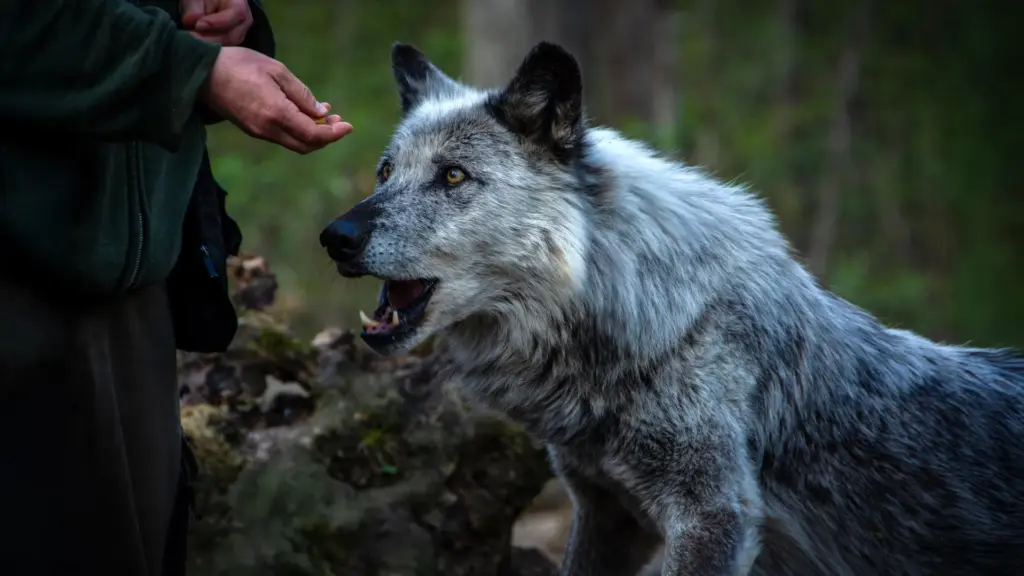
For decades, dog training was heavily influenced by outdated, linear models of canine social structures—most notably the rigid "dominance theory" derived from early, flawed studies of captive wolves. Trainers frequently operated under the assumption that domestic dogs spent their lives plotting to overthrow their human owners to become the "alpha."
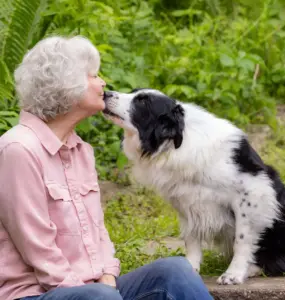
Armed with the modern understanding pioneered by primatologists like Altmann and Strum—that mammalian societies are fundamentally built on cooperation, communication, and mutual trust rather than perpetual internal warfare—modern dog training has largely abandoned punitive, dominance-based hierarchies. Today’s behavioral science favors positive reinforcement, relationship-building, and clear communication ("Nature, light blue in heart and soul," as behavioral advocates poetically frame it).

Lessons from the Farm and Beyond
This ethos of cooperation over conflict plays out daily in unexpected settings, such as farm management. For example, agricultural observation reveals that livestock like sheep—which rely heavily on scent to identify one another—experience profound social resets following annual shearings. When wool is removed, flock members temporarily lose their primary identification markers, leading to ritualized renegotiations of social order (affectionately dubbed annual "smack downs" by seasoned farmers). Yet, amidst this seasonal chaos, enduring inter-individual friendships—such as non-relatives bonding for mutual protection—quickly re-emerge, underscoring that social affiliation is a baseline mammalian need.
As we celebrate achievements in science and literature—ranging from field-changing biological research to celebrated contemporary literature like Patricia McConnell’s bestselling novel Away To Me—the overarching message remains clear. Whether observing wild baboons on the plains of Kenya, managing a flock of sheep, or rehabilitating a rescue dog at home, moving past the myth of relentless dominance allows us to build a more accurate, empathetic, and effective understanding of the natural world.