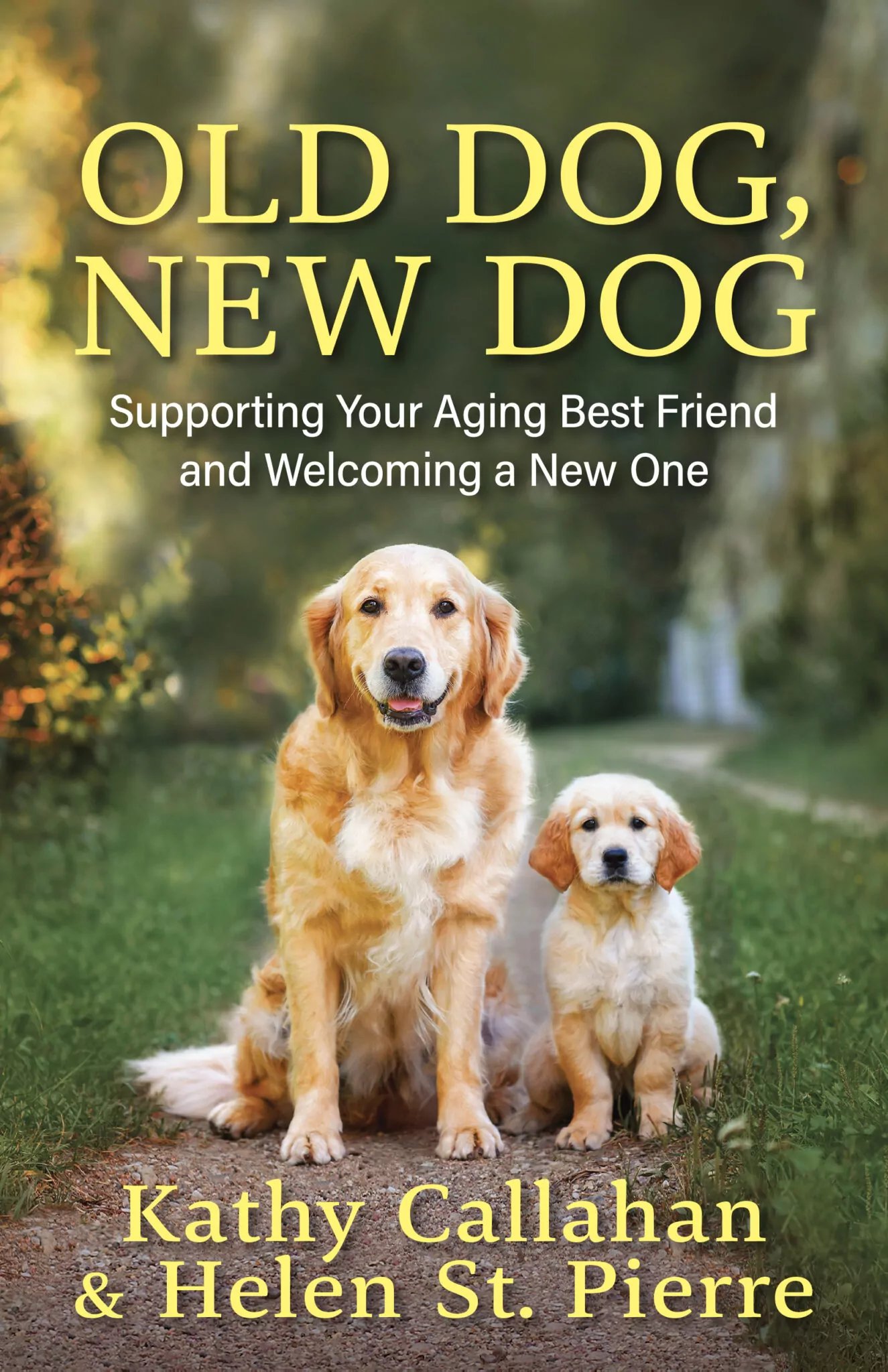
The lifecycle of domestic canines presents pet owners with a complex emotional and logistical dichotomy: the tender, slow-moving twilight of senior care, juxtaposed against the explosive, high-octane energy of welcoming a new puppy. For decades, navigating this delicate household transition has been largely a matter of trial and error for owners. However, a definitive new literary resource has emerged to bridge this gap: Old Dog, New Dog: Supporting Your Aging Best Friend and Welcoming a New One, co-authored by canine behavior and care experts Kathy Callahan of PupStart and Helen St. Pierre of Old Dogs Go To Helen.
Praised widely by animal behaviorists, veterinarians, and seasoned trainers—including renowned zoologist and author Patricia McConnell—this volume serves as both a practical manual and an empathetic guide. The book tackles difficult subjects head-on, from managing the unique behavioral requirements of geriatric canines to evaluating the emotional and spatial bandwidth required when introducing an energetic puppy to a multi-dog household.
Beyond the confines of pet behavioral literature, this report also explores the broader realities of rural animal husbandry and homestead ecology. Drawing from field observations in rural Wisconsin, we examine the intersections of working sheepdogs, local pollinator declines, and perplexing mammalian behaviors that continue to baffle modern naturalists. Through an authoritative, journalistic lens, we analyze the critical insights of Old Dog, New Dog, explore its underlying philosophies on animal welfare and mortality, and reflect on the delicate balance of farm and wildlife management.
Detailed Chronology: The Genesis and Impact of Old Dog, New Dog
The conception of Old Dog, New Dog did not stem from theoretical academic exercise; rather, it was born out of clinical necessity. Both Kathy Callahan and Helen St. Pierre spent years witnessing well-intentioned pet owners inadvertently destabilize their households by bringing puppies into environments already occupied by fragile, aging seniors.
The Experts Behind the Work
Kathy Callahan’s professional pedigree is rooted in foundational puppy development—specifically, helping owners establish correct behavioral baselines during the critical formative windows of a dog’s life. Conversely, Helen St. Pierre has built an authoritative reputation in geriatric canine medicine and palliative care through her specialized advocacy work with Old Dogs Go To Helen.
When these two distinct paradigms—the dawn of life and its sunset—converged, the result was a manuscript designed to address a critical literature gap in the pet care market. Prior to this publication, most training manuals focused either exclusively on puppy socialization or strictly on end-of-life senior management. By pairing these topics, Callahan and St. Pierre established a holistic narrative arc mirroring the natural continuity of canine companionship.
Core Themes Explored in the Text
The book is methodically structured to guide readers through emotionally charged and logistically challenging milestones:
"Savoring the Sunset": A dedicated examination of senior dog care, focusing on physiological degradation, cognitive dysfunction, pain management, and the agonizing calculus of quality-of-life assessments versus natural passing.
"Welcoming a Puppy": A realistic look at the sheer disruption a juvenile dog introduces to a domestic space, addressing the exhaustion of simultaneous management, synchronized feeding schedules, and fragmented exercise regimes.
The Decision Tree: Analytical frameworks designed to help owners evaluate whether their specific domestic infrastructure can absorb the physical, financial, and emotional strain of a multi-generational canine household.
Supporting Context & Metrics: Evaluating Your Household "Bandwidth"
When considering the addition of a puppy to a home already inhabited by an aging dog, standard instinct often leads owners to assume that the older dog will appreciate the youthful vitality, or that the puppy will learn manners by observing the elder. According to Callahan and St. Pierre, this romanticized notion frequently shatters against the harsh rocks of domestic reality.
The "Bandwidth" Metric
During professional consultations regarding the book, Callahan introduced a foundational diagnostic question that every prospective pet owner must ask themselves:
"What is your bandwidth when it gets challenging?"
In a multi-generational pet ecosystem, things invariably go wrong. Senior dogs experience declining mobility, urinary incontinence, cognitive decline, and increased veterinary dependencies. Simultaneously, puppies present developmental challenges: house-training regressions, destructive chewing, excessive vocalization, and susceptibility to parasitic infections such as giardia.
When a senior dog requiring around-the-clock palliative care contracts a schedule-disrupting crisis at the exact moment a teething puppy requires intensive supervision, the human caretaker’s "crisis tank" is often depleted. The book does not argue against acquiring a puppy; rather, it forces a rigorous, data-driven self-assessment of the household’s emotional, financial, and temporal reserves.
Logistical Realities: The Leash Equation
One of the most pragmatic insights highlighted in the text involves the daily logistics of exercise. Owners frequently attempt the seemingly efficient strategy of walking their senior dog and their new puppy simultaneously. The resulting experience—navigating a slow, arthritic dog stopping frequently to sniff, anchored to a frenetic, zigzagging puppy lunging at leaves—is uniformly described by the authors as an exercise in geometric impossibility.
The text outlines clear operational directives: walk dogs separately. For single owners, this immediately doubles the time commitment required for daily physical maintenance, an operational metric that must be calculated before financial investments in a new animal are made.
Official Statements & Expert Perspectives
To fully grasp the cultural and professional resonance of Old Dog, New Dog, one must look to leaders within the applied animal behavior community. Animal behaviorist Patricia McConnell, reviewing the book from her Wisconsin farm, noted that the chapter addressing senior needs—specifically the discourse surrounding planned euthanasia versus waiting for a natural death—justifies the acquisition cost of the book entirely.
Helen St. Pierre’s Core Inquiry: Confronting Mortality
When pressed for an elevator pitch summarizing the emotional core of the book, Helen St. Pierre posed a disarmingly profound question to prospective owners:
"How do you feel about death?"
St. Pierre’s clinical observation points to a recurring psychological phenomenon: humans frequently utilize the acquisition of a puppy as an unconscious defense mechanism to insulate themselves against the impending grief of losing an elderly companion. While a sparkling, milky-breathed puppy injects undeniable joy into a grieving household, caretakers must brutally evaluate whether that acquisition serves the emotional needs of the human, or the welfare of the resident senior dog.
Many senior dogs experience severe behavioral exhaustion when forced to police, evade, or tolerate the relentless advances of an uninhibited puppy. As McConnell observed through her own interactions with her aging dog Maggie—who displayed a quiet, baleful withdrawal when presented with an energetic visitor—senior canines often prefer peace, predictability, and sovereign space over the chaotic renewal of youth.
Future Outlook: Integrating Behavioral Science and Homestead Realities
As the field of applied animal behavior continues to evolve away from outdated dominance theories toward holistic, welfare-centered paradigms, resources like Old Dog, New Dog signal a necessary maturation in pet ownership culture. The future of domestic animal care relies on proactive, emotional literacy—understanding that our desires for companionship must be tempered by the physiological and psychological capacities of the animals already in our charge.
Beyond the Household: Observations from the Farm
The lessons of balance, ecological management, and unexpected animal behaviors extend far beyond domestic pet care and directly into rural homestead stewardship. Life on a working farm offers continuous reminders of complex biological systems at play:
Working Dog Dynamics: Field training sessions with working sheepdogs (such as McConnell’s dog Skip) alongside experienced handlers highlight the remarkable synergy possible when canine drive, human guidance, and livestock cooperation align in well-managed agricultural environments.
Pollinator Ecology & Habitat Health: Observations in rural flora—such as dense plantings of onion-family flowers drawing frenzied populations of native bumblebees alongside honeybees—demonstrate the vital importance of floral diversity. Furthermore, the presence of vulnerable species like swallowtail butterflies, whose delicate proboscises probe zinnias for nectar, serves as a stark reminder of the broader environmental decline facing insect populations globally, urging landowners to prioritize native plantings and pesticide-free ecosystems.
The Enigma of Wildlife Behavior: Ecological coexistence is not without its frustrations. A persistent rural mystery—such as wild rabbits cutting down native Liatris (Blazing Star) flower stems diagonally, leaving the pristine blooms on the ground uneaten even when deterred by physical barriers like dog hair—illustrates the ongoing knowledge gap between human observation and wildlife psychology. These occurrences challenge naturalists to continually reassess our understanding of territorial marking, feeding anomalies, and mammalian behavior.
Conclusion
Whether evaluating the delicate transition from a senior dog to a new puppy using the expert frameworks provided by Callahan and St. Pierre, or managing the intricate web of wildlife, working dogs, and pollinators on a rural homestead, one unifying truth remains: successful stewardship demands preparation, empathy, and an honest assessment of our own limitations. Old Dog, New Dog stands out as an essential milestone in this endeavor, ensuring that our final chapters with aging companions are honored with dignity, and our new beginnings are approached with clear-eyed wisdom.