
Executive Overview
In the vast landscape of rescue animal narratives, few stories capture the delicate intersection of profound vulnerability and unyielding vitality quite like that of Maeve Maureen. Tucked inside the proportions of a diminutive kitten with the unearned confidence of an apex predator, Maeve has become an internet sensation not merely because of her astonishing physical size, but due to a rare medical reality. Diagnosed with feline pituitary dwarfism—clinically recognized as hyposomatotropism—Maeve represents a medical anomaly so uncommon that the vast majority of veterinary professionals will practice an entire career without ever encountering a live case.
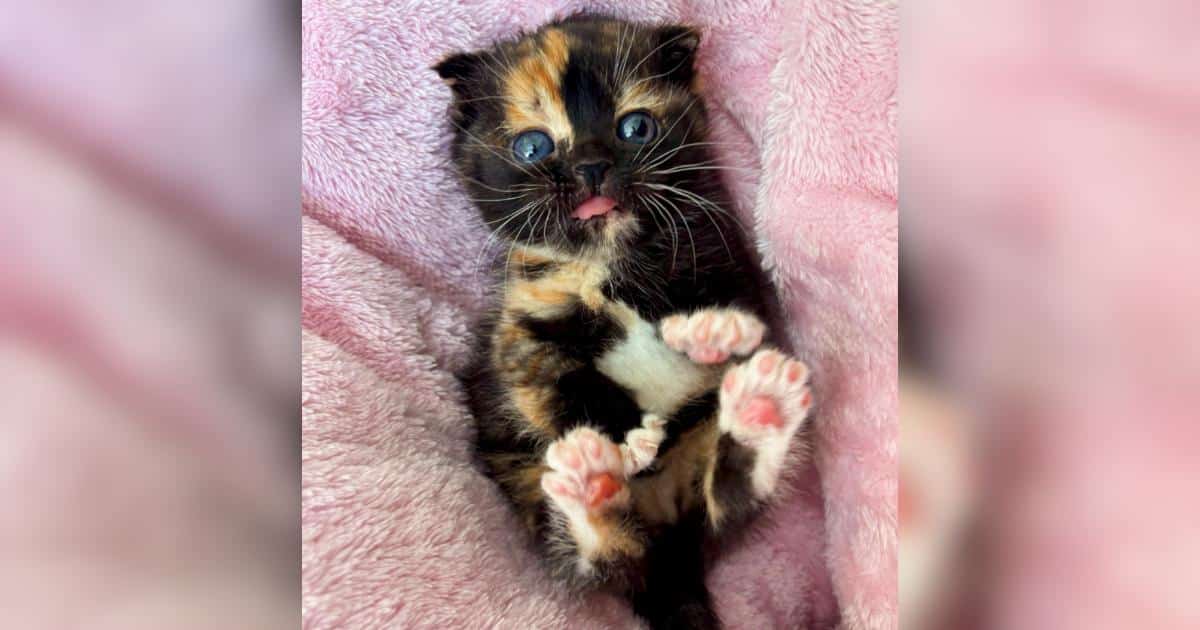
Weighing a mere 200 grams when she was first discovered abandoned beside an unforgiving roadway on April 28, Maeve’s chances of survival were initially calculated in hours rather than years. Today, she serves as an ambassador for rare feline endocrinology, educating thousands of followers through her dedicated social media platform while navigating a life filled with enthusiastic stumbles, unexpected bursts of speed, and a remarkably comical companionship with a Great Dane mix named Buddy. This comprehensive investigative feature explores Maeve’s dramatic rescue, the complex biology of pituitary dwarfism, the day-to-day realities of managing her specialized care, and the broader cultural impact of her journey as a "forever kitten."
Detailed Chronology
The Rescue: A 200-Gram Life Against the Elements
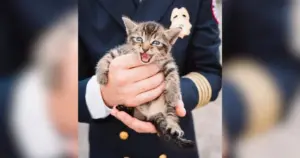
The story of Maeve Maureen begins on a bleak spring day, April 28, when a compassionate passerby discovered a solitary, silent bundle of fur abandoned completely unprotected along a roadside. Without a mother cat or littermates to provide warmth or protection, the fragile creature faced an immediate existential threat from the elements. Meteorological conditions at the time featured biting winds and plunging temperatures—environmental hazards that are routinely fatal to neonatal felines.
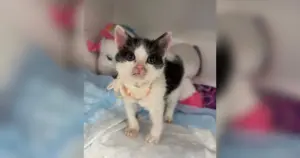
Upon initial rescue, a comprehensive clinical evaluation painted a grim picture. Maeve tipped the scales at an astonishingly low 200 grams. Her physical condition was severely compromised:
- A heavy infestation of fleas had severely depleted her red blood cells.
- One eye was entirely crusted and sealed shut by infectious discharge.
- An advanced upper respiratory infection severely restricted her airways, making every breath a labored struggle.
Promptly transferred into a climate-controlled environment, the kitten instinctively sought refuge in the folds of a warm blanket, a vital first step in combating hypothermia. Veterinarians examining her estimated her age to be approximately one week and four days old. At this critical developmental milestone, orphaned kittens require round-the-clock intervention, including specialized milk-replacement bottle feedings administered every 30 minutes. Her primary caregiver assumed this grueling nocturnal watch, delivering the essential thermoregulation and nutritional support required to pull the infant back from the brink of mortality.
Emerging Anomalies: The Realization of Slow Growth
As the weeks elapsed, Maeve defied her initial prognosis by stabilizing, gaining strength, and developing an insatiable appetite for life. However, as she transitioned through her neonatal phase into early kittenhood, an underlying developmental discrepancy became increasingly apparent to her human family. While her chronological age advanced, her physical scale remained stubbornly static.
Standard developmental milestones—such as the transition from a waddling crawl to a steady gait, the proportional elongation of limbs, and the predictable gain of body weight—failed to manifest according to standard veterinary growth charts. Subsequent veterinary diagnostics ultimately identified the root cause of her diminutive stature: a congenital dysfunction of the pituitary gland resulting in a profound deficiency of growth hormone.
Rather than treating this diagnosis as an insurmountable tragedy, her family embraced the challenge. Recognizing the educational vacuum surrounding the condition, they established a dedicated public profile to chronicle her daily milestones, transforming Maeve’s unique biological blueprint into an instrument of public awareness.
Supporting Context & Metrics: Decoding Feline Pituitary Dwarfism
To fully appreciate Maeve Maureen’s journey, one must examine the complex endocrinological framework of feline pituitary dwarfism, scientifically termed hyposomatotropism.
The Master Gland and Growth Regulation
The pituitary gland is a pea-sized endocrine organ situated at the base of the brain, nestled within a bony enclosure known as the sella turcica. Often dubbed the "master gland," it governs a vast array of systemic functions by synthesizing and secreting critical hormones into the bloodstream. These include:
- Thyroid-stimulating hormone (TSH)
- Adrenocorticotropic hormone (ACTH)
- Prolactin
- Luteinizing hormone and follicle-stimulating hormone
- Growth hormone (somatotropin)
In cases of congenital pituitary dwarfism, the gland fails to produce adequate levels of growth hormone, typically due to structural malformations, cysts, or congenital hypoplasia of the gland itself. Because growth hormone is not merely responsible for linear skeletal expansion but also plays an integral role in cellular metabolism, protein synthesis, and tissue regeneration, the downstream effects of hyposomatotropism extend far beyond miniature stature.
Clinical Implications Beyond Size
While the most visually striking characteristic of a "forever kitten" is their permanent miniature scale, veterinary endocrinologists emphasize that the condition requires vigilant, multi-systemic monitoring. Key clinical considerations include:
- Dermatological Health: Growth hormone deficiency frequently results in retained kitten coats, alopecia (hair loss), hyperpigmentation, and thinning of the dermal layers.
- Endocrinological Cascades: Secondary deficiencies in thyroid or adrenal hormones can manifest, necessitating targeted hormone replacement therapy to maintain metabolic homeostasis.
- Musculoskeletal Development: Proportional harmony can be altered, and joints may experience atypical biomechanical stress, making gait analysis and mobility tracking essential components of long-term care.
By maintaining rigorous observation logs of Maeve’s daily coordination, energy levels, and motor skills, her caregivers operate on the cutting edge of proactive rare-disease management in companion animals.
Official Observations: Daily Life with a "Forever Kitten"
Managing a cat with pituitary dwarfism requires a delicate balance of rigorous medical oversight and an appreciation for the sheer comedic joy such a pet brings into a household. A typical day in the Maeve household offers a masterclass in resilience and humor.
Morning Protocols and the "Kickstart"
Mornings for Maeve commence with structured tactile stimulation and gentle play sessions. Her family lightheartedly notes that Maeve’s neurological processing unit occasionally requires a brief morning "kickstart" before she transitions into high gear. Once fully engaged, however, Maeve wastes no time asserting her presence.
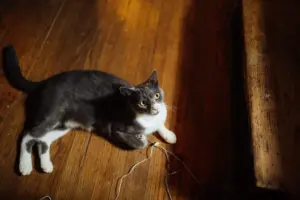
Her locomotion is best described as an enthusiastic, unpredictable hybrid of bounds, bounces, and stumbles. Eschewing the sleek, calculated stealth of a typical feline, Maeve approaches spatial navigation with what her family affectionately characterizes as "the survival instincts of a dodo bird." Her pounces are executed with maximum passion but minimal tactical precision, frequently launched at entirely imaginary targets or empty air.
Yet, any assumption that her diminutive stature translates to sluggishness is quickly disproven. When a compelling stimulus captures her attention, Maeve is capable of generating surprising bursts of velocity, zipping across rooms with an audacity that defies her physical dimensions.
The Great Dane Dynamic: Buddy and Maeve
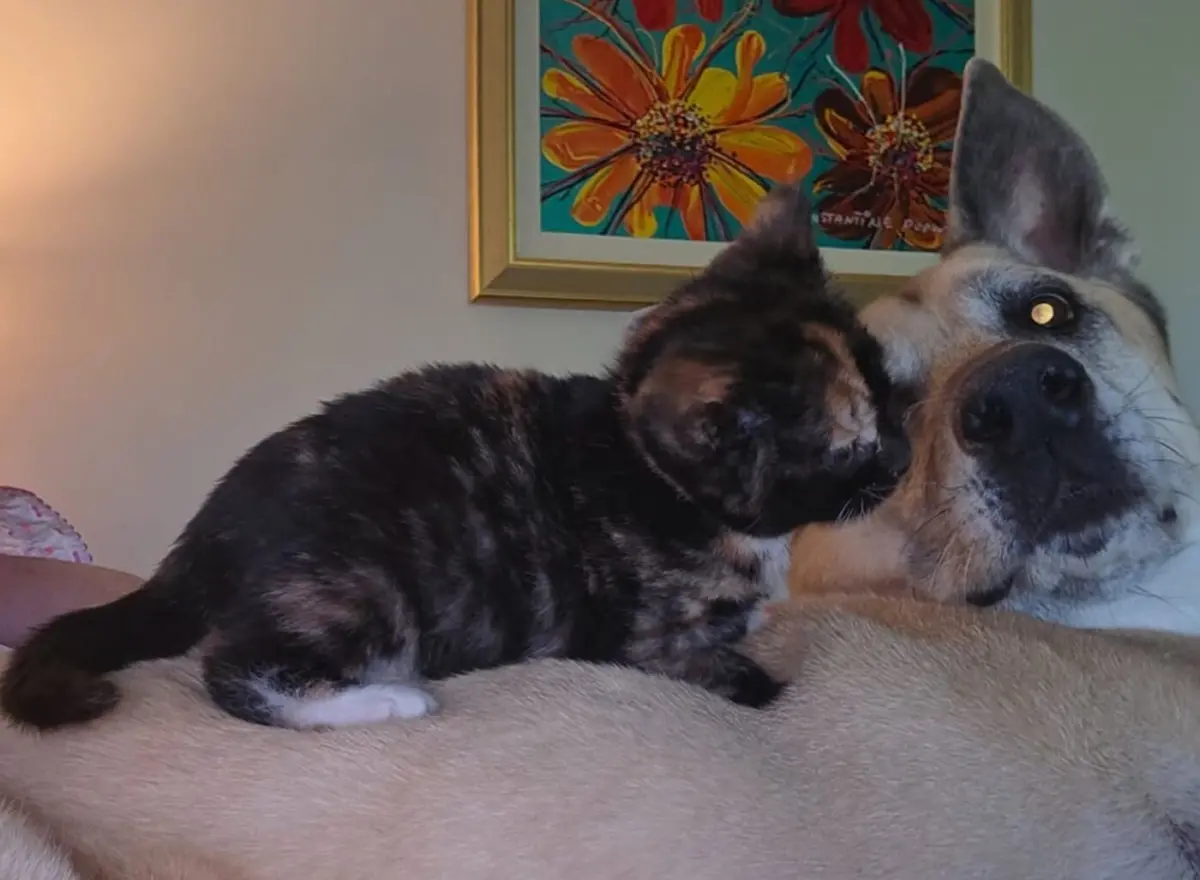
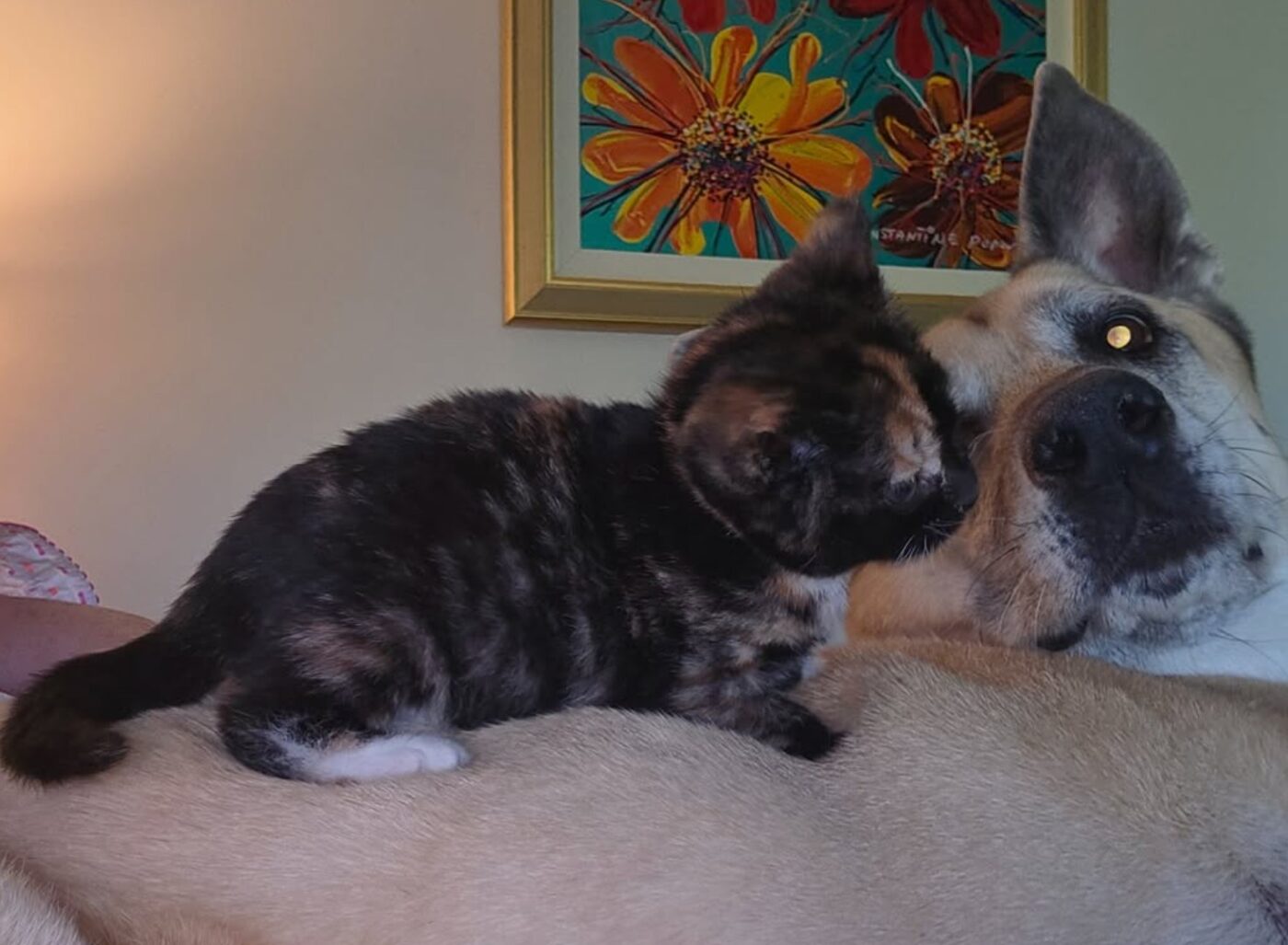
Perhaps no element of Maeve’s home life better illustrates her unique place in the world than her relationship with her canine housemate, Buddy. A large Great Dane mix, Buddy towers over the miniature cat, creating a visual juxtaposition that borders on the surreal.
Placed side-by-side, the size differential is extreme. Yet, far from being a source of stress, this dynamic highlights the protective safety net that surrounds Maeve. Emerging from a background of solitary abandonment on a desolate roadside, Maeve now enjoys the ultimate security blanket: a devoted family, comprehensive medical stewardship, and a gentle giant of a canine brother who inadvertently makes her look even smaller while anchoring her in a world of domestic safety.
Future Outlook
As Maeve Maureen’s digital footprint expands and her community of followers continues to multiply, the trajectory of her life remains a subject of ongoing wonder. Her family maintains a playful stance regarding her ultimate physical dimensions, playfully inviting followers to watch her grow with a cheeky "maybe"—acknowledging that veterinary science cannot definitively predict the terminal growth ceiling for every unique case of pituitary dwarfism.
Beyond the numbers on a veterinary scale, Maeve’s legacy is already firmly established. She has successfully bridged the gap between complex veterinary endocrinology and public accessibility. By refusing to let her diagnosis define the boundaries of her personality, Maeve demonstrates that a life touched by physical difference can simultaneously be rich with affection, mischievous play, and profound joy.
For the tiny, flea-covered, 200-gram kitten left for dead beside an Australian road, the journey from existential peril to pampered icon is nothing short of miraculous. Today, supported by vigilant caregivers, an attentive medical team, and an oversized dog named Buddy, Maeve Maureen continues to prove a vital truth: true impact is measured not in physical centimeters, but in the magnitude of the spirit left in one’s wake.