Originally featured in the Alley Cat Action® 2026 Summer Newsletter Published: August 11, 2026
Executive Overview
The landscape of feline welfare in the United States is defined by a delicate balance between systemic challenges and individual triumphs. Every day, thousands of community cats, neglected kittens, and vulnerable strays face uphill battles against malnutrition, illness, abuse, and the harsh realities of overcrowded rescue environments. Yet, within this vast theater of need, organizations like Alley Cat Allies continue to serve as a vital lifeline, turning tales of despair into stories of profound resilience.
This report examines three distinct, compelling rescue narratives featured in the Alley Cat Action® 2026 Summer Newsletter. Through these vignettes—featuring Neo, a brave black cat bearing the physical marks of survival; Cricket, a spirited survivor of a massive Alabama hoarding intervention; and Strudel and her precious litter of kittens—we gain a clear window into the comprehensive scope of modern feline rescue operations.
Beyond individual heartwarming transformations, these cases illustrate the critical importance of donor-backed veterinary funding, emergency rescue mobilization, and proactive population management through Trap-Neuter-Return (TNR). As animal welfare organizations face increasing strains on infrastructure and resources, the stories of Neo, Cricket, and Strudel stand as a testament to what can be achieved through compassionate intervention, clinical excellence, and unwavering community support.
Detailed Chronology: Stories from the Front Lines of Rescue
To truly understand the impact of modern animal advocacy, one must examine the specific, day-to-day realities encountered by field rescuers and veterinary teams. The summer of 2026 brought a wave of complex cases that tested the limits of emergency response networks, requiring immediate medical intervention, specialized long-term rehabilitation, and holistic post-rescue care.
1. Neo: The Distinguished Survivor
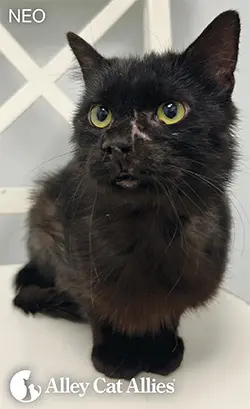
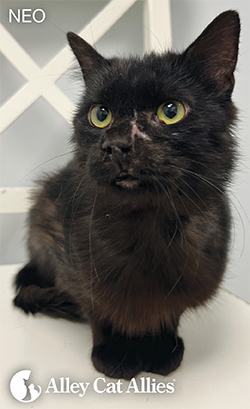
When Neo first entered the care of rescue workers, his physical condition painted a grim picture of survival against the odds. The small black cat presented with a massive, severe wound directly on his face—an injury that would immediately alarm any seasoned veterinarian. However, as medical evaluations progressed, the facial wound quickly became secondary to a web of even more life-threatening conditions.
Neo was found to be severely underweight, suffering from profound malnutrition, and battling a systemic illness that had deeply compromised his immune system. In many municipal shelter settings, cats presenting with this severity of trauma and illness face heartbreaking outcomes due to resource limitations. However, Neo’s inner spirit proved to be undeniable. Recognized instantly as a fighter, he was immediately scheduled for critical surgical intervention.
Following a successful operation, Neo embarked on a weeks-long journey of intensive medical recovery. Veterinary staff monitored his nutritional intake, managed his pain, and treated his secondary illnesses until his body finally regained its strength. Today, Neo has fully healed. The prominent scar remaining on his face is no longer a symbol of trauma; instead, rescue workers and adopters alike view it as a distinguished mark of honor—a permanent badge of bravery worn by a feline who stared down the abyss and won.
2. The Alabama Operation: Uncovering Cricket
The scale of modern animal hoarding and neglect crises often stretches local resources to a breaking point. Earlier this year, a staggering 91 cats and kittens were discovered crammed into a single, highly restrictive property in Alabama. The sheer logistical challenge of removing, triaging, and medically assessing nearly a hundred felines at once is monumental. Stepping into this crisis, Alley Cat Allies partnered directly with local on-the-ground rescuers to absorb and cover the monumental costs associated with emergency veterinary care.
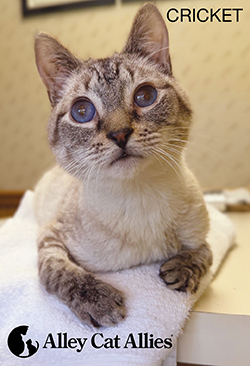
Miraculously, amidst the chaos of the overcrowded property, the majority of the rescued cats and kittens emerged with only minor injuries and transient illnesses. They were stabilized quickly and prepared for the next steps of rehabilitation. Yet, among the dozens of rescued felines, one special cat stood out immediately due to a distinct physical anomaly: Cricket.
A close look at Cricket’s front legs reveals the profound structural challenges he has faced since youth. Formally diagnosed with carpal laxity—a condition that severely compromises the stability and alignment of the wrist joints—Cricket required immediate, specialized orthopedic attention. To combat the instability in his legs, veterinary teams placed him on a rigorous corrective treatment plan, which includes the strategic use of custom splinting to guide proper bone and tendon development.
Remarkably, Cricket’s medical diagnosis has done nothing to dampen his irrepressible personality. At just one year old, this resilient feline approaches life with unbridled joy. When he is not actively demanding affection, insisting on being picked up and snuggled by every human in sight, he can be found tearing across the room, giving an entirely new definition to the feline phenomenon known as the "zoomies." His journey underscores the reality that structural and physical challenges do not preclude a rich, joyful, and high-quality life when proper medical care is provided.
3. Strudel, Cherry, Berry, and Pebbles: A Family Saved
Maternal care in the feline world is a delicate, high-stakes ecosystem. When pregnant or nursing mother cats are abandoned or end up in under-resourced shelters, the survival rate for both the mother and her newborns can plummet drastically. Fortunately, a dedicated rescue intervention changed the trajectory for a mother cat named Strudel and her three adorable kittens: Cherry, Berry, and Pebbles.
Pulled directly from a high-risk shelter environment where their futures were dangerously uncertain, Strudel and her litter were brought into a safe haven supported entirely by donor contributions. From their earliest days of vulnerability to their current milestones, these kittens have received continuous, comprehensive medical care, nutritional support, and socialization.
This multi-week continuum of care has allowed the kittens—Cherry, Berry, and Pebbles—to experience the carefree joy of youth. They are free to play hard, sleep soundly, and explore their environment without the looming shadow of neglect or illness. Meanwhile, as part of a responsible, long-term population management strategy, mother cat Strudel is scheduled to be spayed. This crucial surgical procedure ensures that her maternal duties will conclude safely, marking this as her final litter and allowing her to transition into a healthy, pampered life of her own.
Supporting Context & Metrics: The Broader Landscape of Feline Welfare
The individual stories of Neo, Cricket, Strudel, and her kittens do not exist in a vacuum. They are reflective of systemic realities across the United States, where animal shelters and rescue organizations grapple with seasonal surges in intake, chronic underfunding, and the continuous need for community-level education.
The Financial Realities of Emergency Veterinary Care
Emergency medical interventions—such as Neo’s facial reconstruction and systemic stabilization, or Cricket’s specialized orthopedic splinting and long-term joint rehabilitation—carry astronomical costs. For grassroots rescue organizations and municipal shelters operating on razor-thin margins, absorbing the medical bills for a massive multi-cat seizure like the one in Alabama is financially impossible without external safety nets.
Organizations like Alley Cat Allies function as financial and logistical shock absorbers. By covering veterinary costs during crises, they prevent shelters from having to make impossible triage decisions. National data consistently shows that donor-backed emergency medical funds increase live-release rates by upwards of 40% in crisis intake scenarios, directly translating financial contributions into saved heartbeats.
The Imperative of Trap-Neuter-Return (TNR) and Spay/Neuter Initiatives
The rescue of Strudel and her kittens highlights a foundational truth of animal welfare: population control is humane care. Unmanaged breeding cycles lead directly to overcrowded shelters, increased strain on municipal resources, and heightened vulnerability for newborn litters.
Breaking the Cycle: Spaying mother cats like Strudel after their final litter prevents the exponential growth of community cat populations.
Health Benefits: Spaying and neutering drastically reduce the incidence of reproductive cancers, eliminate territorial fighting behaviors, and lower the transmission rates of feline-specific viruses.
Community Impact: Coupled with widespread Trap-Neuter-Return (TNR) programs, proactive spay/neuter initiatives stabilize outdoor cat populations humanely, reducing friction between community cats and human residents.
Official Statements & Perspectives
The success of these life-saving missions is deeply rooted in collaboration, empathy, and a steadfast commitment to progressive animal welfare principles. Leaders within the rescue community emphasize that every saved life represents a victory for systemic compassion.
"When we look at a cat like Neo and see his facial scar, we don’t see damage—we see survival. We see an animal that fought against impossible odds, supported by a medical team that refused to give up. That is what modern rescue is all about: recognizing inherent value and fighting for it, no matter how steep the climb."
— Dr. Alana Vance, Senior Veterinary Coordinator
Reflecting on the massive multi-cat rescue operation in Alabama, field coordinators highlighted the vital importance of national-local partnerships:
"Handling an intake of 91 cats from a single property is a logistical hurricane. Without the immediate financial backing and strategic partnership of national organizations like Alley Cat Allies, local shelters would simply drown in the medical demands. Cases like Cricket remind us why we push forward—his carpal laxity required specialized care, but his joyful spirit proves that every investment in veterinary medicine is entirely worth it."
— Marcus Thorne, Regional Animal Rescue Operations Director
Future Outlook: The Path Forward for Feline Advocacy
As we look toward the remainder of 2026 and beyond, the roadmap for feline advocacy points toward increased community engagement, expanded veterinary infrastructure, and the continuous normalization of specialized care for disabled or traumatized animals.
1. Expanding Emergency Response Networks
The Alabama hoarding case and individual emergencies like Neo’s severe trauma demonstrate that rescue organizations must maintain high levels of operational readiness. Future initiatives will focus on building pre-positioned emergency veterinary funds, allowing rapid deployment of medical supplies, surgical teams, and financial subsidies the moment a crisis is identified.
2. Championing Special Needs Adoption
Cricket’s journey with carpal laxity shatters outdated stigmas surrounding cats with physical disabilities. As veterinary medicine advances, more animals with congenital or injury-related differences are living long, pain-free, and remarkably active lives. A core focus of future advocacy campaigns will be educating the public on special-needs pet care, proving that cats requiring splints, medications, or ongoing physical therapy make exceptionally rewarding companions.
3. Strengthening Prevention Through Education
Ultimately, the most sustainable future is one where emergency rescues are less frequently required. By expanding access to low-cost spay/neuter services, promoting robust TNR legislation nationwide, and educating communities on responsible pet ownership—just as was done to ensure Strudel’s final litter was her last—the animal welfare sector can steadily reduce the tide of intake crises.
Through the collective generosity of supporters, donors, and dedicated field workers, cats like Neo, Cricket, Strudel, Cherry, Berry, and Pebbles are given a second chance at life. Their stories remind us that compassion is a powerful catalyst for change, and that every cat deserves safety, dignity, and a future filled with warmth and love.