
Executive Overview
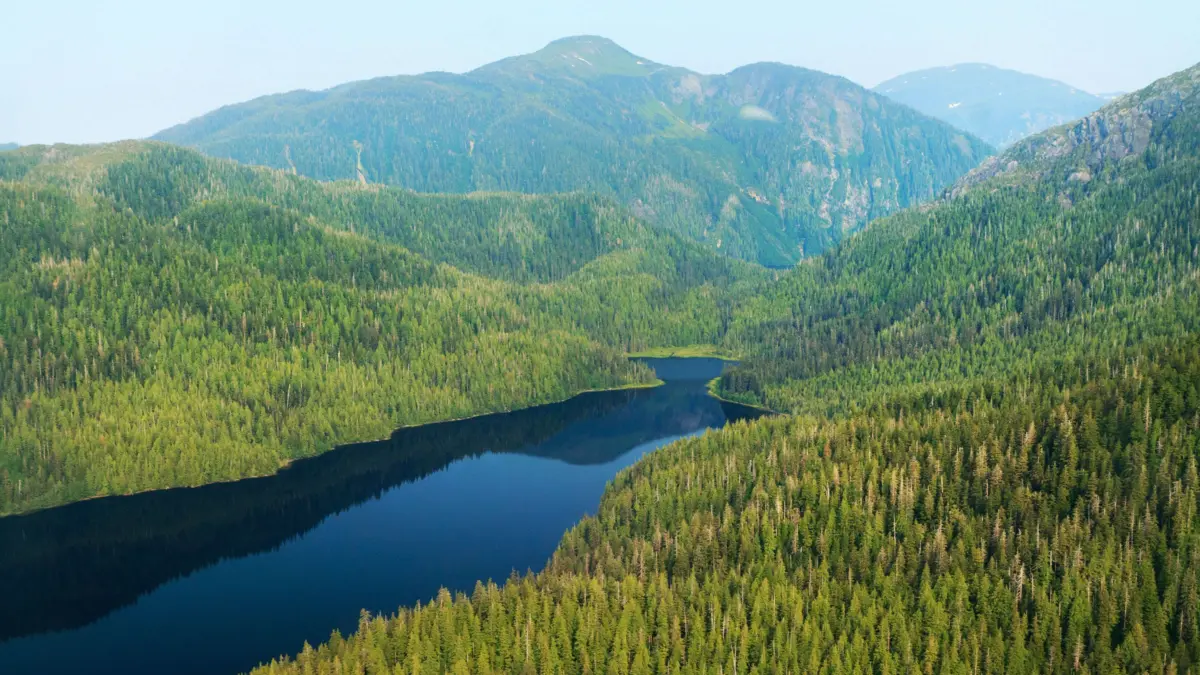
Spanning nearly 17 million acres across the rugged islands, deep fjords, sweeping waterways, and towering mountain ranges of Southeast Alaska, the Tongass National Forest is far more than the largest national forest in the United States. It is the globe’s most expansive intact temperate rainforest—a sprawling, mist-shrouded sanctuary that serves as the ancestral homeland of the Tlingit, Haida, and Tsimshian peoples, who have stewarded these lands since time immemorial.
Today, this ecological crown jewel stands at a precipice. The U.S. Forest Service has advanced a controversial proposal to repeal the decades-old Roadless Rule, a sweeping conservation policy that has shielded the nation’s most pristine wild forests from industrial intrusion since 2001. If enacted, this repeal would strip federal safeguards from roughly 44 million acres of undeveloped forestland nationwide—representing nearly one-third of the entire National Forest System. Because the Tongass harbors the single largest concentration of inventoried roadless areas in the country, it bears the brunt of the threat.
The stakes could not be higher. Beyond its immense cultural and intrinsic value, the Tongass functions as a critical bulwark against global climate change. Often celebrated as the "Lungs of North America" or "America’s Amazon," the forest’s ancient, old-growth canopies store and sequester staggering amounts of carbon, anchoring the U.S. strategy for mitigating greenhouse gas emissions. Simultaneously, it serves as an irreplaceable global stronghold for biodiversity, supporting roughly 350 bird species, complex predator-prey dynamics, and some of the most productive wild salmon fisheries on Earth.
As the federal government pushes forward with a compressed review timeline, conservationists, Indigenous leaders, scientists, and local economies are mobilizing in defense of the Roadless Rule. At stake is not just the fate of a single forest, but the integrity of America’s remaining wild public lands and the ecological stability of an entire region.
Detailed Chronology: The Roadless Rule and the Battle for the Tongass
To understand the magnitude of the current crisis, one must trace the historical evolution of the Roadless Rule and its turbulent relationship with Southeast Alaska.
The Origins of Roadless Protections (2001)
Following years of comprehensive scientific study, nationwide public hearings, and unprecedented public engagement, the Clinton administration finalized the National Forest System Roadless Area Conservation Rule in January 2001. Designed to protect the last remaining blocks of undeveloped national forest lands, the rule generally prohibited new road construction and commercial timber harvesting within inventoried roadless areas. Crucially, the policy did not lock the forest away from all human interaction; it deliberately allowed for active management interventions necessary to mitigate wildfire risks, ensure community safety, and maintain or restore healthy wildlife habitats.
Decades of Legal Ping-Pong and Exemptions (2001–2020)
Almost immediately upon its adoption, the Roadless Rule became the epicenter of a multi-decade legal and political tug-of-war. Successive presidential administrations sought either to expand, weaken, or entirely dismantle the policy. In 2003, the George W. Bush administration temporarily exempted the Tongass National Forest from the rule, arguing that local economic dependence on the timber industry warranted special treatment.
This exemption triggered a protracted cycle of litigation led by a coalition of Alaska Native tribes, commercial fishermen, tourism operators, and environmental organizations. In 2011, a federal district court struck down the Bush-era exemption, restoring Roadless Rule protections to the Tongass. However, the legal landscape shifted again in October 2020, when the Trump administration officially repealed the Roadless Rule for the entirety of the Tongass National Forest, opening up 9.2 million acres of previously protected forestland to potential road building and logging.
Reinstatement and the Current Threat (2021–2026)
The pendulum swung back in February 2023, when the Biden administration formally reinstated the 2001 Roadless Rule across the Tongass, re-establishing federal protections for its vast wild expanses.
That hard-won stability, however, has proven short-lived. On August 20, 2026, the U.S. Forest Service published a newly minted Draft Environmental Impact Statement (DEIS) and a corresponding Proposed Rule aimed at systematically repealing the Roadless Rule on a national scale. This latest administrative maneuver threatens to erase protections across 44 million acres of undeveloped forestland nationwide.
The publication of the DEIS on August 20 kicked off a contentious and accelerated 30-day public comment period, scheduled to close on September 21, 2026. This compressed timeline has sparked widespread outrage among conservation groups and Indigenous advocates, who argue that rushing a policy change of this magnitude stifles meaningful public participation and threatens to permanently unravel decades of science-based forest management. Furthermore, the forest is simultaneously navigating a separate revision of the overarching Tongass Land and Resource Management Plan—a parallel process slated for public comment in early 2027 that will further dictate the future of conservation, recreation, and timber extraction in the region.
Supporting Context & Metrics: Why the Tongass Matters
The urgency surrounding the defense of the Tongass is rooted in its unique ecological characteristics. Unlike heavily fragmented forests in the Lower 48 states, the Tongass remains remarkably whole, functioning as an interconnected web of life that sustains both local communities and global ecological systems.
A Global Climate Sanctuary
Often dubbed America’s "Climate Forest," the Tongass possesses an extraordinary capacity to capture and hold atmospheric carbon, making it a frontline defense against global warming. According to data compiled by the U.S. Forest Service, the forest contains an estimated 70 tons of aboveground carbon per acre.
Dr. John Schoen, former Audubon Alaska senior scientist, emphasizes the sheer scale of this ecological service: "The Tongass holds more than 20% of all carbon stored in national forests in the U.S., and the largest trees store more above-ground carbon than other forests." Because old-growth trees continue to absorb carbon over centuries, preserving these ancient stands prevents the massive carbon emissions that would accompany large-scale commercial logging and road construction.
A Sanctuary for Avian and Terrestrial Biodiversity
The Tongass is an internationally recognized stronghold for wildlife, providing vital habitat for approximately 350 bird species—representing roughly 40 percent of all avian species found in North America.
- Nesting Hotspot: The forest hosts the world’s highest density of nesting Marbled Murrelets and Bald Eagles.
- Migratory Crossroads: Every spring, hundreds of thousands of migrating shorebirds converge on the Tongass’s coastal estuaries to feed and rest before pushing further north to their Arctic breeding grounds.
- Endemic Subspecies: The mature and old-growth canopies are home to unique, localized subspecies found nowhere else on Earth, including the Queen Charlotte Goshawk and the Prince of Wales Spruce Grouse.
An Unbroken, Complete Ecosystem
What sets the Tongass apart from nearly every other forest in the modern world is its structural continuity. As Dr. Schoen observes, the Tongass represents "a complete ecosystem" and stands as "the only public lands left in the United States, if not the world, that still has intact watersheds."
These pristine watersheds preserve the full evolutionary complement of old-growth forests alongside "all their ecological parts." This undisturbed connectivity allows complex natural relationships to thrive without human interruption: Pacific salmon return from the ocean to feed coastal brown bears, which in turn transport marine-derived nutrients deep into the forest floor via their waste, fertilizing the ancient root systems of trees that stabilize the stream banks for future generations of fish.
Economic Drivers: Fisheries, Tourism, and the Local Workforce
For generations, critics of the Roadless Rule have framed environmental protections as a barrier to economic vitality in Southeast Alaska. However, economic data reveals that the health of the region’s economy is inextricably tied to the preservation of its natural resources.
The pristine waterways of the Tongass sustain some of the most productive wild salmon runs on the planet. These runs support vital subsistence harvests for Indigenous communities, thriving commercial and sport fishing fleets, and a broad array of local businesses. Collectively, wild salmon contribute approximately $1 billion annually to the Southeast Alaska economy.
When combined with the burgeoning eco-tourism and outdoor recreation sectors, the region’s resource-based economy flourishes precisely because the landscape remains wild and undeveloped. Seafood industries and tourism combined account for roughly one-quarter of the entire labor force in Southeast Alaska. Compromising the ecological integrity of the watersheds through road building and industrial logging poses a direct, existential threat to these sustainable, long-term economic pillars.
Official Statements and Stakeholder Perspectives
The debate over the Roadless Rule repeal has drawn sharp lines between federal administrators, industrial advocates, and a coalition of conservationists, scientists, and Indigenous leaders.
Proponents of the repeal within federal agencies and industry trade groups argue that removing the Roadless Rule will provide greater flexibility for local forest management, stimulate regional timber economies, and facilitate necessary infrastructure development across remote Alaskan communities. They contend that modern regulatory frameworks and individual forest plans are sufficient to protect environmental values while allowing targeted resource extraction.
Conversely, the scientific and conservation communities view the repeal as a catastrophic rollback of proven environmental safeguards. Dr. John Schoen and other leading ecologists have repeatedly stressed that fragmenting the Tongass with industrial roads will permanently fracture its rare, intact watersheds, severing the ecological lifelines that support its rich biodiversity and carbon storage capabilities.
Indigenous leaders and commercial fishing associations have likewise raised alarm bells. For the Tlingit, Haida, and Tsimshian peoples, the forest is not merely a collection of commodities, but a living cultural heritage that has sustained their societies for millennia. Protecting roadless areas is viewed as an essential act of environmental justice and cultural preservation, ensuring that future generations can continue to practice traditional subsistence ways of life centered on clean water, abundant salmon, and healthy forests.
Future Outlook and Call to Action
As the September 21, 2026, deadline for public comments on the Proposed Rule and Draft Environmental Impact Statement rapidly approaches, the immediate fate of the Tongass hangs in the balance. The outcome of this regulatory battle will determine whether 44 million acres of America’s wildest national forests remain shielded from industrial development or are opened up to widespread road construction and commercial timber harvesting.
Beyond the immediate horizon, the ongoing revision of the Tongass Land and Resource Management Plan—with public comment opportunities slated for early 2027—will establish the long-term blueprint for how conservation, recreation, restoration, and management are balanced across the forest for decades to come.
Conservation organizations, Indigenous groups, and scientific coalitions emphasize that public engagement is critical. Because the current administration is moving on an accelerated timeline, citizens, scientists, and outdoor enthusiasts are being urged to make their voices heard before the September 21 deadline.
To prevent the irreversible fragmentation of the world’s largest intact temperate rainforest and to safeguard America’s premier climate forest, advocates are calling on the U.S. Forest Service to abandon the proposed repeal and uphold the enduring protections of the Roadless Rule across the Tongass and the nation’s remaining wild public lands.