
Executive Overview
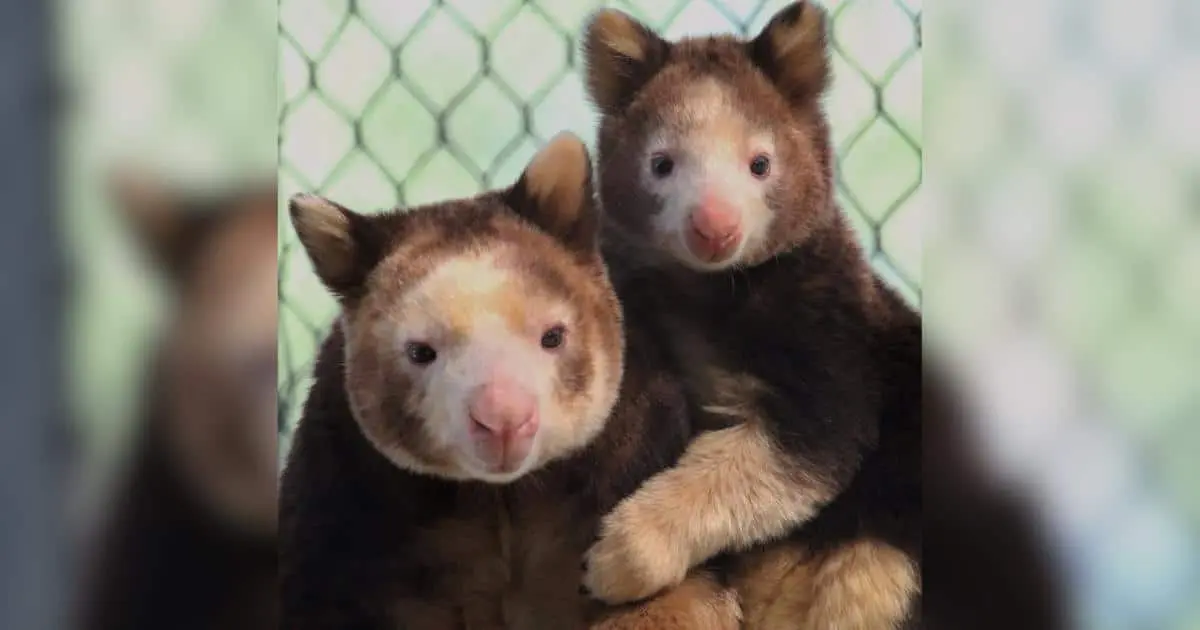
In the high-altitude cloud forests of the Huon Peninsula in Papua New Guinea, an elusive and evolutionarily distinct mammal navigates the canopy. Known to local indigenous communities as the "ghost of the forest," the Huon tree kangaroo (Dendrolagus matschiei) represents a unique evolutionary pivot: a marsupial whose ancestors descended from the trees to the ground, only for this specific lineage to return to an arboreal lifestyle. Today, this critically endangered species faces an existential crisis driven by accelerating habitat fragmentation, agricultural encroachment, and localized hunting pressures.
Against this backdrop of ecological vulnerability, the Denver Zoo Conservation Alliance has achieved a milestone of international significance. The successful rearing of Nane, a one-year-old male Huon tree kangaroo, marks the first successful birth of this species in the institution’s history.
Nane’s progression from an invisible embryo to an agile, independent climber represents more than a localized success story; it is a vital triumph for the Association of Zoos and Aquariums’ (AZA) Species Survival Plan (SSP). By maintaining a genetically diverse ex-situ insurance population, zoological institutions provide a critical safeguard against the imminent threat of extinction in the wild.
+--------------------------------------------------------------------------+
|                     HUON TREE KANGAROO (NANE) PROFILE                    |
+--------------------------------------------------------------------------+
| Species:             Dendrolagus matschiei (Huon/Matschie's Tree Kangaroo)|
| Status:              Critically Endangered (IUCN / Regional Assessment)  |
| Geographic Origin:   Huon Peninsula, Papua New Guinea                    |
| Birth Date:          Late July 2025                                      |
| Birth Location:      Denver Zoo Conservation Alliance                    |
| Maternal/Paternal:   Pearl (Mother) / Tristan (Father)                   |
| Key Milestone:       First successful birth of the species at Denver Zoo |
+--------------------------------------------------------------------------+
Detailed Chronology
The journey toward this historic conservation milestone began several years prior to Nane’s birth, requiring meticulous planning, habitat preparation, and veterinary oversight.
2023: Arrival of Pearl & Tristan ----> July 2025: Historic Birth ----> April 2026: "At Foot" Milestone ----> Mid-2026: Active Training & Independence2023: The Genetic Foundation
Under the scientific guidance of the AZA’s Species Survival Plan, the Denver Zoo Conservation Alliance acquired two adult Huon tree kangaroos: Pearl, a female, and Tristan, a male. The pairing was strategically calculated using population management software designed to minimize inbreeding coefficients and maximize genetic health across the global captive population. Upon their arrival, husbandry teams focused on environmental enrichment and dietary stabilization to prepare the pair for breeding.
July 2025: The Birth of a Pioneer
In late July 2025, Pearl gave birth to her first joey. In keeping with marsupial biology, the birth occurred after a brief gestation period of approximately 39 to 44 days. The newborn joey—blind, hairless, and roughly the size of a jellybean—navigated the arduous journey from the birth canal to Pearl’s anterior pouch unaided.
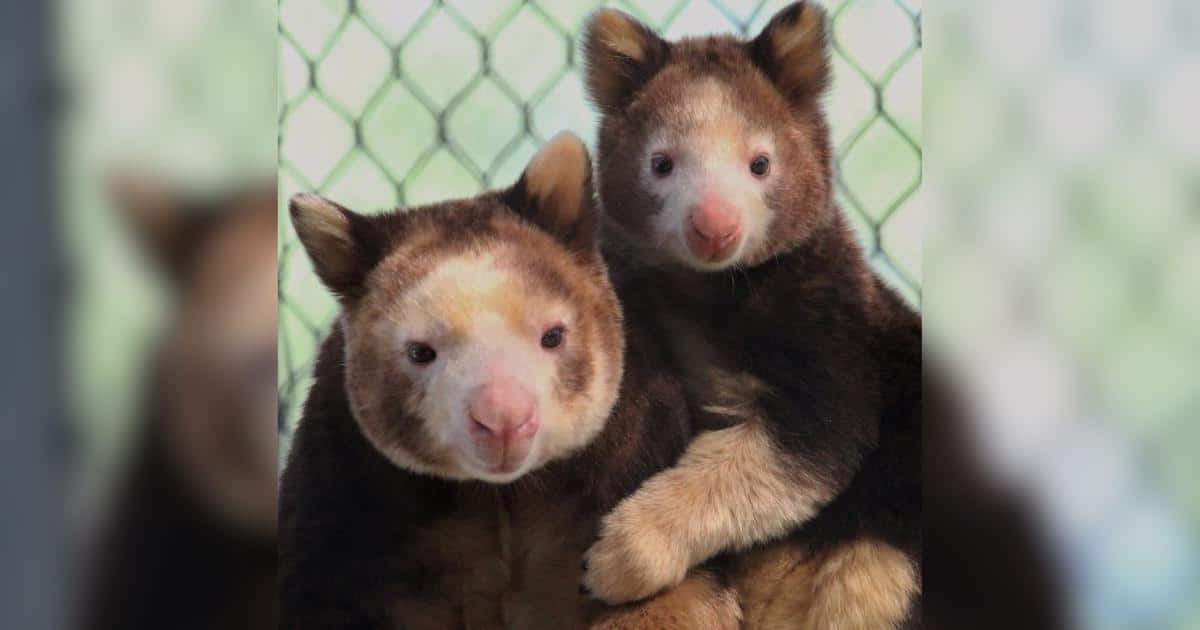
Once inside, the joey attached to one of her four teats, which swelled in its mouth to anchor it in place. For the first several months of his life, Nane remained entirely invisible to keepers and veterinary staff, undergoing rapid physiological development in the protected, nutrient-rich environment of the pouch.
Late 2025 – Early 2026: Pouch Emergence and Public Debut
By late autumn 2025, keepers observed physical shifts in Pearl’s pouch, noting movement and eventual glimpses of a tiny snout and eyes. Over the winter, Nane began poking his head out of the pouch with increasing frequency, acclimating to the ambient sounds and sights of his habitat. During this phase, veterinary teams monitored the joey non-invasively, relying on positive reinforcement training with Pearl to allow close-up visual inspections of her pouch.
April 2026: Reaching the "At Foot" Milestone
At approximately nine months of age, Nane reached the critical developmental milestone known in marsupial biology as being "at foot." This phase is characterized by the joey permanently vacating the pouch. Although Nane remained close to Pearl, he began exploring the physical boundaries of his enclosure, tasting solid foods—including specialized high-fiber browse, root vegetables, and leaf-eater pellets—and testing his motor skills on low-hanging branches.
Mid-2026: Autonomy and Arboreal Mastery
Now over one year old, Nane has transitioned into a highly independent phase. While he maintains a strong social bond with Pearl, he no longer relies on her for locomotion or primary sustenance. Keepers report that Nane is demonstrating advanced arboreal agility, executing complex jumps, and navigating high-elevation platforms within his habitat with confidence.
Supporting Context & Metrics
To appreciate the ecological importance of Nane’s development, one must examine both the evolutionary adaptations of the genus Dendrolagus and the severe environmental pressures facing wild populations.
+---------------------------------------------------------------------------+
|             EVOLUTIONARY ADAPTATIONS: TERRESTRIAL VS. ARBOREAL            |
+---------------------------------------------------------------------------+
| Feature              | Terrestrial Kangaroos     | Huon Tree Kangaroos    |
+----------------------+---------------------------+------------------------+
| Forelimbs            | Short, reduced            | Muscular, elongated    |
| Hind-foot Structure  | Elongated, rigid          | Broad, flexible joint  |
| Claws                | Blunt, flat               | Curved, sharp, gripping|
| Tail Function        | Balance / Tripod support  | Pendulous counterweight|
| Locomotion           | Obligate hopping          | Independent limb movement|
+---------------------------------------------------------------------------+
Anatomical Mechanics of the Arboreal Macropod
Unlike their terrestrial cousins, who are biomechanically locked into a hopping gait on flat terrain, tree kangaroos have underwent profound anatomical modifications to reclaim the canopy:
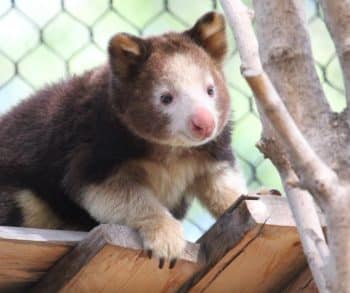
- Rotational Ankle Joints: While ground kangaroos have rigid ankles built for forward propulsion, tree kangaroos possess highly flexible ankle joints. This allows them to turn their feet inward, enabling them to grip tree trunks vertically.
- Serrated Footpads: The soles of their feet are covered in rough, granulated skin, providing friction and preventing slippage on wet, mossy bark.
- Proportional Forelimbs: Their forelimbs are nearly equal in length to their hindlimbs, possessing immense upper-body strength that allows them to pull themselves up vertical structures.
- Curved Claws: Broad, strongly curved claws act as natural climbing hooks, securing a grip on branches.
- The Tail as a Rudder: The long, cylindrical tail of the Huon tree kangaroo is not prehensile, but it serves as a critical counterweight. It hangs straight down, adjusting dynamically to shift the animal’s center of gravity during daring leaps between branches.
Demographics and Conservation Crisis
The wild population of Huon tree kangaroos is confined entirely to the Huon Peninsula of northeastern Papua New Guinea. This geographic restriction makes the species exceptionally vulnerable to localized environmental disturbances.
+---------------------------------------------------------------------------+
|                  WILD STATUS AND THREAT MATRIX: MATSCHIE'S                |
+---------------------------------------------------------------------------+
| Metric / Threat     | Details & Estimated Impact                          |
+---------------------+-----------------------------------------------------+
| Wild Population     | Estimated < 2,500 mature individuals remaining      |
| IUCN Red List Status| Endangered (Critically Endangered regionally)       |
| Primary Threat (1)  | Habitat Loss (Industrial logging & coffee farming)  |
| Primary Threat (2)  | Subsistence Hunting (Local protein source)          |
| Genetic Bottleneck  | Fragmented populations unable to cross open land    |
+---------------------------+-----------------------------------------------+
Because tree kangaroos have a low reproductive rate—typically producing only one joey per year, with a long dependency period—their populations are slow to recover from losses. The loss of even a single breeding adult to hunting or habitat destruction has a compounding negative impact on local population viability.
Official Statements & Community Connections
The significance of Nane’s growth extends far beyond the municipal boundaries of Denver, Colorado. It establishes a direct bridge to indigenous-led conservation efforts on the ground in Papua New Guinea.
The Naming of Nane
When the Denver Zoo Conservation Alliance announced the joey’s name, it chose to honor the human component of international conservation. The name Nane (pronounced Nah-Nae) was selected by his animal care team to pay tribute to the late father of Danny Nane, a prominent conservationist in Papua New Guinea.
Danny Nane is a key figure in the Tree Kangaroo Conservation Program (TKCP), an initiative that partners with local landowners to protect the fragile ecosystems of the Huon Peninsula. By naming the joey after a family lineage dedicated to habitat preservation, the Denver Zoo emphasizes the vital link between ex-situ zoological programs and in-situ community action.
       [Denver Zoo Conservation Alliance] (Ex-Situ SSP Breeding)
                     |
                     | Shared Conservation Mission
                     v
       [Tree Kangaroo Conservation Program] (In-Situ Protection in PNG)
                     |
                     | Community Engagement
                     v
       [Local Landowners & Indigenous Communities] (YUS Conservation Area)
The Role of Community-Based Conservation
The Tree Kangaroo Conservation Program has pioneered a model of community-managed conservation in Papua New Guinea, leading to the creation of the YUS Conservation Area (named after the Yopno, Uruwa, and Som rivers). Because the land in Papua New Guinea is almost entirely owned by indigenous clans, conservation cannot be achieved through government decrees alone. It requires building sustainable partnerships with local communities.
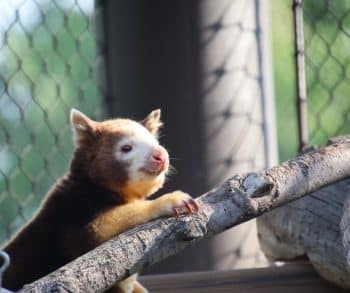
TKCP works with these landowners to designate no-hunting zones, protect forest corridors, and improve local livelihoods through sustainable initiatives, such as shade-grown, conservation-friendly coffee production.
Future Outlook
As Nane approaches his sub-adult phase, his trajectory will be carefully managed to maximize both his personal welfare and his contribution to the global species survival strategy.
Positive Reinforcement Training and Husbandry
In the immediate future, Nane will continue his integration into the Denver Zoo’s positive reinforcement training program. This cooperative management style is essential for the care of sensitive species. Through voluntary participation, Nane is learning to present his paws, allow body-condition scoring, and step onto scales in exchange for preferred food rewards. This training minimizes stress during routine veterinary examinations and eliminates the need for chemical sedation during basic health assessments.
Genetic Contribution to the SSP
As Nane reaches sexual maturity—typically between two and three years of age for males—his genetic profile will be analyzed by the AZA’s population biologists. He will eventually be paired with a genetically compatible female at another accredited institution, continuing the vital work of his parents, Pearl and Tristan. His movements will be dictated by the overarching goal of maintaining a demographically stable and genetically diverse backup population for the next 100 years.
The Broader Educational Impact
For the public, Nane serves as a powerful ambassador for a region of the world that is rarely highlighted in mainstream media. By engaging visitors with his distinct appearance and remarkable climbing abilities, the Denver Zoo Conservation Alliance fosters a deeper public understanding of the global biodiversity crisis.
The story of this young tree kangaroo proves that the survival of endangered species requires a unified, global approach—one that connects a state-of-the-art habitat in Denver to the remote, cloud-shrouded forests of Papua New Guinea. Through coordinated ex-situ breeding and dedicated community-led habitat protection, the "ghost of the forest" has a fighting chance to thrive for generations to come.