
Executive Overview
For renowned animal behaviorist, author, and agriculturalist Dr. Patricia McConnell, the road to hell is indeed paved with good intentions—and, apparently, physical afflictions designed to make a writer’s life infinitely more complicated. As McConnell prepares for the upcoming release of her highly anticipated novel, Away to Me, and an extensive book tour spanning Wisconsin and Texas, her plans have been abruptly sidelined by a painful diagnosis: de Quervain’s tenosynovitis.
Described medically as severe inflammation within the first extensor compartment of the wrist, the condition traps two overworked tendons in a painful, vice-like grip. For an author dependent on keyboards, pens, and the physical demands of farm life, the prognosis is daunting—requiring thumb immobilization, a scheduled cortisone injection, and an anticipated recovery window of two to six months.
Yet, life on the farm brooks no downtime. Amid sub-zero midwinter temperatures plummeting to a bone-chilling minus 16 degrees Fahrenheit with windchills reaching minus 40, McConnell has had to balance personal physical rehabilitation, brutal winter livestock care, and the high-stakes balancing act of literary promotion.
![The Evolution of Play [revisited]](https://www.patriciamcconnell.com/wp-content/uploads/2026/01/IMG_1061-1.jpeg)
To bridge the gap while her hands are out of commission, McConnell has revisited a classic case study from her own archives: the evolutionary journey of her dogs, Skip and Maggie, from mismatched play adversaries to harmonious canine companions. This retrospective offers a masterclass in canine behavioral management, exploring how thoughtful observation, redirection, and protective intervention can transform chaotic rough-play dynamics into a textbook display of healthy social interaction.
Detailed Chronology: The Evolution of Skip and Maggie
The behavioral journey between McConnell’s dogs, Maggie and Skip, underscores a fundamental truth of animal husbandry: play is not merely frivolous entertainment; it is a critical pillar of mental health, physical fitness, and social cohesion. However, when Skip arrived at the farm, his play style was anything but cohesive.
The Linebacker Approach
Skip entered the household possessing an undeniable enthusiasm for play, but lacking any semblance of social finesse or self-handicapping. Described playfully as playing like a linebacker for the Green Bay Packers, Skip approached play sessions as a freight train of unbridled power and muscle. His signature move involved a high-speed charge directly into Maggie, culminating in enthusiastic hip-slams designed to ricochet her off fences.
![The Evolution of Play [revisited]](http://www.patriciamcconnell.com/wp-content/uploads/2026/01/IMG_1102.jpeg)
Initially, McConnell and her husband, Jim, misjudged the dynamic, assuming Maggie was "giving as much as she was getting." Swift and agile, Maggie enjoyed the initial novelty of having a young, energetic playmate, particularly following the passing of their previous dog, Willie. However, as Skip refined his coordination in the snow, his high-impact approach ceased to be fun. Rather than disciplining him—a swift behavioral correction that McConnell notes likely would have recalibrated Skip’s approach instantly—Maggie simply began to withdraw, growing increasingly fearful of his overwhelming physicality.
Intervention and the Trauma Trap
Recognizing the widening gulf in their play dynamic, McConnell implemented a multi-tiered behavioral strategy:
- Toy Integration: Introducing interactive toys shifted their focus away from direct, body-slamming contact toward collaborative play.
- Reliable Recalls: Developing a cheerful, dependable recall allowed McConnell to interrupt Skip’s cavalry charges before he could intimidate Maggie.
- Management and Time-Outs: By keeping Skip close and utilizing brief "wait" commands, McConnell permitted his adrenaline levels to subside.
Just as the dynamic stabilized, a major setback occurred in April when Skip sustained a severe back-leg injury, sidelining him from play for over two months. Ironically, when Skip finally recovered, Maggie refused to engage. Worse still, she developed an acute phobia of walking up the farm’s hill—an avoidance behavior McConnell attributes to the emotional trauma associated with Skip’s injury, which dredged up painful memories of previous rehabilitations with Maggie and Willie.
![The Evolution of Play [revisited]](https://www.patriciamcconnell.com/wp-content/uploads/2021/02/IMG_5898.jpeg)
Resolving this required a painstaking, six-to-eight-week desensitization program using positive reinforcement to rebuild Maggie’s psychological associations with the hill. Today, the payoff is absolute: Skip has mastered self-handicapping, Maggie utilizes her speed and agility with absolute confidence, and the two engage in daily, harmonious tug-of-war and chase sessions.
Supporting Context & Metrics: Winter Extremes and Authorial Realities
While the canine behavioral front has achieved a peaceful equilibrium, the external environment on the farm has proven markedly less forgiving.
Surviving the Polar Vortex
The arrival of a severe cold snap plunged local temperatures far below zero, recording an ambient low of minus 16 degrees Fahrenheit and a brutal windchill of minus 40. For McConnell, navigating this meteorological hostility requires a calculated tactical wardrobe.
![The Evolution of Play [revisited]](http://www.patriciamcconnell.com/wp-content/uploads/2026/01/IMG_1088-1.jpeg)
- The Winter Uniform: Comprises an REI super warm undershirt, a cotton turtleneck, a heavy wool sweater, dual-layered trousers (outer-lined), thick wool socks, mittens, a balaclava, an aging Lands’ End down parka, lined waterproof boots equipped with YakTraks, and a sturdy hiking pole for icy terrain.
- Equine and Canine Adaptations: While livestock management continues unabated, the domestic dogs required specialized care. Frost-nip concerns for Maggie and sheer canine misery for Skip—whose paws could barely withstand contact with the frozen ground—necessitated immediate interventions. McConnell successfully utilized rubber PawsZ booties stuffed with raw farm wool, instantly restoring Skip’s mobility and comfort.
The Publishing Crucible
Concurrently, McConnell faces the dual-pronged reality of modern authorship: transitioning from the solitary, creative sanctuary of drafting a manuscript to the high-energy, public-facing crusade of marketing a newly birthed book.
- Away to Me: McConnell’s debut novel is currently generating significant anticipation among readers and canine enthusiasts alike.
- The Logistical Paradox: Promoting a book requires live events, book tours across Wisconsin and Texas, and the signing of hundreds of physical copies. For an author whose primary writing hand is currently immobilized in a splint—and whose attempts to write her signature left-handed yield results comparable to modern art installations—the logistical hurdles are formidable.
Official Guidelines for Healthy Dog Play
Drawing from decades of professional expertise, McConnell emphasizes that recognizing healthy versus problematic play is only half the battle; owners must actively manage the environment. She outlines several core principles for multi-dog households:
- Observe: Owners must remain vigilant, learning to read subtle indicators of canine anxiety and predicting escalation before a dynamic turns sour.
- Protect: Employ proactive management techniques, including strategic use of leashes, reliable recalls, physical separation during high-stress periods, and keeping successful play sessions brief.
- Redirect: Teach dogs to engage with toys rather than each other during high-arousal states. Mastering games like tug-of-war with a reliable "Drop It" cue allows smaller or more agile dogs to safely hold their own against larger counterparts.
- Time-Outs: Interrupt high-velocity charges and over-aroused behavior immediately, holding the energetic dog close until physiological adrenaline levels normalize.
- Utilize Expert Resources: McConnell highlights foundational educational materials for pet owners seeking deeper behavioral insights:
- Play Together, Stay Together by Patricia McConnell and Karen London.
- McConnell’s comprehensive seminar and instructional DVD, Dog Play.
- Educational behavioral modules via Dr. Sophia Yin’s professional archive.
- Jean Donaldson’s practical text on canine aggression and social dynamics, Fight!
Future Outlook
As the winter freeze slowly loosens its grip on the farm, the immediate future holds a mix of rigorous professional obligations and steady physical healing. McConnell’s upcoming book tour across Wisconsin and Texas represents a vital milestone for Away to Me, connecting a beloved behavioral expert directly with her readership.
![The Evolution of Play [revisited]](http://www.patriciamcconnell.com/wp-content/uploads/2026/01/IMG_1091.jpeg)
Simultaneously, medical oversight—including an upcoming cortisone injection and ongoing splint therapy—points toward a projected two-to-six-month timeline for full wrist recovery. Despite the compounding challenges of sub-zero farm chores, literary promotion, and an immobilized thumb, McConnell maintains a grounded perspective.
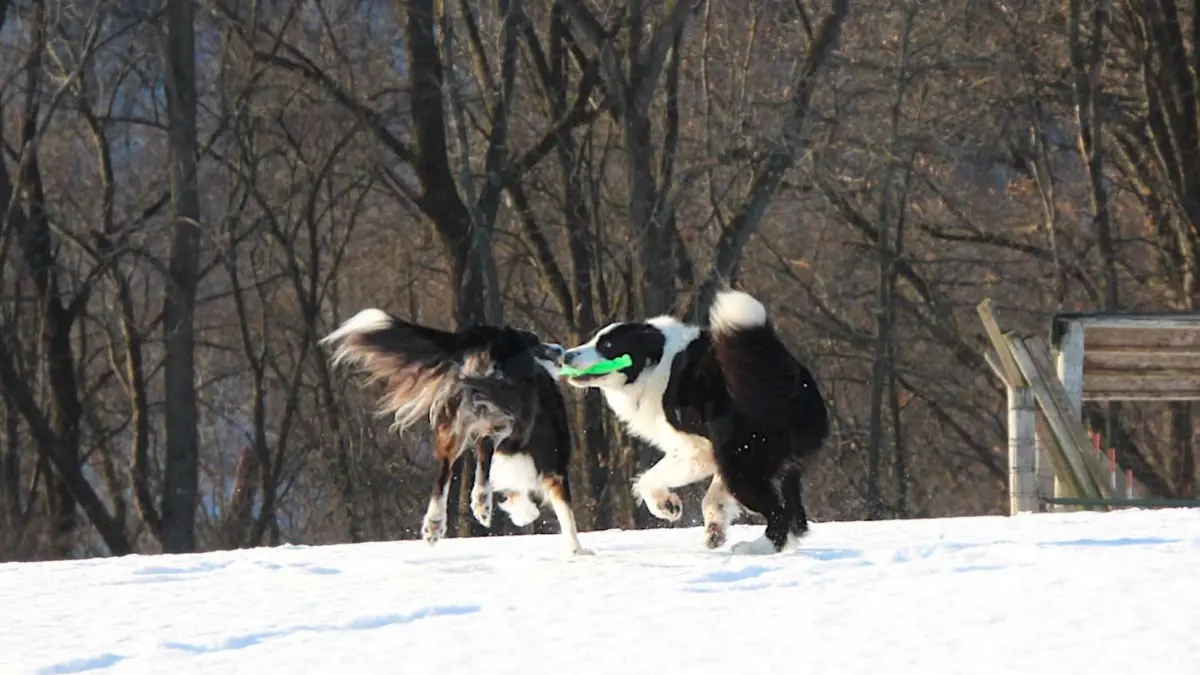
Observing Skip and Maggie bounding across the snow in a flawless display of canine play serves as a daily reminder of nature’s most effective therapy. For pet owners and literary fans alike, the resilience demonstrated across McConnell’s farm—whether managing overzealous retrievers or navigating the physical tolls of daily life—offers an enduring masterclass in patience, adaptation, and joy.