
Executive Overview
The global agricultural technology and crop input sectors are undergoing a profound structural metamorphosis. As the industry advances past the pioneering days of basic gene editing and traditional synthetic chemical production, it faces a complex landscape defined by shifting environmental pressures, tightening regulatory frameworks, and rapidly evolving market demands.
The convergence of artificial intelligence with biotechnology is no longer a futuristic vision; it is the contemporary mechanism deployed to close the "field-performance gap" in commercialized crops. Simultaneously, fundamental inputs—from legacy chemical fertilizers to emerging mineral amendments like silicon—are experiencing severe valuation shifts, forcing industry giants like Bayer, Corteva, and Nutrien to rethink core strategies just as disruptive start-ups redefine soil health and livestock decarbonization.
This comprehensive overview synthesizes the vital agricultural developments, financial earnings, regulatory milestones, and scientific breakthroughs shaping the global food supply chain. By examining the macro-trends influencing the sector—ranging from China’s newly minted seed intellectual property regime to landmark studies quantifying the silent erosion of global yields due to soil degradation—we map out the strategic imperatives for the modern agricultural economy.

Detailed Chronology: Key Developments in AgTech and Agri-Business
The third quarter of 2026 has witnessed an unprecedented cadence of announcements, spanning venture capital infusions, regulatory rollouts, corporate restructuring, and earnings reports from the world’s leading agribusinesses.
Early August: Earnings, Corporate Splits, and Regulatory Milestones
- August 3: Corteva Agriscience reported robust Q2 2026 results, posting operating earnings per share of $2.30 and lifting its full-year guidance. Despite operating EBITDA climbing 4% to $2.26 billion, net sales slipped 1% year-on-year to $6.38 billion, prompting investor apprehension regarding top-line revenue growth ahead of the company’s anticipated October corporate separation.
- August 4: Bayer Corporation sought to soothe market anxieties during its Q2 media update in Leverkusen. CEO Bill Anderson pointed to a strong performance by the Crop Science division—which delivered 5.5% sales growth in the first half of the year and an expanded EBITDA margin of 31%—while confirming that a structural breakup of Bayer’s core divisions remains off the table.
- August 4: In a major regulatory milestone for the Asian agricultural market, China’s Ministry of Agriculture and Rural Affairs (MARA) officially launched its long-awaited Essentially Derived Variety (EDV) system. The intellectual property framework initially covers 10 major crops, including rice, wheat, cotton, and rapeseed, designed to curb imitation breeding and protect original developers.
- August 6: Fertilizer majors Nutrien and The Mosaic Company released their Q2 reports, highlighting continued strain and volatility in global nutrient markets. Nutrien noted declining North American retail volumes for phosphate and nitrogen, prompting executive leadership to question the structural sustainability of the current phosphate market and review strategic options for the business.
Mid-August: Soil Science, Fertilizer Disruption, and Gene Editing
- August 6: Researchers highlighted the growing synergy between artificial intelligence and CRISPR technology, securing crucial research funding (such as a UK team’s £2.2m grant) to predict how engineered genetic traits interact with complex field environments.
- August 13: Jack Keeys, the International Fertilizer Association’s (IFA) inaugural innovation lead, spoke on the industry’s historic shift toward disruption. After nearly a century of optimizing rigid legacy systems, the global fertilizer framework is actively embracing start-ups, biological alternatives, and AI-driven nutrient efficiencies to meet decarbonization targets.
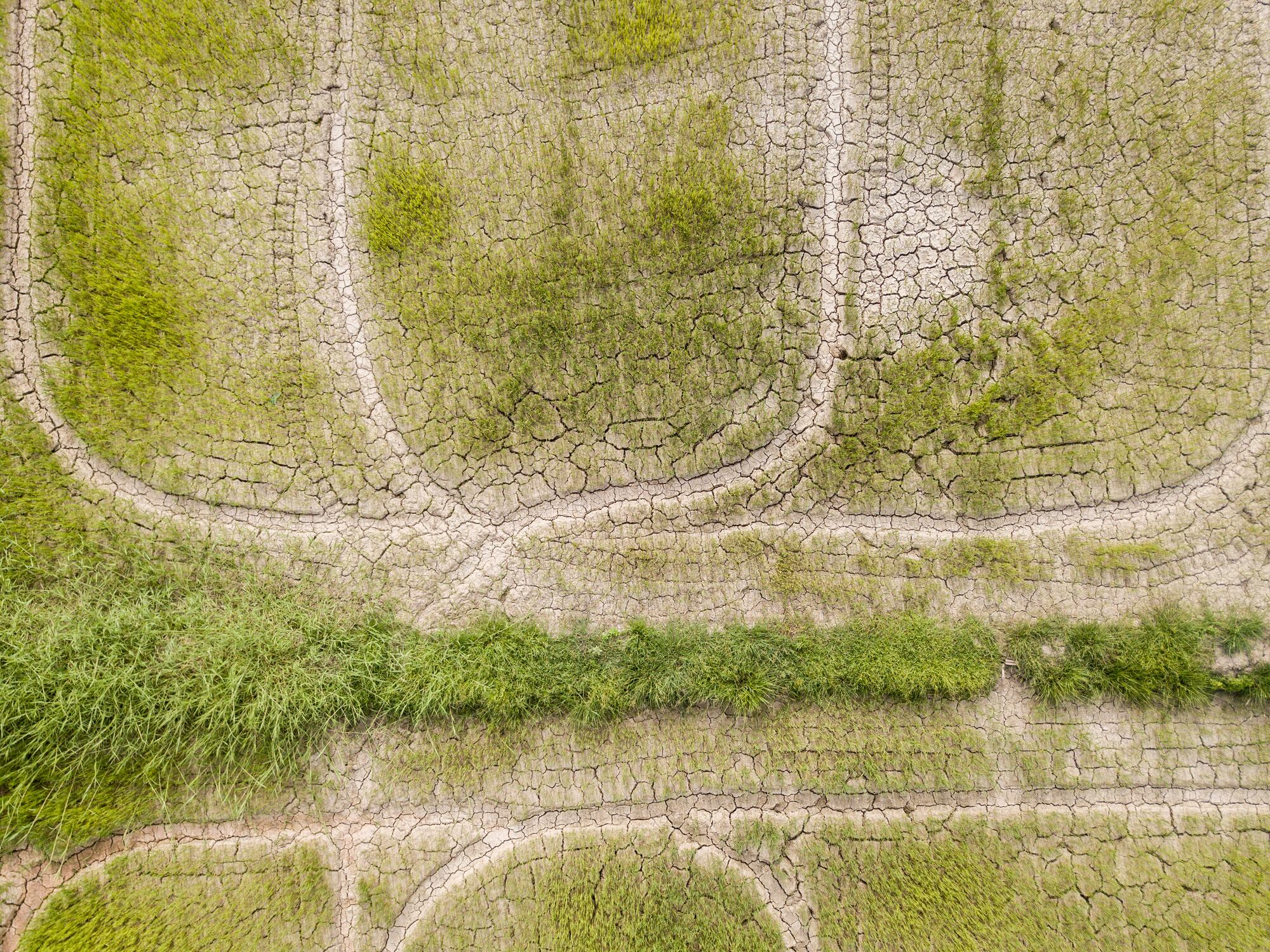
- August 18: A landmark international study published by researchers from the Universities of Bonn, Minnesota, and Basel, alongside Hamburg University of Technology, provided the first quantitative global estimate of soil degradation’s impact on agricultural yields. The study revealed that a 10% increase in soil degradation depresses global crop production by roughly 2%.
Late August: Venture Capital, Livestock Methane, and APAC Priorities
- August 20: Seattle-based agtech start-up Mafix closed a $5.4 million pre-seed funding round to scale its mineral conversion process. By utilizing cement kilns to accelerate silicate rock weathering within a single growing season, Mafix aims to economically deliver silicon fertilizers that enhance soil health and provide industrial carbon dioxide removal.
- August 20: In the European livestock sector, UK-based EcoNomad Solutions secured £230,000 from the British Design Fund as part of a £400,000 funding round. The capital is earmarked to expand deployment of its BioNomad® decentralised anaerobic digestion technology, targeting methane reduction and waste-to-energy solutions for small and medium-sized livestock holdings.
- August 26: Food security leaders across the Asia-Pacific (APAC) region mapped out unified priorities for regional resilience, emphasizing that modern food security demands an integrated approach encompassing farm-level economics, nutritional security, and the deployment of AI-enabled advisory networks.
Supporting Context & Metrics
To fully contextualize the trajectory of the agricultural sector in 2026, quantitative indicators and qualitative structural shifts must be evaluated side by side.
The Financial Health of Legacy Agribusiness
Major chemical and seed conglomerates are currently balancing aggressive cost-cutting measures with portfolio optimization. Bayer’s Crop Science division serves as a primary bellwether, maintaining a commanding 31% EBITDA margin through a strategic tilt toward high-value seed traits, robust licensing revenues, and disciplined operational execution. Conversely, Corteva’s experience underscores the tightrope walk required of modern input suppliers: while operational efficiencies can successfully expand margins—pushing operating EBITDA up to $2.26 billion—investors increasingly demand top-line revenue expansion to justify valuations ahead of major corporate restructurings.
Fertilizer Market Volatility and the Rise of Novel Inputs
The global nutrient supply chain is undergoing a fundamental recalibration. Volatility in sulfur costs, alongside tightening environmental regulations, has pushed legacy fertilizer models to their limits. Nutrien’s candid admission that the contemporary phosphate market is "completely unsustainable" illustrates the urgency driving producers toward novel alternatives.
Into this breach step specialized start-ups. Mafix’s $5.4 million pre-seed round highlights investor appetite for enhanced weathering silicates. Silicon, long overlooked compared to the classic N-P-K (Nitrogen, Phosphorus, Potassium) triad, is gaining traction as a multi-functional input that strengthens plant cell walls against abiotic stress, improves soil microbial health, and permanently sequesters carbon through mineral carbonation.
Quantifying the Cost of Soil Degradation
For decades, the economic impact of soil degradation has been understood conceptually rather than empirically. The landmark multi-university study released in August 2026 provides the first hard metrics:

[Soil Degradation Increase: +10%]
       │
       ▼
[Global Crop Production Drop: ~2%]
       │
       ▼
[Reversing 10% of Human-Caused Degradation]
       │
       ▼
[Additional Food Generated: Enough to feed >70 million people]
This data transforms soil health from an ecological talking point into an urgent financial and geopolitical priority. It validates the massive capital allocations seen in global philanthropic sectors—such as the Gates Foundation’s $1.4 billion commitment to digital advisory services, climate-resilient genetics, and soil regeneration programs targeting smallholder farmers.
Official Statements and Industry Insights
The paradigm shift across the agricultural landscape is best captured through the perspectives of the leaders steering these transitions.
-
On Corporate Focus and Litigation:
Reflecting on Bayer’s stabilizing performance and strategic trajectory during the Q2 media update, CEO Bill Anderson noted:
"I look forward to spending less time on litigation and more time driving our performance forward."
Anderson’s remarks underline a concerted effort by corporate leadership to shift institutional energy away from legacy legal overhangs and toward core crop science innovation. -
On the Cultural Shift within Nutrients:
Addressing analysts during Nutrien’s earnings call regarding retail crop nutrient volumes, Executive VP and CFO Mark Thompson observed:"Following a strong start to the application season in the first quarter, North American retail crop nutrient volumes declined in the second quarter, in particular for phosphate and nitrogen. The reduction in commodity fertilizer volumes was offset by strong proprietary product performance."
-
On Institutionalizing Innovation in Fertilizers:
Jack Keeys, the first-ever innovation lead at the International Fertilizer Association (IFA), spoke on the historic transformation of a nearly century-old sector:"This role didn’t exist two years ago. It took 98 years for the industry to create this co-ordinated global innovation programme. With fertiliser producers under growing pressure to cut emissions while maintaining food security, innovation has become a strategic imperative."
Keeys emphasizes that decarbonization and nutrient efficiency will not be solved by a single silver bullet, but rather by an integrated toolkit of biologicals, AI models, and alternative chemistries. -
On Protecting Intellectual Property in Plant Breeding:
Highlighting the strategic importance of China’s new Essentially Derived Variety (EDV) system, Liu Lihua, director of MARA’s Seed Industry Management Department and director of the Plant Variety Protection Office, stated:
"Innovation is the core of seed industry revitalisation."
The framework is designed to eliminate free-riding imitators, ensuring that original plant breeders are adequately compensated to fund future R&D cycles.
Future Outlook: The Next Horizon for AgTech
As the agricultural sector looks beyond the immediate horizon of late 2026, several critical trajectories will dictate market winners and losers.
1. Closing the Gene-Editing Field-Performance Gap
While laboratory techniques utilizing CRISPR have reached high levels of precision, predicting real-world phenotypic expression remains notoriously difficult. The integration of advanced AI models—such as specialized genomic architectures (e.g., Living Models’ BOTANIC platform)—is bridging this gap. By training machine learning algorithms on genomic datasets spanning the entire plant kingdom, researchers can accurately forecast how gene-edited crops will behave under unpredictable field conditions, mitigating environmental stress responses before commercial release.

2. Decentralization and Decarbonization in Animal Agriculture
Livestock production systems are increasingly viewed as prime targets for high-impact environmental intervention. The influx of venture capital into methane mitigation, animal monitoring, and decentralized waste-to-energy solutions (such as EcoNomad Solutions’ BioNomad® digestion units) signals a move away from centralized industrial processing toward farm-level circular economies. Expect European and North American regulators to further incentivize these technologies through carbon credits and compliance frameworks.
3. Intellectual Property Harmonization and Consolidation
China’s implementation of the EDV system marks a watershed moment that will likely pressure other major agricultural economies to tighten their own breeders’ rights frameworks. As original developers secure stronger legal protections for their intellectual property, smaller biotech start-ups will find clearer pathways to monetization, either through direct commercialization or high-value acquisition by legacy players like Corteva, Bayer, and Nutrien.
Conclusion
The global agricultural economy in Q3 2026 stands at a fascinating crossroads. The challenges are formidable—marked by strained commodity fertilizer markets, degrading soils that quietly sap global caloric output, and the constant demand for top-line revenue growth. However, the tools being deployed to meet these challenges—AI-guided genetic design, enhanced mineral weathering, decentralized biogas capture, and robust intellectual property regimes—herald a more resilient, efficient, and technologically integrated food system for the decades ahead.