
Executive Overview
To walk through a forest at dawn is to be enveloped in one of the earth’s most complex acoustic phenomena: the morning chorus. Ask any seasoned ornithologist or casual weekend birder to identify their favorite birdsong, and you are likely to receive a diverse array of answers. Some might point to the cheery, rich, and flute-like warbles of the Baltimore Oriole or the American Robin; others will champion the haunting, ethereal notes of a Wood Thrush or a Bobolink. Yet, a groundbreaking new study reveals that beneath this mosaic of personal preferences lies a surprisingly rigid, shared human consensus regarding which avian melodies we find profoundly pleasing—and which ones we decidedly do not.
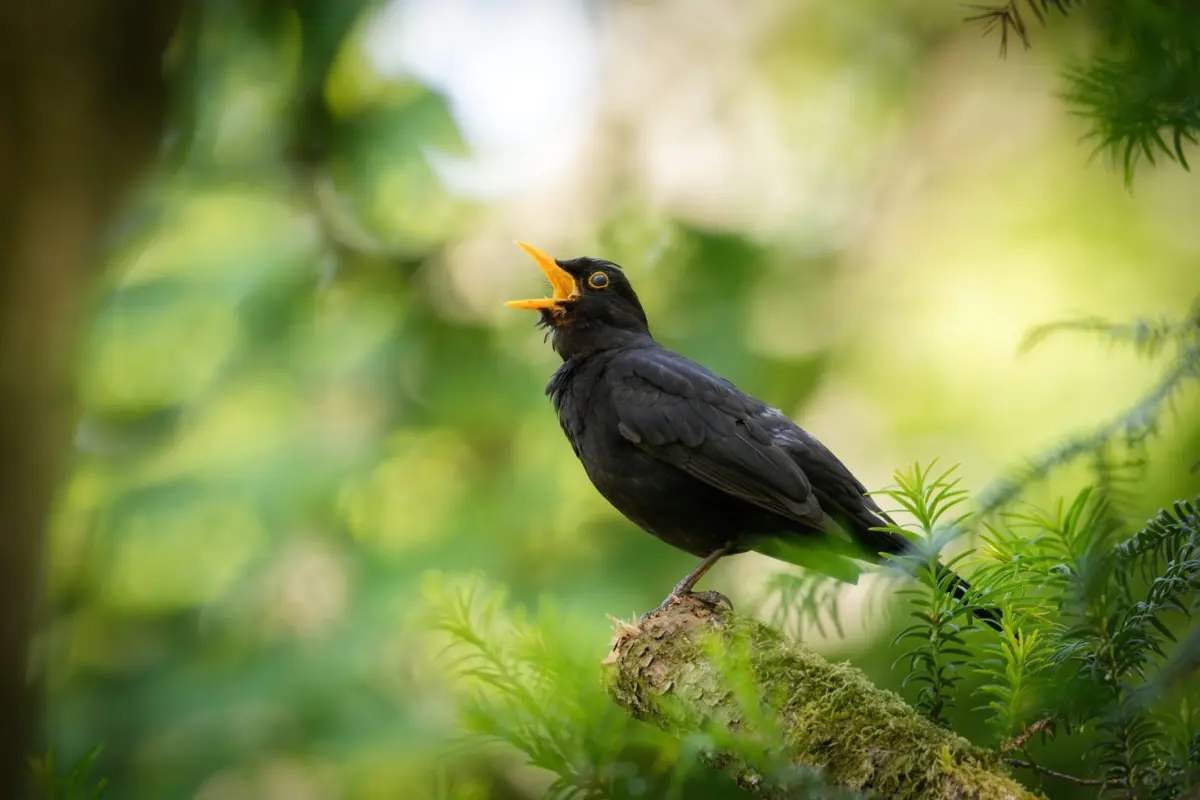
Published recently in the journal Frontiers in Bird Science, the research demonstrates that human aesthetic appreciation of birdsong is not merely subjective. Instead, it is anchored to specific, measurable acoustic properties that appear to transcend cultural and individual backgrounds. Heading the list of humanity’s favorite avian vocalists is the Eurasian Blackbird (Turdus merula), a masterclass in melodic delivery whose serenade captured the top spot for its universal acoustic appeal.
This deep-seated human reaction to birdsong goes far beyond simple aesthetic pleasure; it cuts to the heart of our evolutionary psychology, environmental well-being, and modern conservation strategies. As global biodiversity faces unprecedented threats from habitat loss and climate change, understanding the invisible acoustic threads that connect humans to the natural world has never been more urgent. By decoding what makes a birdsong soothing, researchers are opening new pathways to advocate for the preservation of wild spaces and the vibrant soundscapes that inhabit them.
Detailed Chronology: From Field Recordings to Laboratory Insights
The journey toward understanding human perception of avian vocalizations required a meticulous methodological approach bridging ornithology, psychology, and acoustic engineering. The project materialized under the leadership of co-author Christoph Randler, a behavioral biologist at the University of Tübingen in Germany, alongside a dedicated team of researchers determined to map the exact intersection of sound waves and human emotion.
Phase 1: Experimental Design and Audio Selection
The research team compiled an extensive database featuring 123 distinct bird song recordings sourced from various European species. These recordings captured a vast spectrum of acoustic environments, ranging from dense woodlands to open wetlands. To test human reactions without heavy geographical biases, the team recruited 84 human participants within Germany.
Rather than relying on vague descriptions, the methodology demanded quantitative rigor. Participants were asked to listen to the curated audio samples in a controlled setting and rate each song on a standardized pleasantness scale ranging from one (least pleasant) to five (most pleasant).
Phase 2: Acoustic Profiling and Cross-Referencing
Once the human ratings were compiled, the researchers subjected the audio recordings to rigorous bioacoustic analysis. Using specialized software, they dissected every second of audio to measure precise physical characteristics:
- Amplitude: The perceived loudness or sound pressure level of the vocalization.
- Frequency: The pitch of the song, measured in Hertz (Hz).
- Bandwidth: The range between the lowest and highest frequencies produced during the song.
- Complexity: The structural diversity of the song, tracking the presence of distinct notes, rapid trills, frequency leaps, and tonal changes.
When the team cross-referenced these physical metrics with the pleasantness scores provided by the human participants, clear patterns began to emerge. The data obliterated the notion that beauty is entirely in the ear of the beholder, revealing instead that our brains are hardwired to respond favorably to very specific combinations of frequency, volume, and structural variability.
Phase 3: The Verdict—Top and Bottom Performers
When all the scores were tallied, the Eurasian Blackbird emerged as the clear champion. Often celebrated in European folklore and famously immortalized in Paul McCartney’s classic Beatles ballad “Blackbird,” this species belongs to the thrush family (Turdidae)—a group globally renowned for its rich, complex vocal architecture.
Rounding out the top five most-pleasant avian songs in the study were:
- Eurasian Blackbird
- Willow Warbler
- Blackcap
- Mistle Thrush
- Garden Warbler
Conversely, the study also pinpointed the acoustic profiles that evoke negative or grating reactions from human listeners. The bottom five least-pleasant songs belonged to:
- Barn Owl (noted for its harsh, hissing, and eerie screeches)
- Egyptian Goose
- Gray Heron
- Peregrine Falcon
- Eurasian Jay
Supporting Context & Metrics: The Anatomy of an Appealing Melody
To understand why humans react so intensely to certain avian notes, one must look closely at the physics of sound and human sensory biology. The research team’s acoustic breakdown provided definitive metrics separating the beloved songs from the reviled ones.
The Sweet Spot of Pitch and Power
According to the study’s findings, the most universally favored songs shared three primary acoustic signatures:
- Higher Frequencies (Pitch): Songs that ranked highest on the pleasantness scale tended to be higher-pitched.
- Narrow Bandwidth: Surprisingly, the most favored tunes maintained a relatively narrow frequency range, avoiding the chaotic, jarring leaps found in some alarm calls or harsh raptor vocalizations.
- Lower Amplitude: Quieter, softer amplitudes consistently outperformed loud, aggressive sonic blasts.
This preference for a narrow bandwidth aligns neatly with broader psychoacoustic research. Human hearing is acutely sensitive to specific frequency ranges, and sounds that sit squarely within our heightened sensitivity thresholds can easily register as grating or piercing.
Dr. Clinton Francis, an ecologist at California Polytechnic State University who was not involved in the research, notes that the most pleasant birdsongs in the study actually hover just outside our most sensitive auditory ranges. This subtle acoustic buffering prevents the sound from feeling intrusive or overwhelming to the human inner ear.
The Paradox of Complexity
Perhaps the most surprising finding for the research team was the human preference for structural complexity. Conventional logic might suggest that simple, highly repetitive, and predictable sounds would be the easiest for the human brain to process, leading to higher relaxation ratings.
Instead, the data revealed that higher-rated songs leaned toward greater complexity. They incorporated a sophisticated variety of acoustic elements, including shifting notes, rapid trills, and dynamic frequency jumps. However, this complexity did not manifest as chaotic noise; rather, it was balanced with repetitive phrasing and moderate pacing.
As Christoph Randler observed, this combination forms an ideal sweet spot: “There appears to be a measurable acoustic structure underlying at least part of our response to birdsong.”
Furthermore, the study disproved the hypothesis that specialized knowledge alters aesthetic perception. When researchers compared the ratings given by experienced birders—who possess deep cognitive familiarity with avian species—against those of novices, no significant difference emerged in perceived song pleasantness.
“It’s pretty neat, suggesting that this really is about the acoustic features,” Dr. Francis remarked, emphasizing that the human brain’s positive reaction to these sound waves is fundamentally hardwired rather than culturally learned or academically acquired.
Official Statements and Expert Perspectives
The implications of this research stretch far beyond the realms of bioacoustics, touching upon evolutionary biology, public health, and ecological conservation. Leading scientists in the field have highlighted the profound connection between human neurology and natural soundscapes.
Dr. Christoph Randler emphasized the dual nature of avian vocalizations in our shared environment:
"It reminds us that bird vocalizations have an important dimension beyond communication between birds: They also form a major part of the soundscape experienced by humans."
For decades, psychological and environmental research has documented the restorative power of nature. Countless peer-reviewed studies have established that exposure to natural soundscapes—particularly those dominated by diverse birdsong—actively reduces physiological stress, lowers cortisol levels, alleviates anxiety, and restores human cognitive attention after bouts of mental fatigue.
Dr. Clinton Francis contextualizes these psychological benefits through an evolutionary lens, suggesting that our positive neurological reactions are deeply rooted in our ancestral survival mechanisms:
"Throughout our evolutionary history, hearing birdsong has been a signal that there isn’t any danger. The highest-rated birdsongs could be those that we perceive as signaling a safe, healthy, and restorative environment—one where we feel like we can relax."
In prehistoric times, an active, varied chorus of birds singing unbothered in the canopy served as a reliable acoustic indicator that no predators were lurking nearby, resources were abundant, and the local ecosystem was stable and secure. Conversely sudden silence, alarm calls, or harsh, low-frequency screeches from apex predators signaled immediate danger. Modern humans carry this evolutionary programming within our nervous systems, transforming a simple walk in the park into a deeply therapeutic neural reset when accompanied by the right acoustic backdrop.
Future Outlook: Conserving the Soundscape
As human populations increasingly urbanize and natural habitats face unprecedented fragmentation, the modern soundscape is undergoing a dangerous transformation. Global bird populations are in sharp decline, with habitat loss, pesticide use, and climate change threatening avian biodiversity across every continent.
When a species vanishes from an ecosystem, it takes its unique vocalization with it, leaving behind a progressively impoverished and silent natural world. The degradation of the soundscape is an invisible crisis that mirrors the physical loss of biodiversity.
Translating Science into Conservation Action
The findings from Randler’s team offer a novel strategic tool for conservationists and environmental advocates. By understanding which specific acoustic components of biodiversity humans instinctively perceive, value, and emotionally connect with, organizations can craft more compelling public campaigns.
Using universally beloved avian vocalists—such as the Eurasian Blackbird or its North American thrush relatives—as "charismatic umbrella species" can help galvanize public support for broader habitat preservation. When everyday citizens recognize that protecting a forest or wetland safeguards the rich, restorative melodies that heal their minds and reduce their stress, the abstract concept of biodiversity suddenly becomes personal.
Next Steps for Avian Researchers
Looking ahead, the research team at the University of Tübingen plans to expand their work beyond the controlled confines of the laboratory. Future studies will investigate:
- Real-World Acoustic Interactions: How human perception shifts when bird songs are blended with anthropogenic noise pollution, such as urban traffic or industrial hums.
- Cross-Cultural Variations: Exploring how diverse cultural backgrounds, acoustic environments, and regional upbringing shape human responses to different avian species.
- Therapeutic Applications: Collaborating with urban planners and public health officials to integrate targeted natural soundscapes into urban green spaces, hospital recovery wings, and high-stress metropolitan environments.
As Dr. Francis succinctly concluded:
"The more that we can document these benefits, we can galvanize support for wild spaces, and for people taking time to interact with nature."
Ultimately, this study serves as a timely reminder that humanity’s bond with the avian world is written in the very physics of sound. Protecting the songs of our feathered companions is not merely an act of environmental stewardship; it is an investment in our own peace, health, and evolutionary heritage.