
Executive Overview
In the modern digital household, the television screen is no longer the exclusive domain of human entertainment. From dedicated YouTube channels featuring looping footage of scurrying field mice and flitting songbirds to high-definition documentaries customized for domestic animals, pet owners have long recognized the hypnotic pull of the glowing box on their feline companions. Yet, a new viral phenomenon has bypassed traditional "Cat TV" tropes entirely, capturing the undivided attention of cats across the globe with an unlikely source material: a mainstream animated children’s series streaming on Netflix.
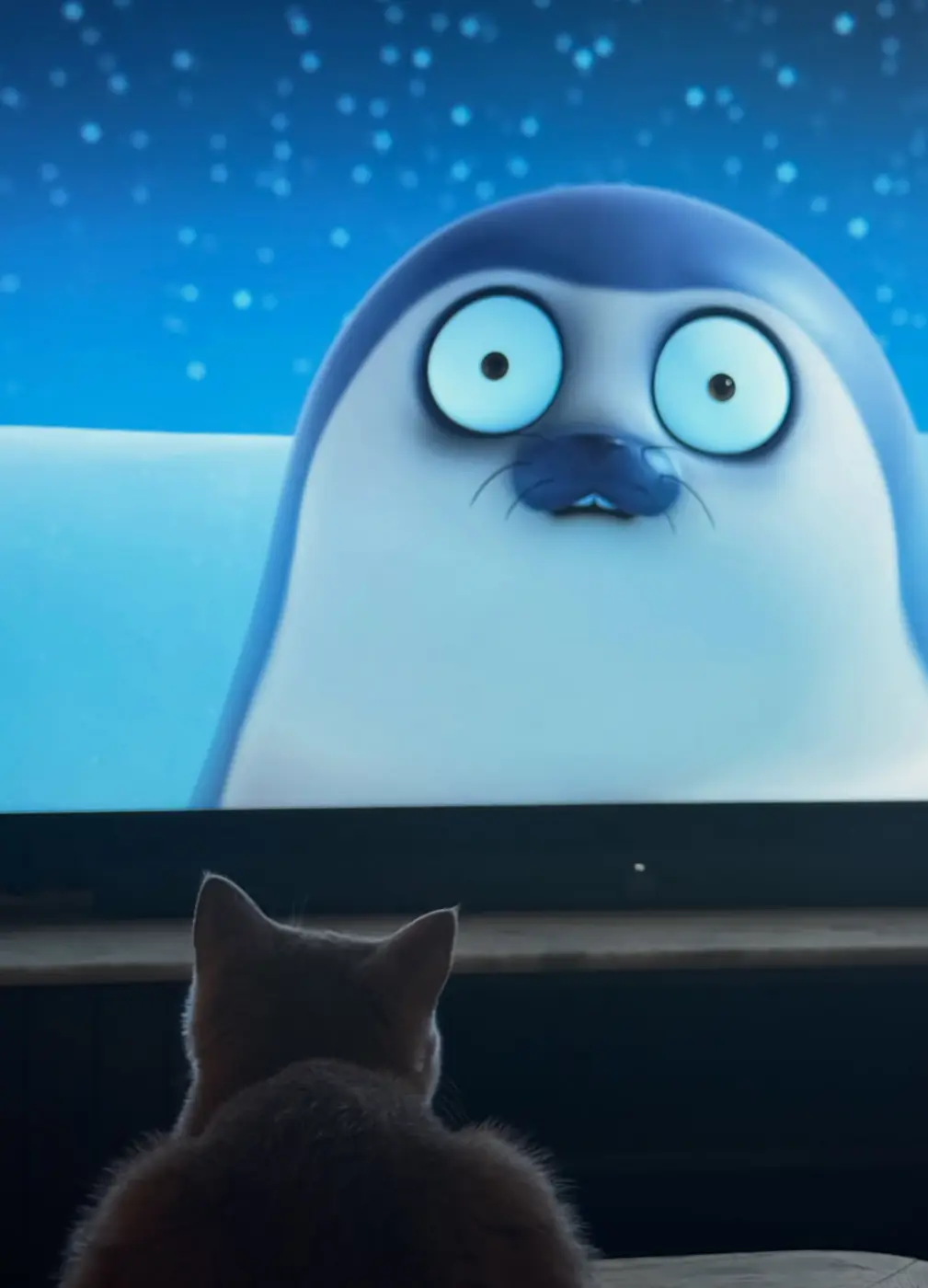
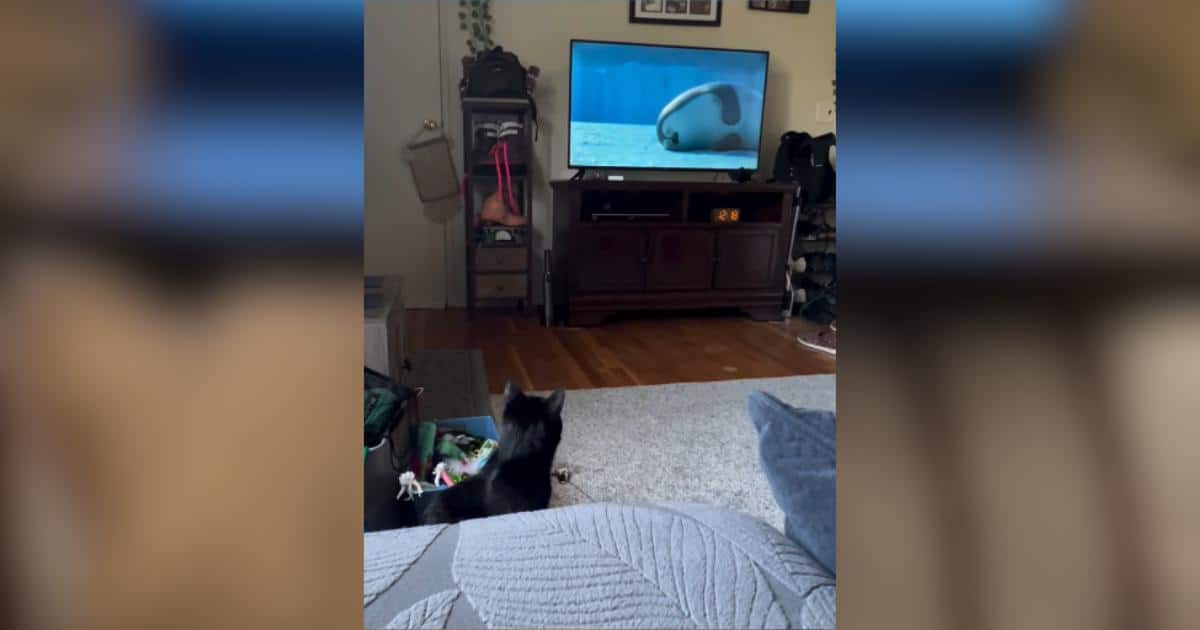
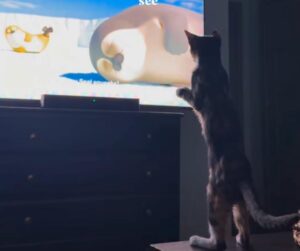
The catalyst for this unexpected cultural moment is Fig, a spirited calico kitten whose journey to internet stardom began when her family introduced her to the animated series Sealook. Documented extensively on the popular Instagram account @fossilandfig, Fig’s reaction was instantaneous and absolute. Rather than offering a casual glance before losing interest—as is typical when presented with human-centric programming—the kitten was immediately glued to the screen. Her initial quiet observation quickly escalated into close-range investigation, with Fig reaching out her paws to bat at the animated marine mammals dancing across the display.
While Netflix classifies Sealook as a whimsical, South Korean children’s cartoon depicting the playful antics of seals living in a coastal sanctuary, the show’s accidental appeal to felines has sparked a broader conversation among pet owners and animal behaviorists alike. Social media comments quickly flooded with corroborating reports from other cat parents whose pets exhibit the exact same hypnotic fixation on the program.
This unexpected intersection of streaming media and feline ethology raises intriguing questions: Do cats actually perceive the specific aesthetic choices of Sealook, or are they simply succumbing to primal predatory instincts triggered by fast-moving graphics? By examining the mechanics of feline vision, the evolutionary drivers of predatory focus, and the unique design elements of the show, we can decode why this children’s comedy has inadvertently become a smash hit within the global cat community.
Detailed Chronology: The Rise of Fig and the Sealook Phenomenon
The story of Fig’s digital awakening began on a routine afternoon when her human caregivers sought a quiet distraction, inadvertently turning on Sealook. What followed has been carefully cataloged for thousands of followers, serving as a case study in modern pet entertainment.
Phase One: The Initial Discovery
Upon first encountering the program, Fig abandoned her usual exploratory routines. As captured in the viral video shared on @fossilandfig, the calico kitten trotted over to the television console and halted directly in front of the display. Her posture shifted instantly from relaxed curiosity to intense predatory focus. The animated seals—characterized by their plump frames, rubbery flexibility, and exaggerated, comical expressions—began executing physical comedy bits across the screen. Fig sat motionless, her head tilting slightly to track the rapidly shifting figures, utterly absorbed by the visual spectacle.
Phase Two: Escalation and Tactile Engagement
As the segment progressed, passive observation proved insufficient for the energetic kitten. Fig closed the distance between herself and the television set, stepping right up to the glass bezel. With pupils dilated and body coiled, she lifted her front paws, repeatedly tapping and swiping at the screen. Her physical gestures mirrored the behavior of a wild cat attempting to pin down escaping prey. To Fig, the barrier of the television screen seemed momentarily irrelevant; the seals were active targets demanding interaction. Her human family summarized the escalation with a succinct declaration shared across social media: "She’s obsessed."
Phase Three: Viral Resonance and Community Confirmation
Had Fig been an isolated anomaly, the incident would have remained a cute, one-off anecdote. However, the publication of her video triggered a cascade of responses from the broader online pet community. Within days, comment sections filled with testimonials from fellow cat owners who independently verified the phenomenon.
One user noted that Sealook had successfully integrated itself into their cat’s daily routine, functioning as an essential component of their enrichment schedule. Other owners immediately announced plans to test the hypothesis on their own pets, reporting varying degrees of similar fascination. While a minority of feline skeptics remained unimpressed—with one owner noting their cats still preferred traditional computer mouse-cursor tracking—the sheer volume of positive confirmations cemented Sealook as an unwitting darling of the feline demographic.
Supporting Context & Metrics: Decoding Feline Vision and Psychology
To fully understand why a show intended for human children has achieved cult status among cats, one must analyze the stark physiological differences between human and feline visual processing systems.
The Feline Eye: Built for Motion, Not Color Saturation
Domestic cats (Felis catus) are obligate carnivores whose evolutionary history is defined by nocturnal and crepuscular (dawn and dusk) hunting. Consequently, their visual apparatus is meticulously engineered to prioritize motion detection and low-light acuity over vibrant color discrimination and fine detail.
- Rod Cells vs. Cone Cells: The human retina is rich in cone cells, which allow us to perceive a vast spectrum of colors and fine chromatic details in bright light. Feline eyes, conversely, are heavily dominated by rod cells—photoreceptors that excel at capturing dim light and detecting minute changes in velocity across a field of vision. This evolutionary adaptation explains why cats can navigate pitch-black rooms with ease, but it also dictates how they interact with modern technology.
- The Color Spectrum of Cats: While popular myth once dictated that cats live entirely in a world of black, white, and gray, modern veterinary science confirms that felines do see color. However, their color palette is significantly more muted than ours. Cats possess fewer cone cells, meaning their world is less saturated. They perceive blues and certain yellow tones with a relatively high degree of clarity, whereas greens, reds, and oranges present substantial perceptual challenges, often appearing as muted grays, brownish hues, or yellowish tones.
The Dynamics of Animation: Why Sealook Works
When these biological facts are applied to television viewing, the appeal of a show like Sealook begins to clarify.
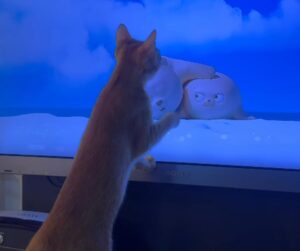
- High-Contrast Color Palettes: Although Netflix did not intentionally design Sealook to cater to feline ocular limits, the animation style naturally utilizes bright, clean, high-contrast backgrounds and character designs that lean heavily into shades of blue and white (such as arctic environments and the seals themselves). These tones fall directly within the narrow band of the spectrum that cats can distinguish with ease.
- Exaggerated Kinetic Movement: According to veterinary ophthalmologists, motion is exponentially more important than color when attempting to capture a cat’s attention. Sealook features short, fast-paced vignettes centered around plump, bouncing, sliding, and tumbling characters. Because cats are hardwired to track small, erratic movements associated with prey animals (like rodents or small birds), the physical comedy and rapid trajectory changes of the animated seals act as a biological trigger. The characters darting across the screen mimic the erratic flight paths of natural prey, commanding the animal’s predatory focus far more effectively than static images or slow-moving human dialogue.
Official Statements and Industry Insights
The intersection of artificial intelligence, streaming algorithms, and animal behavior has drawn commentary from veterinary professionals and digital media analysts alike.
Expert Perspectives on Feline Television Consumption
Dr. Paul Miller, a prominent veterinary ophthalmologist, has frequently noted in industry literature that digital screens present unique visual challenges and opportunities for domestic animals. Because older televisions operated at lower refresh rates (often causing the image to appear as a flickering strobe light to a cat’s fast-processing visual cortex), modern high-refresh-rate flat-screen displays have made "Cat TV" far more viable.
"When a cat watches a screen, they aren’t processing the narrative structure the way a human viewer does," explains Dr. Miller. "They are responding to raw visual stimuli: high-contrast changes, rapid spatial movement, and specific frequency shifts. If an animated program features characters moving with unpredictable, jerky, or bouncing cadences against a clean backdrop, it effectively hacks the cat’s predatory attention span."
Streaming Platforms and Accidental Demographics
Representatives for major streaming networks have consistently maintained that children’s programming is engineered specifically for human youth demographics, focusing on cognitive development, slapstick humor, and emotional accessibility for children aged two to six. Netflix’s official synopsis of Sealook describes it as a lighthearted, non-verbal animated comedy capturing the whimsical daily lives of seals living in a coastal habitat.
Company representatives have confirmed that no specialized focus groups involving domestic felines were consulted during the production of the series. The phenomenon remains a purely organic collision of animation design and evolutionary biology—a testament to the fact that good visual pacing transcends species lines.
Future Outlook: The Evolution of Pet-Centric Media
As digital content consumption continues to evolve, the unexpected success of shows like Sealook among feline audiences points toward fascinating future possibilities in media production and pet enrichment.
The Rise of Multi-Species Media Design
While dedicated "Cat TV" channels on platforms like YouTube have long catered to pet owners looking to leave background stimulation for their animals while at work, the success of mainstream shows breaking into the pet market suggests a commercial opportunity. Animal behaviorists speculate that future animators and game developers may begin consulting veterinary specialists to intentionally optimize visual palettes, frame rates, and motion dynamics for household pets.
By designing background elements that leverage feline-friendly blue-yellow spectrums and incorporating unpredictable motion physics, creators could intentionally produce content that serves a dual purpose: engaging human children while providing certified cognitive enrichment for household cats and dogs.
Enhancing Feline Indoor Enrichment
For everyday cat owners, the lessons learned from Fig’s viral moment offer practical applications. Indoor-only cats frequently suffer from boredom, lethargy, and stress-related behavioral issues if not provided with adequate mental and physical stimulation. While interactive wand toys, puzzle feeders, and climbing trees remain the gold standard of feline enrichment, strategic screen time can serve as a valuable supplemental tool.
Veterinarians recommend that owners looking to replicate Fig’s positive experience keep a few guidelines in mind:
- Monitor Screen Distance: Ensure cats do not become overly aggressive or attempt to knock over unsecured televisions while swatting at characters.
- Select High-Motion Content: Prioritize brightly lit, fast-paced animation or nature documentaries featuring small animals over slow-paced, dialogue-heavy programming.
- Balance Digital and Physical Play: Use screen-based stimulation as a precursor to physical play, allowing the cat to channel their awakened predatory energy into chasing a physical toy immediately afterward.
Conclusion: Fig’s Legacy in the Streaming Age
Fig the calico kitten may not have set out to become an ambassador for feline media studies, but her deep dive into Sealook has opened a whimsical window into the intersection of animal science and digital entertainment. Whether Netflix intended to entertain the feline population or not, the reality is clear: millions of cats possess a sophisticated, motion-driven appreciation for good animation. As long as streaming platforms continue to produce colorful, fast-moving content, human family members may find themselves increasingly locked out of the living room television—because, as Fig has so decisively proven, the cats are using it right now.