
Executive Overview
On any given day, thousands of animal shelters across the United States face the challenging task of rehoming "hard-to-adopt" animals—pets whose medical conditions, behavioral needs, or age require highly specific environments. Among these animals, those with severe mobility impairments face some of the steepest barriers to adoption.
For Hashbrown, a mixed-breed dog born with profound spinal malformations, the search for a permanent home was not a matter of weeks or months, but years. Spanning a remarkable 1,502 days—over four years of continuous care—Hashbrown’s residency at The Runaways Animal Rescue in Florida became a testament to the resilience of special-needs animals and the unwavering dedication of the rescue community.
Hashbrown’s journey from a disabled puppy to a viral internet sensation, and ultimately to a cherished family member, highlights critical dynamics within the modern animal welfare landscape. This investigative report details his chronological history, examines the clinical and logistical complexities of managing long-term special-needs shelter residents, analyzes the role of digital advocacy in modern adoptions, and explores the broader implications for veterinary rehabilitation and shelter policy.
Detailed Chronology
The timeline of Hashbrown’s life and tenure at The Runaways Animal Rescue is a masterclass in patient, resource-intensive animal husbandry. Below is the chronological progression of his journey from rescue intake to final placement.
[July 23, 2022] Intake: Arrives as a puppy with severe spinal malformations.
       │
[Late 2022 - 2023] Rehabilitation: Undergoes physical therapy; learns to use a custom wheelchair.
       │
[December 2023] Viral Breakthrough: Featured on WeRateDogs / New Year's Rockin' Eve.
       │
[2024 - Mid-2026] The Plateau: Remains in foster care as the shelter's longest resident.
       │
[September 2026] Adoption: Placed in a permanent, single-pet home after 1,502 days.
Phase I: Intake and Initial Diagnostics (July 23, 2022)
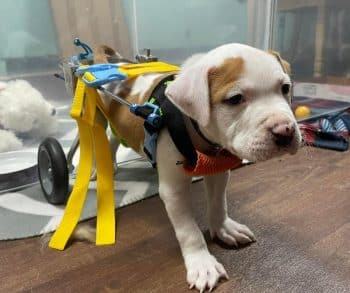
Hashbrown arrived at The Runaways Animal Rescue as a young puppy presenting with obvious physiological abnormalities. Initial veterinary assessments revealed severe congenital spinal malformations, which staff compared to a severe presentation of scoliosis in humans.
Radiographs and specialist consultations confirmed that the structural anomalies of his vertebral column compromised his spinal cord, resulting in permanent paraparesis (partial paralysis of the hind limbs). Specialists concluded that Hashbrown would never possess the neurological or muscular capacity to walk in a typical four-legged gait.
Phase II: Rehabilitation and Adaptive Mobility (Late 2022 – 2023)
Faced with a lifetime mobility deficit, the rescue’s veterinary and foster team initiated a multi-phase rehabilitation plan:
- Targeted Physical Therapy: Aimed at strengthening Hashbrown’s core and forelimbs to prevent compensatory injuries.
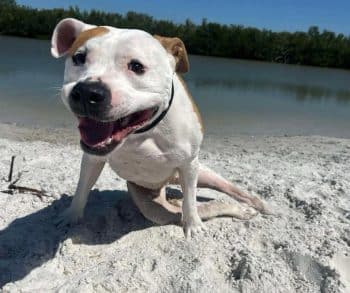
- Locomotive Adaptation: Hashbrown independently developed a unique "bunny hop" motion, utilizing his strong front legs to pull and propel his torso forward.
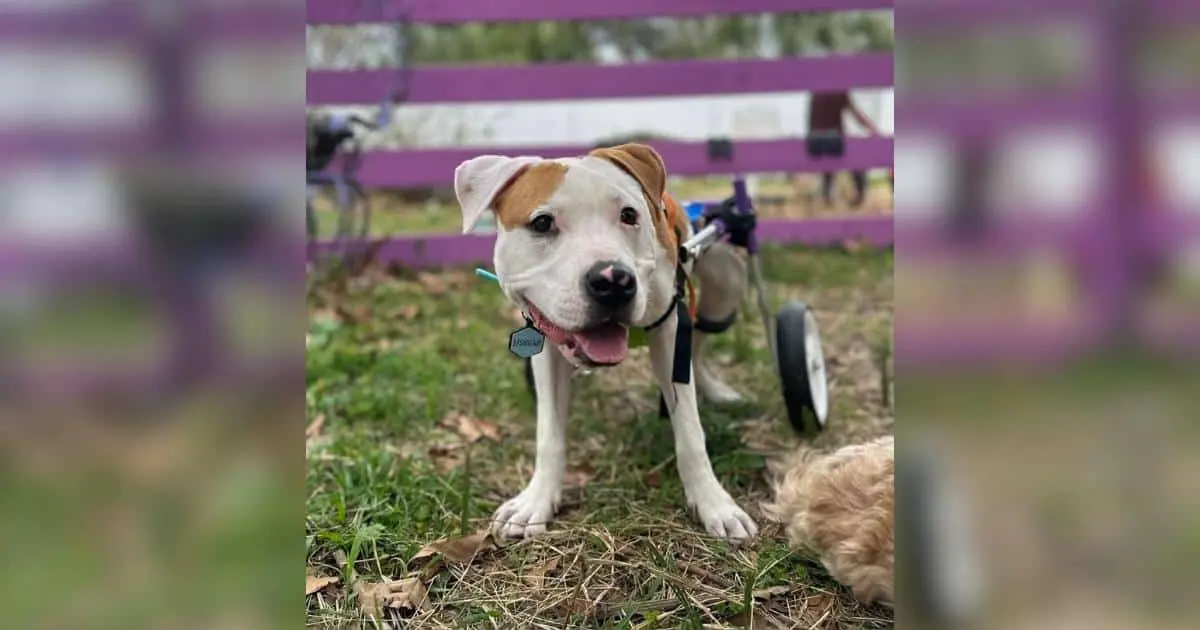
- Orthotic Integration: To prevent skin lesions from dragging and to expand his cardiovascular capacity, Hashbrown was fitted with a custom dual-wheel canine cart (wheelchair). This device allowed him to stand upright and run at high speeds.
Phase III: The Rise of a Digital Micro-Celebrity (Late 2023)
As Hashbrown adapted to his wheelchair, his caregivers began documenting his progress on social media. His charismatic personality, characterized by rapid "bunny hops" and enthusiastic wheelchair sprints, quickly garnered a regional following.
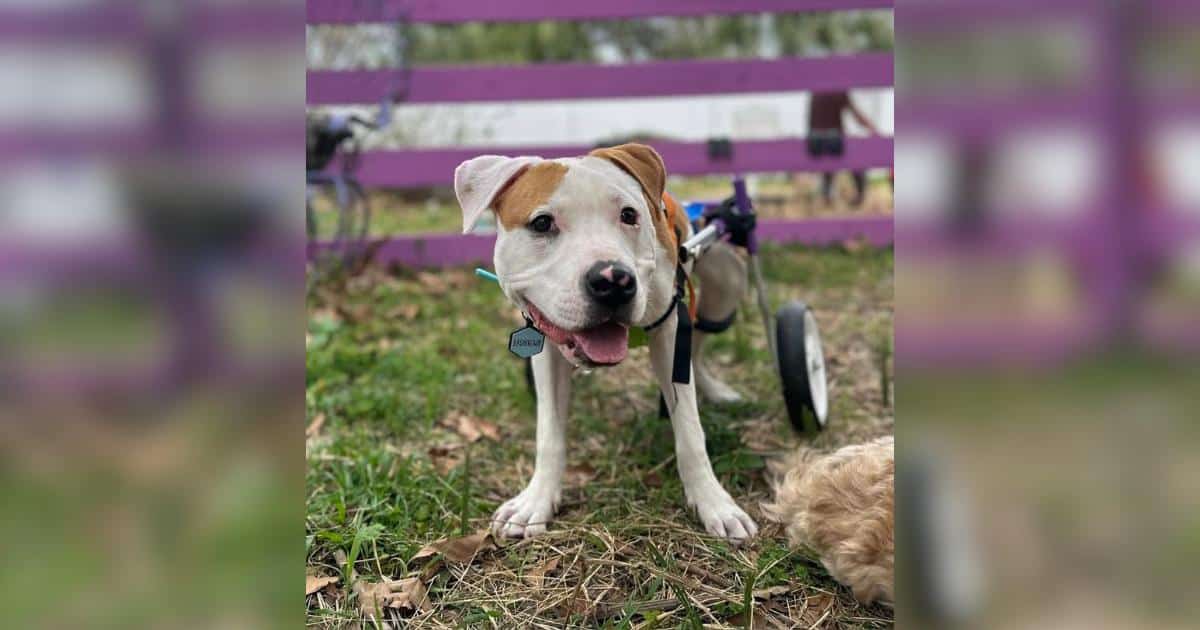
In December 2023, Hashbrown’s digital footprint expanded significantly when he was featured in a WeRateDogs segment broadcast in association with Ryan Seacrest’s New Year’s Rockin’ Eve. This high-profile national exposure elevated him to "mini-celebrity" status, drawing thousands of views and structural inquiries to the rescue’s digital platforms.
Phase IV: The Long-Term Foster Plateau (2024 – Mid-2026)
Despite his online popularity, translating digital views into a physical adoption proved exceptionally difficult. Year after year, Hashbrown remained in a dedicated foster home. By mid-2026, he had transitioned from a puppy to a mature four-year-old, weighing 43 pounds.
During this period, his foster caretakers established a rigorous daily routine. Hashbrown slept soundly on a orthopedic bed adjacent to his foster parent’s bed, mastered complex cognitive food puzzles to mitigate kennel boredom, and participated in structured outdoor exercise sessions.
To lower adoption barriers, the rescue secured a donor to fully sponsor his adoption fee and committed to donating his custom wheelchair and providing comprehensive medical training to his future owners.
Phase V: The Secret Placement and Finalization (September 2026)
In late summer 2026, a highly qualified applicant stepped forward. To protect the integrity of the transition and allow Hashbrown to decompress without public scrutiny, The Runaways Animal Rescue enacted a temporary media blackout regarding his status.
After a successful multi-week trial period during which Hashbrown adjusted seamlessly to his new environment, the rescue officially announced his adoption, marking the end of his historic 1,502-day stay.
Supporting Context & Metrics
To understand the magnitude of Hashbrown’s 1,502-day rescue stay, we must examine the clinical realities of his condition, the systemic challenges faced by shelters managing long-term residents, and the socioeconomic factors that influence special-needs pet ownership.
Clinical Analysis: Canine Spinal Malformations and Mobility Management
Congenital spinal anomalies in canines, such as hemivertebrae, spina bifida, and severe lordosis or scoliosis, present complex long-term care requirements.
| Care Domain | Clinical Requirement | Potential Complications |
|---|---|---|
| Dermatological Care | Daily inspection of friction points from wheelchair harnesses and drag bags. | Decubitus ulcers (pressure sores), urine scald, and secondary bacterial infections. |
| Musculoskeletal | Targeted hydrotherapy and range-of-motion (ROM) exercises for hindquarters. | Muscle atrophy in rear limbs; compensatory joint strain and arthritis in forelimbs. |
| Urogenital Management | Monitoring of bladder expression and bowel movements; frequent hygiene clips. | Neurogenic bladder dysfunction, urinary tract infections (UTIs), and incontinence. |
| Cognitive Enrichment | High-level mental stimulation (e.g., food puzzles) to replace lost physical output. | Chronic frustration, self-mutilation (chewing on paws), and barrier reactivity. |
Because Hashbrown’s mobility relied heavily on a custom cart, his environment required continuous management. Canine wheelchairs are highly effective, but they are not full-time mobility replacements; dogs cannot lie down or rest naturally while strapped into a cart, requiring caretakers to manually transition them between active and resting states throughout the day.
[Active State: Wheelchair Cart] ──(Manual Transition)──> [Resting State: Orthopedic Bed]
         │                                                        │
         ├── High-speed mobility                                  ├── Muscle decompression
         ├── Outdoor socialization                                ├── Risk of pressure sores
         └── Elevated cardiorespiratory demand                    └── Requires regular repositioning
The Logistics and Economics of Long-Term Shelter Care
The average length of stay (LOS) for a healthy dog in a U.S. shelter ranges from 14 to 45 days. A residency of 1,502 days represents an extraordinary allocation of shelter resources.
- Financial Overhead: The cost of veterinary maintenance, specialized nutrition, physical therapy, and custom orthotics over four years can easily exceed $10,000 per animal.
- Opportunity Cost: In a physical shelter environment, one long-term resident occupies a kennel space that could otherwise facilitate the adoption of dozens of highly adoptable animals over a multi-year period. The Runaways Animal Rescue mitigated this by utilizing a dedicated foster home network, which kept shelter kennels open while providing Hashbrown with a stable, domestic environment.
- The "Single-Pet" Constraint: Hashbrown’s adoption profile specified that he be placed in a single-pet household. This requirement significantly restricts the pool of potential adopters, as a high percentage of experienced, special-needs-capable owners already house other animals.
Official Statements
Following the successful transition of Hashbrown into his permanent home, both his rescue team and his new adoptive family issued statements reflecting on the emotional and operational significance of this placement.
From The Runaways Animal Rescue:
"So many of you have followed his journey, shared his posts, cheered him on, and fallen in love with this very special boy right along with us. For 1,502 days, our team poured everything we had into Hashbrown. He was never ‘just a shelter dog’ to us; he was family.
Watching him transition from a tiny, fragile puppy with a malformed spine into a confident, wheelchair-racing celebrity has been the privilege of a lifetime. His adoption proves that there is a perfect home for every dog, no matter how complex their medical needs may be. We are endlessly grateful to his adopters for seeing him for the joyful, brilliant dog he is."
From Hashbrown’s Adoptive Family:
"Hashbrown is, without a doubt, the happiest, sweetest, most loving boy we have ever met. He has become the absolute perfect addition to our family.
We want to extend our deepest gratitude to everyone at The Runaways Animal Rescue. It is incredibly obvious from his first day in our home just how deeply and consistently he was loved during his four years in their care. They didn’t just keep him alive; they helped him thrive. His wheelchair doesn’t slow him down for a second, and he brings a level of infectious joy to our home that we didn’t know was missing."
Future Outlook
Hashbrown’s successful adoption after more than four years provides several key takeaways for the broader animal welfare sector:
1. The Critical Role of Foster Networks
Without a robust foster care system, a dog with Hashbrown’s clinical profile would likely suffer from "kennel deterioration" or "long-term shelter syndrome," characterized by severe anxiety, depression, and self-destructive behaviors.
Expanding foster networks is essential for rescues managing long-term, medically complex residents. Foster homes act as active rehabilitation centers, providing real-world data on how a disabled animal navigates a home layout, sleeps, and interacts with humans.
2. Strategic Digital Advocacy and "Micro-Influencer" Marketing
While traditional adoption profiles often focus heavily on an animal’s physical limitations or medical needs, Hashbrown’s campaign succeeded by highlighting his capabilities and personality.
By focusing on his intelligence (solving food puzzles), his unique "bunny hop" movement, and his high-speed wheelchair adventures, his caretakers framed him not as an object of pity, but as an active, joyful companion. This approach, combined with national exposure on platforms like WeRateDogs, represents a highly effective blueprint for rehoming other long-term residents.
3. Decompression Protocols for Special-Needs Placements
The rescue’s decision to maintain a temporary media blackout during Hashbrown’s initial placement is a highly recommended practice for complex adoptions.
Special-needs dogs are highly sensitive to environmental changes. Giving the adoptive family and the animal a quiet, low-pressure window to establish daily routines—such as wheelchair harnessing, bathroom schedules, and boundary setting—substantially reduces the risk of adoption failure and return.
Conclusion
Ultimately, Hashbrown’s 1,502-day journey demonstrates that with patient veterinary care, structured foster support, and creative digital outreach, even the most vulnerable animals can successfully transition from long-term shelter residents to beloved family members. His story stands as a beacon of hope for special-needs animals nationwide, proving that "forever" is always worth the wait.