
For millennia, the relentless expansion of human civilization has radically transformed the Earth’s ecosystems. From sprawling mega-cities and vast agricultural heartlands to dense networks of highways and industrial infrastructure, humanity has fundamentally reshaped the terrestrial globe. For generations, wildlife conservationists and ecologists have studied how wild animals adapt to these heavily altered physical environments. Conventional wisdom long held that an animal’s behavior was dictated primarily by habitat modification—the physical removal of forests, the paving over of grasslands, and the fragmentation of natural corridors.
However, groundbreaking new research published in the prestigious journal Science shatters this long-standing assumption. The study reveals that wildlife responds not merely to the concrete and steel of our built environments, but also to the simple, ephemeral presence of human beings moving through the landscape.
By merging high-resolution GPS tracking data from thousands of individual animals with anonymized, neighborhood-level cellphone mobility data gathered across the United States, an international team of researchers has uncovered a complex, nuanced reality. The findings demonstrate that wildlife behavioral shifts are driven by a dynamic interplay between physical habitat alteration and direct human presence. Crucially, these responses vary wildly depending on the specific species and the degree to which a landscape has already been modified.
This research was made possible by an unprecedented global event: the COVID-19 pandemic lockdowns. The sudden, dramatic shifts in human mobility during 2020 created a massive, unplanned natural experiment—dubbed the "anthropause"—allowing scientists for the first time to isolate the psychological and behavioral impact of human presence from the permanent structural impacts of urban and rural development.
The implications of this study are profound. As conservationists grapple with accelerating biodiversity loss and escalating human-wildlife conflicts, these findings signal an urgent need to move beyond one-size-fits-all management strategies. By understanding how animals perceive and react to both our physical footprint and our mere existence, policymakers can craft smarter, more targeted conservation frameworks that foster coexistence in an increasingly crowded world.
Detailed Chronology: Unlocking the "Anthropause" Experiment
To understand how researchers achieved this methodological breakthrough, one must look back to the early months of 2020. As the COVID-19 pandemic swept across the globe, governments instituted sweeping lockdowns, stay-at-home orders, and travel restrictions. Overnight, human mobility plummeted in urban centers, recreational parks, and rural thoroughfares alike.
For wildlife biologists, this sudden silence in human activity presented a once-in-a-lifetime research window. Under normal circumstances, separating the impacts of human presence (people walking, driving, or recreating) from the impacts of landscape modification (roads, buildings, and clear-cut forests) is nearly impossible. Where there are buildings and roads, there are almost always people. The pandemic untangled these two variables, giving birth to the COVID-19 Bio-Logging Initiative.
The Genesis of a Global Collaboration
The initiative rapidly blossomed into a massive international collaboration involving more than 600 academic and conservation partners. Together, the network assembled an unprecedented repository of approximately one billion location records gathered from roughly 13,000 individual animals worldwide.
Among this vast global dataset, a team of researchers from the University of California, Santa Barbara (UCSB), the Smithsonian’s National Zoo and Conservation Biology Institute, and Yale University zeroed in on the continental United States. They curated a robust subset of weekly GPS tracking records spanning matching periods in 2019 (pre-pandemic baseline) and 2020 (the lockdown era). This specific sample comprised 4,581 individual mammals and birds across 37 distinct species.
Overcoming the Data Deficit
While tracking animal movement via GPS collars and avian transmitters is a well-established science, quantifying human presence dynamically has historically been a major bottleneck for ecologists.
In the past, researchers seeking to measure human impact were forced to rely on coarse, indirect proxies. These included static metrics such as housing density, the percentage of impervious surfaces, agricultural zoning maps, or—during the early pandemic—binary indicators of whether a county was under lockdown restrictions. While these proxies offered broad clues about human habitation, they failed to capture the fluid, real-time movements of people across natural and semi-natural landscapes.
To overcome this critical limitation, the research team secured access to a novel data source: anonymized cellphone geolocation data aggregated at the neighborhood level.
"The cell phone data we used was made available to researchers during the pandemic to help reveal the impacts of COVID-19 shutdowns," explained Dr. Scott Yanco, a research ecologist at the Smithsonian’s National Zoo and co-lead author of the study. "Typically, private companies hold onto these, which made this a rare opportunity for us to quantify how human presence impacts wildlife, and to demonstrate that there is more to consider than just land modification to create robust conservation plans."
By synchronizing these high-resolution human mobility logs with the GPS telemetry of thousands of birds and mammals, the research team was able to model, with staggering precision, how wildlife modified their spatial habits in direct response to the ebb and flow of human foot and vehicular traffic.
Supporting Context & Metrics: How Wildlife Reacts to Us
The analysis yielded sweeping insights into how animals navigate human-dominated landscapes. Rather than pointing to a single universal behavioral rule, the data painted a complex portrait of behavioral adaptation, highlighting that both physical infrastructure and human bodies exert independent yet deeply intertwined pressures on wild populations.
The Dominance of Dual Pressures
When the researchers examined how human activity influenced both the physical area utilized by each animal (territory size) and its environmental niche (how it utilizes habitats and resources), the results were definitive. For the vast majority of studied species, looking solely at landscape modification told an incomplete story.
- 57% of all species studied were significantly affected by the combined forces of direct human presence and landscape modification.
- 67% of mammal species altered either their territory size or environmental niche in response to human presence.
- 68% of bird species demonstrated similar measurable shifts in space or resource use when exposed to fluctuating human numbers.
Interconnected Influences and the Paradox of Protected Areas
Crucially, the research revealed that human presence and habitat alteration do not operate in silos; they feed into one another. The magnitude of an animal’s reaction to a human being depended heavily on how pristine or degraded the surrounding landscape already was. Conversely, the impact of a modified landscape depended on how many people were actively moving through it.
Intriguingly, the data showed that about 67% of mammal species and 41% of bird species responded to the dual pressure of people and landscape alteration by contracting the amount of habitat they used.
Even more counterintuitive was the geographic distribution of this sensitivity. Animals displayed the highest sensitivity to human presence not necessarily in chaotic, densely populated urban cores where wildlife is already habituated, but in relatively wild, lightly developed spaces. National parks, wilderness buffer zones, and rural preserves—places where encounters with humans are less frequent—triggered the most pronounced behavioral contractions. When humans ventured into these quieter sanctuaries, wildlife felt the disruption acutely.
Species-Specific Case Studies: Wolves, Deer, and Cranes
One of the most compelling takeaways from the study is the absence of a universal behavioral playbook across the animal kingdom. Different taxa, evolutionary histories, and ecological niches dictate vastly different survival strategies when humans enter the picture.
Gray Wolves: Expanding the Horizon
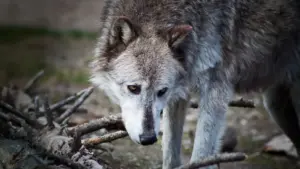
Gray wolves (Canis lupus) provided a striking departure from the general trend of habitat contraction. While many species shrank their territory ranges to avoid human-heavy zones, wolves actually expanded their habitat use in response to human presence.
Ecologists attribute this to the deep-seated, evolutionary history of conflict between wolves and humans. Having faced centuries of persecution, culling, and habitat displacement, wolves appear to adopt an expansive, highly cautious strategy. Rather than hunkering down in shrinking patches, they actively widen their spatial footprint to maximize distance from human activity and secure safe corridors for movement.
White-Tailed Deer vs. Sandhill Cranes
The study also illuminated subtle, divergent responses between common mammal and avian neighbors.
White-tailed deer (Odocoileus virginianus) demonstrated a fascinating dichotomy: their environmental niches expanded as their physical landscapes became more heavily modified by human infrastructure, yet their spatial ranges contracted as the sheer volume of human presence increased. They learned to exploit fragmented, human-altered habitats—such as suburban edges and agricultural fields—for food, but pulled back geographically when human density spiked.
Sandhill cranes (Antigone canadensis), on the other hand, displayed an almost completely reversed pattern of behavioral adjustment, showcasing how distinct avian ecological requirements shape completely different reactions to the same anthropogenic pressures.
"These findings highlight the critical importance of species-based conservation," noted Dr. Ruth Oliver, co-lead author and assistant professor at UCSB’s Bren School of Environmental Science & Management. "Every species has different habitat requirements, has its own particular behavioral tendencies and faces unique threats. Effective conservation requires that we understand the particular challenges that each species faces."
Official Statements and Expert Perspectives
The publication of this study in Science has sent ripples through the global conservation community, prompting leading ecologists to reevaluate decades-old wildlife management paradigms.
Reflecting on the overarching goals of the COVID-19 Bio-Logging Initiative, researchers emphasize that the integration of mobile-device data represents a quantum leap forward for applied ecology. In the Anthropocene—the geological epoch defined by dominant human impact on Earth’s climate and ecosystems—traditional conservation has too often focused strictly on land preservation while ignoring the invisible, psychological footprint of human recreation, traffic, and tourism.
"Humans have complicated effects on wildlife—from our physical presence to how we reshape habitats—but we can’t understand our full impact without information on both," Dr. Oliver stated during a press briefing on the findings.
Dr. Scott Yanco echoed these sentiments, emphasizing the collaborative nature of the breakthrough and the rarity of the datasets involved. "Typically, private companies hold onto these [cellphone data streams]," Yanco remarked, noting that the unique circumstances of the global health crisis temporarily bridged the gap between commercial data analytics and academic ecological research.
Furthermore, the broader scientific collaboration—which synthesized 1 billion location records from 13,000 animals across 600 global partners—has established a new methodological gold standard. Conservation biologists can no longer treat "human impact" as a monolithic variable defined solely by concrete, asphalt, and zoning lines. Moving forward, understanding the frequency, timing, and distribution of human bodies on the landscape will be just as vital as mapping the physical terrain.
Future Outlook: Survival, Stress, and Smarter Conservation
While the new study successfully demonstrates that animals alter their spatial behavior in response to human presence, it opens the door to an even more urgent and pressing ecological question: Are these behavioral adjustments helping or hurting wildlife?
Adaptation vs. Chronic Stress
When an animal shrinks its territory, avoids preferred feeding grounds, or expands its daily travel distance to steer clear of humans, it expends precious metabolic energy. However, ecologists do not yet fully understand whether these behavioral shifts represent successful, adaptive coping mechanisms that protect animals from harm, or if they are outward symptoms of chronic physiological stress that ultimately degrades population health.
"Our current study shows that animals change how they use space and resources, but we don’t know if these changes are helping them adapt or are a sign of stress," Dr. Oliver explained, outlining the trajectory of her lab’s ongoing research. "Our group is now digging into that question by asking whether animals that change their behavior in response to human pressures are at greater or lower risk of dying."
By linking real-time behavioral tracking with demographic and survival data, future research will aim to determine the precise biological toll of human disturbance. This next frontier of study is critical for identifying ecological tipping points—the exact threshold where human presence transitions from a minor nuisance to a driver of population decline.
A Framework for Coexistence
Despite the sobering realization that our mere physical presence weighs heavily on wild animals, the researchers maintain an optimistic view of the future. Historically, wildlife management policies were drafted in the dark, lacking granular data on how animals react in real-time to human footsteps.
Armed with the insights born from the pandemic’s "anthropause," conservationists now possess the analytical tools necessary to design dynamic, fine-tuned management strategies. Rather than imposing blanket closures on entire public lands or green spaces, future conservation policies can employ time-and-space zoning—restricting human access to sensitive breeding grounds only during critical seasonal windows, or managing visitor flows in national parks based on empirical wildlife telemetry.
"Our results give me some optimism that we can achieve wildlife-coexistence through more nuanced policies that more smartly consider where and when we need to give animals space," Dr. Oliver concluded.
As human populations continue to grow and wild spaces shrink, bridging the gap between human mobility and animal ecology will no longer be an academic luxury—it will be an absolute necessity for safeguarding the planetary biodiversity that remains.