
Executive Overview
In the relentless, daily battle to protect and uplift vulnerable feline populations across the United States, victories are often measured in small, quiet moments: a steady heartbeat returning after emergency surgery, a once-gaunt frame filling out with healthy muscle, or the playful bound of a kitten experiencing safety for the very first time. The Alley Cat Action® 2026 Summer Newsletter captures the absolute essence of this high-stakes, deeply compassionate work. Highlighting stories featured in the official summer edition, this report explores the extraordinary journeys of cats whose lives were fundamentally altered—and in many cases saved—through strategic intervention, specialized veterinary care, and the unwavering dedication of a compassionate community of supporters.
From the solitary streets where a brave little black cat fought through severe malnourishment and trauma, to a massive multi-cat rescue operation in rural Alabama that liberated nearly a hundred animals from perilous conditions, the summer of 2026 has tested the resources and resolve of animal welfare advocates. Yet, through collaborative partnerships, targeted funding, and evidence-based population management strategies like Trap-Neuter-Return (TNR), organizations like Alley Cat Allies continue to rewrite the destinies of society’s most overlooked animals.
This in-depth feature examines the multi-faceted rescue operations, medical triumphs, and ongoing systemic challenges highlighted in the latest legislative and field updates. By analyzing individual rehabilitation cases—such as Neo, Cricket, and Strudel with her kittens—we gain a clearer understanding of the profound impact that targeted veterinary funding and donor-backed advocacy have on animal welfare nationwide.
Detailed Chronology: Stories from the Front Lines of Rescue
The path from crisis to recovery is rarely straightforward. Each feline brought into the care of Alley Cat Allies and its network of shelter partners carries a distinct history of hardship, endurance, and, ultimately, transformation. The following chronological accounts detail how three distinct rescue scenarios unfolded during the early months of 2026, culminating in the inspiring recovery stories shared in the summer newsletter.
1. Neo: The Distinguished Survivor of Severe Trauma
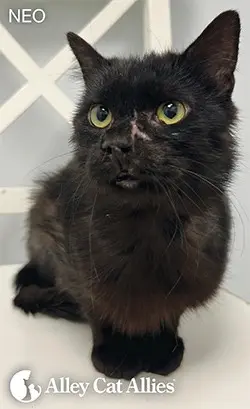
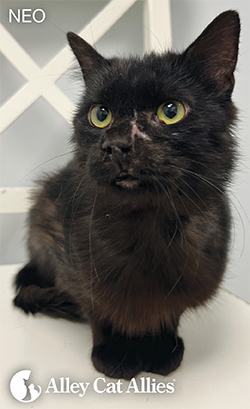
For Neo, life before rescue was a daily gauntlet of survival. When the small black cat was first brought into the care of veterinary professionals, his physical condition painted a harrowing picture of neglect and vulnerability. Most immediately striking was a massive, angry wound slashed across his face—an injury that would cause alarm to even the most seasoned field rescuers.
However, as medical evaluations progressed, the facial wound quickly became part of a much larger, more systemic medical crisis. A comprehensive examination revealed that Neo was suffering from severe underweight status, advanced malnourishment, and multiple concurrent systemic illnesses. His immune system was heavily compromised, leaving him dangerously susceptible to secondary infections.
Despite the bleak initial prognosis, Neo exhibited a fierce, indomitable will to live. Recognizing his fighting spirit, the veterinary team immediately formulated an aggressive, multi-week medical intervention plan. This regimen included complex surgical repair of his facial trauma, intensive nutritional rehabilitation, fluid therapy, and targeted pharmaceutical treatments to combat his underlying illnesses.

The recovery process was arduous, demanding round-the-clock monitoring and specialized nursing care. Yet, Neo responded remarkably well to treatment. As the weeks pressed on, his energy returned, his coat regained its sleekness, and his robust appetite signaled that he was finally out of danger. Today, the deep scar across his nose is no longer a symbol of trauma; rather, it has been proudly re-characterized by his caregivers as a badge of honor and a distinguished mark of bravery. Neo’s journey stands as a powerful testament to the resilience of feline life when met with immediate, high-quality medical intervention.
2. The Alabama Operation: Uncovering Crisis and Discovering Cricket
While solitary rescues like Neo’s require intense individual focus, large-scale cruelty and hoarding situations demand massive, coordinated logistical responses. Earlier this year, animal welfare organizations faced a monumental crisis when an astounding 91 cats and kittens were discovered living in severely cramped, unsanitary conditions on a single property in Alabama.
The scale of the property seizure threatened to overwhelm local rescue infrastructure immediately. Recognizing the urgent need for financial and operational reinforcement, Alley Cat Allies stepped in to directly cover the extensive veterinary care costs required to evaluate, triage, and treat the nearly one hundred displaced animals.
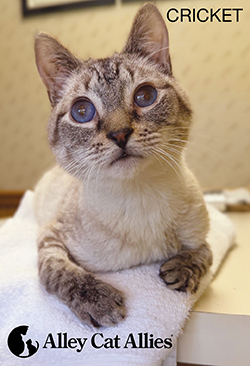
Miraculously, despite the overcrowded and substandard conditions of the property, the majority of the cats and kittens emerged with only minor injuries, upper respiratory infections, and parasite loads—issues that were swiftly managed through standard shelter medicine protocols. However, one specific feline among the group stood out immediately due to an uncommon physical presentation that required specialized orthopedic intervention. His name is Cricket.
A close inspection of Cricket’s physical structure immediately reveals an unusual stance, particularly centered around his front legs. Following comprehensive diagnostic imaging and specialist consultations, Cricket was officially diagnosed with carpal laxity—a congenital or developmental condition that severely compromises the stability and structural integrity of the wrist joints.
Rather than allowing the condition to curtail his quality of life, veterinary teams immediately implemented a specialized treatment and physical rehabilitation protocol, incorporating custom splinting to gradually strengthen and correct his front legs. Far from slowing him down, this one-year-old feline approaches life with boundless enthusiasm. When he is not actively demanding to be picked up, cuddled, and doted upon by human caretakers, Cricket can be found tearing across rooms, giving an entirely new, heartwarming meaning to the concept of feline "zoomies."
3. Strudel and Her Litter: Breaking the Cycle of Shelter Vulnerability
The cycle of feline overpopulation often begins with unspayed mother cats struggling to raise litters in unsafe, volatile environments. Earlier this year, a mother cat named Strudel and her three tiny kittens—Cherry, Berry, and Pebbles—were pulled from a high-intake municipal shelter where their survival hung in the balance.
Shelters are notoriously high-stress environments, particularly for nursing mothers and neonatal kittens whose immune systems are fragile and underdeveloped. Without rapid intervention and secure placement, the prognosis for families like Strudel’s is frequently grim. Fortunately, through the vital financial support of donors and animal advocates, Alley Cat Allies intervened to secure their safe extraction and fund their comprehensive medical care from their earliest days of life onward.
From nutritional support for the growing kittens to preventative medicine and socialization, the family received the exact foundation needed to thrive. Crucially, the intervention plan also addressed the root cause of generational shelter intake: mother cat Strudel is scheduled to be spayed, ensuring that this litter will be her last.
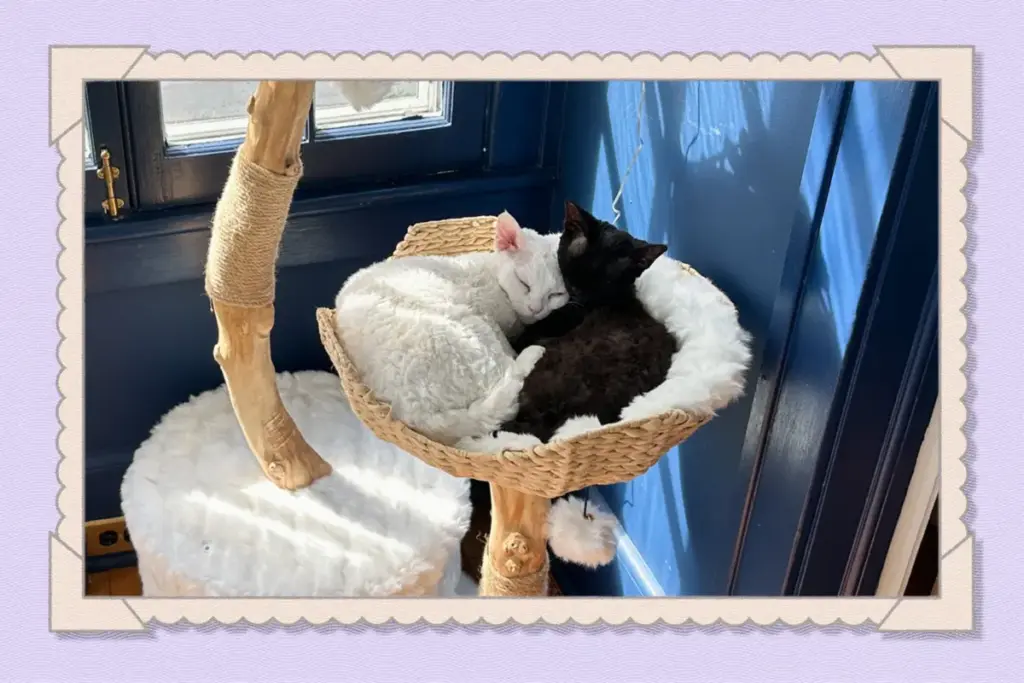
Today, thriving in a safe foster environment, Cherry, Berry, and Pebbles exhibit the carefree behaviors of healthy, happy youth. They play with intense, joyful abandon, sleep deeply and securely, and experience a standard of living that honors the intrinsic value of every animal life.
Supporting Context & Metrics: The Scope of Feline Overpopulation and Intervention
To fully appreciate the significance of individual rescue narratives like those of Neo, Cricket, and Strudel, one must examine the broader statistical landscape of animal sheltering and community cat management in North America. The challenges faced by organizations like Alley Cat Allies are systemic, structural, and deeply rooted in socio-economic and geographic factors.
The Scale of Intake and Crisis
According to recent industry metrics, millions of cats enter the U.S. shelter system annually, with a disproportionate percentage occurring during the warmer spring and summer months—widely referred to in the rescue community as "kitten season." During this peak window, community cat populations reproduce rapidly, straining municipal shelters, private rescues, and volunteer-led TNR groups to their absolute limits.
- Multi-Cat Property Seizures: Cases like the Alabama property holding 91 cats are unfortunately not isolated incidents. Animal hoarding and neglect situations frequently result from well-intentioned individuals becoming overwhelmed by unsterilized animal populations that multiply exponentially within a matter of months.
- Veterinary Resource Deficits: Rural and under-resourced areas frequently lack access to low-cost spay/neuter clinics and emergency veterinary hospitals. When mass intakes occur in these regions, regional shelters often lack the operational capital to provide necessary surgeries, diagnostic testing, and specialized treatments (such as Cricket’s carpal laxity splinting) without external philanthropic backing.
- The Economic Impact of Donor-Backed Care: Financial injections from national advocacy organizations directly bridge the gap between shelter capacity and life-saving action. By covering medical bills, specialized surgeries, and preventative care protocols, organizations ensure that shelters do not have to resort to euthanasia due to budgetary constraints.
The Preventative Power of Trap-Neuter-Return (TNR)
While medical rehabilitation saves individual cats like Neo and Cricket, systemic population control remains the ultimate weapon against mass shelter overcrowding. Trap-Neuter-Return (TNR) is recognized globally by humane societies, animal behaviorists, and public health officials as the single most effective, humane, and economically viable method for stabilizing community cat populations.
By humanely trapping free-roaming cats, having them spayed or neutered (preventing future litters like Strudel’s), vaccinating them against rabies, and returning them to their outdoor homes, communities consistently observe:
- Population Stabilization: Gradual, natural reduction in colony sizes over time.
- Behavioral Improvement: Elimination of nuisance behaviors associated with mating, such as yowling, spraying, and territorial fighting (which frequently causes facial wounds like the one Neo sustained).
- Public Health Protection: Maintained herd immunity against zoonotic diseases through widespread rabies vaccination protocols.
Official Statements and Perspectives from Leadership
The human element of animal rescue is driven by a shared philosophy of empathy, accountability, and systemic reform. Leaders within the animal advocacy space continually emphasize that saving individual animals must go hand-in-hand with shifting public policy and community education.
"Every cat that enters our care represents a unique story of survival against daunting odds. Whether it is a severely malnourished cat healing from profound trauma or a kitten overcoming congenital orthopedic challenges, our commitment remains absolute: every life is worth fighting for."
— Field Operations Representative, Alley Cat Allies
Reflecting on the massive Alabama multi-cat rescue, shelter medicine specialists underscore the critical importance of emergency funding networks.
"When nearly a hundred animals are suddenly uprooted from a neglectful environment, local infrastructure is instantly pushed to the breaking point. It is through the immediate mobilization of resources, strategic partnerships, and the steadfast generosity of our supporters that we can transform a potential tragedy into a massive rescue success story. Cases like Cricket remind us that even specialized medical needs should never be a barrier to a joyful, vibrant life."
Furthermore, advocacy directors emphasize the vital importance of proactive prevention, noting that while emergency medical interventions are essential, permanent systemic change relies on widespread adoption of proactive spay/neuter programs and community-based education regarding responsible pet guardianship.
Future Outlook: Sustaining the Momentum of Compassion
As the animal welfare community looks beyond the summer of 2026, the roadmap ahead is clear, albeit demanding. The ongoing success of initiatives highlighted in the Alley Cat Action® newsletter depends on the continued cultivation of donor support, legislative advocacy, and grassroots volunteer engagement.
Key Strategic Objectives for the Coming Years:
- Expansion of Emergency Veterinary Subsidies: Increasing the financial safety net available to shelters confronting unexpected mass-intake and hoarding crises, ensuring that regional facilities never have to turn away animals in desperate need of critical care.
- Broadening TNR and Spay/Neuter Accessibility: Partnering with local municipalities and community leaders to establish permanent, low-cost sterilization clinics in underserved rural and urban corridors, directly curtailing the influx of litters into the shelter system.
- Advocacy and Public Education: Continuing to champion progressive legislative policies that protect outdoor cats, mandate humane population management strategies, and strengthen animal cruelty penalties nationwide.
- Promoting Special Needs Adoption: Raising awareness around cats with unique medical or physical requirements—proving through ambassadors like Cricket and Neo that animals with historical trauma or congenital differences make exceptionally loving, resilient, and rewarding companions.
The stories of Neo, Cricket, Strudel, and her kittens serve as a profound reminder of what is possible when human compassion meets decisive, organized action. They are living proof that scars can become badges of honor, that physical challenges do not preclude a joyful life, and that—with the support of a dedicated global community—every cat can be given the chance to play hard, sleep soundly, and live life to the absolute fullest.