For centuries, canine training has relied on a foundational paradigm of compliance. From the basic domestic commands of "sit," "stay," and "come" to advanced working disciplines, a dog’s value has traditionally been measured by its immediate, unhesitating adherence to human instruction. Yet, within the specialized realm of guide dog mobility, this orthodox understanding of obedience is intentionally upended.
Enter the complex, counter-intuitive phenomenon known as intelligent disobedience.
Far from being a behavioral flaw or an act of stubborn defiance, intelligent disobedience represents the pinnacle of service animal training. It is the calculated, deliberate refusal of a command when executing that command would place the handler in imminent physical danger. When a visually impaired handler issues a "forward" command to cross a busy intersection, but an oncoming vehicle fails to yield, a properly trained guide dog will refuse to move. The animal remains firmly planted, prioritizing physical preservation over blind compliance.
This advanced operational capability transforms the dog from a simple tool into an autonomous, thinking teammate. Achieving this level of situational awareness and independent judgment requires a rigorous, multi-year developmental pipeline, specialized professional evaluation, and, above all, a profound psychological pact built on mutual trust between human and animal. This report investigates the mechanics, training methodologies, psychological underpinnings, and life-changing impacts of intelligent disobedience, revealing how saying "no" ultimately grants handlers unprecedented freedom.
Detailed Chronology: The Lifecycle of a Working Guide Dog
The journey toward mastering intelligent disobedience is not forged overnight. It is the culmination of an intensive, years-long developmental trajectory designed to transition a raw puppy into an elite, safety-critical mobility partner. The timeline of this transformation reflects a delicate balance of socialization, structured learning, and professional evaluation.
Phase 1: Early Foundations and Puppy Raising (Birth to 18 Months)
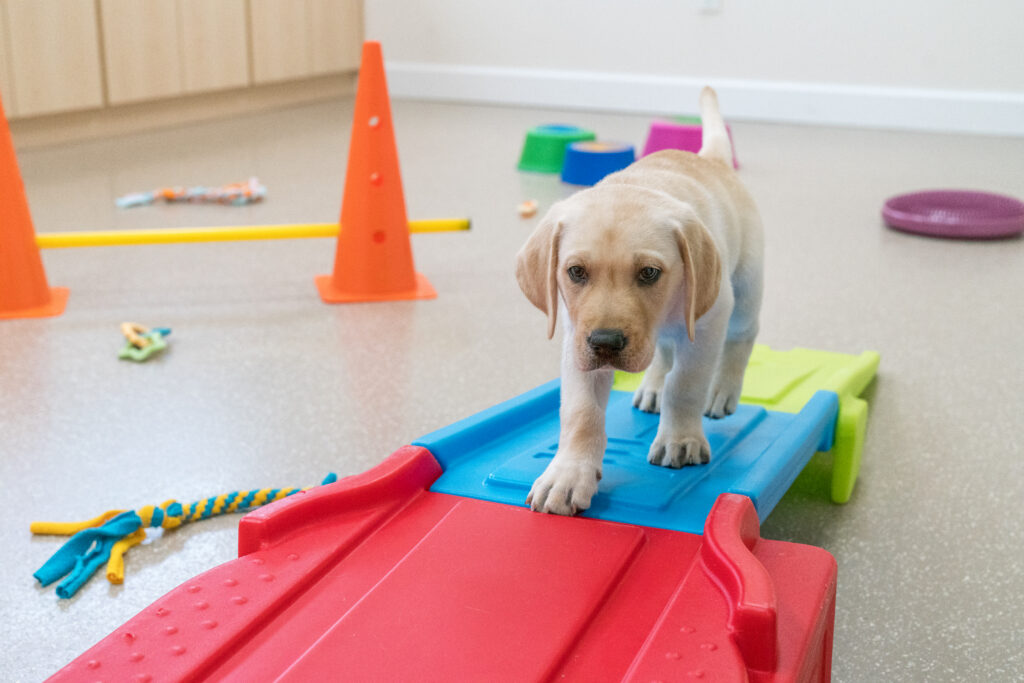
The roadmap of a guide dog begins long before formal training commences. During the first year to eighteen months of life, puppies are placed with dedicated volunteer puppy raisers. This foundational phase focuses heavily on socialization rather than strict task execution.
Exposing the dog to bustling urban centers, crowded public transit systems, erratic pedestrian behaviors, and diverse auditory stimuli.
Cultivating emotional resilience, ensuring the dog remains calm, focused, and unshakeable under sudden sensory pressure.
Phase 2: Advanced Mobility Training (Months 18 to 24+)
Once basic obedience and environmental stability are locked in, the canine enters advanced training facilities under the supervision of professional mobility instructors. This intensive phase typically lasts a minimum of five months. During this period, trainers introduce complex, high-stakes scenarios:
Simulating obstructed pathways, sudden construction zones, low-hanging hazards, and dangerous traffic patterns.
Systematically rewarding the dog for independent decision-making, reframing the canine’s understanding that safety—not compliance—is the ultimate metric of success.
Phase 3: Team Matching and the "Juno Walk"
A dog that possesses exceptional judgment is useless if it cannot harmonize with its specific human handler. Organizations utilize meticulous matching protocols to evaluate a handler’s physical pace, everyday environment, navigation style, and personality traits.
To test prospective compatibility before final placement, specialists deploy diagnostic tools such as the Juno Walk.
This trial walk allows instructors to observe how the human-animal team communicates under real-world pressures, ensuring long-term operational success.
Supporting Context & Metrics: The Mechanics of Safety and Evaluation
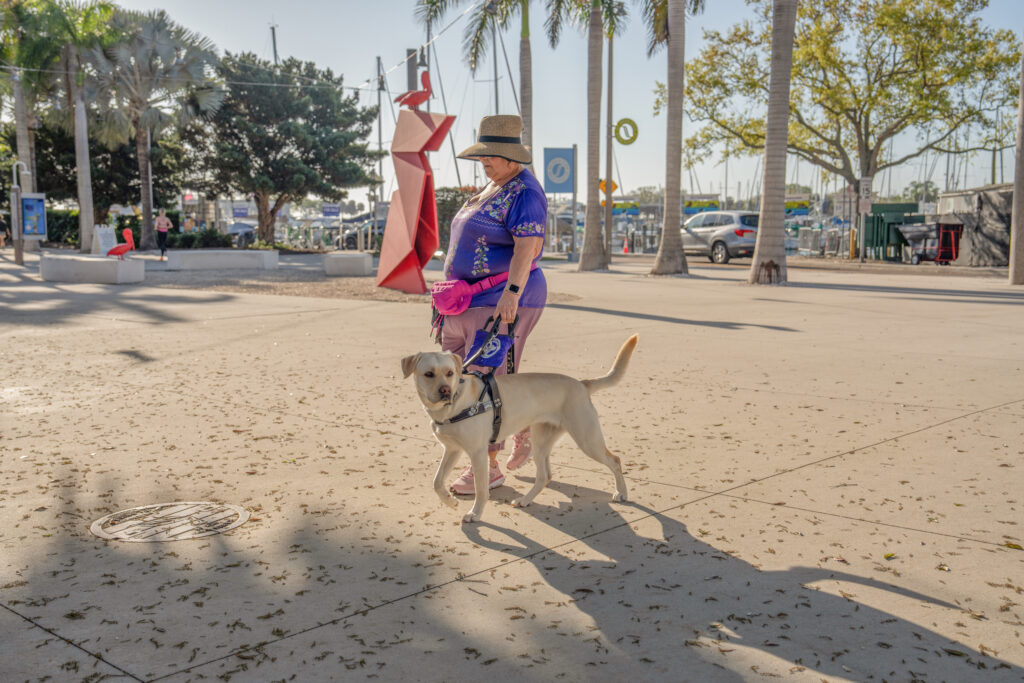
Understanding why intelligent disobedience is necessary requires examining the sensory landscape of visual impairment. Individuals who are blind or visually impaired navigate the world masterfully using auditory cues, tactile feedback from long white canes, and spatial memory. However, ambient noise can mask silent electric vehicles, erratic bicyclists, or sudden overhead construction hazards.
The guide dog acts as an active, mobile safety buffer. To maintain this standard, guide dog mobility instructors rigorously assess a dog’s cognitive capacity through a series of dynamic field evaluations.
Key Evaluation Metrics Used by Mobility Instructors
During increasingly realistic urban simulations, professional instructors grade candidates against strict behavioral benchmarks:
Evaluation Metric
Description & Operational Significance
Environmental Scanning
The dog’s ability to continuously monitor peripheral movement, traffic flow, and overhead obstacles without becoming distracted.
Pressure Composure
Maintaining emotional equilibrium and focus when faced with sudden loud noises, crowded corridors, or aggressive pedestrian traffic.
Inhibitory Control
The physiological capacity to suppress the natural desire to follow a handler’s forward cue when a physical threat is detected.
Problem-Solving Speed
The alacrity with which the dog identifies a blocked pathway, stops, and successfully calculates a safe detour (e.g., routing around a construction barrier).
These metrics ensure that only canines possessing the rare combination of high emotional intelligence, low reactivity, and autonomous reasoning graduate into active service.
Official Insights: The Psychology of Trust and Partnership
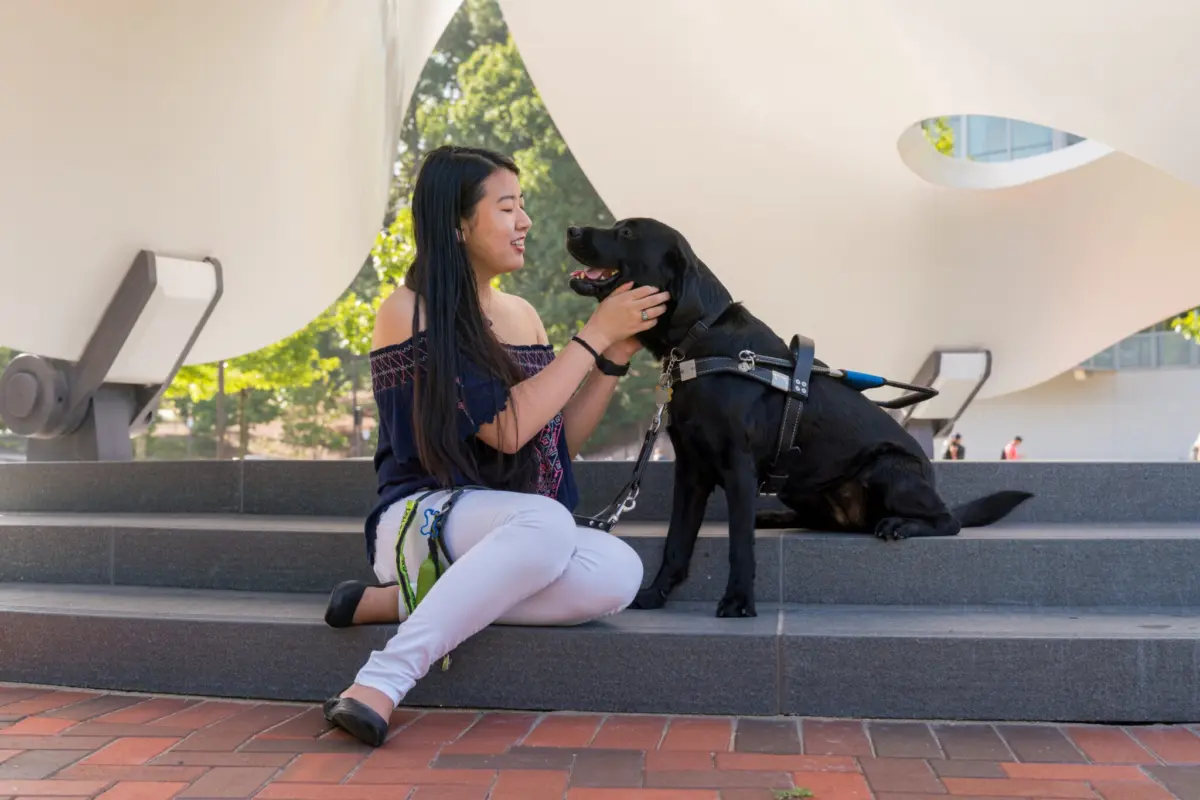
Intelligent disobedience does not operate in a vacuum; it is fundamentally relational. Experts in service animal training emphasize that the system collapses without a symbiotic bond of trust between handler and dog.
According to mobility specialists, the human-guide dog relationship functions as a dynamic distribution of labor:
"The handler provides the strategic intent—they know where they want to go and when to initiate movement. The guide dog provides the tactical intelligence—monitoring how to get there safely, filtering out hazards, and executing micro-adjustments along the way."
When a guide dog suddenly halts or refuses to step off a curb despite a clear verbal command, a friction point occurs. For an inexperienced handler, this moment can be confusing. However, seasoned handlers understand that a refusal is an alarm bell.
Over months and years of working together, the handler learns to interpret the dog’s physical language—a stiffened posture, a blocked path, or a subtle pivot away from danger. This feedback loop transforms the partnership from a master-servant dynamic into a true interspecies coalition. The handler learns to trust the dog’s judgment implicitly, while the dog learns that its independent interventions are validated and appreciated rather than punished.
Real-World Applications: When "No" Saves Lives
The practical manifestations of intelligent disobedience vary from the mundane to the life-saving. In everyday deployment, these split-second decisions prevent accidents that could result in catastrophic injury.
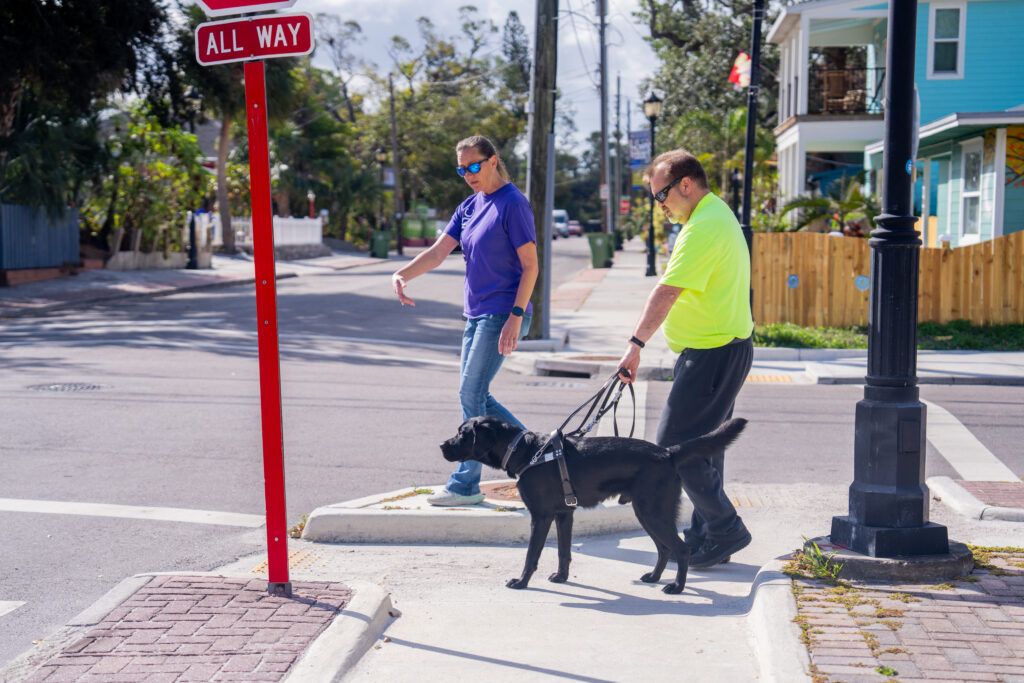
Traffic and Intersection Management: As detailed previously, a handler attempting to cross a street relies on sound patterns. If an unobservant driver turns the corner or runs a red light silently, the guide dog freezes, effectively anchoring the handler out of the vehicle’s path.
Overhead and Low-Level Hazards: Low-hanging tree branches, construction scaffolding, protruding store signs, and open sidewalk cellar doors often sit above a white cane’s sweep zone and at eye-level for a human. Guide dogs routinely swerve or stop to prevent head-on collisions with these environmental traps.
Improvised Obstruction Detours: When a familiar sidewalk is blocked by a massive utility truck, a deep puddle, or unexpected debris, the dog does not simply stall out. Instead, it evaluates the surrounding space, safely steers the team around the obstacle, and seamlessly returns to the original trajectory on the other side.
Future Outlook: Advancing Canine Mobility and Independence
As our urban environments grow increasingly dense, chaotic, and technologically complex—marked by the proliferation of silent hybrid vehicles, electric scooters scattered across walkways, and congested smart cities—the demands placed on guide dogs will only intensify.
Organizations at the forefront of service animal breeding and training, such as Dogs Inc, continue to refine their breeding programs and socialization curriculums to enhance cognitive resilience and problem-solving traits. Future developments in mobility training will likely lean even heavier into neurological resilience testing, ensuring that the next generation of guide dogs can process hyper-complex sensory environments without cognitive overload.
Ultimately, intelligent disobedience represents a profound philosophical achievement in animal training: the cultivation of sentient independence in service of human freedom. By teaching dogs when to say "no," trainers unlock a world of safety, confidence, and unconstrained mobility for individuals with visual impairments. For those who rely on these exceptional animals, intelligent disobedience is not just a training technique—it is an ongoing, daily partnership that transforms the daunting landscape of the world into an accessible, navigable horizon.